








For B2B beach-shorts development, choose lining based on the product’s use, shell fabric opacity, desired support and coverage, wet-use behavior, and tolerance for added layers. Lining may improve coverage or structure, while an unlined construction may reduce bulk and support airflow, but the result depends on the fabric, pattern, fit, and construction. Confirm the decision through samples and relevant opacity, fit, colorfastness, and drying checks before bulk production. For broader category context, a men’s beach shorts manufacturing and custom sourcing guide can sit alongside this narrower construction decision.
Lined vs Unlined Beach Shorts: The Short Answer
The difference is the presence or absence of an inner layer, but “lined” is not a complete specification. A product may use mesh lining, a knit lining, a partial liner, or another construction with different fiber content, weight, stretch, placement, and seam treatment. An unlined short may rely entirely on the shell fabric and garment construction for coverage, comfort, and appearance.
For a swim-oriented product, ask whether the shell remains sufficiently opaque when wet, whether the wearer needs additional coverage or support, and whether the lining remains comfortable during movement. For resort or casual beach wear, low bulk, hand feel, and appearance may carry more weight. Neither construction is automatically better: the appropriate choice depends on the intended activity, selected materials, pattern, fit, and buyer-defined product priorities.
What Changes When Beach Shorts Are Lined?
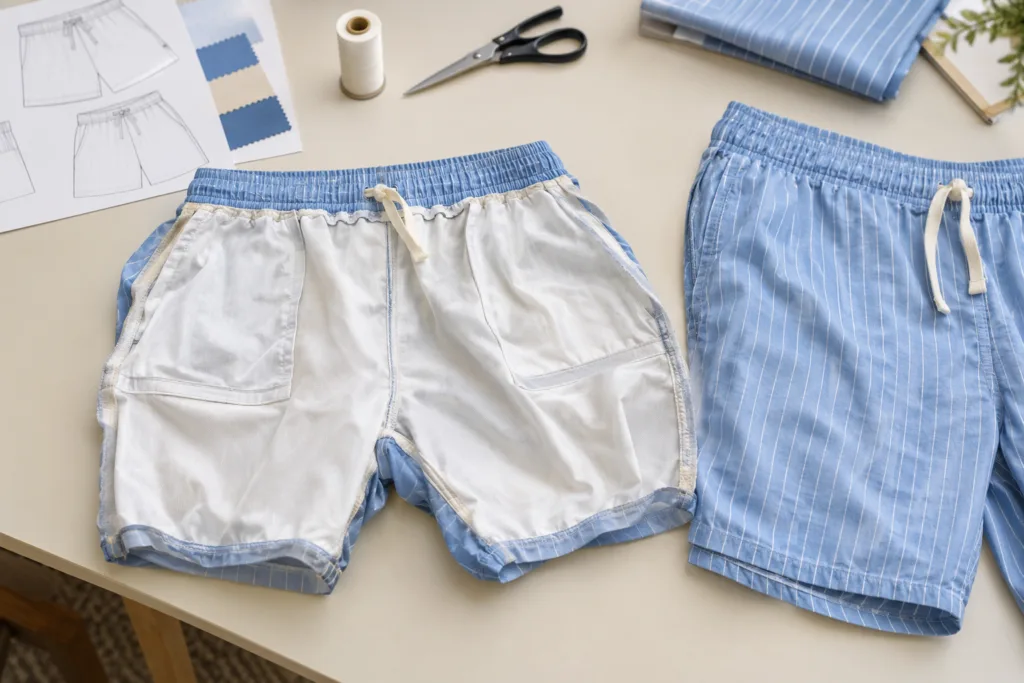
A lining adds another layer between the shell and the wearer. That layer can contribute to coverage or alter the garment’s structure, but those outcomes should be confirmed for the selected combination rather than assumed from the word “lined.” A close-fitting liner and a looser mesh liner will not behave identically, and a front-only or partial lining creates different coverage from a full inner layer.
Specify the lining, not just the label
A development brief should identify the lining’s fiber content, weight, stretch direction, placement, and attachment method. It should also state whether the liner is intended to sit close to the body, how its edges are finished, and where seams will contact the skin. These details affect movement, bulk, comfort, and the visual result. Waistband construction, leg opening, rise, and liner length can also change how the garment feels even when the shell fabric is unchanged.
Coverage is a sample question, not a universal benefit. Compare the lined sample with the intended shell in dry and wet conditions, including the areas most likely to be visible under light or movement. Review whether the lining shifts, bunches, pulls at the seams, or changes the outer short’s drape. If support is a product requirement, define what “support” means for the intended wearer and verify the fit; a lining alone does not establish a support level.
What Changes When Beach Shorts Are Unlined?
Removing the inner layer can reduce the number of components and the amount of material in contact with the wearer. This may suit a design where low bulk, airflow, or direct shell-fabric hand feel is important. The result still depends on shell opacity, surface feel, stretch, seam placement, and fit. An unlined construction is not automatically lighter, cooler, faster drying, or more comfortable.
Unlined beach shorts require particular attention to the shell fabric because it carries the coverage and skin-contact responsibilities. Review the fabric’s construction, fiber content, weight, stretch direction, and finishing information. Check whether the shell becomes more revealing when wet, whether seams or pocket bags create unwanted show-through, and whether the fabric feels acceptable during repeated movement. If a product is intended for swimming, an unlined sample should be evaluated in the actual use conditions represented by the product brief.
The unlined option may be appropriate when the product is primarily resort wear or when the design intentionally prioritizes minimal layering. It may be less suitable where the shell lacks adequate opacity, where direct skin contact is uncomfortable, or where the product brief requires a defined liner placement. These are development decisions rather than fixed properties of every unlined short.
Fabric, Lining, and Wet-Use Performance
Construction should be selected together with the material specification. A useful beach-shorts fabric selection process records composition, fabric construction, weight, stretch direction, color, finish, and intended use. For a lined product, record the same information for the lining and note whether it is mesh, knit, partial, or another approved construction.
Drying should be observed rather than promised from a fabric name or lining label. Record the sample condition, water exposure, hanging or wearing position, ambient conditions, and the comparison method used by the development team. Where a formal claim is required, specify the test method and acceptance criteria. The same discipline applies to opacity, colorfastness, and dimensional stability: identify the sample, condition, method, and decision threshold before approval.
| Product priority or use case | Lined construction considerations | Unlined construction considerations | Fabric and fit checks | Sample approval question |
|---|---|---|---|---|
| Water use and coverage | Confirm liner placement, wet opacity, movement, and seam comfort. | Confirm that the shell provides the required coverage when wet. | Check shell and lining stretch, fit, and visibility in dry and wet states. | Does the sample meet the intended coverage requirement without shifting or pulling? |
| Low bulk and resort wear | Assess added layer, drape, waistband thickness, and skin contact. | Assess direct shell contact, seam feel, and opacity under the intended lighting. | Review hand feel, rise, leg opening, pocket construction, and movement. | Does the simpler layer configuration deliver the required appearance and comfort? |
| Quick-dry beach shorts | Compare shell and liner drying observations rather than assuming the liner slows drying. | Compare the shell’s wet behavior and drying observation with the product brief. | Record exposure conditions and compare equivalent samples. | Was the drying comparison made using the same conditions and approval criteria? |
Once the construction direction is clear, communicate the approved shell, lining, fit, and inspection points to the supplier. A custom cut-and-sew services discussion is most useful when it follows a defined product brief rather than replacing the lined-versus-unlined decision.
Fit and Construction Details That Affect the Result
The lined-versus-unlined decision should be recorded alongside the pattern and component details that determine how the short behaves on the body. Specify the rise, outseam or inseam, leg opening, waistband height, drawcord position, pocket dimensions, and intended size range. These inputs affect coverage, movement, appearance, and the amount of fabric that contacts the wearer.
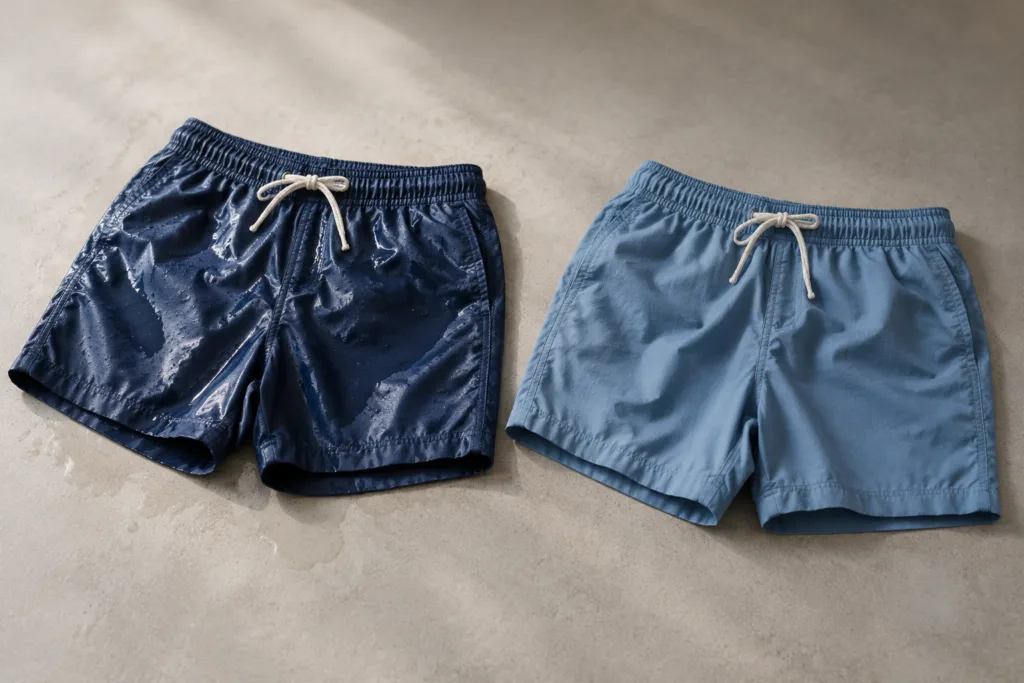
For lined beach shorts, identify the liner length, front or full placement, leg-opening finish, attachment points, and seam allowance. Confirm that the liner does not ride up, twist, bunch, or pull the shell out of shape during movement. For unlined beach shorts, check the inside of every seam, pocket bag, waistband join, and hem because these areas may affect comfort or show-through. A gusset or revised seam position may be relevant where the product brief requires greater movement.
Also define the drawcord construction, including exit position, channel width, end treatment, and security after repeated adjustment. Pocket bags should be reviewed for wet-use behavior, drainage expectations, bulk, and visibility through the shell. These are specification and sample-approval questions, not automatic advantages of either construction.
Decision Matrix for Product Development
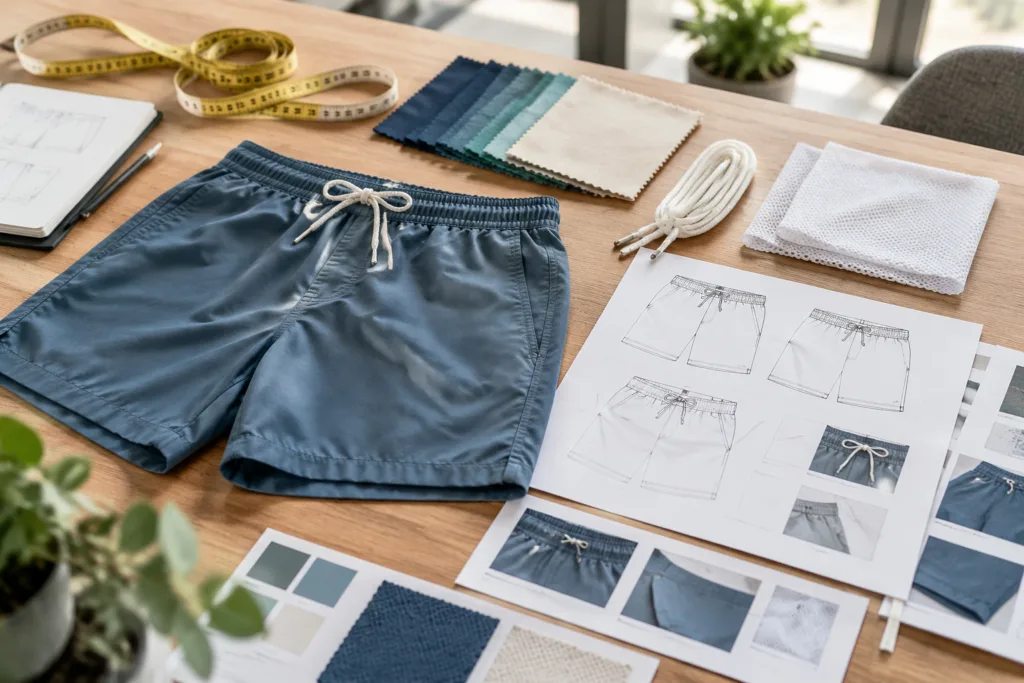
Use the product brief to rank priorities before asking a supplier to recommend a construction. Water use, resort wear, active movement, opacity, support, low bulk, drying expectations, hand feel, and target price may point in different directions. The table above provides the initial comparison; the following questions help a team turn that comparison into a documented decision.
- Intended use: State whether the short is for swimming, mixed beach activity, resort wear, or primarily casual use.
- Coverage requirement: Define the dry and wet appearance expected from the shell, liner, and finished fit.
- Movement requirement: Identify the range of movement and whether the liner, seams, waistband, or leg opening must remain stable.
- Material direction: Approve the shell and lining composition, construction, weight, stretch direction, color, and finish before comparing samples.
- Commercial constraint: Consider component count, decoration, packaging, and target price only after the required product performance is clear.
This approach keeps customization separate from the construction decision. A distinctive print or decoration does not resolve questions about opacity, fit, drying, or liner comfort.
Sampling and Quality Checks Before Bulk Production
Before approving a lined or unlined sample, compare it against the approved tech pack and review the garment in the conditions represented by its intended use. Record observations rather than relying on the construction label or a fabric name.
- Measure the approved points of measure, including rise, length, waistband, leg opening, and liner placement.
- Review fit while standing, walking, sitting, and performing relevant movement for the product.
- Check opacity in dry and wet states, under consistent lighting and with the intended color and print.
- Inspect liner comfort, seam contact, bunching, riding, twisting, and pulling where applicable.
- Check drawcord security, waistband recovery, pocket behavior, hem consistency, and seam quality.
- Record wet exposure and drying observations using the same sample condition, handling position, environment, and comparison method.
- Define any required colorfastness, dimensional-stability, or wash-care review by naming the method and acceptance criteria before testing.
Approval should identify the exact shell, lining, trims, measurements, construction, and decoration version being accepted. Any change to fiber content, weight, stretch, dye, finish, liner placement, or pattern should trigger a review of the relevant checks.
Working With a Custom Beach Shorts Manufacturer
A manufacturer can give more useful development feedback when the inquiry contains enough product information to distinguish a construction question from a general sourcing question. Include reference images, a tech pack or measurement sheet, intended use, target wearer, size chart, shell and lining preferences, color or print direction, decoration requirements, pocket details, waistband and drawcord requirements, packaging or labeling needs, target quantities if known, and required sample approvals.
When supplier selection is part of the project, evaluate communication, material transparency, sampling discipline, construction understanding, and the ability to document agreed specifications. Guidance on how to choose a reliable clothing manufacturer can support that separate evaluation without deciding whether this product should be lined or unlined.
For the next step, contact Ninghow with the product brief, intended use, quantity, material direction, decoration, and sampling requirements.
Are lined or unlined beach shorts better for swimming?
Neither is universally better. Choose based on wet opacity, comfort, movement, liner placement, shell and lining specifications, and the result of relevant sample checks.
Do unlined beach shorts become transparent when wet?
They may, depending on shell construction, color, finish, fit, and lighting. Confirm opacity on the actual unlined sample in both dry and wet conditions.
Does a lining make beach shorts dry more slowly?
Not automatically. Drying depends on the shell, lining, construction, water exposure, handling, and environment, so compare equivalent samples using defined conditions.
What lining materials can be used in custom beach shorts?
Possible directions include mesh, knit, partial, or other specified constructions. Confirm fiber content, weight, stretch, placement, seam finish, and intended skin contact for the selected option.
What should brands include in a custom beach-shorts tech pack?
Include measurements, size range, shell and lining specifications, liner placement, fit, waistband, drawcord, pockets, seams, decoration, labels, packaging, intended use, and sample approval criteria.