



Introduction to Garment Labeling Requirements
Whether you’re launching a new apparel line or managing bulk garment production, understanding garment labeling requirements is non-negotiable. Fiber content and care labels aren’t just regulatory checkpoints—they shape customer trust and retail compliance. In this guide, we’ll break down vital information on fiber content, care instructions, common mistakes, and the label approval process. If you’re looking to optimize your product quality and avoid setbacks, this article gives you all the industry-backed steps.
Why Garment Labels Matter for Brands and Buyers
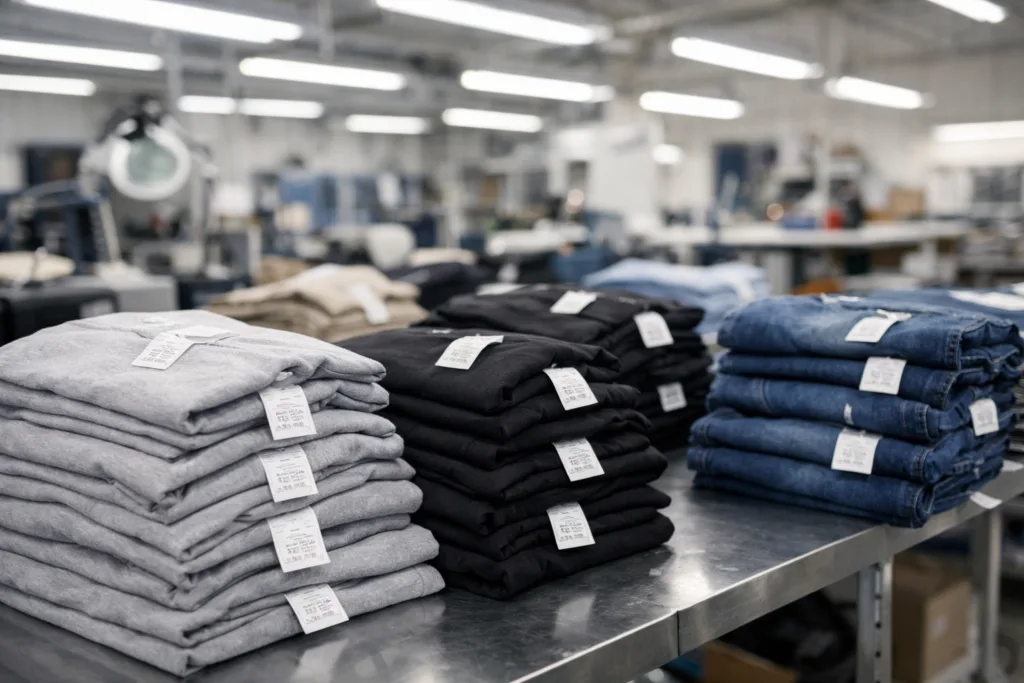
Garment labeling requirements exist for good reasons: consumer safety, transparency, and global trade. Labels can affect everything from shelf placement to customs clearance. The Apparel Compliance Checklist offers a practical overview for brands aiming to pre-empt issues.
Mandatory Information for Garment Labels
Every garment sold in major markets (EU, US, UK, etc.) must display several key label attributes:
- Fiber content and percentage (e.g., 60% cotton / 40% polyester)
- Care instructions (standard symbols and/or text)
- Origin (country of manufacture)
- Manufacturer or distributor identity (sometimes address)
- Size (clearly indicated)
Fiber Content Labeling: Rules and Realities
Listing fiber composition isn’t as simple as it sounds. Small errors in percentage or sequence can trigger customs delays or product returns. Typical fiber declarations use descending order by percentage. Combine accuracy with clarity—generic terms like “polyamide” might be fine locally, but the EU often demands “nylon” or “polyester.”
Care Labels: Global Symbol Standards
Care labels use universal symbols to inform shoppers how to clean, dry, and iron their garments. But standards differ by region:
- ISO 3758 for Europe: Five basic symbol groups (washing, bleaching, drying, ironing, professional care)
- ASTM D5489 for USA: Updated symbols, clear text options
- Japan, Australia, and Canada: Unique adaptations
Reference guides like How to Master Apparel Sample Types are helpful for buyers and tech pack creators.
Common Garment Labeling Errors (And How To Fix Them)
Mistakes on garment labels are surprisingly frequent, even for established brands. Some common pitfalls include:
- Incorrect fiber percentages (mis-stated blend ratios)
- Wrong care symbols (invalid or conflicting instructions)
- Missing country of origin
- Inconsistent sizing details
- Typographical errors or mistranslations
Ninghow’s production team often encounters inconsistent translations or ambiguous care icons during Sample Approval Workflows. Their advice: always send final mock-ups before mass production.
Must-Have Information on Every Garment Label
Certain elements are universal across apparel markets. To pass retailer checks and customs, ensure every label features:
- Fiber content (exact and total 100%)
- Care instructions (symbols and/or local language)
- Country of manufacture (e.g., “Made in Bangladesh”)
- Brand/manufacturer name
- Unique product code or batch ID (for traceability)
Garment Label Approval Workflow
Getting your labels right means following a reliable approval process. Typical steps:
- Initial design draft (with all regulatory elements)
- Compliance check against destination market standards
- Internal brand or buyer approval
- Physical sample or pre-production sample review
- Final sign-off before bulk production
Never skip the compliance review—errors at this stage can halt shipment, especially for large orders.
Custom Label Design Tips for Apparel Makers
Besides required data, design matters for branding and legality. Here are practical tips:
- Use readable fonts and colors
- Choose durable label material to survive laundering
- Consider bilingual or multi-language labels (especially for export markets)
- Test attachment methods: heat seal, sew-in, adhesive
Label Placement: Best Practices for Different Garments
Where you place your labels often depends on the garment type:
- T-shirts, polos, hoodies: Back neck area (sewn-in or heat transfer)
- Bottoms: Waistband, side seam, or pocket lining
- Jackets: Inside neck or lower inside side
- Intimates: Inside side seam with soft finish
The main goal: visibility for compliance, comfort for the wearer, and durability after washing.
Fiber Content Labeling for Blends and Special Fabrics
Blends—such as polyester/cotton or modal/spandex—must declare every component over 5%. “Other fibers” can only be used if individually less than this threshold. Cashmere, silk, and technical fibers often have stricter country requirements.

Care Symbols Explained: Washing, Bleaching, Drying, Ironing
Understanding care symbols is crucial for both buyers and manufacturers:
| Symbol | Meaning |
|---|---|
| Washing tub | Water temperature and type (machine/hand) |
| Triangle | Bleaching instructions (allowed or not) |
| Square with a circle | Tumble drying guidance |
| Iron | Ironing temperature (dots as heat levels) |
| Circle | Professional care (dry cleaning) |
Labeling for Restricted Substances and Compliance
Some jurisdictions require extra label info related to fabric safety, such as AZO-free or REACH-compliance marks. Review REACH, AZO, and Heavy Metals for textile-specific labeling.
Incorrect Labeling: Impact on Shipping and Customs
Customs authorities regularly check labels for fiber content, care, and legal text. Incorrect labeling can result in rejected shipments, fines, or lengthy delays. Always pair clear labels with proper Customs Documents to avoid mistakes.
The Role of Tech Packs in Label Approval
Tech packs outline exact label placement, dimensions, and materials for factories. A thorough tech pack streamlines approval and reduces sample revisions. Ninghow recommends including high-res visuals and translation checks in every tech pack design.
Label Sample Inspection: What Buyers Should Expect
Before mass production starts, brands should check a pre-production label sample. Verify:
- All regulatory info present
- Symbol and text clarity
- Durability after washing (test wash recommended)
- Attachment method matches production plan
If issues arise, rework is expensive and time-consuming—factory floor experience shows a 24-hour window for corrections is optimal.
Fiber Content and Care Labels: US vs EU vs UK Summary
| Region | Required Elements | Symbol Standard |
|---|---|---|
| US | Fiber %, care, origin | ASTM D5489 |
| EU | Fiber %, care, origin, contact info | ISO 3758 |
| UK | Fiber %, care, size | ISO/UK adaptations |
Double-check market-specific rules. Penalties for errors vary but always impact your brand reputation.
Best Practices for Garment Label Copywriting
Labels should be brief but clear, avoiding jargon. If space allows (and legal standards permit), consider short explanations in the local language alongside symbols. Pre-translate care text to avoid ambiguity.
Interpreting Care Label Symbols for End Consumers
The right labeling helps customers keep garments looking new. Include standard icons for washing, drying, bleaching, and ironing. If in doubt, offer a QR code linking to care instructions.
Garment Labeling Requirements: Fiber Content & Care Labels
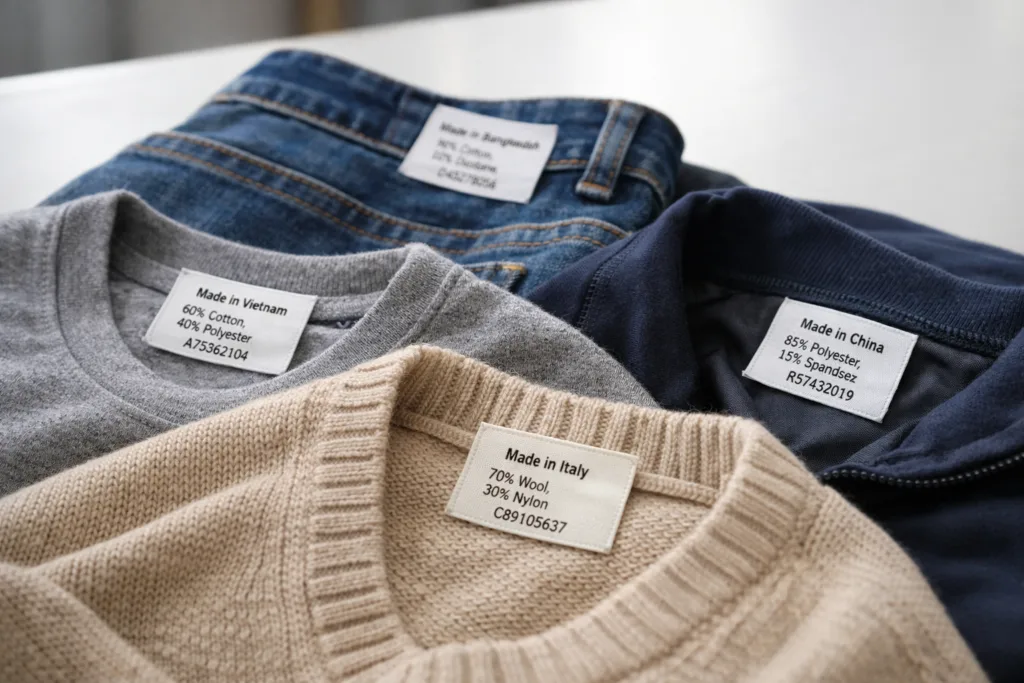
To summarize, garment labeling requirements demand both precision and compliance expertise. Always provide correct fiber content in descending order, use globally-recognized care symbols, and vet all data through pre-approval flows. For OEM/private label production, consistent labeling is a mark of manufacturing credibility. Brands and makers like Ninghow have learned that detailed planning, approval workflows, and sample QC minimize surprise costs and last-minute setbacks. If you want your apparel line to stand out for professionalism and reliability, never overlook labeling details.
Frequently Asked Questions
What information is mandatory on garment labels?
Garment labels must include fiber content, care instructions, country of origin, brand identity, and size to comply with regulations in major markets.
How do I choose the correct care symbols for different regions?
Refer to ISO 3758 for Europe, ASTM D5489 for the USA, and local standards elsewhere; adjust symbols/text for the destination market’s rules.
What happens if my labels have errors?
Label errors can lead to customs delays, product recalls, or fines, and may require costly fixing or relabeling before distribution.
Can I use abbreviations or generic fiber names?
Only use abbreviations or generic fiber names allowed under destination market regulations—some regions require specific terms like “polyester.”
How do sample approvals work for garment labels?
Brands and manufacturers agree on label drafts, review pre-production samples, and give final sign-off before bulk production begins.
Are QR codes acceptable on garment labels for care instructions?
QR codes are increasingly accepted, but must be accompanied by mandatory regulatory info and symbols on the physical label itself.
Related Reading
- Reduce Returns: Master Control Points from Pattern to Packaging
- 13-Step Guide for Consistent Clothing Manufacturing Quotes
- 7 Steps to Reliable Fabric Color Approval in Apparel Brands
- End-to-End Checklist to Avoid Private Label Apparel Mistakes
- 7 Secrets to Sourcing Fabric & Trims That Boost Your Brand’s Performance
