


Introduction: In 2026, Stability Matters More Than Low Cost
For clothing brands in 2026, the era of picking factories solely for the lowest price point is long gone. Today’s buyers know that cost savings mean little if your product arrives late, or not at all. When the world faces unpredictable events—war, trade blockades, rerouted ships, or sudden surges in reorders—brands are prioritizing supply stability over raw price. Apparel sourcing has become a game of speed, execution, and risk management. Delivery reliability now trumps unit cost, and consistency is king. In such volatile times, why China’s apparel supply chain is still the most stable choice in 2026 should be at the center of every sourcing conversation.
What “Supply Chain Stability” Really Means in Apparel
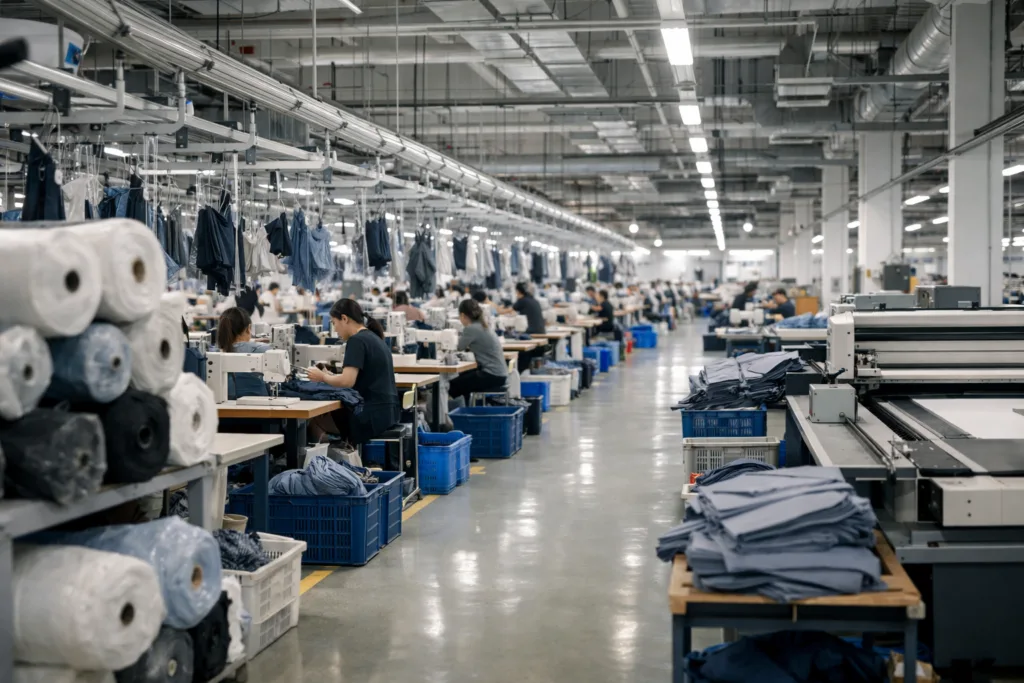
Stability isn’t just a buzzword for brands in 2026. It’s the ability to trust that every stage—from sampling to bulk, from labels to packaging, from the first order to repeats—is predictable and coordinated. True stability means fast recovery—even when things go wrong. It means building resilience into every link of the chain.
Stable Sampling Timelines
Sampling is the first true test of a supplier’s process control. Reliable manufacturers stick to sampling calendars, even during high season. Consistently prompt samples reduce development lag and give you more flexibility for last-minute changes.
Reliable Bulk Production
On-time bulk production isn’t guaranteed by low labor costs or big factories. The key is proven scheduling discipline and minimal slippage between planned and actual delivery.
Consistent Quality Across Repeat Orders
A stable supply chain ensures that a reorder six months later arrives with the exact same fit and finish as your first. Brands count on this for in-season replenishment and program business, especially for ongoing teamwear or branded lines.
Predictable Shipping and Delivery
It isn’t just about making garments fast. It’s about getting those garments loaded, shipped, and cleared—regardless of external shocks. Stable supply chains have backup plans for common disruptions.
Strong Coordination When Problems Happen
No one expects zero mistakes. But the real test of a supply chain is how fast it alerts you, mobilizes alternate resources, and gets the issue fixed—all before your launch window is at risk.
Why Global Apparel Supply Chains Feel More Fragile in 2026
Global trade has always felt a little fragile, but by 2026, the risks are higher and closer to home. Sourcing professionals feel growing uncertainty from events that once seemed like distant news items—now, their effects show up as real tracking delays, insurance premium hikes, and losing weeks in shipping queues.
Rising Geopolitical Uncertainty Is Reshaping Sourcing Decisions
Brands have watched how conflicts and trade tensions can quickly re-route or even suspend entire transport lanes. These aren’t distant factors; they shape which supplier gets your PO next season.
War and Regional Conflict Now Affect Shipping, Insurance, and Lead Times
A single conflict, such as ongoing tensions in the Middle East, can turn the safest sea lanes—like the Red Sea or Strait of Hormuz—into high-risk zones overnight. That means ocean freight must detour, insurance costs spike, and “guaranteed” lead times turn uncertain. For the apparel industry, where deliveries are tied so tightly to seasons and promotions, that added risk changes everything.
Brands Face More Pressure to Reduce Disruption, Not Just Reduce Cost
The new reality isn’t just about cutting cost per unit—it’s about trimming risk per order. Fashion cycles don’t wait for supply chains to recover from war or weather delays. In 2026, reducing the chance of major disruption is the ultimate form of cost control.
Why China Still Offers More Stability Under Global Uncertainty
If problems can hit anywhere, why is China’s apparel supply chain still less exposed? The answer is both scale and structure. Let’s look at the ingredients driving China’s continued edge:
A Dense Supplier Network Reduces Dependency
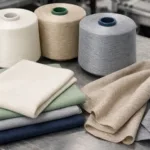
China’s huge network of fabric, trim, label, and accessory providers sits close to its sewing floors. When containers are stuck at sea, Chinese manufacturers can often source locally—while others are left waiting for overseas zippers or specialty interlining.
A Complete Ecosystem Makes Problem-Solving Faster
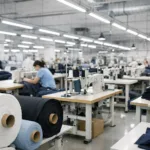
China is not just about sewing power; it’s about having every process—dyeing, embroidery, washing, finishing, even carton and hangtag suppliers—just a short drive away. If a heat transfer label fails QC, a backup supplier is ready the same afternoon. This tight-knit system keeps orders on schedule when the unexpected happens.
Strong Export Infrastructure Supports Reliable Shipments
With world-class ports, rail links, and domestic courier networks, China has unparalleled logistics muscle. World Bank Logistics Performance Index (LPI) 2023 again put China at the forefront on infrastructure, making contingency shipment routing a reality.
Experience Across Categories Improves Execution Under Pressure
Chinese garment factories don’t just work on one product type; they move between polos, hoodies, jackets, and activewear. This flexibility, built over decades, means faster pivots if a crisis forces sudden changes in order spec or delivery mode.
Why Other Countries Still Struggle to Fully Replace China
Alternative sourcing destinations often look attractive on spreadsheets, but they come with hidden obstacles when it comes to full-package reliability.
Lower Labor Cost Does Not Equal Lower Sourcing Risk
Cheap labor can bring down price per unit, but it won’t help when floods, port closures, or vessel delays hit. Savings disappear if you miss a delivery window and pay air freight as backup.
Many Countries Can Sew, Few Can Full-Package
It’s one thing to stitch a basic T-shirt; quite another to coordinate fabric, trims, labels, QC, packaging, and fast shipping for a branded collection. Most nations can handle sewing, but only a few—like China—offer genuine one-stop synthesis and rapid troubleshooting along the entire chain. Brands needing guidance on these models can read about OEM vs ODM apparel manufacturing for an in-depth comparison.
Alternatives Are More Exposed to Upstream Dependency
Vietnam, Bangladesh, and others often depend on imported yarns, specialty trims, or even basic packaging from China. When trade routes bottleneck, these countries face outsized risk—one missing component can stall an entire order.
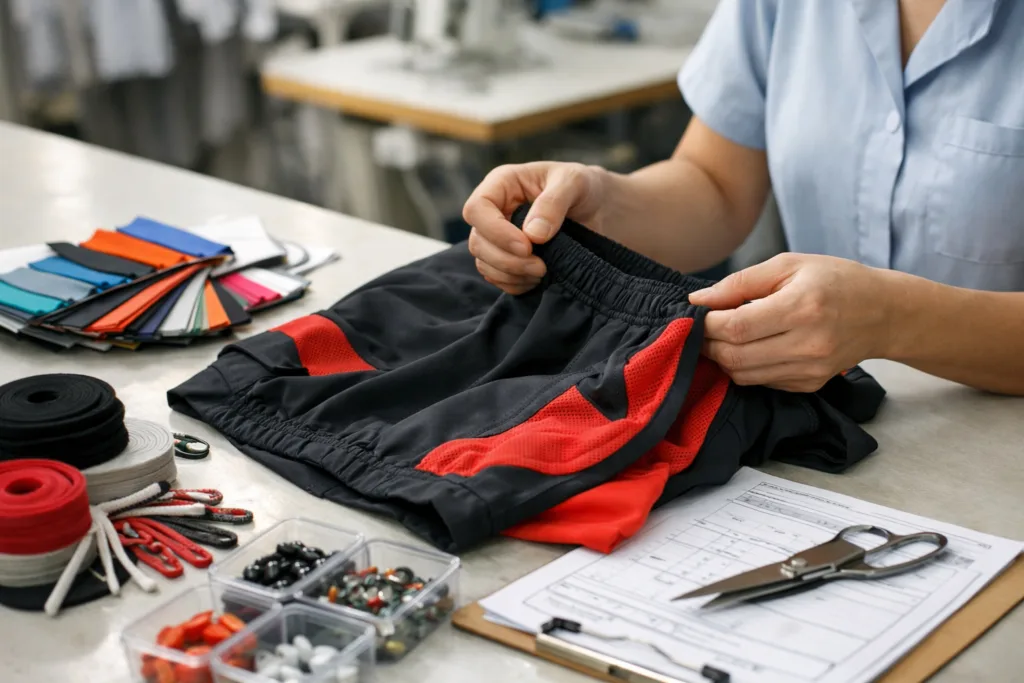
Replacing One Factory Is Easier Than Replacing an Ecosystem
Swapping suppliers seems quick—until you realize what you’re really replacing isn’t a vendor, but a coordinated system of partners, processes, and logistics. As WTO apparel value chain data shows, China’s share of domestic value-add far outpaces that of its challengers, who depend more heavily on imported inputs.
Which Apparel Orders Still Work Best in China in 2026
The biggest secret: not every style, volume, or business model must move out of China. In fact, some kinds of orders get the most benefit by staying.
Complex Garments with Multiple Trims or Processes
If your pieces need special zippers, reflective prints, bonded seams, or intricate packaging, China delivers unmatched integration and on-site troubleshooting.
Styles That Require Fast Sample Revisions
Development cycles where you need three or four rapid proto rounds thrive on China’s fast sampling and close designer-shop relationships. For a clear sampling roadmap, check how custom apparel manufacturing works step-by-step.
Repeat Orders and Replenishment Programs
Ongoing SKUs and regularly refreshed stock need a supplier with robust order tracking, stable QC, and seamless communication. Without those, a “simple” reorder can turn complex fast.
Orders Where Quality Consistency Matters More Than Price
Premium brands and established programs depend on like-for-like quality with lower tolerance for variation. Here, a more mature and systematized supplier base really shines.
Teamwear, Sportswear, Polos, Hoodies, Shorts, and T-Shirts
Team apparel and core branded gear—items with seasonal reorders and strong fit/spec control—are ideally matched to China’s production environment, where consistency and predictability carry more weight than chasing rock-bottom costs. For those seeking guidance on new launches, explore this private label team clothing launch guide.
How Ninghow Helps Brands Turn China’s Stability Into Real Results
Ninghow, as a seasoned garment manufacturer, has seen firsthand that a stable environment is just the start. It takes practical systems at the shop-floor level to transform that stability into on-time, on-spec deliveries for global brands.
Clear Sample Development Workflow
By structuring every sample run with detailed checklists, timed feedback windows, and side-by-side fit evaluations, Ninghow minimizes confusion and makes repeatability the foundation of product launches.
Better Fabric and Trim Coordination
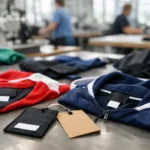
Integrated procurement teams make sure the right fabric, trims, and packaging arrive together for each PO—so you don’t face partial shipments or mismatched goods. If a trim supplier has an issue, local alternates are quickly sourced without production delays.
Production Follow-Up and Quality Control
Shop-floor QC checkpoints, along with in-progress “pilot” production, catch issues before bulk is finished. This means less rework and more predictable timelines for buyers and brands.
Support for Repeat Orders and Long-Term Cooperation
For partners with ongoing needs, Ninghow keeps digital spec archives and prior fit data, smoothing future reorders and reducing sampling cost and confusion. Consistency becomes easier and less stressful over time.
When China Is Still the Right Choice for Your Brand
Not sure whether to double down on China or diversify further? Here’s a straightforward checklist to guide your decision:
- You need more stable product development, even for seasonal or trend-driven programs
- You rely on repeat orders with minimal spec variation
- Your products involve multiple processes or trims (beyond simple sewing only)
- You require robust local support for fast material/trims changes
- You want to cut total sourcing risk, not just chase the lowest labor cost
Conclusion: China’s Apparel Supply Chain in 2026
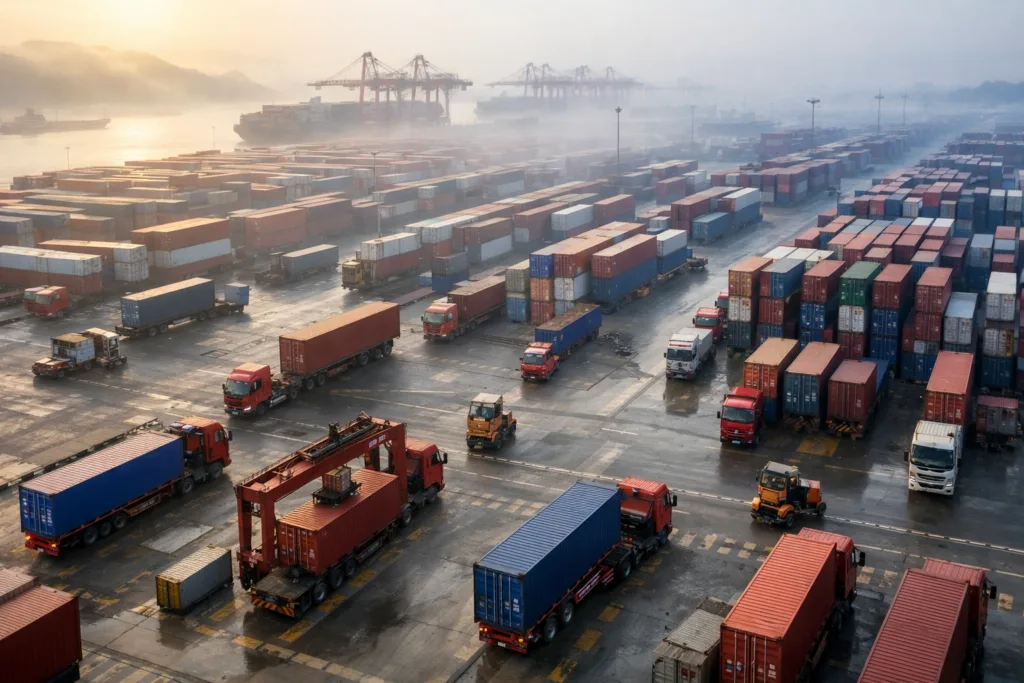
In 2026, apparel manufacturing is not a pure cost race—it is a stability challenge. Brands that prioritize reliability, speed, and supplier flexibility will ride out uncertain times more smoothly than those chasing marginal cost cuts. Why China’s apparel supply chain is still the most stable choice in 2026 comes down to dense local integration, deep experience, and proven execution under stress. The world will keep changing, but the value of a tightly coordinated manufacturing ecosystem will only grow.
Frequently Asked Questions
Is China still reliable for apparel manufacturing in 2026?
Yes. Despite geopolitical disruptions, China’s complete supply chain, strong logistics, and experienced factories make it a reliable choice for quality-focused apparel brands.
How does war affect global apparel supply chains?
Wars disrupt shipping routes, increase insurance costs, and introduce unexpected delays, impacting scheduling for brands everywhere—not just near conflict zones.
Why does shipping disruption matter so much in clothing production?
Fashion is time-sensitive. Delayed shipments risk missing seasons or promotional windows, which can cost brands far more than paying a slightly higher price per unit.
Why are many brands still manufacturing in China?
Because China provides an unmatched end-to-end ecosystem, fast problem-solving, and high predictability—even when global supply chains face external shocks.
Can other countries replace China for apparel manufacturing?
Some volume can shift, but no country offers China’s scale, local support, or integrated supply chain. Many alternatives still depend on China for materials or trims.
What types of garments are still better made in China?
Complex, process-heavy styles, core branded teamwear (like polos and hoodies), and any program with high repeat or spec consistency are a good fit for China in 2026.
Related Reading
- How Real Factories Compare Pros & Cons of Making Apparel in China
- 25 Critical Steps for Picking a Reliable China Clothing Manufacturer
- Choosing Smart: 25-Point Guide to Finding Your Perfect Manufacturer
- 21 Real-World Steps to Deliver Sustainable Clothing Manufacturing
- The 11 Buyer Questions Pros Ask Before Bulk Team Apparel Orders
