
Introduction: Bulk Teamwear Orders—Size Range & Delivery Plan Explained
Organizing bulk teamwear orders for your sports club, corporate team, or school program means more than just picking colors and logos. Getting the size breakdown right, planning how assignments are packed, and ensuring timely delivery is crucial for a smooth rollout. In this guide, you’ll learn exactly how professional teamwear manufacturers break down size ranges, handle distribution friendly packaging, and set up reliable delivery plans that keep teams on track—no matter the roster size or deadline.
Understanding Bulk Teamwear Orders
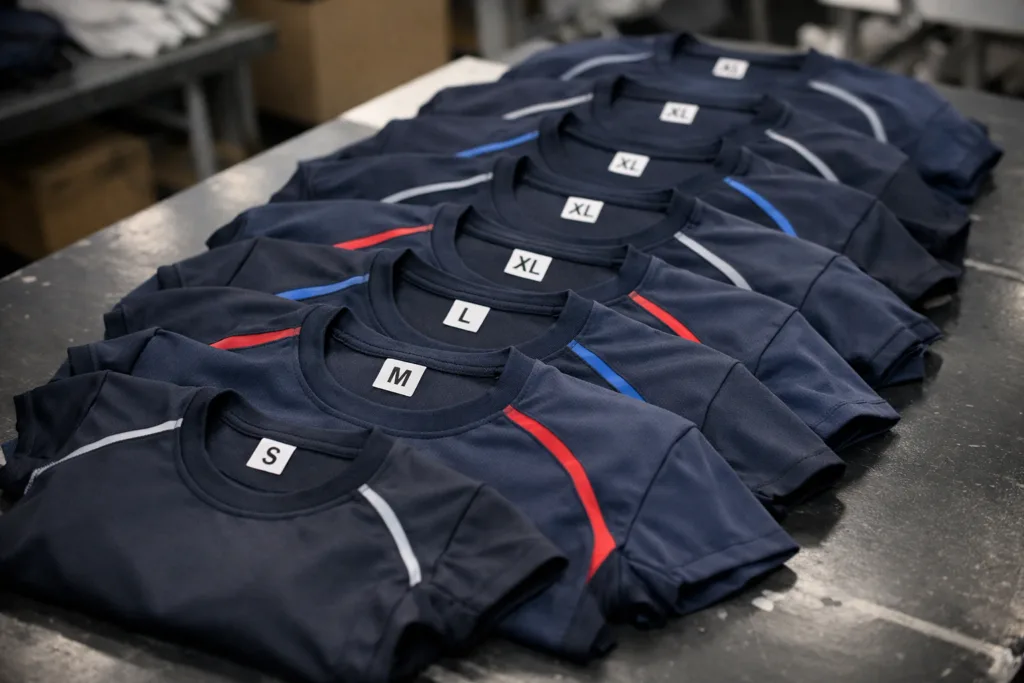
Bulk teamwear orders involve purchasing large quantities of sports uniforms or athletic apparel in various sizes for entire teams or groups. The process requires accurate planning to ensure every team member gets what they need—no missing sizes, awkward fits, or delays. A small mistake at the beginning can lead to further headaches during distribution and game day.
The Importance of Accurate Size Ranges in Bulk Orders
Ordering for a large group amplifies every sizing issue. It’s vital to collect accurate sizing info early—youth, adult, men’s, women’s, and even extended sizes if necessary. Manufacturers often reference consistent garment measurements as discussed in precision tolerance strategies for 2026 to minimize returns due to fit problems. Double-check the size chart with the factory to prevent miscommunication.
Common Teamwear Size Ranges and Breakdowns
Most teams order in adult unisex sizing, but some sports require youth or women’s cuts. A typical breakdown might look like:
- Small (S): 10%
- Medium (M): 25%
- Large (L): 35%
- Extra Large (XL): 20%
- XXL (2XL) and up: 10%
Adjust based on historical team data or prior year’s orders. Don’t guess—collect real sizing info when possible!
How to Collect Size Data from Your Team
Accurate size data is the foundation. Provide a clear size chart (using actual garment measurements), ideally with “how to measure” instructions. Use Google Forms, spreadsheets, or team management apps to collect and organize responses. Avoid gathering sizes verbally—written records minimize mix-ups.
Managing Special Size Requests and Outliers
Some orders will always need a few “outlier” sizes (XS or 3XL+). Talk to your teamwear manufacturer about their ability to mix in non-standard sizes and the impact on cost or lead time. Planning for these at the start avoids last-minute frustrations.
Balancing Men’s, Women’s, and Youth Cuts
Many modern sports teams require a mix of gendered fits and youth-adult sizing. Appoint a coordinator to clarify each person’s required cut and confirm with the manufacturer that each size is available in those options.
Preparing Your Teamwear Size Matrix
A finalized “size matrix” communicates your breakdown clearly. For example, 10 x S, 24 x M, 32 x L, 18 x XL, 6 x 2XL (split by style if needed: 20 x adult men’s, 15 x adult women’s, 15 x youth). This document is the starting point for production planning, as detailed in the 13-Step Guide to Consistent Clothing Manufacturing Quotes.
Customizing Player Names and Numbers: The Impact on Packing & Lead Time
Frequently, teamwear includes personalization—names, numbers, or both. This adds steps and may lengthen production. Clearly document customizations to avoid mix-ups. Share the specific spreadsheet with your teamwear manufacturer to ensure accuracy.
Packaging Methods for Bulk Teamwear Orders
How you request your order to be packed can save (or cost) hours during distribution:
- By style/size (standard): All items of the same size/style are packed together. Fastest for factories, but requires sorting at your end.
- By player/package (custom): Each person’s set is individually packed and labeled. Easier for you, but adds labor cost and time at the factory.
- Some factories offer partial packing (e.g., by team group or department).
Packing and Labeling Tips for Easy Distribution
Request clear, durable labeling. Use both player name and number, or roster group. When possible, include an order sheet inside each master carton, as suggested in the 13 Unmissable Rules for Packaging Compliance in Apparel Shipments. This ensures no item gets misplaced during handout.
The Role of Carton Packing Lists and Master Sheets
Bulk orders should always ship with a master packing list. This document breaks down quantities by size, style, and (if relevant) by player or roster group. Factories like Ninghow recommend cross-checking this against your own order sheet and roster before distribution day.
Proven Distribution Strategies for Teams and Schools
To streamline handout, sort cartons by team, age group, or jersey number order before the event. Use checklists to mark off each item as it’s handed out and immediately address any missing or switched items.
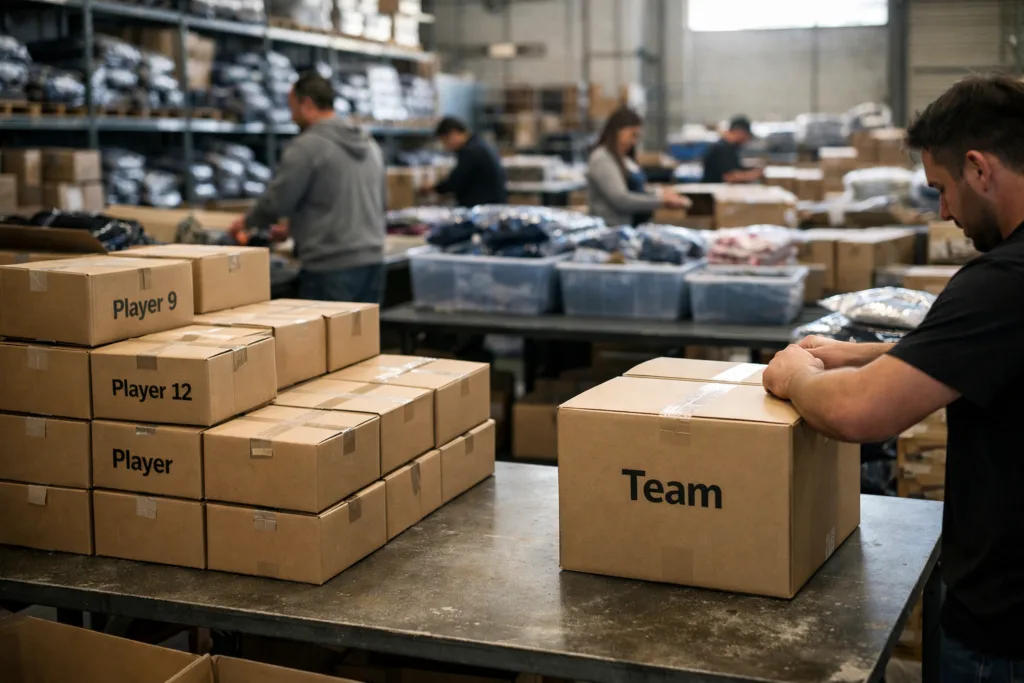
Bulk Teamwear Orders: Size Range & Delivery Plan
Beneath every successful team season lies careful advance planning. In this section, we’ll walk through the entire process step by step:
- Collect player list and secure sizing data
- Confirm all cut/style requirements (men’s, women’s, youth)
- Create a size matrix and submit to manufacturer for quote
- Detail any customizations (names, numbers) in final spreadsheet
- Finalize packaging preferences: by style, by player, or group
- Review all delivery requirements & set timeline
Factory QC for Size and Packing Accuracy
Professional manufacturers conduct inline and final quality control checks to confirm size accuracy, correct logo placement, and packing configuration (individual vs. bulk). As detailed in the Inline QC vs Final Inspection guide, you can request photos or packing list samples before shipment as added reassurance.
Establishing Your Delivery Timeline (Production Lead Times)
Expect bulk lead times of 25–45 days for most teamwear orders, depending on order complexity. Factories will provide a delivery window; make sure this factors in time for labeling, packaging, and personalized items if needed. Confirm with experienced partners who anticipate seasonality (e.g., back-to-school, club launches).
Tracking Order Progress: Best Practices
Request weekly updates from your supplier, including current production status, upcoming QC dates, and packaging milestones. With Ninghow and similar manufacturers, production tracking tools or regular emails minimize surprises and keep you in control. See the recommendations from Weekly Production Updates That Prevent Headaches.
Shipping Methods for Bulk Teamwear Orders
Decide between air, sea, or express, depending on your deadline and budget. Air freight is fast but costly; sea is cost-effective for larger quantities. Build in a buffer for customs clearance, which can be unpredictable. Cross-reference with the 2024 Guide to Air vs Sea vs Express Shipping for Apparel for tailored recommendations.
Customs Documents and Compliance for Large Shipments
Organizing all documents (invoices, packing lists, compliance statements) in advance prevents costly customs delays and guarantees smoother delivery. Refer to the Essential Customs Documents for Faster Apparel Shipping for a comprehensive checklist.
Receiving and Checking Your Teamwear Shipment
Upon arrival, confirm that all cartons and packages match the master packing list. Inspect a sample of each size and style for accuracy and quality before full distribution. Report discrepancies instantly to your manufacturer.
Managing Returns, Replacements, and Size Swaps
While rare with careful planning, issues can happen. Maintain clear communication with your manufacturer for any replacements, especially if errors are in size breakdown or packaging. Document everything for seamless customer service.
Key Takeaways for Bulk Teamwear Orders
- Proactive size data collection = fewer fit problems
- Packaging configuration impacts handout speed
- Realistic delivery timelines allow for customization and QC
- Open communication with your teamwear manufacturer is essential for a smooth project
Conclusion: Consistent Results for Every Teamwear Season

Ordering bulk teamwear doesn’t have to be overwhelming. With a clear size range and delivery plan, your group avoids last-minute surprises and achieves unity on game day. Prioritize accurate data collection, deliberate packing strategies, open supplier communication, and flexible timelines. The result: every player is outfitted comfortably, every set is easy to distribute, and your season launches without unnecessary delays.
Frequently Asked Questions
What is the best way to gather size information for a bulk teamwear order?
Use a centralized digital form with clear measurement instructions and standardized size charts. Avoid verbal collection to minimize errors.
How far in advance should I place my bulk teamwear order to ensure timely delivery?
Place your order at least 6–8 weeks before your deadline, especially if personalization or international shipping is involved.
Can I mix men’s, women’s, and youth sizes in one bulk teamwear order?
Yes, but specify each style and size in your ordering spreadsheet to avoid confusion and ensure the factory can fulfill all requirements.
What packaging option is quickest for team distribution?
Request “by player” or “by group” individual packing. It saves time during handout, but may increase production costs and lead time.
How do I handle late changes in team roster or sizing after placing my order?
Notify your manufacturer immediately. Late changes can disrupt production and may incur extra fees or delay shipment, but small last-minute swaps are sometimes possible if caught early.
What should I check when receiving my bulk teamwear shipment?
Compare actual received items against your final order sheet and factory packing list. Inspect a sample of each size/style for fit, labeling, and print accuracy before full distribution.
