





Have you ever thought about why viscose fabric is so liked by designers and those who care about the planet? This material is amazing in the fashion world because of its benefits and uses. It feels like silk, breathes well, and keeps you dry, offering both comfort and style easily. Benefits and Uses of Viscose Fabric.
Viscose is perfect for making a wide range of clothes like dresses, suits, and lingerie. It holds onto bright colors well, even after you wash it many times. It does not shrink with a bit of heat and mixes nicely with materials like polyester. It’s perfect for hot weather and sports clothes because it’s so light and airy.
However, viscose isn’t without its problems. It can shrink if washed in very hot water and wrinkles easily. Its ability to wick moisture can also cause stains. Also, it often needs dry cleaning, which concerns some people because of the environmental impact. Yet, viscose is still a top choice for those looking for environment-friendly fabric options.
Key Takeaways
- Viscose fabric is versatile and commonly used in a variety of apparel.
- It offers a luxurious feel similar to silk but at a more affordable price.
- The fabric is breathable and moisture-wicking, making it comfortable for daily wear.
- Viscose blends well with other fibers, allowing for diverse fashion applications.
- Environmental concerns arise due to the chemicals used in the fabric’s manufacturing process.
Introduction to Viscose Fabric
Viscose fabric is important in textiles because of its versatility and widespread use. To truly value it, we must explore its nature and history.
What is Viscose Fabric?
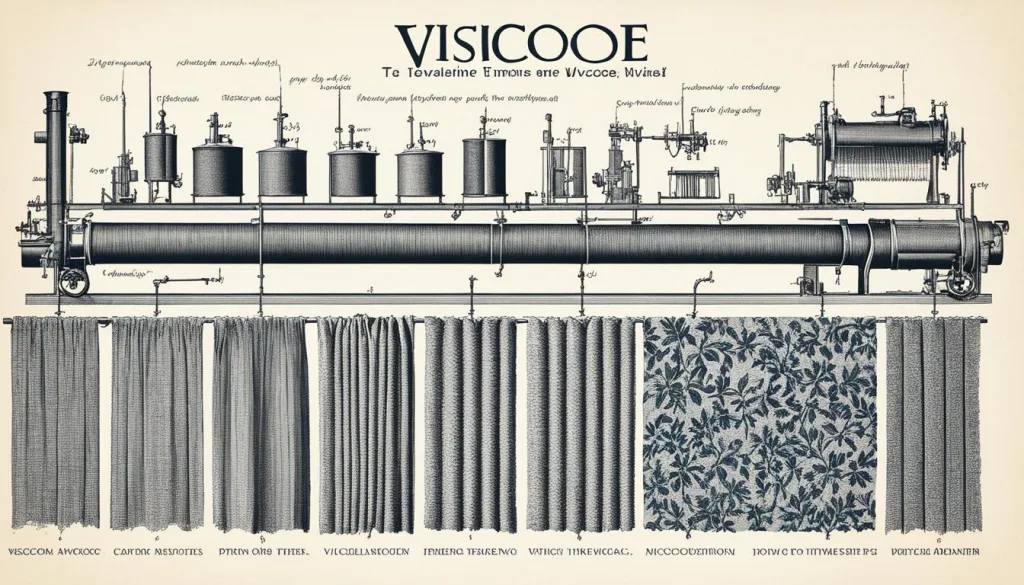
Viscose is a type of rayon known for being breathable, allergy-friendly, and cool. It stays bright even after many washes because it’s easy to dye. The making of viscose starts with turning wood pulp into fibers, using chemicals. This creates a fabric that’s soft, smooth, and hangs nicely.
History of Viscose
In 1883, Edward John Bevan and Charles Frederick Cross made the first viscose rayon. Their invention is a big deal in textile history. The first large-scale production began in 1905 in Britain. This marked viscose’s start in many products.
- Viscose is used in making blouses, shirts, sportswear, and scarves.
- It’s also found in feminine hygiene items and home textiles.
The making of viscose hurts the environment due to harmful chemicals. These chemicals pollute the air and water. Lots of water is also needed for the trees and in making the fabric. Still, viscose is biodegradable, which is better for the planet if done right.
Knowing about viscose and its history highlights its role in fashion and textiles. Even with environmental concerns, progress in sustainable practices offers hope.
Viscose Fabric Properties
Viscose fabric is getting more popular in fashion and textiles. Knowing its special traits explains why it’s so chosen. It’s perfect for a range of uses.
Smooth Texture
Viscose fabric stands out for its smooth touch. This feature makes it perfect for luxury clothes. The fabric’s light shine and slight see-through quality add to its beauty.
When mixed with other fibers, viscose becomes even smoother. This blend is great for daily outfits and high-end fashion.
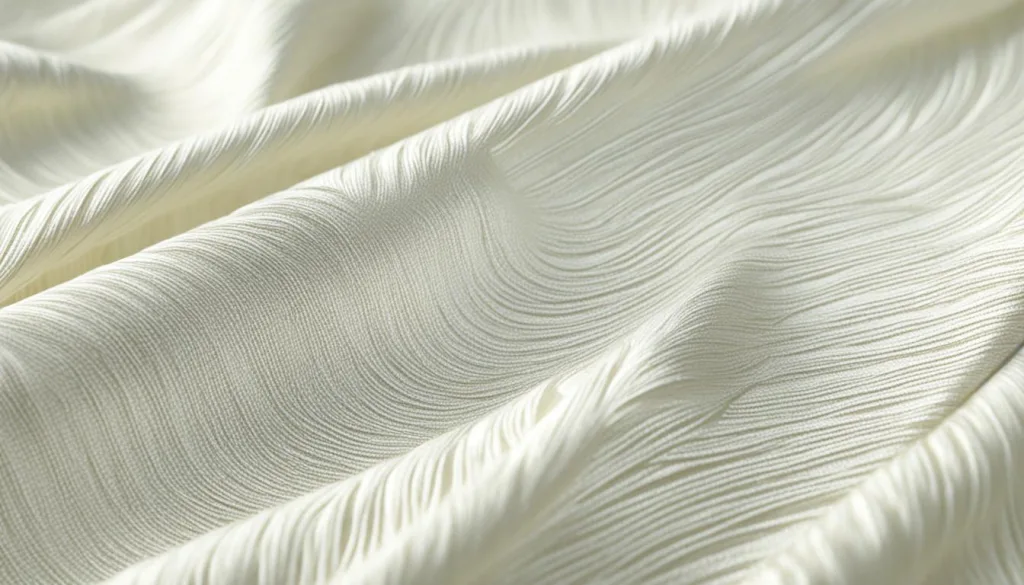
Comfort and Breathability
People love viscose for its comfort. It’s more breathable than cotton, making it perfect for hot weather wear. Viscose clothing stays cool and comfy.
Its colors stay bright thanks to special dyeing methods. This makes viscose clothes look great and last longer. The airiness of viscose keeps you cool, ideal for nightwear and casual clothes.
Remember, viscose is strong when dry but can weaken if wet. Avoid water, heat, or UV light to keep viscose clothes in good shape.
To sum up, viscose is loved for its smoothness and comfort. That’s why both designers and shoppers prefer it.
Comprehensive Insight into the Benefits and Uses of Viscose Fabric
Viscose fabric is widely used in fashion for many good reasons. One of its main benefits of viscose in fashion is how well it drapes. This makes clothes look fluid and elegant. The fabric also keeps its color very well, keeping clothes looking bright and new.
The fabric’s versatility is a big plus. It’s used in everything from light summer dresses to sturdy outerwear. Designers love how adaptable it is, allowing them to be really creative. This same versatility also applies to uses of viscose fabric in the home, like in soft bedsheets and stylish curtains.
Another big plus is that viscose is cost-effective. It’s cheaper to produce than many other fibers. Yet, it remains a high-quality option. Viscose blends well with other materials like cotton or linen, keeping clothes comfortable and breathable.
Additionally, viscose is great for people with sensitive skin thanks to its hypoallergenic nature. It feels luxurious like silk but is more affordable and easier to look after.
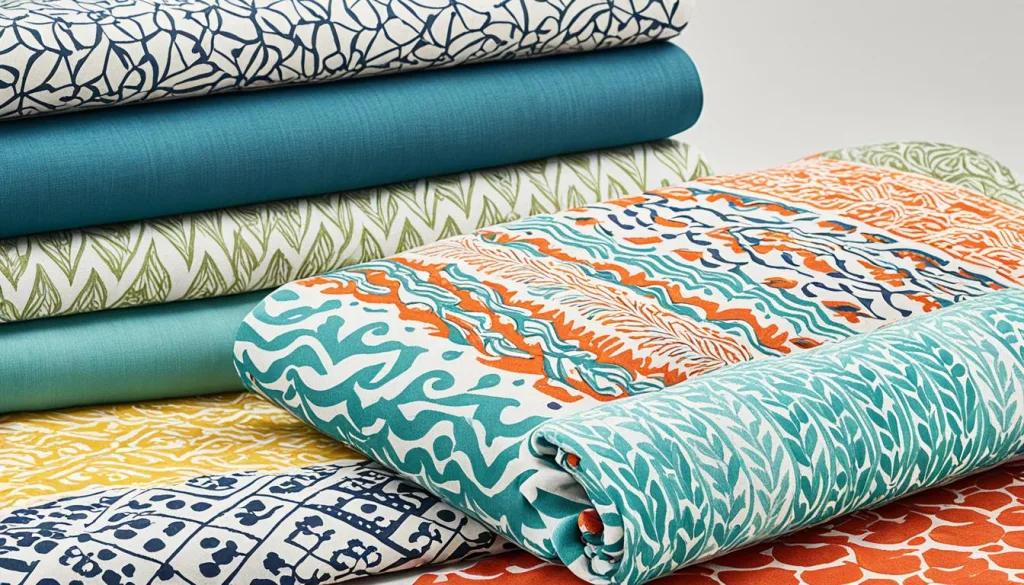
Here’s a quick look at some important uses of viscose fabric across different industries:
- Apparel: Dresses, blouses, trousers, and jackets.
- Home Textiles: Bed linens, curtains, and upholstery.
- Industrial: Wipes, medical textiles, and filtration products.
Viscose fabric’s application and versatility of viscose fabric keep it popular in fashion and functional textiles. Brands like Zara, H&M, and Mango use it to make clothes that are stylish yet comfortable.
Viscose vs Cotton
Choosing the right fabric is important. Viscose and cotton are widely used for different reasons. Understanding their feel, wear, durability, and how to take care of them helps people make better choices.
Comparison of Feel and Wear
Viscose feels silky and drapes elegantly. It’s great for fancy clothes. Cotton is all about comfort. It’s soft, breathable, and perfect for everyday outfits.
Viscose is chosen for luxury. Cotton is loved for its casual feel.
Durability and Maintenance
Viscose looks delicate but isn’t as tough as cotton. It can get damaged easily, especially if it gets wet. Cotton, however, is strong. It can handle lots of washes and wear.
Cotton is easy to maintain. Viscose needs more care to last longer.
| Feature | Viscose | Cotton |
|---|---|---|
| Feel | Silky and smooth | Soft and natural |
| Wear | Luxurious drape | Comfortable and breathable |
| Durability | Prone to wear and tear, especially when wet | Robust and long-lasting |
| Maintenance | Requires gentle handling and specific care | Easy to care for, withstands frequent washing |
Viscose Clothing and Fashion
In the fashion industry, viscose clothing trends are getting more popular. Designers love this fabric for how well it can change shape and flow. Viscose in modern apparel is everywhere, from everyday clothes to high-end fashion.
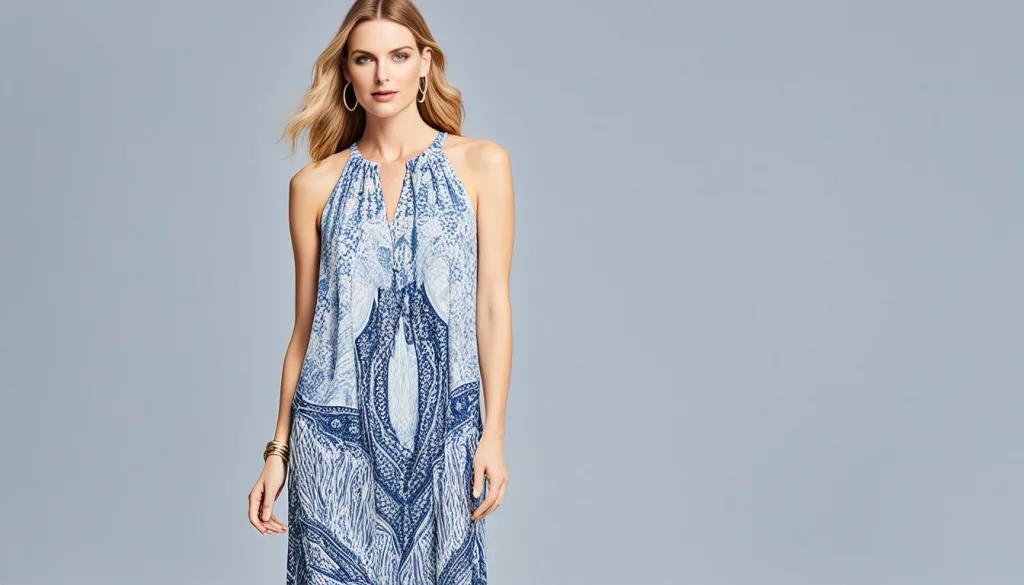
Styling viscose garments shows off how the fabric works with many looks and accessories. Stores like Zara and H&M use viscose a lot. They make beautiful dresses, light tops, and neat pants with it. This fabric feels soft and keeps you cool, which is why both designers and shoppers like it.
Viscose is also good for the planet, which is important today. Its eco-friendly qualities meet the need for making clothes responsibly. This makes viscose key in creating new fashion industry trends.
Viscose Sustainability and Environmental Impact
The need for sustainable fashion has made viscose popular for its green benefits. This part looks into viscose’s sustainability, covering its making and environmental effects.
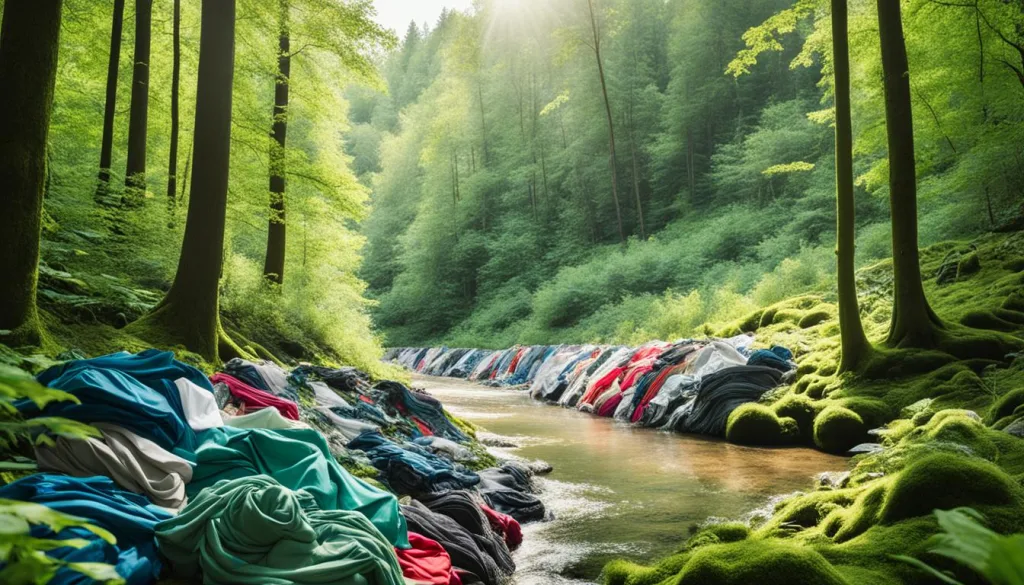
Sustainable Production Methods
Viscose makers are now using greener ways to reduce environmental harm. They’re shifting to processes that cut waste and pollution. They also get raw materials from forests that are managed responsibly.
- Lenzing AG and its TENCEL™ fibers lead in green viscose production. They use renewable trees and recycle water and chemicals well.
- “Ecovero™ by Lenzing AG” makes sure their wood is from forests that care for the environment. This makes viscose less harmful and supports eco-friendly fabric choices.
- Current studies are enhancing viscose’s biodegradable features, making it compete with other green fabrics.
Environmental Benefits of Viscose
More people are choosing green fabrics, and viscose’s advantages stand out. Its biodegradability cuts down waste. It uses less non-renewable resources, making it a leader in sustainable textiles.
- Viscose doesn’t need as much fossil fuel as polyester, meaning fewer carbon emissions.
- Green techniques such as using enzymes and low-energy processes increase viscose’s eco benefits.
- Its qualities like being highly absorbent and comfy fit well with sustainable fashion and home goods.
The viscose industry continues to innovate in eco-friendly production. It’s moving towards more sustainable choices. These efforts improve the environment while keeping high standards in material quality and usefulness.
Conclusion
As we finish our journey learning about viscose fabric, we find its charm in many areas. From its soft feel to its role in eco-friendly fashion, it stands out. Viscose is loved for its silky texture, comfort, and how well it breathes. This makes it a top pick for both everyday clothes and luxury fashion. Its ability to be shaped into various garments also boosts its fame in the fashion industry.
Viscose is also stepping up in the green fashion movement. The way it’s made now harms the environment less, leading to a greener tomorrow for this fabric. With fashion makers constantly finding new, green ways to work, viscose’s horizon looks bright.
In essence, viscose brings together utility, beauty, and care for the earth in a way not many fabrics do. As folks lean more towards green choices, the call for fabrics like viscose will only rise. The role of viscose in sustainable fashion is not just promising—it’s critical for a planet-friendly future. Remember, when you pick viscose, you’re making a statement for fashion and for the earth.
FAQ
What is Viscose Fabric?
Viscose fabric comes from cellulose fibers found in wood pulp. It feels like silk and has a smooth touch. You’ll see it in many textile products because of its versatility.
What are the benefits and uses of viscose fabric?
People love viscose for how soft and breathable it is. It drapes beautifully, too. Because of this, it’s great for both everyday clothes and luxury fashion pieces. It’s a favorite in the fashion world.
How does the viscose production process work?
To make viscose, we first get cellulose from wood. Then, this cellulose is dissolved, treated, and turned into fibers. Using sustainable practices can make this process more eco-friendly.
How does viscose compare to cotton?
Viscose feels more like silk and is smoother than cotton. But cotton is more breathable and durable. Viscose offers a luxurious feel, while cotton is better for everyday use.
Why is viscose considered sustainable?
Using sustainable methods to make viscose reduces its environmental impact. Innovations in eco-friendly production also boost its sustainability. This makes it great for those who care about the planet.
What are some common uses of viscose fabric in clothing?
Viscose is everywhere in fashion because it’s soft and breathable. You’ll find it in dresses, blouses, and even in sportswear. It’s beloved for holding colors and prints well, making clothes look vibrant.
What are the properties of viscose blended fabrics?
Viscose mixes well with other fibers, enhancing their features. A mix of viscose and cotton, for example, makes the fabric softer and better at draping. These blends get the best traits of both fibers.
What impact does viscose fabric have on the environment?
The impact of viscose on the environment depends on how it’s made. Eco-friendly methods can reduce harmful effects. Choosing sustainably made viscose can help our planet.
What are the unique physical properties of viscose fabric?
Viscose stands out for its smoothness, softness, and how well it drapes. It’s also airy and feels great against the skin. Plus, it’s awesome for vibrant fashion pieces because of how well it keeps colors.
How important is viscose in the fashion industry?
Viscose is a big deal in fashion. Its flexibility, good price, and beauty make it a top choice. Designers especially love it for creating both fancy and everyday clothes.
