


Wholesale beach shorts succeed or fail at the margin on 3 decisions: how the fabric behaves when wet, how consistently the garment is constructed, and whether a supplier can reproduce the approved specification across repeat orders. Retail buyers should compare swim trunks, board shorts and hybrid styles by use case, fabric composition, lining, waistband and pocket construction. Before placing a bulk order, retain an approved sample and ask the supplier to explain sizing tolerances, customization options, production timing and quality-control checkpoints. A practical starting point is to separate product evaluation from commercial terms; a bulk beach shorts sourcing guide can address the latter in more depth.
Wholesale Beach Shorts: What Retail Buyers Actually Need to Decide
Buying beach shorts in bulk is an assortment and risk decision, not simply a unit-price comparison. First define the customer use case: casual beachwear, swimming, resort travel, or active water use. Then set a minimum specification for fit, fabric, lining, waistband, pockets, closures and branding. A lower price may be acceptable for a lightweight fashion style, but it becomes a poor trade-off if the garment twists when wet, the waistband loses shape, or size grading varies between production runs.
Before comparing suppliers, write down 4 items:
- Style mix: Decide whether the range needs shorter swim trunks, longer board shorts, or hybrid designs that can move between water and casual wear.
- Material requirement: Specify fibre composition, fabric weight or hand feel where relevant, stretch needs, lining fabric and the finish expected after washing.
- Construction standard: Define acceptable stitching, seam finishing, drawcord security, pocket reinforcement, waistband recovery and print or label placement.
- Approval process: State which sample, measurement chart and artwork version will be used as the reference for production.
These decisions make supplier conversations more precise. They also help separate a genuine specification issue from a preference that can be changed during development. Claims such as quick-dry, colorfastness or UPF should be treated as requirements to clarify and verify against the relevant fabric, finish and test method, rather than as automatic properties of every beach short.
Beach Short Styles Compared: Swim Trunks, Board Shorts and Hybrids
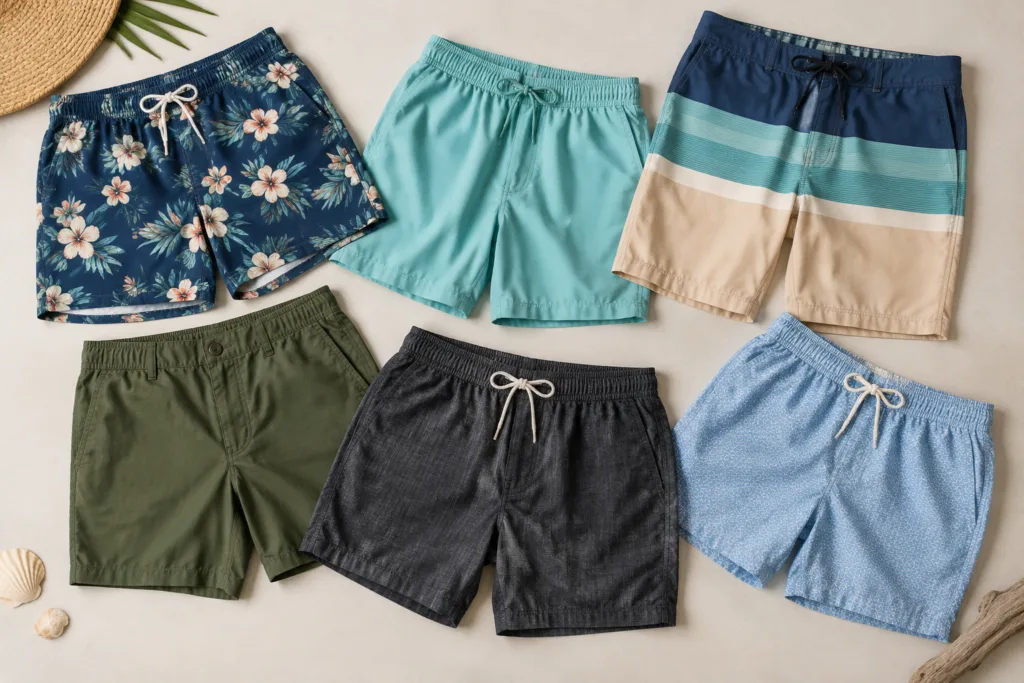
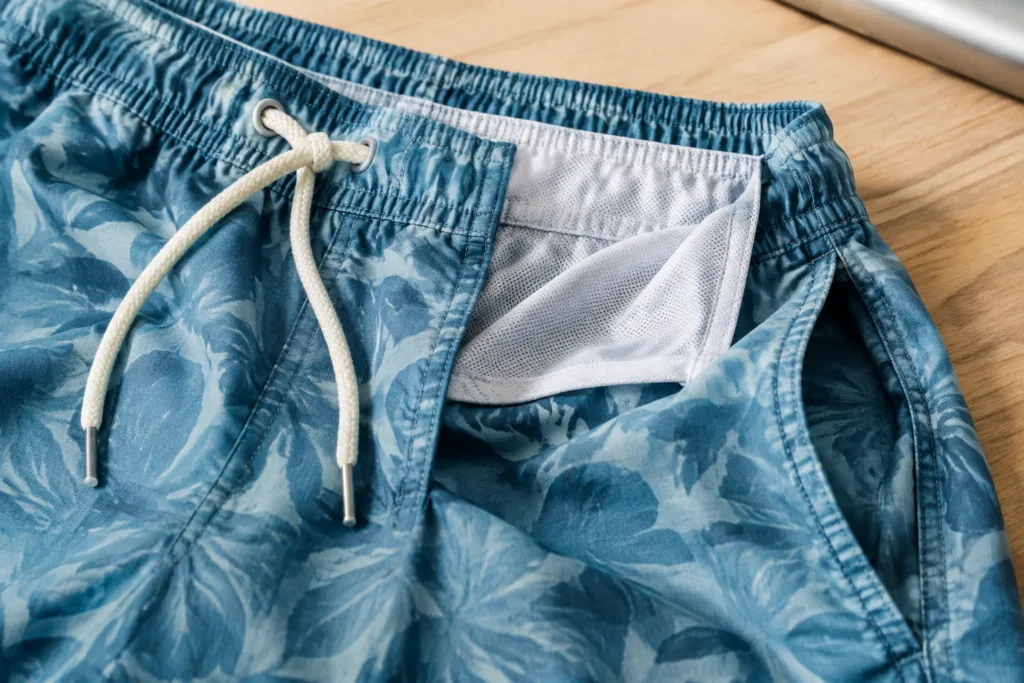
The names overlap in retail use, so compare the actual construction instead of relying on the category label. Swim trunks commonly use a shorter or medium length and may include an inner lining, elastic waistband and drawcord. Board shorts often use a longer leg, a more structured waistband or front closure, and utility pockets. Hybrid beach shorts combine selected features from both categories; the exact balance depends on the pattern and intended use.
| Style | Typical length | Lining | Closure/pockets | Best use case | Retail fit |
|---|---|---|---|---|---|
| Swim trunks | Short to medium | Often lined; confirm construction | Elastic waistband and drawcord are common; pocket layout varies | Swimming and general beachwear | Useful for buyers prioritizing easy movement and a familiar swim silhouette |
| Board shorts | Medium to longer | May be unlined or selectively lined | Structured closure and utility pocket options are common | Water activities and customers wanting more coverage | Useful where function, coverage and storage matter |
| Hybrid beach shorts | Short to medium or longer | Varies by pattern and intended use | May combine drawcord, structured closure and casual pockets | Beach-to-casual wear | Useful for assortments serving multiple activities with fewer silhouettes |
Length affects coverage, movement and the visual proportion of the garment. Lining affects privacy, comfort and drying behavior, but it can also add bulk or change the hand feel. Buyers comparing lined versus unlined beach shorts should inspect the lining attachment, leg opening, seam placement and drying expectations rather than treating lining as an automatic quality upgrade.
Pockets also require a use-case decision. A pocket intended for casual storage may need a different opening, reinforcement or closure from a pocket designed for light activity. Ask whether pocket bags are made from the same fabric or a separate lining fabric, and check that they do not distort the side seam or restrict movement. For a private-label range, confirm that the selected closure, drawcord, eyelets, labels and trims are included in the approved specification.
Fabric Selection: Polyester, Nylon and Blends for Beachwear
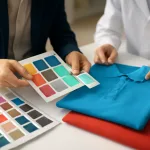
Polyester, nylon and blends can all be used for beachwear, but fibre content alone does not determine the finished product. Knit or woven structure, fabric weight, stretch content, dyeing and finishing affect drying behavior, color retention, abrasion resistance, drape and comfort. A buyer comparing fabric options should request the exact composition and construction, then evaluate the fabric in the finished garment rather than from a swatch alone. The beach shorts fabric guide can support that comparison, but the purchase specification should still identify the selected material clearly.
Wet handling is especially important. Check whether the fabric becomes transparent, heavy, stiff or less stable when wet. Review the waistband and seam behavior after soaking and drying, and ask how the supplier controls shade consistency between the shell fabric, lining, trims and printed elements. If a supplier presents quick-dry, colorfastness or UV-related performance as a selling point, ask what exact fabric version, care conditions and evidence apply. Do not assume that a performance claim transfers to a different weight, color, blend or finishing process.
Quality Checks Before Buying in Bulk
A pre-production sample should be checked against the measurement chart, artwork, fabric specification and construction details before bulk approval. Inspect the following:
- Compare key measurements across sizes, including waistband, rise, inseam, leg opening and pocket placement.
- Examine seam density, skipped stitches, loose threads, seam allowance and areas exposed to pulling or repeated movement.
- Pull the drawcord and waistband through normal use; check that the cord exits are secure and the waistband returns without uncomfortable twisting.
- Inspect lining coverage, attachment and edge finishing, especially around openings and high-friction areas.
- Review print, embroidery, labels and trims for placement, adhesion, alignment and compatibility with the care instructions.
- Use the approved sample as the physical reference when checking delivered cartons, and record deviations by size, color and production lot.
Sizing and Fit Consistency in Bulk Orders
Size consistency depends on a controlled measurement chart, clear grading rules and a production reference that remains available after approval. Do not assess only 1 sample size. Review the full size range and identify which points matter most to the wearer, such as waistband, rise, inseam, leg opening and pocket position.
Ask the supplier to state how measurements are taken and which tolerances apply to each point. The tolerance should be agreed before production, because a waistband measurement and a pocket-position measurement do not affect fit in the same way. Record the approved sample measurements, fabric composition, trim details and artwork version in 1 specification file. Keep the sample protected from unnecessary wear so it remains a practical comparison reference.
When goods arrive, inspect more than 1 size and color. Compare measurements across cartons, check that labels match the actual garment size, and look for repeated differences between production lots. A small variation may be acceptable under the agreed specification, while a systematic change in grading, rise or leg opening requires supplier review before the goods enter normal inventory.
How to Evaluate a Beach Shorts Supplier
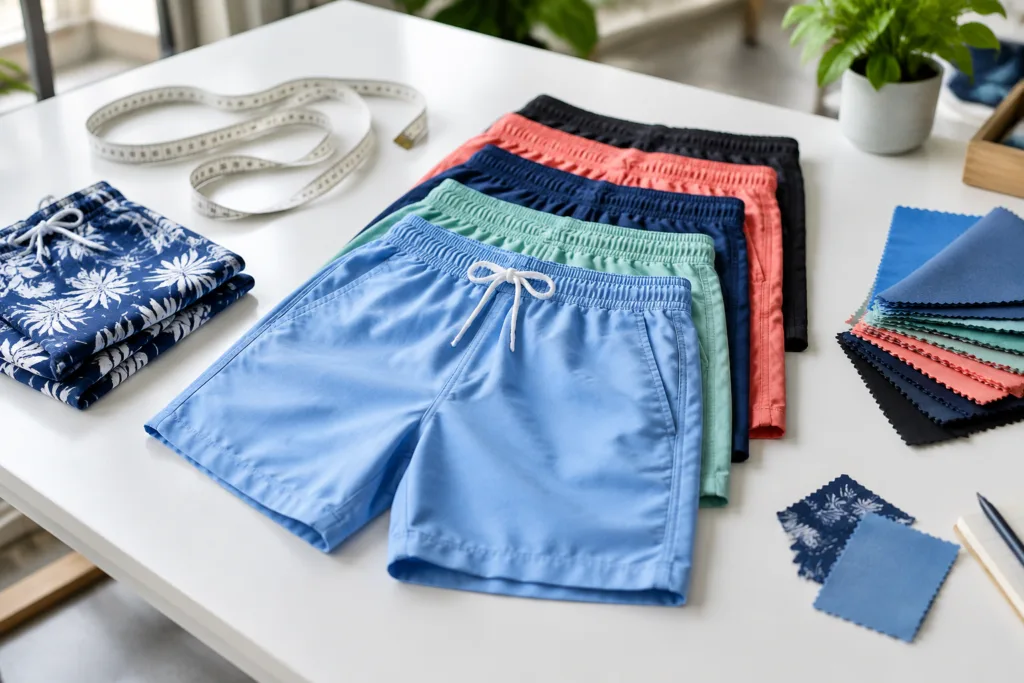
A suitable beach shorts supplier should be able to discuss the product in specifications rather than broad quality language. Ask for a clear description of the fabric construction, lining, waistband, closures, pocket details, decoration method and care instructions. The supplier should also identify which details are fixed and which can change during development.
Use the following checklist to keep supplier comparisons evidence-based:
| Criterion | Evidence to request | Decision question |
|---|---|---|
| Specification handling | Written confirmation of fabric composition, measurements, construction, trims and artwork | Does the supplier understand the complete product brief? |
| Sample approval | Sample, measurement chart and approval record that identify the version released for production | Is there a clear physical and written reference before bulk work begins? |
| Change control | Documented record of changes to fabric, color, trims, labels, decoration or measurements | Will changes be acknowledged before they affect production? |
| Quality checks | Description of inspection stages and records for measurements, defects and appearance | Can the supplier explain what is checked and how deviations are handled? |
| Reorder comparison | Process for comparing later samples or production lots with the retained approved reference | Can repeat orders be reviewed against the same specification? |
Quality language should be specific enough to audit. A supplier may describe an internal apparel quality control system, but the buyer still needs to ask what is checked, when it is checked and what happens when a result does not match the approved specification. Claims about certifications or restricted substances should likewise be connected to the exact product, material, market requirement and current supporting documents; a general overview of textile certifications and standards can help buyers frame those questions.
Customization, Sampling and Production Planning
Private-label beach shorts can involve woven or printed labels, screen or transfer decoration, embroidery where suitable, custom artwork, branded drawcords and selected trims. The appropriate method depends on the fabric surface, artwork detail, placement, care requirements and intended appearance. Ask for decoration artwork in the required format and approve its position, size, color and finish on the actual garment rather than on a flat mock-up alone.
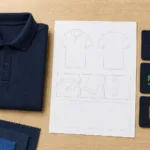
Sampling should answer product questions before bulk production begins. Request a sample that reflects the proposed shell fabric, lining, waistband, closure, pocket construction, labels and decoration. Then test the sample through the intended inspection process: measure it, examine seams, review the garment wet and dry where relevant, check the care label and compare the result with the written specification. If changes are needed, update the specification and retain the latest approved sample.
Production planning should be discussed early, but buyers should request supplier-specific information instead of relying on generic calendar assumptions. Clarify the stages for fabric and trim approval, sample review, artwork approval, production release, inspection and shipping coordination. Ask which events could change the schedule and how those changes will be communicated. Any promised production timing should be written against the approved specification and order scope.
Buying Beach Shorts in Bulk: Assortment and Inventory Considerations
Plan the assortment around customer use cases before dividing quantities. A retailer serving casual resort customers may need a different balance of lined swim trunks, longer board shorts and hybrid designs than a seller focused on active water use. Start with the styles that best match the target customer, then add color and size options only where the supplier can reproduce the specification consistently.
Use early sales and reorder evidence to refine the mix rather than treating every style, color and size as equally important. Record sell-through by style, size, color and use case, and note returns or product complaints that may indicate fit or construction issues. When a style is reordered, compare the new sample with the retained reference before confirming production. Commercial terms, including minimum order and pricing questions, should be agreed separately from the product-quality approval process.
Before committing, prepare a brief covering the product type, intended use, quantity, material direction, decoration and sampling requirements, then Request a Quote with those details.
What is the difference between wholesale swim trunks and board shorts?
Swim trunks are commonly shorter or medium length and may use an elastic waistband, drawcord and inner lining. Board shorts are often longer and may use a structured closure, utility pockets or a different waistband construction. Confirm the actual pattern and specification because category names vary.
Which fabric is best for beach shorts sold in bulk?
There is no single best fabric for every assortment. Polyester, nylon and blends can suit different designs, but fabric structure, weight, stretch, finishing and construction also affect wet handling, drying, comfort and durability. Approve the exact fabric in the finished garment.
How do I check quality before placing a bulk beach shorts order?
Measure the sample, inspect seams and stitching, test the waistband and drawcord, review lining and pockets, check decoration and compare the garment with the written specification. Use the approved sample as the reference for delivered goods.
Can I customize wholesale beach shorts with my own brand label?
Customization may include labels, artwork, trims, drawcords and other specified details, depending on the design and supplier process. Confirm the decoration method, placement, artwork, care requirements and approval sample before production.
Why is a pre-production sample important for bulk orders?
It gives the buyer a physical reference for fit, fabric, construction, decoration and measurements before the full order is made. Any correction can then be documented in the specification instead of being discovered across finished inventory.
How do I handle size consistency when reordering beach shorts?
Keep the approved sample and measurement chart, define measurement methods and tolerances, and compare samples and delivered garments across sizes, colors and production lots. Record any recurring deviation and resolve it before approving the reorder.
Related guidance: apparel quality control system.