




Effective apparel manufacturing content begins before the first paragraph is written. A useful article must identify the garment, buyer, commercial decision, and production risk it will address. For Ninghow, that means connecting search intent with practical guidance about fabric, fit, customization, sampling, MOQ, lead time, quality control, and supplier evaluation. This planning guide explains how to turn a broad apparel manufacturing keyword into a focused, manufacturer-informed article that helps clothing brands, sourcing teams, and apparel buyers make better decisions.
If the confirmed topic involves fleece products, branded teamwear, or a new seasonal collection, custom hoodie manufacturing support can be a useful example of how a broad production need becomes a specific development brief. A manufacturer can help assess fabric weight, construction, logo application, private labels, sampling, low MOQ possibilities, packaging, and bulk production planning before the buyer commits to a final specification.
Clarify the Garment, Buyer, and Business Problem First
The first planning decision is not the keyword. It is the product and the buyer situation behind the keyword. “Apparel manufacturing” may attract clothing startups, established brands, sports teams, uniform buyers, distributors, retailers, or product developers, but each audience needs different information and faces different production risks.
Start by naming the garment category as precisely as possible. A T-shirt, polo shirt, hoodie, golf top, performance short, fleece jacket, and school uniform may all use apparel manufacturing services, yet their fabrics, patterns, trims, decoration methods, and quality checkpoints differ. A strong brief should also state whether the buyer wants cut-and-sew production, private label development, OEM or ODM support, customization of an existing style, or a complete product developed from an idea.
- Garment: Define the product, intended season, expected use, and construction complexity.
- Buyer: Identify whether the reader is a brand founder, sourcing manager, team buyer, retailer, club, school, or distributor.
- Business problem: Clarify whether the reader is comparing suppliers, reducing production risk, preparing a first order, or improving an existing product.
- Decision: State what the reader should be able to choose or prepare after reading the article.
For example, “How to choose a manufacturer for a custom team hoodie” is more useful than a general article about clothing production. The narrower version can discuss fleece GSM, rib recovery, embroidery placement, size grading, team quantities, name personalization, repeat orders, and delivery timing.
Key takeaway: A defined garment and buyer problem create a more useful article than a broad keyword used without a clear production scenario.
Define Search Intent and the Reader’s Next Decision

Informational search intent does not mean the article should remain abstract. It means the reader is looking for understanding before taking action. The planning brief should identify the question beneath the search phrase and the practical decision that follows it.
A reader searching for apparel manufacturing may want to understand how production works, what information to send to a factory, whether a supplier can handle a small launch, or how to compare production quotations. These are related questions, but they should not be mixed into an unfocused article. Choose one primary decision and use the other topics as supporting sections.
| Reader situation | Likely information need | Useful article outcome |
|---|---|---|
| New brand preparing a first product | Fabric, tech pack, sampling, MOQ, and cost drivers | A realistic pre-production checklist |
| Sourcing team comparing factories | Capabilities, communication, QC, lead time, and scalability | A supplier evaluation framework |
| Team or organization ordering garments | Decoration, sizing, quantity splits, and delivery planning | A bulk order preparation guide |
| Existing brand improving a style | Fit corrections, material alternatives, and consistency | A product development and revision plan |
Search intent should also influence the call to action. An early-stage reader may need a clear inquiry checklist, while an experienced buyer may need a production risk matrix. The article should help both readers understand what information a manufacturer needs before a reliable quotation can be prepared.
Explain Apparel Manufacturing in Plain Language
Apparel manufacturing is the coordinated process of turning a garment concept or specification into finished clothing. It normally includes product review, fabric and trim sourcing, pattern development, sample making, fit revisions, approval, material preparation, cutting, sewing, decoration, finishing, inspection, packing, and shipment preparation.
The exact workflow varies by garment and factory capability. A basic stock-inspired T-shirt may require fewer development decisions than a technical jacket with bonded seams, waterproof components, multiple panels, and specialized hardware. The article should explain this difference without assuming that every reader knows manufacturing terminology.
It is useful to distinguish between OEM, ODM, private label, and custom cut-and-sew work. OEM production follows the buyer’s specifications, while ODM work may begin from a manufacturer’s existing design direction that is adapted to the buyer’s brand. Private label production typically adds brand labels, hangtags, packaging, and other identity elements. Cut-and-sew manufacturing means panels are cut from fabric and assembled according to a selected pattern rather than simply decorated after purchase.
We recommend explaining production terms through decisions rather than definitions alone. For instance, GSM is not automatically a quality score; it describes fabric weight and can influence opacity, warmth, drape, cost, and perceived durability. A higher GSM may suit a heavyweight hoodie but be uncomfortable for a hot-weather sports top.
Match Fabric, GSM, Fit, and Construction to the Use Case
Material selection should begin with intended use, not with the lowest quoted fabric price. Buyers should define whether the garment needs softness, breathability, stretch, abrasion resistance, moisture management, warmth, shape retention, or easy care. Fiber composition, yarn structure, knit or woven construction, finishing, and fabric weight all affect the final result.
For a T-shirt, cotton, polyester, viscose, or blended fabrics may create very different hand feels and performance characteristics. A sportswear buyer may prioritize moisture movement and stretch, while a lifestyle brand may place greater value on natural hand feel and drape. For hoodies and sweatshirts, fleece structure, brushed or unbrushed interior, rib quality, shrinkage, and GSM affect warmth and recovery.
| Factor | What it influences | What the buyer should confirm |
|---|---|---|
| Fiber composition | Hand feel, care, performance, and appearance | Exact percentage and whether the composition is consistent across production |
| GSM | Weight, opacity, warmth, drape, and cost | Target range and acceptable tolerance for the approved fabric |
| Stretch and recovery | Comfort, mobility, and shape retention | Stretch direction, recovery expectations, and test method |
| Construction | Durability, breathability, and garment appearance | Seam type, stitch density, panel layout, and reinforcement points |
| Color and finish | Brand consistency, hand feel, and care performance | Color standard, lab dip approval, finish, and wash expectations |
Fit requires the same level of attention. A measurement chart should identify key points such as chest, body length, shoulder, sleeve length, waist, rise, and leg opening where relevant. The buyer should also define the intended fit: regular, relaxed, oversized, slim, athletic, or gender-specific. Pattern grading must preserve the design proportions across sizes rather than simply adding equal measurements.
At Ninghow, we treat the approved sample as a reference for both appearance and construction. A measurement sheet, tolerance range, fabric specification, artwork placement, and approved trim list reduce ambiguity when the order moves from development to bulk production. Buyers can also use information to include in a clothing factory inquiry to prepare a clearer first conversation with a manufacturer.
Plan Customization Before Sampling
Customization should be decided before the sample is made because decoration and branding can affect pattern placement, material selection, cost, and production timing. A private label project may include woven neck labels, care labels, size labels, hangtags, packaging, barcode stickers, and custom polybags. These details should be listed instead of treated as last-minute additions.
Choose the logo method according to the artwork, fabric, quantity, position, and expected use. Embroidery can provide a raised, durable appearance but may add weight or stiffness to lightweight fabric. Screen printing is often suitable for larger graphic areas and repeat colors, while heat transfer can work well for detailed names or smaller runs. Sublimation is commonly considered for certain polyester performance garments because the design becomes part of the printed surface rather than sitting as a separate layer.
| Customization method | Useful for | Planning considerations |
|---|---|---|
| Embroidery | Polos, caps, hoodies, uniforms, and premium branding | Stitch count, backing, placement, fabric stability, and design size |
| Screen printing | Graphic T-shirts, team orders, and larger artwork | Color separation, screen setup, ink type, curing, and wash performance |
| Heat transfer | Names, numbers, small graphics, and detailed artwork | Transfer type, temperature, pressure, adhesion, and surface compatibility |
| Sublimation | Selected polyester sportswear and all-over graphics | Polyester content, color behavior, artwork scale, and white base limitations |
Color matching needs a physical reference whenever brand consistency matters. Digital artwork is useful for communication, but screen color and fabric color can differ from the finished result. A lab dip, strike-off, embroidery sample, or decorated pre-production sample gives the buyer a better approval point.
Packaging also belongs in the product brief. Specify folding method, individual bags, carton requirements, labels, inserts, size stickers, and assortment rules before production. Packaging changes can affect labor and material planning even when the garment itself remains unchanged.
Build a Clear Product Development Workflow
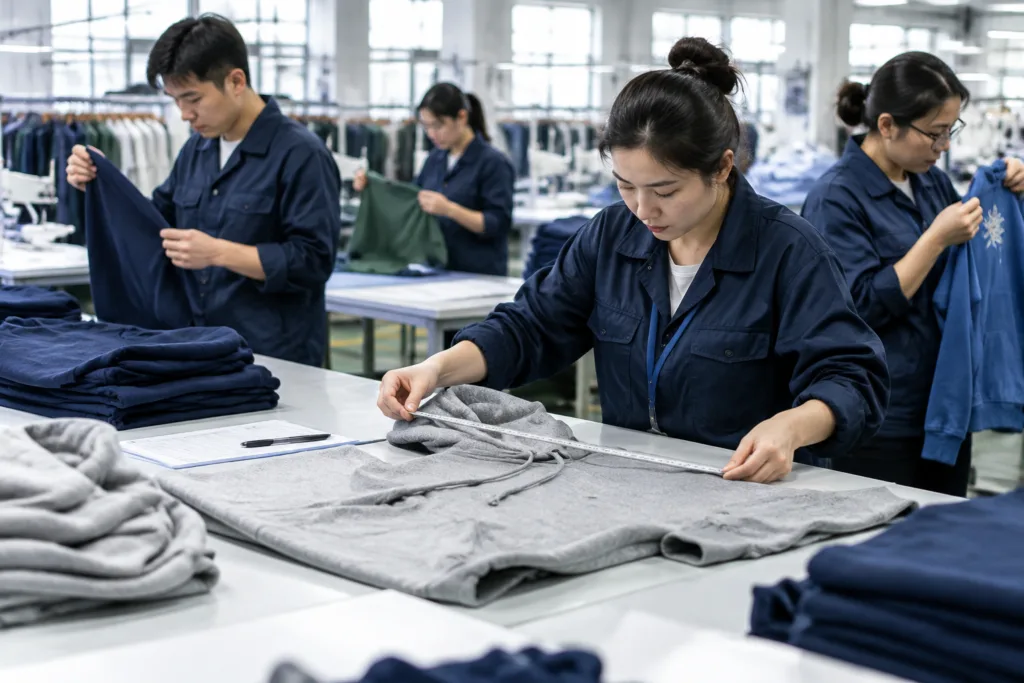
A practical article should show the reader how an idea becomes an approved production sample. The first stage is a technical review. The manufacturer checks the tech pack, reference sample, sketches, measurement chart, fabric requirements, artwork, trims, and intended quantity. Missing information does not always stop development, but it can create assumptions that later increase revisions or cost.
Pattern development follows the agreed measurements and construction details. The first sample then reveals issues that drawings may not show, including balance, seam behavior, neckline shape, pocket position, sleeve mobility, fabric drape, and decoration placement. Buyers should evaluate the sample on a person or suitable fit model, not only on a table.
Sample comments should be specific and prioritized. Instead of saying “make it better,” identify the measurement, location, change, and approval standard. A useful revision note might state that the body length should increase by a defined amount, the sleeve opening should narrow, or the chest logo should move relative to the center front.
Our apparel sampling process perspective is that sample approval should cover both product appearance and production feasibility. Once the buyer approves the fit, materials, artwork, labels, and construction, those approvals should be recorded as the reference for bulk manufacturing.
- Review the tech pack, artwork, size chart, and quantity forecast.
- Confirm fabric, color, GSM, trims, labels, and packaging requirements.
- Develop or adapt the pattern and make the first sample.
- Test fit, measurements, construction, decoration, and wash expectations.
- Record revisions in one consolidated comment sheet.
- Approve the final sample and production specifications before bulk cutting.
Set Realistic MOQ, Cost, and Lead-Time Expectations
MOQ is not a single universal number. It can depend on fabric availability, dyeing requirements, color count, trim quantities, print setup, embroidery programming, packaging, size ratios, and the factory’s production planning. A low MOQ may be more realistic when the buyer selects available fabric colors, limits customization complexity, or accepts a narrower size and color range.
Sampling costs and bulk costs should be considered separately. A sample may require one-off pattern work, small material purchases, special shipping, or setup charges that do not represent the unit cost of a larger order. Buyers should ask which development costs can be credited, repeated, or avoided during future orders.
Lead time normally includes more than sewing. Fabric booking, dyeing, trim production, sample revisions, testing, cutting, sewing, decoration, inspection, packing, and shipment preparation can all affect the schedule. A timeline that begins only at sewing is likely to be incomplete.
Use a written production calendar with approval deadlines. A buyer who delays artwork or label approval can affect material ordering and final delivery even when the factory is ready to proceed. For a deeper planning reference, review apparel production timeline planning when building a launch schedule.
| Cost or timing driver | Why it matters | Planning response |
|---|---|---|
| Custom fabric color | May require dyeing minimums and lab dip approval | Approve color early and confirm minimum quantities |
| Complex trims | Labels, cords, hardware, and packaging may have separate lead times | Provide specifications and artwork with the initial brief |
| Multiple decoration methods | Each method can add setup and inspection steps | Confirm placement, artwork, and testing before sampling |
| Size and color variety | Increases cutting, sorting, packing, and inventory complexity | Provide a realistic quantity breakdown and size ratio |
Key takeaway: The most reliable quotation is based on a complete specification, quantity breakdown, and approval schedule rather than a product name alone.
Use Quality Control Checkpoints Instead of One Final Inspection
Quality control is stronger when it is built into the production process. A final inspection can identify problems, but it may be too late to correct fabric defects, incorrect cutting, inconsistent measurements, or decoration errors without affecting delivery.
Before cutting, verify fabric width, GSM or weight target, color, shade consistency, shrinkage expectations, and visible defects. During cutting, check marker efficiency, panel direction, grain, notches, and bundle identification. During sewing, monitor seam strength, stitch consistency, skipped stitches, puckering, measurements, and construction details.
Decoration requires its own checks. Compare logo size, position, color, thread, print coverage, adhesion, and registration against the approved reference. Finishing inspection should verify loose threads, stains, pressing, labels, folding, packaging, carton assortment, and quantity.
Our apparel quality control procedures approach emphasizes agreed standards and measurable tolerances. Buyers should define what is acceptable before production rather than relying on subjective impressions after the cartons are packed.
- Fabric inspection and shade matching before cutting.
- Pattern, panel, and size checks during cutting.
- Inline sewing checks for construction and measurement consistency.
- Decoration checks for artwork, position, color, and durability.
- Final garment inspection for appearance, measurements, labels, and packing.
- Carton and quantity verification before shipment release.
For garments sold in the United States, product-safety planning may also be necessary. Fabric selection and testing should account for applicable U.S. flammability requirements for clothing textiles, especially when the product, fiber, finish, or intended market creates a testing obligation. Compliance is not a substitute for normal quality control; it is an additional part of responsible product planning.
Compare Manufacturers Using Evidence
Supplier evaluation should focus on production fit rather than presentation alone. A factory may be capable of making garments but not suitable for the buyer’s fabric, decoration, quantity, product complexity, communication style, or delivery needs. Ask for evidence that relates to the confirmed product category.
Review whether the manufacturer can explain fabric options, pattern development, sampling, trims, decoration, MOQ, inspection, and packaging in specific terms. Clear answers are more useful than broad claims. Buyers should also observe whether the supplier identifies risks proactively, documents approvals, and distinguishes confirmed information from estimates.
Ninghow’s manufacturing perspective is that a good production relationship depends on shared specifications. Buyers can use the Ninghow website as a starting point for understanding how a clothing manufacturer may support product development, customization, sampling, and bulk planning, but the final evaluation should always be based on the actual garment brief and approved sample.
Manufacturer comparison checklist
- Can the supplier make the required garment construction and intended fit?
- Can it source or develop the requested fabric, GSM, color, and finish?
- Are private labels, hangtags, packaging, and decoration included in the discussion?
- Will the factory provide a sample and record approval changes?
- Are MOQ, sample charges, production lead time, and repeat-order terms clear?
- Are quality standards, tolerances, testing, and inspection checkpoints documented?
- Can the supplier scale quantities without changing the approved product unexpectedly?
- Is communication detailed enough to resolve technical questions quickly?
Common Planning Mistakes That Create Production Problems
The most common mistake is requesting a price before defining the product. “A custom hoodie” could mean several fabric weights, fits, pocket constructions, decoration methods, and packaging levels. A quotation based on assumptions may look attractive but become unreliable after the specification is clarified.
Another mistake is approving appearance without approving measurements. A sample can look correct on a hanger while being too short, too narrow, or poorly balanced when worn. Buyers should record measurements, tolerances, fit comments, and the size range before bulk production.
Late artwork and trim changes are also frequent causes of delay. A new label, color, print size, or packaging instruction can require new sourcing, setup, or approval. Consolidating feedback into one controlled revision document helps prevent contradictory instructions.
Finally, buyers sometimes treat MOQ and lead time as fixed promises before materials and quantities are known. A more responsible approach is to ask which assumptions support the quoted MOQ and schedule, then identify what would change them.
Prepare the Final Article Brief or Bulk Order Checklist
Before drafting the final article or sending a production inquiry, collect the information that determines the recommendation. The brief does not need to be perfect, but it should make unknowns visible. This allows the article and the manufacturer conversation to address real decisions instead of filling space with generic advice.
- Product category, intended use, season, and target market.
- Primary reader and commercial problem.
- Fabric composition, construction, target GSM, stretch, finish, and color requirements.
- Fit direction, measurement chart, grading expectations, and size range.
- Artwork, decoration method, placement, labels, trims, and packaging.
- Sample quantity, target bulk quantity, color and size breakdown, and reorder expectations.
- Target launch date, delivery destination, testing needs, and compliance requirements.
- Expected quality standards, tolerances, inspection plan, and acceptance criteria.
- Questions that remain unresolved before a final quotation or production commitment.
If the topic is still broad, identify the missing information before drafting. The article may need to be narrowed to a garment, buyer scenario, market, or production decision. That extra planning step improves search relevance and makes the final content more useful to people who are genuinely preparing a product.
Conclusion: Turn a Broad Keyword Into a Useful Manufacturing Resource
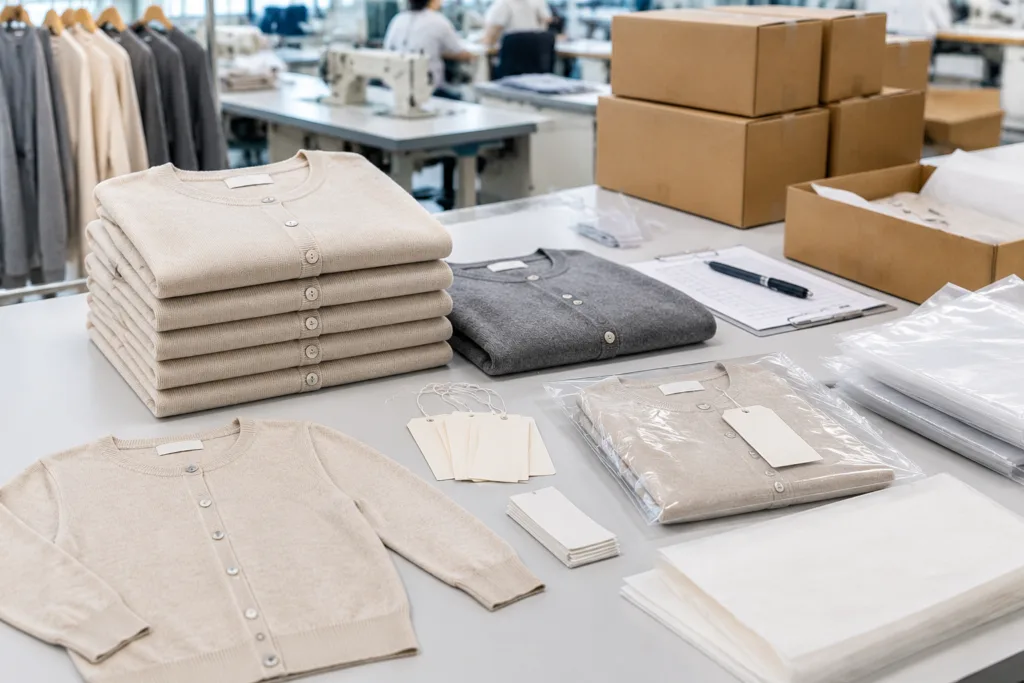
A strong apparel manufacturing article should guide a real decision. It should begin with a defined garment and buyer problem, explain the relevant concept in plain language, and then connect fabric, fit, customization, sampling, MOQ, lead time, quality control, and supplier evaluation to the intended use case.
From our manufacturer perspective, the most valuable content is specific without being difficult to understand. It helps readers prepare a complete brief, recognize production risks, compare suppliers fairly, and approve a product before bulk manufacturing begins. When those details are clear, the article becomes more than a search result: it becomes a practical planning tool for product development and sourcing.
Frequently Asked Questions
What information should I send to an apparel manufacturer first?
Send the garment type, sketches or reference images, target fabric and GSM, measurements or tech pack, artwork, quantity estimate, size and color breakdown, delivery target, and packaging requirements. If some details are undecided, identify them clearly so the manufacturer can explain the available options and their effect on cost or timing.
How does GSM affect a garment?
GSM describes fabric weight and can influence warmth, opacity, drape, hand feel, durability, and cost. It is not a standalone quality score, so buyers should evaluate GSM together with fiber composition, fabric construction, finishing, intended use, and sample performance.
When should a buyer request a sample?
A buyer should request a sample before bulk production whenever fit, fabric, construction, decoration, or branding details matter. The approved sample should be checked for measurements, appearance, hand feel, logo placement, labels, and workmanship, then documented as the reference for bulk manufacturing.
Is low MOQ available for every custom clothing project?
Low MOQ is not available under the same conditions for every project because fabric minimums, custom dyeing, trims, decoration setup, and production complexity affect quantity requirements. Low MOQ may be more realistic when the buyer uses available materials, limits colors, simplifies customization, or accepts a smaller initial range.
What causes apparel production delays most often?
Common causes include incomplete specifications, late artwork or label approval, fabric or trim shortages, sample revisions, unclear quantity breakdowns, testing requirements, and changes made after production begins. A clear tech pack, consolidated feedback, approved sample, and written production calendar reduce these risks.
How can I compare two clothing manufacturers fairly?
Compare their ability to make the required garment, source the requested materials, manage sampling, meet the quantity and timeline, apply decoration, document quality standards, and communicate technical information. Review comparable samples or evidence where possible, and compare complete quotations rather than unit prices alone.