




Custom clothing manufacturing becomes more predictable when buyers define the product, use case, quality expectations, and approval process before requesting a quotation. Whether you are developing a private label hoodie, team uniform, performance shirt, or branded workwear program, the goal is not simply to find a factory that can sew garments. You need a manufacturing partner that can translate your product brief into a repeatable specification, approved sample, controlled production plan, and consistent bulk order.
If your project focuses on hoodies, oversized fleece, or branded team garments, hoodie manufacturing support for brand and bulk orders can help you assess fabric weight, fit, decoration, labels, packaging, and order feasibility before production. These same development principles also apply to many other apparel categories.
Clarify the Buyer’s Goal, Garment Category, and Intended Use
The first manufacturing decision is to define what the garment must do for its wearer and buyer. A fashion startup may prioritize hand feel, silhouette, and private label presentation. A school, club, or distributor may prioritize durability, repeat sizing, decoration consistency, and dependable replenishment. A sportswear brand may need stretch, moisture management, breathability, and freedom of movement.
Start with a one-page product brief that states the garment category, target customer, wearing environment, expected retail or distribution position, initial quantity, target delivery window, and required customization. This brief gives a manufacturer context for recommending materials and construction instead of quoting an unsuitable standard product.
- Identify the garment: T-shirt, polo, hoodie, sweatshirt, jacket, shorts, pants, uniform, or performance top.
- Describe the use case: casual wear, training, golf, school, workwear, teamwear, promotional use, or retail.
- Define the desired fit: regular, relaxed, oversized, athletic, unisex, youth, or women’s specific.
- Set a quality position: entry-level, mid-market, premium, or technical performance.
- List sales markets and any expected labeling, testing, packaging, or documentation requirements.
Key takeaway: A clear use case improves every later decision because fabric, fit, decoration, construction, and price should support the same product purpose.
What Custom Clothing Manufacturing Includes

Custom production can mean different things, so buyers should define the level of development they actually need. OEM manufacturing generally means producing a buyer’s specified design, measurements, materials, branding, and packaging. ODM development may begin with a manufacturer’s existing style or capability and adapt it to the buyer’s branding and commercial needs. Private label production adds brand identity through labels, hangtags, packaging, and approved product details.
Made-to-order production can also range from a modified stock pattern to a fully developed garment. The more elements that are changed, the more sampling, communication, material planning, and technical review may be required. A quotation should therefore describe what is included rather than using OEM, ODM, or private label as vague labels.
| Production approach | Suitable when | Buyer should confirm |
|---|---|---|
| OEM | You have a defined design and technical specification. | Pattern ownership, approved materials, measurements, and tolerances. |
| ODM | You want to adapt an existing style or manufacturing platform. | Available fabrics, customization limits, and exclusive design expectations. |
| Private label | You need branded garments ready for retail or organized distribution. | Labels, hangtags, packaging, compliance information, and carton packing. |
| Low-MOQ development | You are validating demand or launching a limited collection. | Fabric availability, color limits, trim minimums, and setup charges. |
Define the Product Before Contacting a Manufacturer
Manufacturers can work with a sketch, reference garment, measurement sheet, or complete tech pack, but the quality of the quotation depends on the information supplied. At a minimum, prepare front and back artwork, garment measurements, fabric expectations, color references, logo files, decoration positions, size range, and estimated quantity by color and size.
Do not rely on terms such as “heavyweight,” “premium,” or “high quality” without supporting them with measurable information. For example, specify an approximate GSM range, fiber composition, desired shrinkage performance, rib construction, stitch appearance, and fit measurements. If you do not know the correct specification, explain the intended result and ask the manufacturer to propose suitable options.
How to Choose Fabric Composition and GSM
Fabric selection affects comfort, appearance, durability, production cost, and how the finished garment behaves after washing. Cotton can provide a natural hand feel, while polyester can support color retention, quick drying, and performance use. Blends can balance softness, stability, stretch, and cost, but the correct ratio depends on the garment and application.
GSM describes fabric weight per square meter, but it does not independently determine quality. Two fabrics with similar GSM can feel very different because of yarn, knit structure, finishing, fiber quality, brushing, and compactness. A heavier fabric may create a structured premium look, while a lighter fabric may be more breathable and economical for warm-weather uniforms.
| Fabric consideration | What it influences | Buyer question |
|---|---|---|
| Composition | Hand feel, drying, strength, care, and appearance. | What performance or comfort result is required? |
| GSM | Drape, opacity, warmth, structure, and material consumption. | Should the garment feel light, balanced, or substantial? |
| Stretch | Movement, recovery, fit tolerance, and comfort. | Does the garment need mechanical or elastane stretch? |
| Finish | Softness, surface appearance, pilling behavior, and shrinkage. | Will the finish remain suitable after care and repeated wear? |
We recommend comparing fabric swatches and, where practical, making a development sample before fixing the final material. A fabric that looks attractive on a swatch may become too stiff after printing, too heavy with embroidery, or unsuitable for a particular neckline or seam construction.
Develop Fit, Measurements, Sizing, and Construction Requirements
Fit should be approved through measurements and physical evaluation, not through a visual image alone. A buyer should identify key points of measure such as chest, body length, shoulder width, sleeve length, armhole, bottom opening, rise, inseam, or hood dimensions depending on the garment.
Include a size chart with points of measure, base size, grading logic, and acceptable tolerances. If you have an existing garment that fits well, send it as a reference sample and explain what you like or want changed. A manufacturer can then compare the sample with the pattern rather than guessing from a photograph.
Construction details also need to be recorded. These may include stitch type, seam allowance, coverstitching, bartacks, shoulder tape, rib percentage, pocket shape, zipper specification, drawcord details, lining, reinforcement, and hem finish. Small details often influence both durability and production time.
At Ninghow, we treat the tech pack and approved sample as communication tools between product development and bulk production. When the design intent, measurements, and tolerances are documented clearly, production teams have a stronger reference for cutting, sewing, finishing, and final inspection. Buyers seeking broader development and sourcing support can review Ninghow as part of their manufacturer evaluation.
Prepare a Tech Pack, Reference Sample, or Complete Product Brief
A tech pack does not need to be visually elaborate to be useful. It needs to remove ambiguity. Include a style name or code, technical flats, bill of materials, fabric composition, GSM target, color references, measurements, grading rules, construction notes, decoration artwork, label placement, packaging instructions, and revision history.
For a developing brand, the most important feature is version control. Mark each change clearly, such as “sample revision two” or “measurement update after fitting.” This prevents an old file from being used for costing or production. If a reference garment is sent, identify whether it is a fit reference, construction reference, fabric reference, or decoration reference; one garment may not represent all desired characteristics.
- Use vector artwork for logos whenever possible and state the required finished dimensions.
- Provide color standards or physical swatches for important brand colors.
- Separate mandatory requirements from flexible preferences.
- List required labels, hangtags, polybags, cartons, folding methods, and barcode instructions.
- Record every approved change before bulk materials are purchased.
Choose the Right Customization Method
Decoration should be selected according to artwork, fabric, order quantity, durability expectations, and production schedule. Screen printing can be effective for bold artwork and larger quantities, while heat transfer can support detailed graphics or smaller placements. Embroidery adds dimension and a durable branded appearance but can add weight and stiffness, especially on lightweight fabrics.
Sublimation is commonly considered for suitable synthetic fabrics and all-over performance graphics. Woven labels, printed labels, patches, hangtags, and custom packaging create a private label presentation, but each trim may introduce its own sampling and minimum-order requirements.
| Method | Strengths | Production considerations |
|---|---|---|
| Screen printing | Strong coverage and efficient repeat production for suitable artwork. | Color separations, screens, curing, and fabric compatibility matter. |
| Heat transfer | Useful for detailed graphics, names, numbers, and selected placements. | Film quality, adhesion, pressure, and wash performance require checking. |
| Embroidery | Dimensional appearance and durable branding for logos and text. | Stitch density, backing, fabric weight, and placement affect comfort. |
| Sublimation | Supports detailed color graphics on appropriate synthetic fabrics. | Fiber content, color control, panel alignment, and bleed must be reviewed. |
Decoration should be approved on the actual fabric whenever possible. A logo that looks correct on a smooth swatch may distort across a ribbed collar, seam, brushed fleece, stretch panel, or curved pocket. We also recommend confirming whether decoration happens before or after garment assembly because that choice can affect alignment and handling.
Manage the Sample Development Process
The sample is a decision point, not merely a sales preview. It should be assessed for fit, fabric, color, construction, decoration, trims, labels, and overall use. Buyers should wear or test the sample in a realistic way and record specific changes rather than giving broad feedback such as “make it better.”
A structured review should identify whether a problem comes from the pattern, fabric, sewing, finishing, or decoration. For example, a sleeve may feel tight because of the armhole shape, sleeve width, fabric recovery, or seam position. Clear diagnosis helps the manufacturer revise the correct component. A useful reference for organizing approvals is a structured apparel sampling process.
- Check garment measurements against the approved size chart.
- Compare fit on the intended wearer or a suitable fit model.
- Inspect seam appearance, puckering, thread tension, and symmetry.
- Review logo size, position, color, adhesion, and stitch density.
- Confirm labels, trims, folding, packaging, and presentation details.
- Record approved changes in writing and archive the final sample reference.
Key takeaway: Bulk production should not begin until the buyer and manufacturer agree which sample, artwork, measurements, and material references are the production standard.
Understand MOQ, Colorways, Size Runs, and Feasibility
MOQ is rarely just one number. It may apply to the total style, each color, each fabric, each printed design, or each custom trim. A factory may be able to produce a small total quantity when a fabric is readily available, but a custom-dyed color or specially developed trim can require a larger commitment.
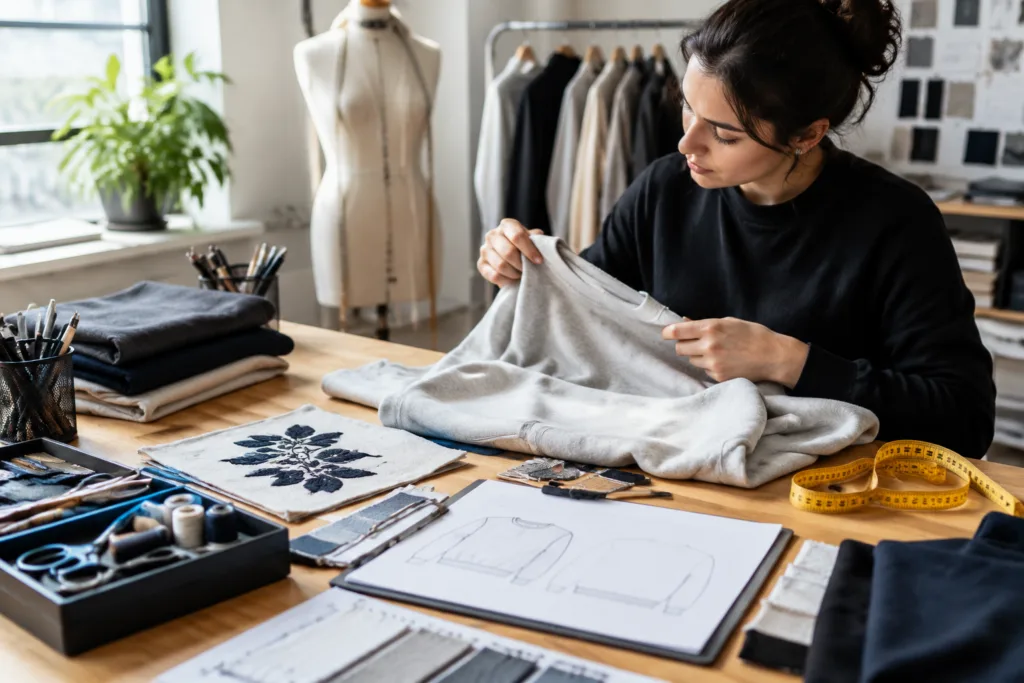
Ask for MOQ assumptions in writing. Clarify whether the minimum applies per style or color, whether sizes can be mixed, whether excess fabric or trims must be purchased, and whether sampling quantities are treated separately. For a startup, reducing colorways may be more effective than demanding an extremely small total order because each color creates separate planning and inventory decisions.
| MOQ driver | Why it matters | Possible planning response |
|---|---|---|
| Fabric availability | Stock fabric may be flexible; custom dyeing can require larger quantities. | Use available colors for validation or consolidate demand. |
| Size distribution | Very uneven size runs can complicate cutting and packing. | Provide a realistic size forecast early. |
| Decoration | Artwork setup, screens, embroidery files, or transfers add preparation. | Standardize artwork and limit unnecessary variants. |
| Trims and packaging | Labels, cartons, hangtags, and bags may have their own minimums. | Confirm trim quantities before final costing. |
Plan Lead Time from Approval Through Bulk Delivery
Production lead time starts with the information and approvals required to release the order, not simply when sewing begins. Fabric booking, color approval, trim development, pattern revisions, sample approval, cutting, sewing, decoration, finishing, inspection, packing, and shipment can each affect the delivery window.
Build a timeline around decision dates. Late artwork, incomplete size ratios, delayed sample comments, or a change to fabric after approval can move the schedule even when the factory is ready. For a practical planning framework, review apparel production timeline planning and separate buyer-controlled tasks from manufacturer-controlled tasks.
A realistic production calendar should include time for material confirmation, pre-production approval, bulk manufacturing, inspection, corrections if needed, packing, and transportation. Avoid promising a market launch based only on the estimated sewing period. The safest date is based on the complete route from final approval to goods receipt.
Use Quality Control Checkpoints Before Shipment
Quality control is most effective when it is distributed throughout production. Checking only finished cartons can reveal defects too late, while early checks can prevent the same issue from spreading across hundreds or thousands of pieces.
| Checkpoint | What to inspect |
|---|---|
| Incoming materials | Composition, GSM, color, width, shade variation, trims, and quantities. |
| Cutting | Pattern accuracy, panel matching, grain direction, and bundling. |
| Inline sewing | Measurements, seam quality, construction, symmetry, and workmanship. |
| Decoration | Position, dimensions, color, adhesion, stitch density, and alignment. |
| Final inspection | Appearance, measurements, labels, packing, quantity, and carton details. |
Quality expectations should be written before production. Define critical defects, acceptable measurement tolerances, approved color references, decoration standards, and packing requirements. Our manufacturing perspective is that a useful inspection plan should reflect the product’s actual risk rather than relying on a generic visual check. Buyers can also review apparel quality control procedures when building an approval checklist.
For products sold in regulated markets, identify applicable testing and safety requirements before bulk material commitment. For example, the U.S. Consumer Product Safety Commission explains U.S. clothing-textile flammability testing under 16 CFR part 1610. The exact requirements depend on the product and market, so buyers should confirm obligations with qualified compliance professionals and their manufacturer.
Compare Clothing Manufacturers Beyond Unit Price
The lowest quoted unit price is not necessarily the lowest total production cost. Compare what each quotation includes: fabric quality, decoration, labels, packaging, sampling, testing, inspection, tooling, shipping terms, and revision support. A low initial quote can become expensive if the fabric is substituted, trims are excluded, or quality corrections create delays.
Evaluate the manufacturer’s communication and technical response as carefully as the price. Can the supplier explain fabric alternatives, identify missing information, distinguish assumptions from confirmed details, and document changes? Can the team show how it will control measurements, color, decoration, and packing in bulk?
- Ask which materials are stock, custom, or subject to supplier minimums.
- Request a clear breakdown of sampling, setup, trims, packaging, and production charges.
- Confirm who owns patterns, artwork files, samples, and approved specifications.
- Ask how production changes are authorized after sample approval.
- Review how quality findings are recorded and resolved.
The apparel order process from approval to shipment is useful to consider as a complete workflow rather than a single transaction. A capable manufacturer should help make the workflow visible so both sides understand responsibilities and decision points.
Common Ordering Mistakes That Cause Delays or Extra Costs
Many sourcing problems begin before the purchase order. Buyers may request quotations without a size chart, change fabric after approval, provide low-resolution artwork, or assume that a reference garment can answer every technical question. These gaps create repeated clarification, inaccurate costing, and avoidable sample revisions.
Another common mistake is treating all colors and sizes as equally simple. A single style with several custom colors, contrast panels, embroidered positions, and packaging versions may behave like several production programs. Consolidating decisions and reducing unnecessary variants can protect both the launch schedule and the budget.
Practical Mistakes to Avoid
- Approving a sample without measuring it against the agreed chart.
- Changing the fabric, GSM, or finish after decoration has been approved.
- Using verbal approvals without updating the specification file.
- Leaving care labels, fiber content, country-of-origin details, or packaging undecided.
- Ignoring wash testing or wear testing for garments intended for repeated use.
- Planning delivery from the sewing date instead of the full approval-to-shipment timeline.
Prepare a Bulk Production Checklist
Before releasing bulk production, create one final approval package. It should contain the approved sample reference, final tech pack, confirmed fabric and trims, color standards, decoration artwork, size breakdown, packaging instructions, purchase order, inspection expectations, and delivery information.
A practical approval workflow assigns an owner to each decision. The product developer may own fit, the brand team may own artwork, procurement may own quantities and commercial terms, and the manufacturer may own production feasibility and factory execution. One person should still coordinate the final release so conflicting instructions do not reach the production floor.
- Confirm style codes, colors, sizes, quantities, and carton requirements.
- Approve the final fabric, trims, labels, artwork, and packaging.
- Confirm measurement tolerances and workmanship standards.
- Record the sample revision and date used for bulk reference.
- Set inspection timing and define how nonconformities will be handled.
- Confirm the delivery address, shipping terms, and required documents.
When to Choose Low-MOQ, OEM, or ODM Production
Low-MOQ manufacturing can be useful for product validation, limited team programs, new brand launches, or controlled market tests. It is most realistic when the buyer accepts available fabrics, limited colors, simpler construction, or standard trims. Fully custom materials, many colorways, and complex decoration can reduce the practical benefit of a low minimum.
OEM is usually appropriate when the buyer has a clear product identity and wants the manufacturer to execute defined specifications. ODM can reduce development effort when an existing construction platform is close to the intended product. Neither approach removes the need for sample approval; it only changes where the initial design and technical decisions originate.
Questions to Ask Before Selecting an Apparel Supplier
Use supplier questions to test manufacturing fit, not just sales responsiveness. The following questions help reveal whether the proposed production route matches your product and purchasing stage:
- Which fabric compositions, GSM ranges, and finishes are suitable for this use case?
- What information is needed to create an accurate quotation?
- What is the MOQ by style, color, fabric, size, and custom trim?
- How many sample revisions are practical before bulk approval?
- How are patterns, measurements, grading, and tolerances documented?
- Which decoration methods are recommended for the fabric and artwork?
- What are the main lead-time risks for this product?
- Which quality checkpoints occur before and during bulk production?
- How are changes approved after the purchase order is issued?
- What labels, packaging, testing, and shipping documents are included?
Answers should be specific enough to compare. If a supplier responds only with broad promises, ask for assumptions, examples of required inputs, and a written production sequence. Good communication at the beginning is one of the strongest indicators of whether bulk production will be manageable.
Conclusion: Turn a Clear Product Brief into Consistent Bulk Production
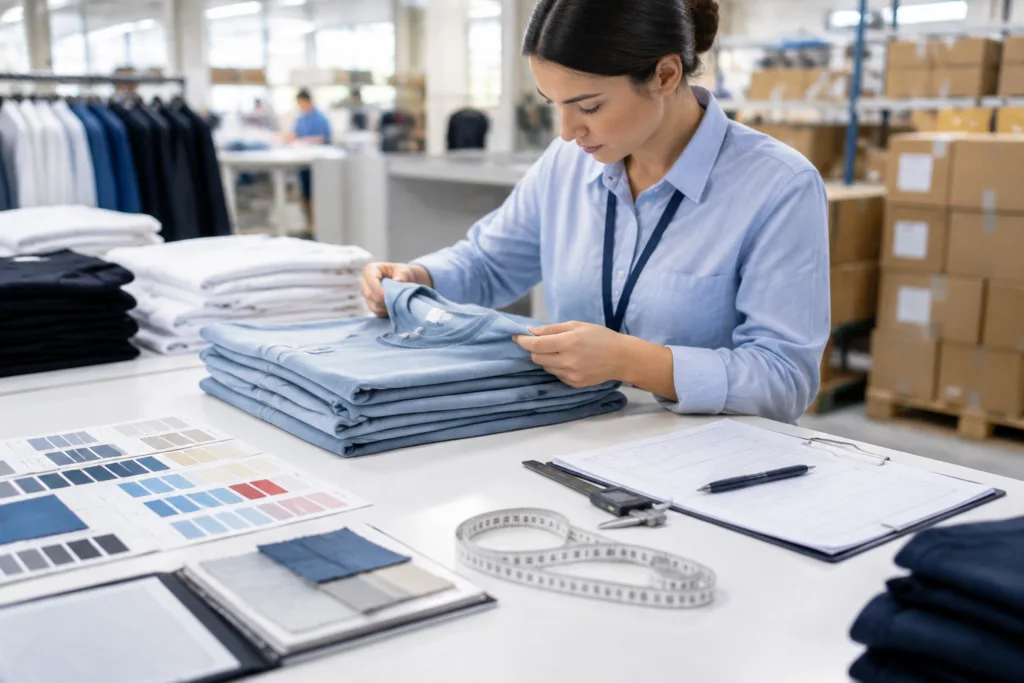
Successful custom clothing manufacturing starts with a defined product brief and continues through fabric selection, technical specification, fit approval, decoration planning, MOQ review, lead-time management, and documented quality control. The most reliable sourcing decisions balance design ambition with material availability, production complexity, order volume, and the buyer’s real delivery requirements.
From our manufacturing perspective, the strongest projects are not necessarily the most complicated. They are the projects in which the buyer and supplier agree on what the garment should be, how it will be measured, which sample is approved, how changes are controlled, and what quality standard will be used for bulk production.
Frequently Asked Questions
What is custom clothing manufacturing?
Custom clothing manufacturing is the process of developing and producing garments to a buyer’s specified design, materials, measurements, branding, construction, and packaging requirements. The level of customization may range from modifying an existing style to creating a fully developed garment with a new pattern and private label details.
How much information should I provide before requesting a quote?
You should provide the garment type, intended use, estimated quantity, size range, colorways, fabric expectations, artwork, measurements, labels, packaging needs, and target delivery window. If some details are not final, identify them as assumptions so the manufacturer can explain how they may affect the quotation.
Can a manufacturer support a low-MOQ apparel order?
A manufacturer may support a low-MOQ order when fabrics, colors, trims, and production methods are practical at the requested volume. Low MOQ does not eliminate minimums for custom dyeing, special labels, complex decoration, or packaging, so ask whether the MOQ applies per style, color, fabric, or trim.
Why is a pre-production sample important?
A pre-production sample confirms the garment’s fit, materials, construction, decoration, labels, and appearance before bulk production begins. It gives both sides a physical reference for cutting, sewing, finishing, and inspection, reducing the risk that production follows an outdated drawing or interpretation.
How should I compare apparel manufacturers?
Compare technical understanding, communication, sample quality, material options, MOQ assumptions, lead-time planning, quality procedures, customization capability, and total cost rather than unit price alone. A supplier that clearly documents assumptions and responds to product risks may provide better production reliability even when its initial quotation is not the lowest.
What causes the most common apparel production delays?
The most common causes include incomplete specifications, late artwork, delayed sample feedback, fabric or trim shortages, changes after approval, unclear size quantities, and unrealistic delivery expectations. A controlled approval workflow with written specifications and decision deadlines helps prevent these issues from reaching bulk production.