






To reduce risk custom clothing China projects require more than choosing a factory and approving a price. Most production problems begin earlier, when the product brief is incomplete, the sample is approved too loosely, the size chart is not locked, or color and trim expectations are discussed verbally instead of documented clearly. From our manufacturing perspective, buyers lower risk when they build control points before bulk production starts, not after goods are already packed.
If your project involves private label garments, teamwear, promotional apparel, or a first bulk order with a new supplier, reliable import clothing sourcing support from China helps connect product specifications with real factory execution. We support buyers by checking fabric options, sample requirements, decoration methods, labeling details, packaging standards, and pre-production approvals so that the final bulk order is based on clear written control points rather than assumptions.
Why custom clothing orders from China carry risk
Custom clothing production has many moving parts, and each one can shift the final result. Fabric composition, GSM tolerance, shrinkage behavior, dye lot variation, fit balance, logo placement, and trim sourcing all affect what buyers receive in bulk.
China remains one of the most important sourcing regions for custom apparel because of manufacturing depth and material access, but that does not remove execution risk. The real issue is not the country itself. The issue is whether the buyer and manufacturer have translated the product idea into stable production instructions.
Key takeaway: Most apparel risk is specification risk. When the product is defined clearly, the factory has a much better chance of repeating the approved result at bulk scale.
What buyers should control first to reduce risk custom clothing China orders
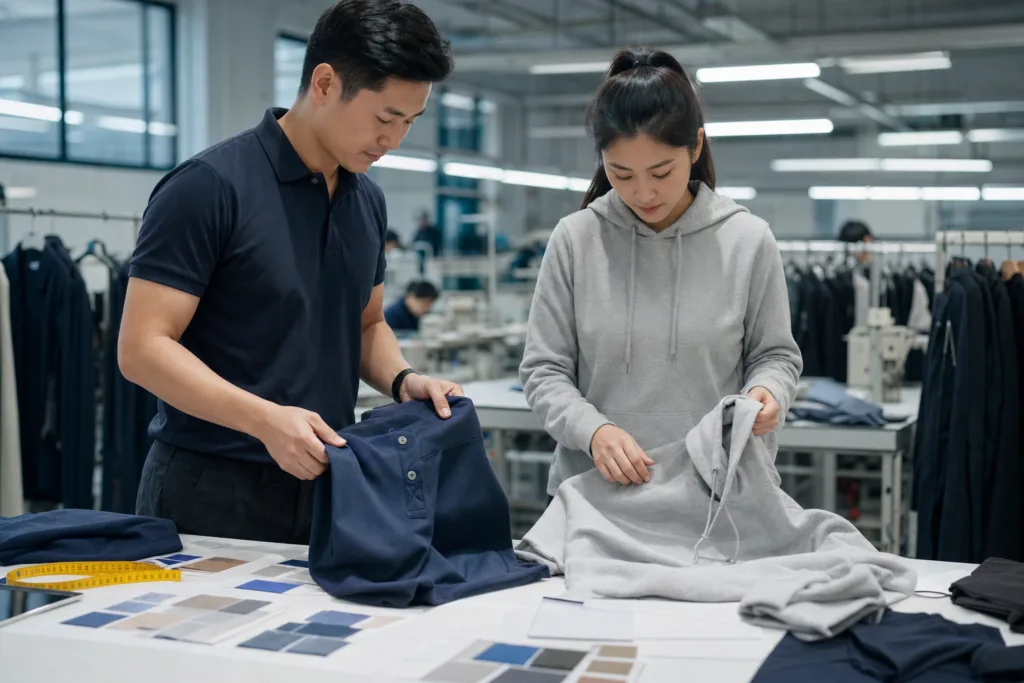
The main risks usually fall into six areas: quality, fit, color, materials, lead time, and communication. These risks are connected, so a weakness in one area often creates problems in another.
| Risk area | What can go wrong | How to control it early |
|---|---|---|
| Quality | Loose stitching, inconsistent measurement, poor finishing | Approve sample standards and define QC checkpoints |
| Fit | Wrong shape, short body length, sleeve imbalance | Lock size chart, grading rules, and fit comments |
| Color | Shade mismatch, trim mismatch, printing color shift | Use Pantone references and lab dip or swatch approval |
| Materials | Wrong fabric hand feel, composition, stretch, or GSM | Confirm fabric specification and test sample performance |
| Lead time | Sampling delays, fabric shortages, rushed bulk production | Build a realistic calendar with approval deadlines |
| Communication | Verbal assumptions, missing files, version confusion | Use written approvals and a single document trail |
When buyers ask us where to start, our answer is simple: define the product, test it through sampling, and freeze decisions before bulk cutting. That sequence removes a large share of preventable risk.
Start with a clear product brief and written specifications
A clear brief is the first real control tool. Even if you do not yet have a complete tech pack, you should still provide a structured written brief covering garment category, target customer, fit direction, fabric preference, decoration method, quantity estimate, labeling, packaging, and target price level.
For example, a men’s golf polo can vary significantly depending on whether the buyer wants a clean retail silhouette, a roomier team fit, or a performance fabric with higher stretch recovery. If those expectations are not written down, the sample may look acceptable at first glance but still fail once compared against actual use requirements.
- Garment type and intended use
- Reference images or previous samples
- Target fabric composition and approximate GSM
- Required logo method and placement
- Label, hangtag, and packaging needs
- Expected order quantity by color and size
- Target launch date and approval milestones
Buyers with more structured development needs often benefit from a documented apparel order process because it reduces confusion about who approves each stage, when files are frozen, and which sample version becomes the bulk standard.
How samples reduce risk before bulk production
Sampling is not just for checking appearance. It is how buyers test whether instructions are complete enough for repeatable production. A sample exposes hidden issues in fabric behavior, shape, sewing construction, decoration, and finishing.
In our work, the most useful sample feedback is specific. Instead of saying “fit is not right,” buyers should mark changes such as shoulder width minus 1 centimeter, front neck drop deeper by 0.5 centimeter, hem width wider, or sleeve opening tighter. That level of detail helps the next version move toward approval faster.
A strong apparel sampling process should move from concept validation to production readiness. The goal is not to produce endless sample rounds. The goal is to use each round to eliminate risk that would be costly in bulk.
Which sample types matter most
| Sample type | Main purpose | Risk it reduces |
|---|---|---|
| Development sample | Translate idea into a physical garment | Construction and design misunderstanding |
| Fit sample | Check shape and measurements | Size and silhouette problems |
| Counter sample | Match a reference garment or approved standard | Expectation gap between buyer and factory |
| Pre-production sample | Use bulk-like fabric, trims, and workmanship | Bulk execution inconsistency |
| Golden sample | Serve as final sealed reference | Approval disputes during inspection |
Key takeaway: A sample only reduces risk when comments are written, versions are tracked, and approvals are tied to exact specifications.
What must be included in a tech pack or spec sheet
A tech pack does not need to be complicated, but it must be complete enough for production teams to follow. The factory should not have to guess critical details that affect fit, construction, or decoration.
At minimum, we recommend including style sketches, point of measurement definitions, garment measurements, grading rules, fabric details, artwork files, trim requirements, care label information, packaging instructions, and workmanship notes. Missing just one of these can create avoidable interpretation problems.
- Flat sketch showing front and back details
- Point of measurement list with tolerances
- Base size measurement chart
- Grading increments for other sizes
- Fabric composition, finish, stretch, and target GSM
- Thread, zipper, button, drawcord, and other trim details
- Artwork dimensions, colors, and application method
- Main label, size label, care label, and hangtag requirements
- Folding, polybag, carton, and carton marking instructions
If care labeling is part of your private label program, the wording and fiber disclosure should be checked carefully against your target market requirements. Even when a factory can sew the garment correctly, labeling mistakes can still create selling or import issues later.
Why size charts, grading, and fit approval matter more than many buyers expect
Fit problems are one of the most common reasons for bulk dissatisfaction. A garment can be made with good sewing quality and still fail commercially because the size balance feels wrong on body.
Buyers should approve not only one base size sample but also the grading logic. If the chest grows too quickly across sizes, or body length does not increase enough, the larger sizes may feel tight and short even if the medium size looked fine.
What to check before size approval
- Measure the sample against the spec sheet, not by visual impression only
- Fit the garment on the intended body type if possible
- Check shoulder slope, armhole comfort, and body balance
- Review size increments from one size to the next
- Confirm tolerance rules for bulk production
From a manufacturer’s perspective, clear point-of-measurement definitions matter because teams may measure body length, sleeve length, or chest width differently if the method is not shown. A simple annotated chart often prevents long back-and-forth later.
For buyers comparing suppliers, this is also a capability test. A factory that asks disciplined fit questions usually understands repeat production better than one that approves vague comments too quickly.
How to approve fabric, color, and Pantone references correctly
Color approval should be treated as a formal checkpoint, especially for branded apparel, uniforms, teamwear, and coordinated collections. Screen color on a monitor is not enough, and photos under mixed lighting can be misleading.
The safest method is to define a physical or standardized reference, then confirm whether the fabric dyeing, print ink, embroidery thread, and trims need to match exactly or only visually coordinate. This distinction matters because different materials absorb color differently.
| Approval item | Best control method | Common risk |
|---|---|---|
| Dyed fabric | Lab dip or physical swatch approval | Bulk shade differs from expectation |
| Pantone-based logo | Confirm Pantone target and material limitations | Print and embroidery do not match fabric trim |
| Heather or mélange fabric | Approve actual knitted sample | Visual tone differs from plain color reference |
| Contrast trim | Approve trim against body fabric together | Near-match looks wrong when assembled |
Color also connects to production timing. If fabric must be custom dyed, approval delays can push the apparel production timeline more than buyers expect, especially when lab dips, strike-offs, or replacement trims are required.
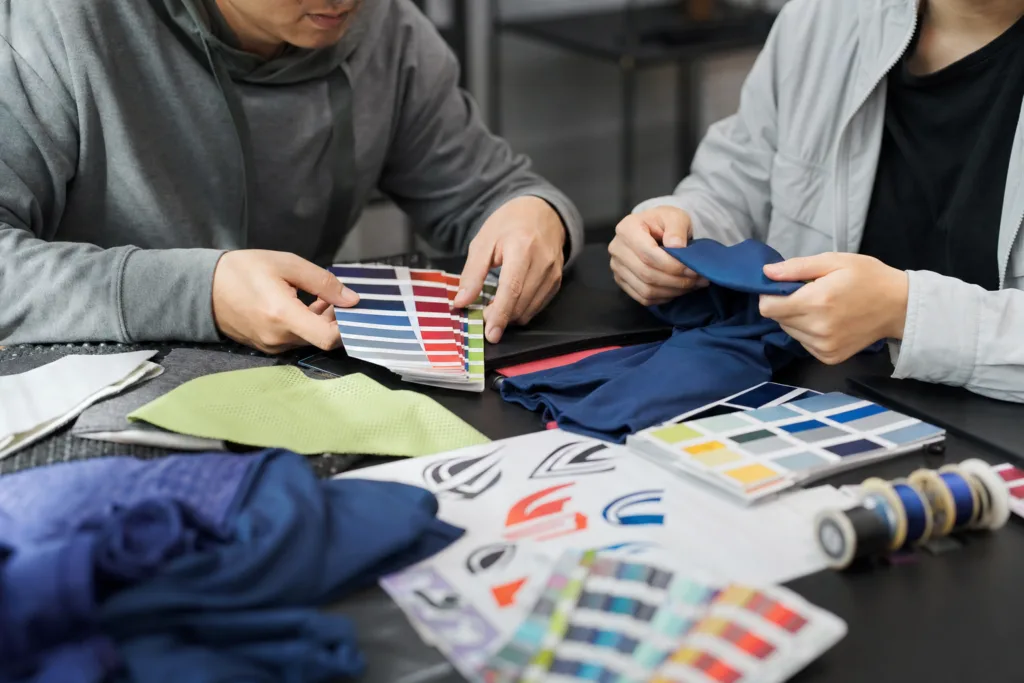
Key takeaway: Approve color in the same form it will appear in production whenever possible. Fabric, print, embroidery, and trims should be reviewed together, not separately.
Pre-production confirmation: what should be locked before mass production
Before bulk cutting starts, the factory and buyer should confirm one final production standard. This step is often called pre-production confirmation, and it is one of the most effective ways to reduce order risk.
At this stage, the buyer should not still be debating logo size, label wording, carton assortment, or whether the fabric hand feel seems slightly lighter than expected. Those decisions should already be closed, or the order is still carrying open risk.
What should be frozen before production
- Approved sample version
- Final measurement chart and tolerances
- Fabric composition, color, and GSM target
- Artwork size, placement, and decoration method
- Labels, hangtags, barcodes, and packaging details
- Size breakdown and color ratio
- AQL or inspection expectations if specified
- Shipping marks and delivery timeline
At Ninghow, we see pre-production confirmation as the point where a design project becomes a manufacturing project. Once this stage is signed off, the production team has a stable standard to follow, and both sides have a clearer basis for quality review.
How factory samples, counter samples, and golden samples should be used
Not every approved sample plays the same role. Buyers sometimes approve one sample by email and assume that is enough, but production teams need to know which reference controls what.
A factory sample may show construction feasibility. A counter sample may define what the buyer wants matched. A golden sample should become the sealed visual standard for bulk comparison. If those roles are mixed together, inspection arguments become more likely.
- Use development samples to refine the product idea
- Use fit samples to lock measurements and wearing balance
- Use counter samples when matching an existing product is important
- Use pre-production samples to verify bulk-like materials and workmanship
- Use one golden sample as the final reference for production and inspection
For repeat programs, keeping records of approved sample versions also helps maintain consistency season after season. Without that archive, even a reliable supplier may interpret a “repeat” style differently if staff or material sources change.
Inspection methods that catch problems before shipment
Inspection works best when it confirms an already controlled process. It should not be the first time anyone checks whether size, color, sewing quality, and packaging are correct.
That said, inspection remains essential because bulk production can still drift from the approved sample. The earlier a problem is found, the cheaper it usually is to correct.
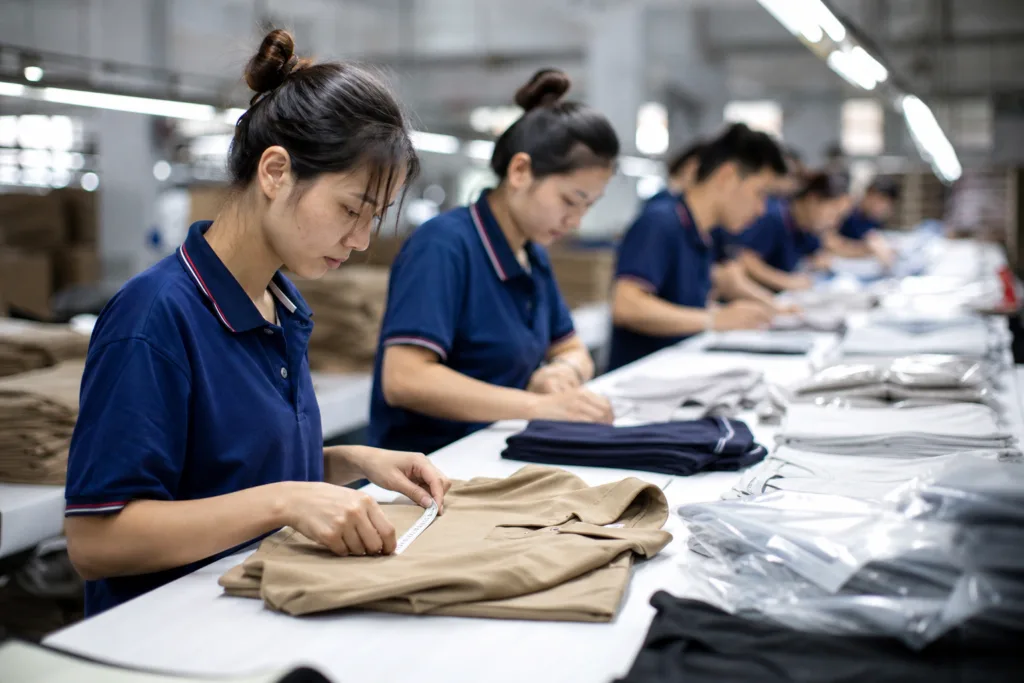
A disciplined apparel quality control plan normally includes incoming material checks, in-line checks during sewing, finishing review, measurement audit, and final random inspection before shipment.
Practical inspection points buyers should discuss
- Fabric shade consistency across the order
- Logo position and decoration quality
- Measurement compliance by size
- Seam strength and stitch appearance
- Cleanliness, thread trimming, and pressing
- Label accuracy and barcode placement
- Folding method, polybag details, and carton assortment
| Inspection stage | Main focus | Why it matters |
|---|---|---|
| Material inspection | Fabric shade, defects, trim correctness | Stops wrong inputs entering production |
| In-line inspection | Sewing workmanship and measurement control | Catches repeat problems before full output |
| Finishing inspection | Pressing, loose threads, labeling, packing | Prevents avoidable presentation issues |
| Final inspection | Random bulk verification against approved standard | Supports shipment approval decisions |
Common mistakes buyers make when ordering custom clothing from China
The most expensive mistakes are often simple ones. They happen when buyers move too fast from concept to production without enough written control.
- Approving a sample from photos only without checking measurements
- Using vague comments such as “make it better” or “same as before”
- Skipping grading review because the base size looked acceptable
- Sending artwork without exact size and color references
- Changing trims or packaging after production planning has started
- Assuming MOQ, lead time, or fabric availability without confirmation
- Waiting until final inspection to identify issues that should have been caught earlier
Another common problem is treating cost as the only decision factor. Lower pricing may come with narrower fabric choices, less process control, or higher tolerance risk. Buyers do not always need the most expensive option, but they do need to understand what quality standard the quoted price actually supports.
How to build a low-risk ordering process for first-time and repeat buyers
For first-time buyers, the safest approach is to move in stages. Start with a focused style range, define one clear approval chain, and avoid too many colorways or custom trim variations until the supplier relationship is proven.
Repeat buyers can move faster, but they should still refresh key controls when fabric mills, decoration methods, or specifications change. A repeat order is only low risk when the inputs are truly stable.
A practical low-risk workflow
- Create a written brief and collect all reference files
- Confirm material options, MOQ logic, and development feasibility
- Develop and comment on samples in tracked versions
- Lock size chart, grading, and fit approval
- Approve fabric, color, artwork, trims, and labels
- Issue final pre-production confirmation
- Run in-line and final inspection against the sealed standard
This kind of workflow is also why soft coordination matters as much as technical knowledge. One decision owner, one latest file set, and one approved sample standard can prevent a surprising amount of confusion.
Final buyer checklist for safer custom clothing orders
Before you release a bulk order, you should be able to answer yes to most of the points below. If several answers are no, risk is still sitting inside the project.
- Do you have a clear written product brief?
- Has the sample been measured and commented in detail?
- Is the size chart approved with grading logic?
- Are fabric composition, GSM target, and hand feel defined?
- Are Pantone or physical color references confirmed?
- Are labels, packaging, and carton marks approved?
- Is one final sample serving as the production reference?
- Have inspection criteria been discussed before shipment?
- Is the lead time realistic for fabric, trims, and approvals?
If a buyer needs support at any of these stages, a manufacturer should be able to explain the decision clearly, not just push the order forward. That is especially important for startups, growing brands, and teams managing overseas sourcing with limited onsite oversight.
Conclusion
The safest way to reduce risk custom clothing China orders is to replace assumptions with approved standards. Good samples, clear specifications, disciplined size control, formal color approval, pre-production confirmation, and planned inspection all work together to protect product quality and delivery reliability.
From our manufacturing perspective, risk reduction is not one single step. It is a chain of small decisions made at the right time. When buyers and factories lock those decisions early, custom apparel production becomes much more predictable, even for complex private label or multi-size bulk orders.
FAQs
How many sample rounds are usually needed before bulk production?
The number of sample rounds depends on product complexity, but most custom clothing orders need at least one development sample and one approval-ready sample before bulk production. More rounds may be needed if the fit is new, the fabric is custom developed, or the logo application requires testing. The goal is not to minimize sample rounds at any cost, but to use each round to remove specific production risks before mass manufacturing starts.
What is the biggest risk if I do not provide a full tech pack?
The biggest risk is inconsistent interpretation of your product requirements. Without a full tech pack or a strong written spec sheet, the factory may guess measurement methods, trim details, logo placement, or packaging standards differently from what you expect. That can still produce a wearable garment, but not necessarily the one your brand intended to sell.
Should I approve color from photos or require physical swatches?
Physical swatches or approved lab dips are safer than photos for most bulk apparel orders. Photos can shift because of lighting, screen settings, and camera processing, while physical references show the actual shade relationship between fabric and trims. If exact branding color matters, buyers should avoid relying only on digital approval.
Why is size grading important if the sample in my main size fits well?
Size grading matters because a good fit in one base size does not guarantee good fit in the full size range. If grading increments are too large or too small, larger sizes can feel short or tight and smaller sizes can lose the intended silhouette. Reviewing grading protects commercial consistency across the order, not just the sample size.
What should be included in pre-production confirmation?
Pre-production confirmation should include the final approved sample, measurement chart, tolerances, fabric details, color references, artwork placement, trim list, labels, packaging instructions, quantity breakdown, and shipment marking details. This stage should freeze all core production decisions so the factory can move into bulk manufacturing with a stable standard.
Is final inspection enough to control quality on a custom clothing order?
Final inspection is important, but it is not enough by itself to control quality on a custom clothing order. If the product brief, sample approval, size chart, and pre-production controls are weak, inspection may find problems only after most of the order is already finished. The lowest-risk approach combines early specification control with in-line and final inspection.