

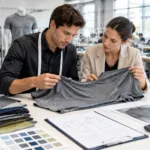


Choosing where to manufacture gym clothing is no longer just a cost decision. In 2026, brands are comparing speed, minimum order quantity, access to performance fabrics, private label flexibility, and the total cost of getting finished garments into stock. For many buyers, the real question is not simply whether one country is cheaper than another, but which sourcing region fits the product, launch plan, quality target, and reorder model. That is why comparisons involving sportswear manufacturers in china, the USA, Portugal, and the UK have become more practical than broad country rankings.
If your range includes leggings, training T-shirts, compression tops, gym shorts, or club activewear, custom gym apparel production support matters because fabric selection, fit correction, logo application, private label setup, and bulk consistency all affect the result more than the country name alone. We help buyers align these moving parts early, especially when a project needs sampling, trim decisions, low-to-medium MOQ planning, and a reliable path from development to bulk production.
From our manufacturing perspective, the strongest sourcing decisions come from comparing five factors first: lead time, MOQ, fabric capability, quality consistency, and landed cost. A buyer launching a premium studiowear line may choose differently from a teamwear distributor, a startup testing a small collection, or an established brand preparing repeat orders across multiple colorways.
Why this comparison matters for gym clothing sourcing in 2026
Gym clothing sits in a demanding category. Buyers need garments that stretch, recover, wick moisture, hold shape after repeated washing, and still present a clean retail look. That means country selection affects more than sewing cost. It can influence available fabric mills, trim sourcing, print durability, technical pattern development, and how easily size consistency can be maintained in bulk.
In 2026, buyers are also watching inventory risk more closely. Many brands do not want to overcommit before a style proves itself. Others need faster replenishment because sales are driven by seasonal campaigns, gym partnerships, influencer drops, or club programs. These realities make the sourcing region a strategic decision tied to business model, not only production price.
What buyers should compare first
Lead time and replenishment speed
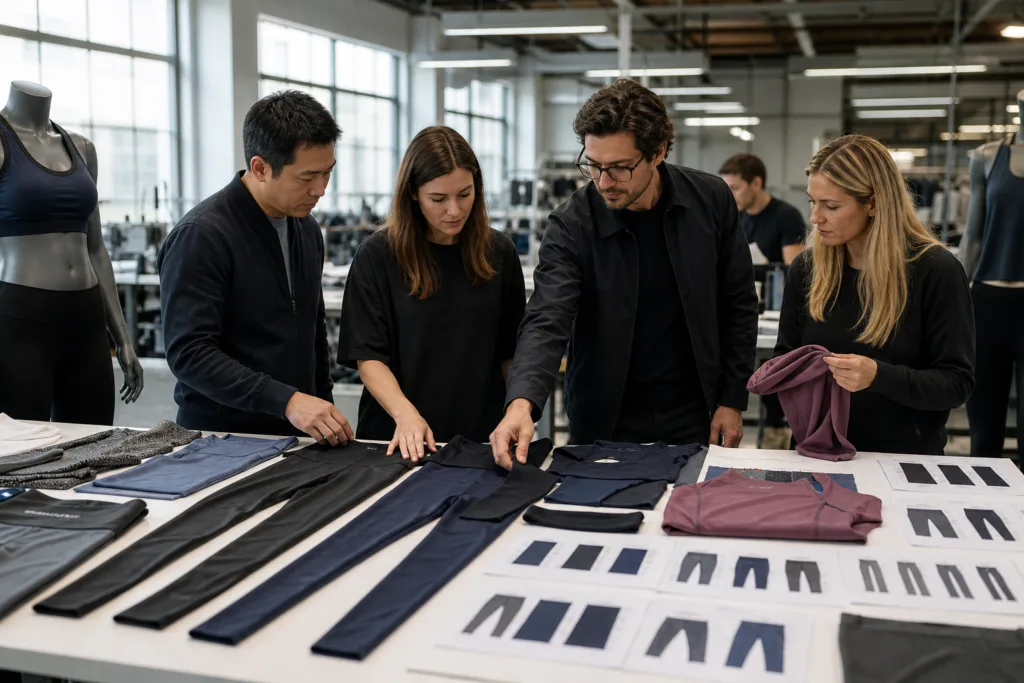
Lead time should be viewed in stages: development, sample revisions, bulk fabric booking, production, finishing, and freight. A country may look fast on paper but still become slow if fabric sourcing is fragmented or if communication gaps create repeated sample corrections. For gym clothing, fabrics with elastane, brushed finishes, jacquard textures, or compression performance often add extra approval steps.
MOQ and launch flexibility
MOQ affects cash flow, SKU strategy, and testing ability. Some suppliers are structured for high-volume efficiency and are less suitable for a startup with six styles and three colors. Others can support lower opening quantities but may use more standardized fabrics or have higher unit costs. Buyers should ask whether MOQ applies per style, per color, per fabric, or per total order.
Fabric expertise and technical capability
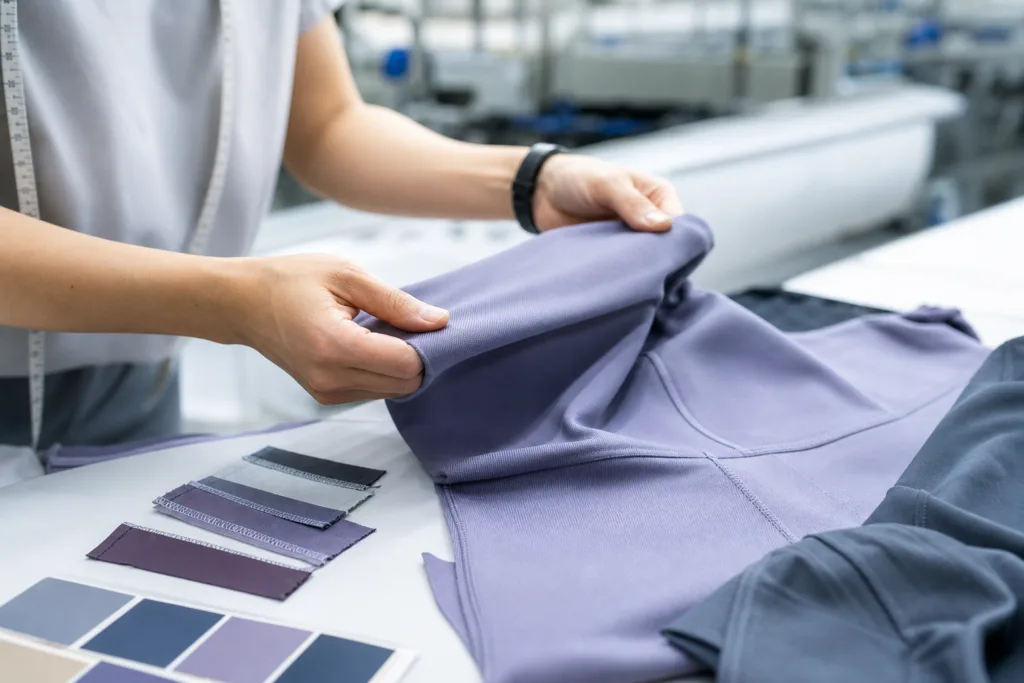
Performance activewear depends heavily on fabric development. Moisture management, stretch recovery, opacity, brushed hand feel, anti-pilling behavior, and seam compatibility all matter. In activewear sourcing, access to technical textile ecosystems can be as important as sewing capacity. The U.S. International Trade Administration provides a useful overview of technical textiles and performance fabric capability, which helps explain why some regions are stronger in specialized material development than others.
Quality consistency
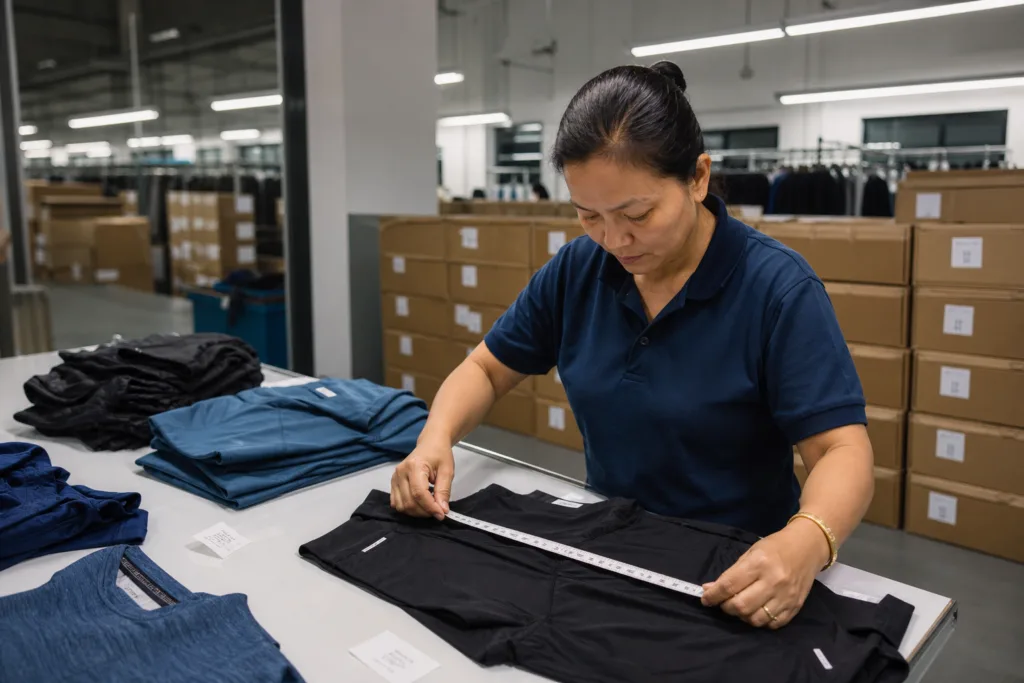
For gym clothing, quality consistency means more than checking final measurements. It includes panel symmetry, stitch stretch tolerance, shade consistency between fabric lots, logo placement, waistband recovery, seam durability, and whether dark colors remain stable after wash and abrasion. The right supplier should have clear in-line and final inspection points, especially for high-stretch garments.
Total landed cost
The lowest quoted unit price often does not deliver the lowest landed cost. Freight mode, duty exposure, development waste, remakes, packaging, labeling revisions, and reorder delays all affect profitability. Buyers should compare the full commercial outcome, not only factory ex-works price.
USA as a sourcing option
The USA is usually chosen for speed, easier collaboration, lower communication friction for domestic buyers, and better fit for replenishment or niche premium programs. It can be attractive for brands wanting closer oversight, smaller reorder cycles, and reduced transit uncertainty. The U.S. textile and apparel ecosystem also includes technical capabilities that support specialized products, which is one reason some brands continue to source domestically for select categories; the U.S. textiles industry overview offers helpful context on that capability.
From a buyer-fit perspective, the USA often works best for premium domestic brands, limited launches, fast reorder models, and categories where local speed is more important than achieving the lowest unit cost. It can also suit products requiring frequent fit meetings or close development feedback.
The main limitations are cost and, in some cases, narrower factory flexibility for broad style ranges at highly competitive prices. Unit prices are typically higher, and some factories focus on niche categories rather than full-package gymwear programs with many fabric bases and trim combinations.
Typical strengths of USA sourcing
- Fast communication and easier oversight for local buyers
- Strong fit for replenishment and premium short runs
- Potentially lower operational friction for domestic distribution
- Useful for niche technical products and close development cycles
Typical limitations of USA sourcing
- Higher labor and production costs
- Less suitable when the brand needs aggressive pricing across many SKUs
- May offer fewer broad-volume options than large Asian sourcing networks
China as a sourcing option
When buyers compare regions seriously, sportswear manufacturers in china remain central because China combines broad fabric access, trim sourcing depth, scalable production, and a mature ecosystem for customized activewear. This is especially relevant for brands needing matching sets, multiple logo techniques, color continuity across styles, and a path from sample refinement into larger bulk runs.
China is often the most balanced option when a buyer needs performance fabric choices, competitive pricing, and scalable capacity in one place. In our work on performance sportswear manufacturing options, we regularly see buyers choose China not because it is cheapest in every situation, but because it can deliver stronger cost-to-capability value across development, customization, and repeat production.
China is also strong when the garment program involves coordinated collections rather than one isolated style. That matters for gym clothing because brands often need leggings, bras, shorts, T-shirts, hoodies, and outer layers to align in color, branding, hand feel, and packaging.
The limitations are usually not about basic capability, but about supplier selection. The gap between a strong factory and a weak one can be significant. Buyers must verify pattern experience, fabric control, communication quality, and actual production specialization rather than assuming all factories are equal.
Typical strengths of China sourcing
- Deep supply chain for performance knits, trims, labels, and packaging
- Strong scalability from development to larger production volumes
- Wide customization options including screen print, heat transfer, embroidery, and private label finishing
- Competitive cost-performance balance for many activewear categories
Typical limitations of China sourcing
- Supplier quality varies, so screening matters
- Shipping time must be planned carefully for launch calendars
- Buyers need clear tech packs and approval discipline to avoid revisions later
Portugal as a sourcing option
Portugal is frequently chosen by brands that want European production, refined workmanship, and a more premium positioning. It can be a good fit for elevated activewear, fashion-forward athleisure, and collections where smaller regional supply chains and perceived production proximity support the brand story.
Portuguese factories are often appreciated for communication, workmanship, and comfort with premium jersey and knit categories. For buyers focusing on softer hand feel, cleaner finishing, and European market distribution, Portugal can be an effective option.
However, costs are usually higher than China, and not every project gains enough commercial benefit from that premium. Portugal may also be less attractive for buyers who need broad cost-sensitive scaling across many SKUs and colorways.
Typical strengths of Portugal sourcing
- Good fit for premium positioning and European distribution
- Often strong workmanship and finishing standards
- Useful for brands prioritizing brand story and regional production alignment
Typical limitations of Portugal sourcing
- Higher unit costs than many Asian options
- Less cost-efficient for aggressive scaling programs
- Fabric and trim options may still require careful confirmation by project
UK as a sourcing option
The UK can make sense for local brands that need very short development loops, domestic coordination, and smaller programs close to market. It is often considered for sampling, pilot runs, event-led launches, or products where speed and oversight matter more than unit economics.
For gym clothing, the UK may be useful when a brand wants to test fit quickly before committing to offshore production, or when marketing timing is tight and small-batch local output has value. Buyers with limited initial volume may also consider whether flexible small-batch production support is more important than domestic location alone, since MOQ structure often matters just as much as geography.
The main trade-off is that UK manufacturing generally becomes expensive at scale, and its supply chain depth for large, fully customized activewear programs is not always as broad as China’s. For many buyers, the UK is strongest as a speed or proximity solution rather than a long-term large-volume cost solution.
Head-to-head comparison of the four sourcing regions
| Region | Speed | MOQ Flexibility | Fabric Capability | Customization Depth | Cost Profile | Best Buyer Fit |
|---|---|---|---|---|---|---|
| USA | High for domestic buyers | Moderate | Good, especially niche technical areas | Moderate to good | High | Premium domestic, fast replenishment, niche programs |
| China | Moderate overall, strong at scale | Moderate to good by supplier | Very strong across activewear categories | Very strong | Competitive | Brands balancing cost, customization, and scale |
| Portugal | Good for Europe | Moderate | Good for premium knit categories | Good | Medium to high | Premium European-focused brands |
| UK | High for local buyers | Good for select small programs | Moderate | Moderate | High | Local tests, pilot runs, quick development |
Best country by buyer scenario
For startups testing a new gymwear line
Startups usually need manageable MOQ, enough customization to create a brand identity, and pricing that does not destroy margin. China often works well here if the supplier accepts a practical opening volume and offers realistic development support. The key is choosing a factory that can simplify early decisions rather than overcomplicate them.
For premium brands selling elevated activewear
Portugal or the USA may suit premium programs where local or regional production story, hand feel, finishing detail, and tighter communication carry brand value. Still, premium does not automatically exclude China. A well-managed Chinese factory can also support premium private label activewear when fabric and QC standards are clearly defined.
For fast reorders
USA and UK usually have the advantage for local buyers when the goal is immediate replenishment. If the base fabrics are already approved and stocked, local production can reduce response time significantly.
For scaling programs across multiple SKUs
China generally offers the strongest structure for brands planning to grow from a small line into a wider assortment. We often recommend comparing suppliers based on whether they can support OEM and ODM apparel development paths, because scaling is easier when development, pattern control, and bulk planning can stay under one coordinated system.
Gym clothing fabric and construction factors that affect sourcing decisions
Country comparisons are incomplete without fabric and construction analysis. Two factories in different countries may quote the same legging style, yet the cheaper quote may use a weaker fabric structure, lower elastane quality, less stable dyeing, or reduced GSM. These choices affect opacity, compression feel, and wash performance.
Fabric points buyers should verify
- Composition, such as polyester-spandex or nylon-spandex
- GSM and whether it matches intended support and opacity
- Stretch percentage and recovery behavior
- Brushed or unbrushed hand feel
- Moisture management expectations
- Colorfastness and pilling resistance
- Whether the fabric is in-stock, made-to-order, or custom dyed
Construction matters too. Flatlock seams, coverstitch finishing, gusset design, waistband structure, bar tacks, removable pads, and zipper selection all affect both comfort and production complexity. In our experience, buyers get better results when they ask not only for fabric swatches, but also for comments on seam suitability and stress-point reinforcement.
Private label and customization considerations
Gym clothing often requires more branding decisions than basic casualwear. Logo size, placement, stretch compatibility, wash durability, and visual balance all matter. Some logos work better as heat transfer on compression fabric, while others are more suitable for embroidery on jackets or looser outer layers.
Buyers should compare countries not only by garment construction, but by how well suppliers manage full-package branding details. For many activewear programs, this includes labels, hangtags, polybags, barcode stickers, carton marks, care labels, and retail-ready folding. Where a project depends on panel-engineered design, contrast inserts, or proprietary silhouettes, buyers should also assess whether the supplier offers cut-and-sew production support for activewear rather than relying only on stock-body decoration.
A practical customization checklist includes:
- Logo method: screen print, heat transfer, silicone print, embroidery, sublimation
- Brand trims: woven label, heat seal label, size tab, hangtag
- Packaging: individual bagging, size sticker, ratio pack, branded carton marks
- Color matching: pantone reference, strike-off approval, fabric lot control
- Placement approvals: artwork size, chest position, back neck, leg or hem placement
Sampling workflow and what to verify before bulk production
Before bulk order approval, the sample process should resolve fit, fabric behavior, branding application, and workmanship standards. This is where many sourcing decisions succeed or fail. A good supplier does not treat the sample as a formality. It is the stage where patterns are corrected, seam tensions are reviewed, and sizing logic is tested.
At Ninghow, we encourage buyers to verify the following before bulk confirmation:
- Base measurements and tolerance acceptance
- Fit comments after real wear testing
- Fabric hand feel and opacity in light and stretch conditions
- Logo durability after wash or friction testing
- Label content, placement, and packaging details
- Any construction point that may affect comfort during training
For gymwear, a fit sample should be tested in motion, not only on a hanger. Squat opacity, waistband grip, arm mobility, underarm comfort, and seam rubbing are practical issues that often appear only during wear.
Common sourcing risks by region and how to reduce them
USA and UK risks
The main risk is often cost misalignment. Buyers may appreciate speed but later discover the margin structure is too tight for scaling. Reduce this risk by comparing reorder scenarios, not just first-order convenience.
Portugal risks
The most common issue is assuming the premium positioning automatically justifies the cost. Reduce this risk by mapping whether your customer really pays for that premium and whether the factory’s fabric capabilities match your exact technical needs.
China risks
The main risk is inconsistent supplier quality across the market. Reduce this by checking activewear specialization, reviewing sample accuracy, confirming fabric sourcing processes, and documenting approvals carefully. Among sportswear manufacturers in china, the difference between a factory with true gymwear experience and one that mainly produces general knitwear is significant.
How to evaluate a gym clothing manufacturer beyond country alone
Country is a filter, not a final answer. The better evaluation method is to compare manufacturers on category fit, pattern competence, communication quality, trim management, and production discipline. A strong activewear supplier should be able to explain why one fabric suits compression leggings while another is better for loose training tops, and how those choices affect MOQ, price, and sewing performance.
Ask questions such as:
- What activewear categories do you produce most often?
- How do you control shade consistency across bulk fabric lots?
- What is your sample revision workflow?
- Which logo methods work best on high-stretch fabrics?
- How do you manage measurement tolerance in bulk?
- Can you support future scale if the style performs well?
The answers usually reveal more than the country label does.
When China offers the best balance of cost, capability, and scalability
China tends to be the strongest choice when a buyer needs several things at once: functional fabric access, broad customization, stable cost-performance, and room to scale. This combination matters for brands building a repeatable gym clothing business rather than a one-off launch. When the supplier is properly vetted, China can support both startup-level development and larger structured production programs.
That does not mean China is always the answer. If your model depends on local replenishment within days, a domestic option may fit better. But if the goal is to develop a complete collection with controlled costs, multiple trims, private label detail, and future growth capacity, China often provides the most commercially balanced route.
Final recommendation framework
Choose the USA when speed, domestic coordination, and premium local production outweigh cost concerns. Choose Portugal when European production alignment and premium workmanship support your brand positioning. Choose the UK when very close-to-market development or small local runs matter most. Choose China when you need the most practical combination of customization depth, fabric options, scalable production, and competitive total value.
For most growing brands, the right sourcing choice comes from matching country strengths to product complexity, reorder strategy, and margin structure. That is why sportswear manufacturers in china remain highly relevant in 2026: not because every buyer should source there automatically, but because the region often offers the most balanced solution for gymwear brands that need capability and scale without losing commercial control.
FAQs
Which country is usually best for startup gym clothing brands?
For many startups, China is often the most practical option because it can combine broader customization, better fabric variety, and more scalable pricing than higher-cost regions. The right choice still depends on your MOQ tolerance, launch budget, and whether you need local speed or long-term growth capacity more than short-term convenience.
Is the USA better than China for fast gym clothing reorders?
If your business is based in the USA and the factory already has approved materials or quick access to them, domestic production can usually support faster replenishment. China can still work well for planned repeat orders, but it generally requires stronger forecast discipline because freight and production planning add more time.
What MOQ should buyers expect for custom gym clothing?
MOQ varies by factory, fabric type, color count, and level of customization. Buyers should ask whether the minimum applies per style, per color, or per total order, because those structures affect launch planning differently. A low MOQ can be useful, but it may also increase unit cost or limit custom fabric choices.
How important is fabric capability when choosing a sourcing country?
It is critical because activewear performance comes from the fabric as much as the sewing. Stretch recovery, opacity, hand feel, moisture management, and pilling resistance all affect the final product. A country with strong activewear fabric access can often deliver better overall value than a region that looks cheaper on cut-and-sew price alone.
Should brands sample locally first and then bulk produce overseas?
That can be a smart approach when fit is complex or launch timing is tight, but it only works if the overseas bulk supplier can reproduce the local sample accurately. Buyers should make sure patterns, measurements, seam details, and fabric specifications transfer clearly, otherwise the bulk result may differ from the approved prototype.
How do buyers compare landed cost instead of only unit price?
Landed cost should include development expense, fabric waste, trims, packaging, freight, duties where applicable, and the financial impact of delays or quality issues. A slightly higher factory price can still be the better decision if it reduces remake risk, improves consistency, or supports more efficient scaling later.