



Introduction: Why Sampling Sets the Tone for Streetwear Hoodie Success
Before your brand invests in the next hit streetwear hoodie, navigating the sampling phase with a manufacturer is essential. A clear, detailed approach—covering everything from fabric to packaging—saves costly do-overs and delays. Each decision you make before sampling shapes quality, lead time, and brand differentiation. For brands in the streetwear space, hoodie details like drop shoulder silhouettes, specialty washes, bold prints, and unique trims aren’t just design extras—they’re business-critical choices that impact factory readiness, production cost, and, ultimately, sell-through. This article breaks down what brands must clarify for their hoodie samples, minimizing back-and-forth and setting the stage for smooth bulk orders.
For readers comparing manufacturing options or preparing technical packs, a useful next step is to see in detail how manufacturers outline scope, customization, and production capacity: working with a hoodie manufacturer. Reviewing this resource gives valuable context on typical custom options, MOQ expectations, and the manufacturing realities specific to hoodies—which can inform and streamline your sampling preparations.
Streetwear Hoodies: What Brands Should Ask a Manufacturer Before Sampling
Understanding Streetwear Hoodie DNA
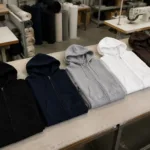
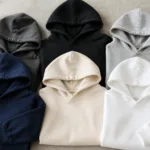
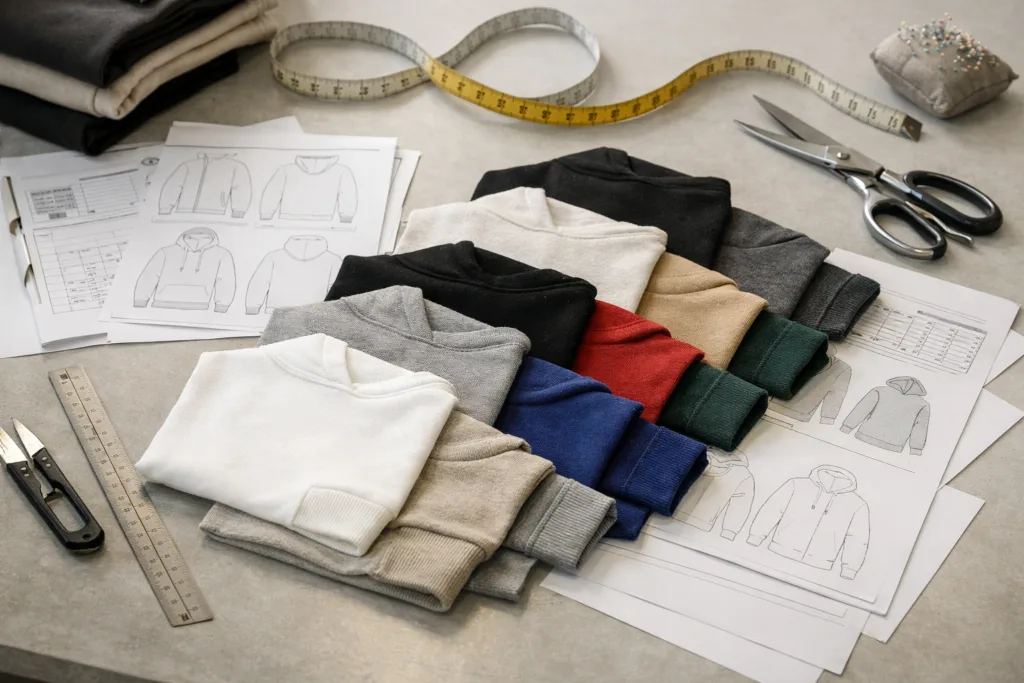
Brands must start with the fundamentals. Streetwear hoodies have their own DNA: dropped shoulders, oversized fits, statement prints, specialty washes, and bold branding. Before sampling, define exactly what “streetwear hoodie” means to your project. What’s the shape? Where does the seam sit? Which aesthetic cues set it apart from basic athletic hoodies or mainstream blanks?
Defining Your Sampling Objectives
- Is the sample a sales tool, pre-production tool, or both?
- Are you validating fit, materials, trims, or all of the above?
- What’s your timeline from sample to bulk order?
Specifying Fabric: The Foundation of Every Streetwear Hoodie
Cotton, Blends, and GSM: Key Talking Points
The most common material for streetwear hoodies is brushed fleece (often 100% cotton, cotton-poly blends, or French terry). Streetwear brands favor heavier weights—think 350–480gsm—for a premium, structured feel. Before sampling, communicate:
- Preferred fiber (100% cotton, organic, recycled, etc.)
- Knit structure (fleece, French terry, waffle)
- Target GSM/oz for body and rib components
- Shrinkage and stability requirements
Fabric Sourcing and Reference Swatches
If you have legacy samples or market references, send them to your manufacturer to reduce ambiguity. If you lack standards, your factory (like Ninghow) can recommend proven fabrics popular in the streetwear segment. Make sure to request hangers or cuttings for approval before any cutting begins.
Sustainable and Specialty Yarns
Clarify any recycled or organic content needs early; lead times can be longer and MOQs higher for sustainable fabrics. Also, share information about custom yarn-dye colors or melanges upfront.
Wash Treatments and Dye Effects: Prepare for Complexity
The Impact of Prewashing and Garment Dyes
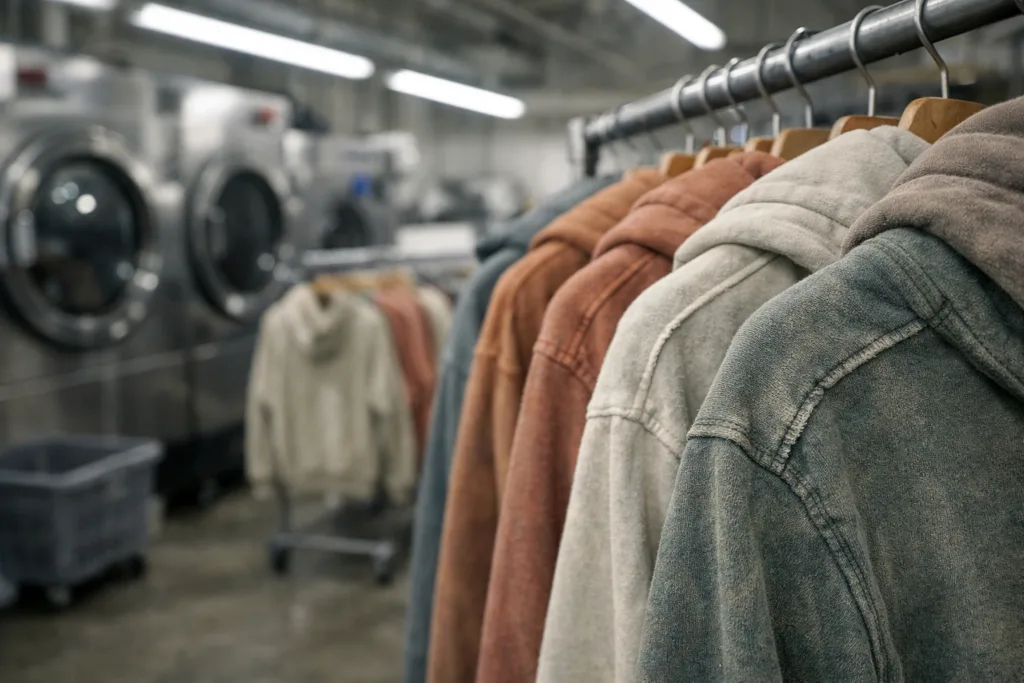
Vintage washing, garment dye, enzyme, stone, acid, and sandblasting washes are hallmark streetwear looks. These treatments create planned irregularity. But they can cause shrinkage, color variation, and increase sampling cost. Always specify:
- Type of desired wash (photo examples help)
- Color targets and acceptable range of variation
- Faded, distressed, or overdyed requirements
Water Usage and Compliance
If your brand requires testing for colorfastness, finish safety, or restricted substance lists (RSLs), communicate this during sampling. Wash processes may require additional outside lab testing, especially for youth-targeted brands.
Fabric vs. Garment Dye
Explain whether you want the fabric dyed before sewing or apply garment dye/wash after full assembly. This decision affects unity across batches and costing.
Drop Shoulders, Oversized Fits, and Pattern Precision
Communicating the Drop Shoulder Silhouette
Set-in sleeve, raglan, and drop-shoulder patterns all create different looks and fits. Streetwear leans on drop shoulders for that relaxed, slouchy attitude. Share reference photos, measurements (shoulder width, chest, length), and clarify fit intent (oversized, boxy, cropped, longline) in your sampling tech pack.
Pattern Adjustments for Bulk
Note that pattern scaling (grading for S-XXL) can distort the fit; confirm with your manufacturer how they handle grading rules for dropped shoulders and boxy bodies.
Bold Prints, Embroidery, and Branding Effects
Preparation for Printing Methods
From screen prints to puff, flock, discharge, and reflective inks, the choices are endless. Streetwear hoodies often require complex placement, multiple colors, or mixed techniques. Send layered artwork files, Pantone codes, and print size/position maps in advance.
Special Print Techniques and Sample Costs
- Direct-to-garment (DTG) for photo prints
- Silicone or 3D gel prints
- Patch appliqué or heavy embroidery
Identify if any printing or embroidery will be handled after garment washing, as this impacts surface texture and effect.
Intentional Aging, Distressing, and “Made to Look Worn”
How to Brief for Planned Distressing
“Vintage” and “distressed” looks involve holes, grinding, abrasion, enzyme, or spray paint effects. Create annotated sketches or photo callouts so the manufacturer knows where and how much distressing to apply. Overly vague terms like “a little bit worn” can lead to inconsistent results sample to sample.
Limitations and QC for Distressed Garments
Every distressed garment is slightly unique—clarify how much variance is acceptable and how you want factory QC to check samples versus bulk.
Trims, Zippers, Drawcords, and Hardware That Matter
Choosing and Sourcing the Right Components
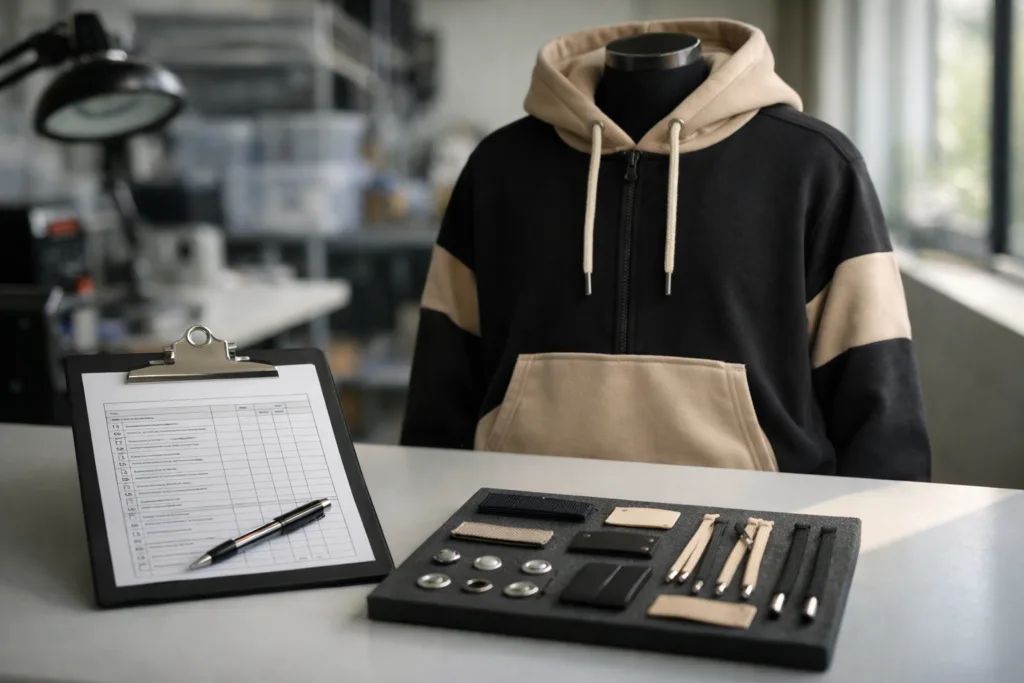
Streetwear often elevates basics with custom aglets, branded eyelets, chunky YKK zips, or statement drawcords. List:
- Exact zipper types (metal, plastic, reversible, waterproof, branded puller)
- Preferred labels (main, size, care, swing tags)
- Any woven patches, leather hits, or custom badges
If you don’t spec these, the factory will choose standard industry items, which may not match your vision.
MOQ and Lead Times for Custom Trims
Custom trims often have their own MOQs and separate delivery timelines. Ask about stock vs. custom options upfront; this can impact your project’s critical path.
Packaging and Presentation Expectations
Protecting and Presenting Streetwear Hoodies in Transit
Will hoodies be bagged in branded poly, recyclable materials, zip pouches, or a combination? State your requirements, including hang tags, wrap cards, or packing order. Well-communicated packaging helps avoid snags at customs or in retail delivery.
Compliance for Retail or DTC
If you ship direct to customer, include barcodes, folding method, and any accessories needed (stickers, pins, limited-edition extras). For retail or e-commerce, clarify carton quantities and master-packing expectations.
Sizing, Grading, and Tolerance Requests
Streetwear Sizing Standards
Streetwear brands often break size conventions. Standardize your own set of measurements for body width/length, sleeve drop, and hood depth. Provide a table if possible (see example below):
| Size | Body Width | Body Length | Sleeve Length |
|---|---|---|---|
| S | 60 cm | 68 cm | 58 cm |
| M | 62 cm | 70 cm | 60 cm |
| L | 64 cm | 72 cm | 62 cm |
Establishing Acceptable Tolerances
Suggest clear +/– tolerances (e.g., +/- 1.5cm on body width) on your tech pack or PO. This helps avoid disputes after sampling.
Minimum Order Quantities (MOQ): Getting a Straight Answer
Factors Affecting Streetwear Hoodie MOQ
MOQ isn’t just one number. It depends on fabric, dye, trims, and printing technique. Clarify whether the stated MOQ is per style, color, or total order. For highly custom pieces, trim MOQs may be the true constraint.
Negotiating Reasonable Starter Runs
If you’re a new brand or testing the market, explain your quantity targets and discuss whether your manufacturer offers sample runs or “test orders” with surcharge. Factories like Ninghow often accommodate lower quantities for brands scaling up, as long as expectations are realistic.
Technical Packs, Reference Samples, and Communication Tools
Creating Clarity with Tech Packs
Failure to specify all the above leads to repeated sampling and increased costs. Use:
- Illustrated tech packs (front, back, detail views)
- Measurement specs (with tolerances)
- Artwork files labeled by color and placement
- Physical reference samples, if available
Factory Communication Practices
Frequent, clear written and photographic communication is vital. Use annotated images, video calls when practical, and summary emails agreeing on next steps. Overcommunication early means less firefighting later.
For more detail on minimizing communication gaps, see Ninghow’s deep-dive on understanding the apparel sampling process. Thorough preparation at this stage often saves substantial cost and delay downstream.
Sampling Costs, Surcharges, and Expected Timelines
What Is the True Sampling Cost?
Sampling is rarely free for streetwear. Expect to pay for custom patterns, prototype labor, unique treatments, and shipping—even before bulk PO confirmation. Confirm whether those fees are deducted from your final order or considered stand-alone.
Sample Lead Time Management
Normal sample cycles run 10–20 days, but special washes or trims can add another week or two. Pre-approve artwork, fabric, and trims fast to avoid “dead time.”
Bulk Production Preparations
From Approved Sample to Bulk Order
Keep master records of all final approved materials, fit notes, and photos. If you make last-minute changes, document them clearly to avoid factory confusion. In streetwear, consistency from sample to bulk is often the hardest win—especially with specialty effects.
Critical “Golden Sample” Protocols
Tag one sample as your “golden” for QC reference. Both your team and your manufacturer should sign off on this unit as the only standard for all bulk goods.
Streetwear Hoodie Quality Control: Sampling Phase Matters
Control Points Unique to Streetwear
Inspect wash effects, print alignment, drop shoulder integrity, and trim placement carefully in the sample. Use studio and daylight photos to check color and effect. Streetwear’s added complexity means extra attention at sample inspection pays off at scale.
Documentation and Approvals
Ask your factory for a sample sheet documenting every key material, effect, and garment measurement. Approve by signature before authorizing volume production.
When working with experienced manufacturers such as Ninghow, these steps are integrated into everyday practice. From fit tests to special effect QC, established procedures help brands minimize costly mistakes and keep creative intent intact throughout the supply chain.
If you need broader context on choosing the right manufacturing partner for these crucial steps, Ninghow’s resource on finding a reliable clothing manufacturer can help clarify the core selection criteria for quality-driven apparel brands.
Key Takeaways: Reducing Communication Costs in Streetwear Hoodie Sampling
- Prepare your specs, reference images, and priorities before contacting factories
- Clarify every detail—especially wash effects, trims, and prints—to avoid misalignment
- Recognize that “streetwear” is not a generic hoodie; communicate your intended value and differentiators
- Use written, visual, and sample-based communication; document every change
- Respect factory sampling fees, timelines, and MOQ constraints
- Partner with producers who understand streetwear complexity and are transparent about challenges
Frequently Asked Questions
What is the most important thing to specify for a streetwear hoodie sample?
Brands must be precise about fabric type, weight, color, and finished look, as these influence cost, quality, and the “streetwear” effect more than any other variable.
How do wash treatments change the hoodie sampling process?
Treatments like stone wash or garment dye may cause color and size variation, require extra sample rounds, and impact final cost and lead time.
What details should be included in a good streetwear hoodie tech pack?
Include clear measurements, fabric specs, all wash/print/trim details, placement of graphics, packaging notes, and reference images to avoid confusion.
Why do custom trims and hardware often increase the MOQ?
Custom trims (like special zippers or eyelets) are usually produced by outside suppliers with their own minimums, making small quantity orders more complex.
Can I request a single sample in my custom color or wash?
Usually yes—with a surcharge—but for difficult colors/washes, factories may require small batch dyeing or treat the sample as a prototype, not production standard.
What should I do if the sample does not match my reference exactly?
Document issues with annotated photos and clear feedback; work with your manufacturer on practical solutions—minor variance is expected with specialty finishes.