








Understanding Apparel Lead Times: Why It’s More Than Just Factory Days
When managing apparel logistics lead time, many buyers focus solely on how long a factory takes to make garments. But true lead time covers far more. Raw material delays, port congestion, shipping schedules, customs clearance, and last-mile logistics—all these critical steps shape your delivery timeline. Ignoring logistics factors can cause surprises, missed launches, and unstable supply chains even with the most efficient garment factory.
The Journey from Factory Floor to Finished Apparel
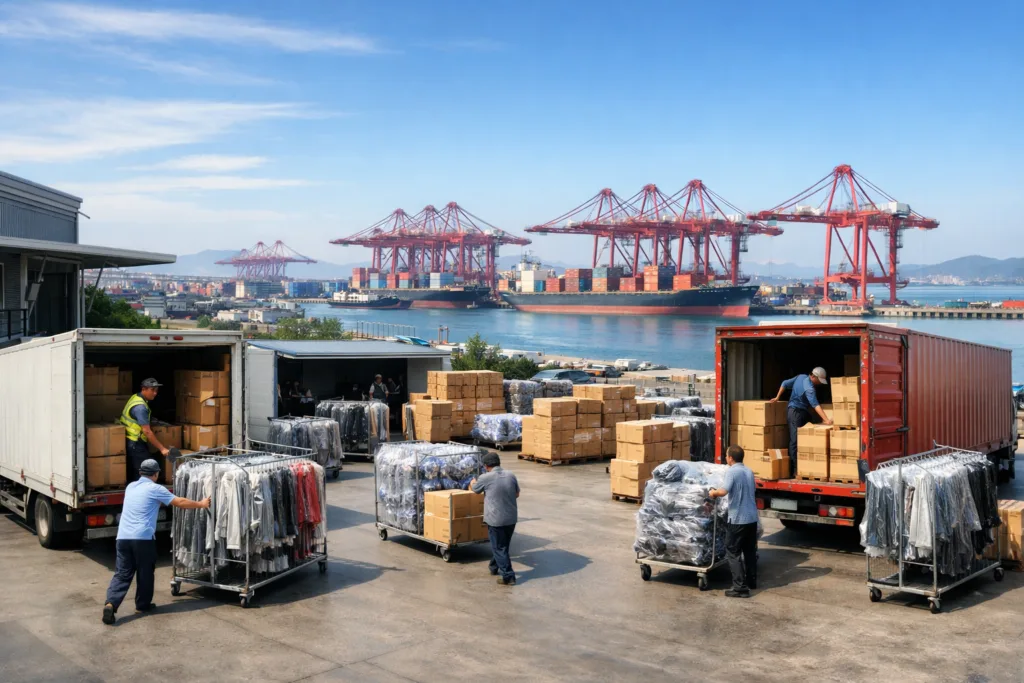
Apparel production starts on the manufacturing line, but successful delivery relies on what happens outside the factory. Once your order is finished, it enters a complex logistics pipeline that determines when, and even if, your products reach the destination on time. For many brands sourcing from China, understanding this journey is critical to predicting true apparel logistics lead times.
Key Stages Shaping Apparel Delivery Timelines
- Factory Production: Material sourcing, cutting, sewing, QC, and packing.
- Port Access: Transportation from the factory to port cities like Shanghai, Shenzhen, or Ningbo.
- Shipping Schedules: Booking space on vessels, awaiting next sailing date.
- Port Congestion: Potential wait times for loading/export clearance.
- Customs and Clearance: Approval for export (and later, import in buyer’s country).
- International Shipping: Ocean or air transit—impacted by route, container space, and weather.
- Final Mile Logistics: Drayage from destination port to your warehouse or retail location.
Why Port Access Defines Apparel Logistics Lead Time
Not all garment factories are equally close to major Chinese ports. If production sites are inland, moving containers to coastal export hubs adds days and sometimes risk, especially with road freight backlogs or weather events. Factories in cities like Guangzhou or Xiamen may offer shorter trucking time to the port compared to those hundreds of kilometers inland.
Port efficiency also matters: Busy ports may have longer queues for vessel berthing, while secondary ports might offer faster export clearance but fewer direct shipping routes. These differences can add—or save—days in your overall garment lead time logistics.
Shipping Schedules: Hidden Days on the Calendar
Booking a container is not as simple as calling a carrier. Factory production may be complete, but if the next ship departs in three days, your finished goods sit idle, costing you valuable time. Major ports like Shanghai offer frequent sailings, but during peak season or with tight global shipping capacity, getting container space can be unpredictable.
If you want a deeper breakdown of how non-production delays add up, see this practical manufacturing timeline for real-world examples from inside Chinese factories.
Customs Clearance: The Non-Negotiable Step Before Exports
Chinese apparel exports must clear customs before boarding vessels. Documentation accuracy—including commercial invoices, packing lists, commodity codes, and certificates of origin—directly affects how quickly customs allows goods to move. In some cases, missing or incorrect paperwork can hold back containers for days, disrupting even the tightest production schedules.
Customs authorities globally are tightening checks for garment shipments, especially on compliance or origin declarations, to reduce fraud. Efficient factories maintain dedicated export documentation teams who work closely with their freight forwarders.
International Shipping Routes: Ocean vs. Air Freight for Garment Lead Time
Most China garment export logistics flow by ocean: Container ships are cost-effective but slow, typically taking 3–6 weeks to reach key markets like the US, EU, or Australia. Air freight is much faster (3–7 days), but costs up to 8x more—and even then, flights can be delayed by air cargo congestion or capacity limits.
| Route | Average Transit Time | Cost Factor |
|---|---|---|
| East China to US West Coast (Ocean) | 15–21 days | Low |
| South China to Europe (Ocean) | 28–35 days | Low |
| China to Europe/USA (Air) | 3–7 days | High |
How Logistics Disruptions Impact Clothing Shipping Lead Time
Shipping bottlenecks arise from global events (COVID-19 outbreaks, port strikes, or Suez Canal blockages) as well as local Chinese holidays, typhoons, or customs slowdowns. Even small hiccups can cascade across complex supply chains, especially if you need precise launch dates or promotional events.
For brands, this means planning not just for “best-case” factory schedules, but building buffers and backup logistics plans into your clothing shipping lead time.
The Buyer’s View: Stability Is Reliability, Not Just Speed
Garment buyers value predictable, repeatable delivery timelines even more than just the fastest possible speed. If a supplier can consistently meet ETAs quarter after quarter, buyers are more likely to build long-term trust—especially for seasonal or promotional apparel launches. Unpredictable delays in port clearance or shipping erode this confidence, sometimes outweighing high garment quality or favorable prices.
Practical Steps: How Brands Can Reduce Apparel Export Delays
- Ask for direct lines to port from factories—remote or inland sites may make lead times harder to predict.
- Request transparent production and shipping updates (including vessel booking and port schedules).
- Plan for “Golden Week” and other major Chinese holidays, which halt both production and logistics for several days.
- Pre-clear documentation with your freight forwarder to minimize customs surprises.
- Build time buffers into launch calendars, especially for high-priority or event-driven orders.
Comparison Table: Port and Logistics Variables That Shape Apparel Lead Times
| Variable | Impact on Lead Time | Mitigation |
|---|---|---|
| Factory Distance from Port | +1–5 days (trucking delays) | Choose factories near major ports |
| Port Congestion | +2–7 days (peak season) | Alternate ports or flexible shipping |
| Sailing Frequency | +0–5 days (low frequency) | Book well in advance |
| Customs Clearance | +1–10 days (issues/paperwork) | Accurate documentation, proactive prep |
| Weather/Strike Events | Unpredictable | Buffer time and risk contingency |
Why Buyers Perceive Logistics as Part of Overall Stability
A supplier’s ability to manage logistics—port access, vessel bookings, customs knowledge, and last-mile tracking—is inseparable from how buyers judge their stability. Reliability here signals real control and maturity. Many veteran brands now survey not only a factory’s sewing or finishing skills but also their track record with stable supply chains and consistent export performance.
How Port Access and Logistics Shape Apparel Lead Times
In conversations with experienced production leads (like at Ninghow), there is a recurring principle: A factory can run at world-class speed, but if logistics falter—missed bookings, slow customs, delayed documents—the end customer sees only missed deadlines. For growing brands, this means constantly re-evaluating where, how, and with whom you produce, and refusing to see “lead time” as just what happens inside four factory walls.
To better control end-to-end schedules, Ninghow coordinates regular production audits and maintains updated contacts with forwarders at both major and secondary Chinese ports, so team apparel shipments rarely sit unaccounted for after leaving the sewing floor.
Integrating Logistics Planning Into Your Apparel Production Timeline
For modern apparel brands, it’s critical to treat logistics as a phase in the production schedule, not an afterthought. Upfront discussions about port options, preferred carriers, and buffer days keep everyone—from designer to sales manager—aligned. Failing to do so can stretch even a 25-day “factory” order into a 40-day ordeal when logistics are overlooked.
As this vertical coordination in supply chains article covers, smooth handoffs between each phase (fabric, sewing, QA, logistics) reduce these domino effects and boost on-time rates immensely.
Case Study: Real-World Impact of Logistical Delays on Seasonal Apparel Orders
Let’s consider a typical seasonal sportswear campaign. If the factory finishes goods on March 1, but container space is only available March 7, and a sudden port congestion adds three more days, your on-shelf date may slip past your planned event. In Ninghow’s experience, mapping every phase upfront—factory, transport, bookings, customs—keeps surprises to a minimum for critical drop dates. The lesson: Logistics is a source of competitive risk, not just a back-office detail.
Conclusion: Mastering Apparel Logistics Lead Times for Competitive Advantage

In today’s global apparel market, managing lead time means mastering every phase from sewing to shipping. Focusing only on factory speed hides the true sources of delay. Port access, vessel schedules, customs, and last-mile logistics can make or break your launch timelines. For buyers, stability is built on a partner’s ability to deliver consistently—not just quickly—across production and logistics alike. Smart brands and manufacturers see “lead time” as a cross-functional discipline, driving fewer surprises and more reliable launches every season.
Frequently Asked Questions
How do Chinese public holidays affect apparel shipping timelines?
Chinese holidays, like Golden Week and Chinese New Year, pause both factory production and port operations, often causing multi-day or week-long backlogs. Plan orders and logistics well in advance of any major holiday period.
Is air freight a better solution for urgent apparel orders?
Air freight can cut delivery times from weeks to days but is significantly more expensive than ocean shipping. It’s best used for high-margin or deadline-critical orders, not standard restocks.
What paperwork is required for smooth apparel export from China?
Key documents include the commercial invoice, packing list, export declaration, certificate of origin, and correct commodity codes. Incorrect or missing documents can delay customs clearance by days or more.
Why does a factory’s location matter for apparel logistics?
Factories closer to major ports cut trucking time and risk. Remote or inland sites add lead time and logistics complexity, especially during transport or weather disruptions.
How can brands reduce surprises in apparel delivery schedules?
Communicate early about logistics, monitor booking and port updates, and add buffer days for peak seasons or unpredictable events. Choose established partners with stable supply chain histories.
What is the biggest risk to consistent apparel lead times today?
Global shipping disruptions—like port strikes, container shortages, or new customs rules—pose the largest risk. Building flexibility and staying informed can protect brand timelines.
Related Reading
- Why Reliable Repeat Orders Still Favor China’s Apparel Factories
- China vs. India: Essential Supply Chain Differences for Apparel Brands
- Rush Orders Decoded: How Chinese Factories Speed Up Production Timelines
- The Hidden Costs Brands Pay for Unstable Apparel Supply Chains
- How to Build a Truly Stable Clothing Supply Chain for 2026 Launches