





Introduction: The Hidden Speed Engine of Apparel Brands
For brands pushing fast fashion or custom team apparel, speed isn’t just a bonus—it’s the backbone of survival. Many wonder why, even as alternative countries race to compete, China’s fabric and trim ecosystem still gives brands a speed advantage. The answer rests in the dense, coordinated supply chain network for everything from fabrics to trims like labels, zippers, drawcords, patches, and printing. This web of suppliers doesn’t just support manufacturing—it powers accelerated timelines from sampling to bulk production, supporting brands who can’t afford to miss a season or an event drop.
Understanding the Fabric and Trim Ecosystem: More Than Just Materials
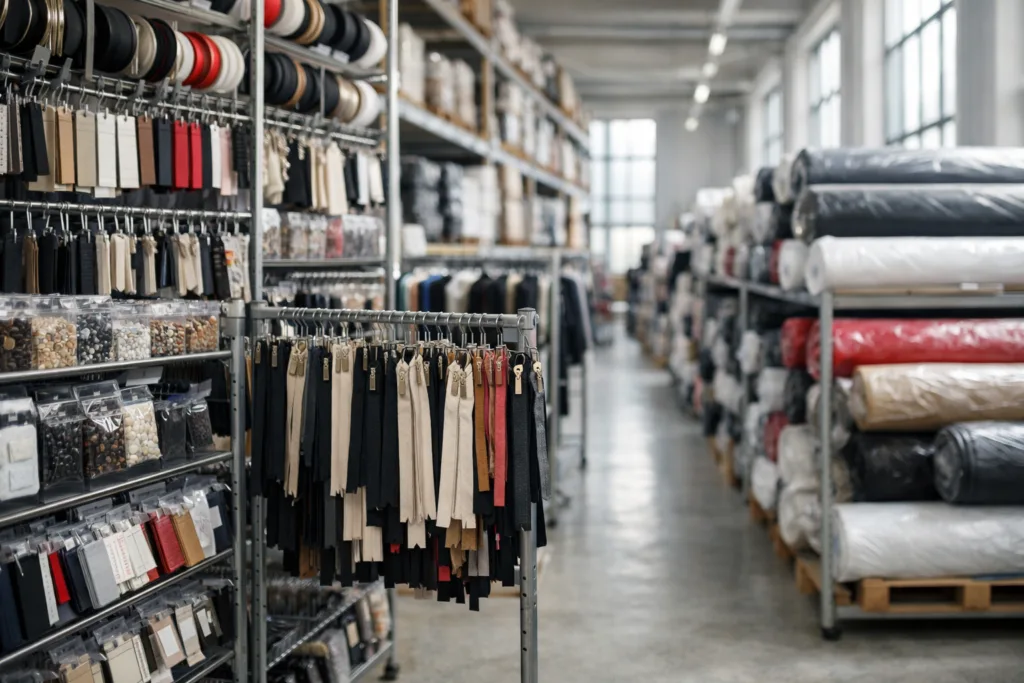
China’s supply chain isn’t just about accessing affordable materials. It’s about the synchronized availability of both fabrics and trims, which underpins rapid product development for apparel brands. Trims—labels, zippers, drawcords, patches, printing, buttons—are often the detail elements that make or break a garment’s final look, utility, and delivery speed. When trims are aligned and accessible, the entire apparel launch process compresses, allowing brands to seize market opportunities faster.
Why China’s Fabric and Trim Ecosystem Still Gives Brands a Speed Advantage
The interconnectedness of sourcing fabrics and trims in China gives brands flexibility other regions struggle to match. In cities like Guangzhou, Keqiao, and Dongguan, hundreds of specialized suppliers operate within short logistical reach. Factories can coordinate same-day swatch runs, overnight delivery of specialty zippers, and test print runs with local partners, slashing typical wait times found in more scattered apparel markets.
The Chain Reaction: Labels, Zippers, Drawcords, Patches, Printing
How do small design choices translate to real-world speed? Here’s how trims drive—or stall—production:
- Labels: Custom woven or printed labels, if unavailable locally, can add 7–14 days’ delay. In China, well-established trim vendors can turn around production label sets within 2–3 days or sample packs overnight.
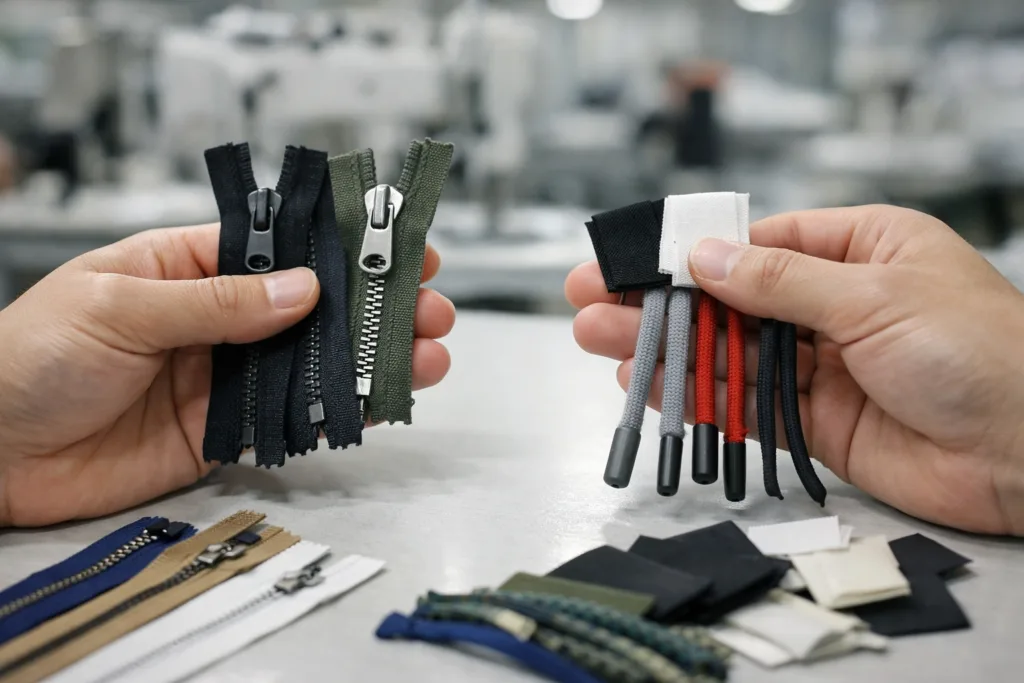
- Zippers: Sourcing branded zippers (like YKK or SBS) with custom pulls in China is often a same-city task, while other countries need longer lead times or heavy import reliance.
- Drawcords: The ability to choose, sample, and color-match cords accelerates hoodie and bottoms development—China’s trim-makers work nearly in parallel with fabric mills.
- Patches: Custom embroidery or silicone patches are made and delivered across garment workshops rapidly due to neighborhood clusters of trim shops.
- Printing: Screen printing, heat transfer, or reflective logos can be sampled in rounds, adjusted, and approved quickly thanks to close coordination and technical alignment.
Vertical Coordination Shrinks Lead Times
When fabrics and trims are local, aligned, and coordinated, brands can trim weeks off standard development cycles. One example: Instead of waiting for imported zippers or labels to clear customs, everything is pulled from the local ecosystem—even for custom requirements. That’s a core reason why China’s apparel development cycles are routinely faster.
Ninghow’s Practical View: Why Speed Means More Than Labor Cost
From the manufacturing floor, speed is not just about the price of labor. It’s about preventing costly bottlenecks. At Ninghow, order delays most often result from out-of-sync trim arrivals, not factory sewing time. Coordinated trim and fabric supply means a typical order doesn’t get stuck waiting for special color drawcords or high-density logo tags—everything hits the line together, and production flows as planned. It’s only possible when trim vendors, mills, and garment factories operate as a real-time network, not isolated islands.
Comparative Table: China vs. Alternative Apparel Sourcing Destinations
| Factor | China | Vietnam/Bangladesh/etc. |
|---|---|---|
| Fabric Sourcing Speed | 2–7 days (local mills, vast inventory) | 7–21 days (import-heavy, less variety) |
| Trim Variety (labels, cords, zippers, etc.) | All types, vast local options, rapid sampling | Limited, often imported, longer approval cycles |
| Communication Flow | Direct with makers, iterative rounds possible | Often through middlemen, less flexible |
| Risk of Delay | Low—Rarely await imported trims | High if non-standard trims used |
| Overall Apparel Development Speed | Consistently faster, more predictable | Slower, more prone to hiccups |
How Labels Influence Apparel Development Timelines
Labels are the finishing touch, but an imported or out-of-stock label can halt delivery. In China, teams choose from hundreds of in-market label suppliers. Brands can order custom logo labels, size tags, and care instructions together, get physical samples in a single package, and sign-off without international shipping delays. That’s rare in less-developed apparel hubs.
Apparel Trims and Quick Bulk Approval
When every trim comes from a local network, duplicate samples can be made for bulk sign-off or sent to different decision-makers. This “sampling at speed” is one of China’s signature strengths—and saves weeks on each development round. For a deeper breakdown of rapid sampling, discover how fast sampling works for apparel brands in China.
Zippers: Why Local Supply Chains Cut Weeks Off Your Calendar
An innovative zipper or branded pull can be a collection highlight—or a project’s biggest logistical headache. The China fabric trim supply chain puts zipper specialists, dyehouses, and cut-and-sew factories within days, not weeks, of each other. For apparel brands relying on design innovation or requiring color-matched trims, this greatly reduces approval and rework delays.
Ninghow’s Insight: Sampling Zippers Efficiently
A typical workflow at a garment workshop like Ninghow: the sample room orders 2–3 zipper options from local vendors, tests colorfastness and feel, then runs one-off prototypes on finished samples—all in under a week. For international brands, this approach offers certainty at every design milestone.
Drawcords: The Small Detail That Impacts Big Picture Timelines
For categories like hoodies, joggers, and athleisure, drawcords are both functional and branding elements. China’s trim markets allow you to request matching, custom-tipped cords, or silicone-dipped ends overnight. Overseas sourcing usually means default options—or waiting for imports. In a market driven by micro-season launches, even minor delays can derail marketing calendars.
Patches and Embroidery: Local Sourcing Means Faster Swaps
Well-developed local patch makers, embroidery houses, and silicone badge providers let brands update, swap, or re-approve designs with minimal downtime. In other sourcing regions, changing a logo material can mean production comes to a standstill.
Printing: Parallel Process Saves Weeks
Screen print, heat transfer, DTF, and digital printing are coordinated alongside garment assembly. Brands make changes without delaying fabric delivery. This flexible, parallel workflow is rarely matched elsewhere and is a cornerstone of China’s speed advantage.
One-Stop Sourcing: A True Speed Multiplier
China’s supply hubs aren’t just more comprehensive—they’re denser, more experienced, and designed for speed. Vendors know how to align colors, test compatibility, and deliver trims with production yardage, so the entire garment comes together on schedule.
What Holds Back Other Sourcing Destinations?
Brands exploring overseas options like Vietnam or Bangladesh often hit snags with trim lead times, sampling delays, or incomplete supply networks. Most lack China’s depth of vertical integration and local sourcing variety, which means delays can snowball from a single imported patch, label, or specialty zipper. For a deeper supply chain breakdown, see the main guide on why China’s supply chain stays stable for apparel.
Integrated QC: Why Coordinated Sourcing Means Fewer Surprises
Having trims, fabrics, and components from the same supply base makes it much easier to synchronize quality inspections. Localized networks mean faster fixes when defects are spotted—saving time, cost, and rework, and keeping bulk production on schedule.
Real-World Impact: Timeline Compression from Sample to Shipment
Brands using China’s full ecosystem often turn a sample idea into shipment-ready bulk stock in as little as 4–6 weeks (sometimes less for repeat runs). The process is driven less by unpredictable logistics and more by real-time planning. This pace is almost impossible in split or import-heavy supply chains.
When Apparel Trims Slow You Down: Common Pitfalls
There are real risks if you assume every trim can arrive “just in time.” Problems arise when rarity or high custom requirements outpace the network’s capacity—or if brands opt for non-standard materials not common in Chinese markets. Experienced manufacturers work with buyers to design around supply realities, not just wish lists.
Future-Proofing: How Brands Can Leverage China’s Ecosystem for Long-Term Speed
Brands planning longer-term launches should ask these questions:
- Are all trims and fabric elements available locally?
- Can design rounds/prototyping run in parallel or must they be sequential?
- Does the factory coordinate trims, or will you be required to chase parts independently?
Brands who clarify these factors up front avoid last-minute setbacks and realize China’s full speed advantage.
Technology’s Role: Digital Sampling and Trim Libraries
Digital trim catalogs, QC workflows with real-time updates, and virtual swatch approvals further accelerate the process. China’s trim makers are advancing in this direction, giving even small brands access to larger, more flexible material options without slowing development timelines.
Balancing Cost, Quality, and Speed
Chasing the lowest cost can backfire if it introduces delays—especially from imported trims or second-source suppliers. At the same time, super-premium trims or very low MOQs may slow down, not speed up, production if not managed locally. China’s ecosystem is strongest where speed, flexibility, and dependable quality align with practical, scalable needs.
Conclusion: China’s Apparel Trim Supply Chain Wins on Speed—Here’s Why
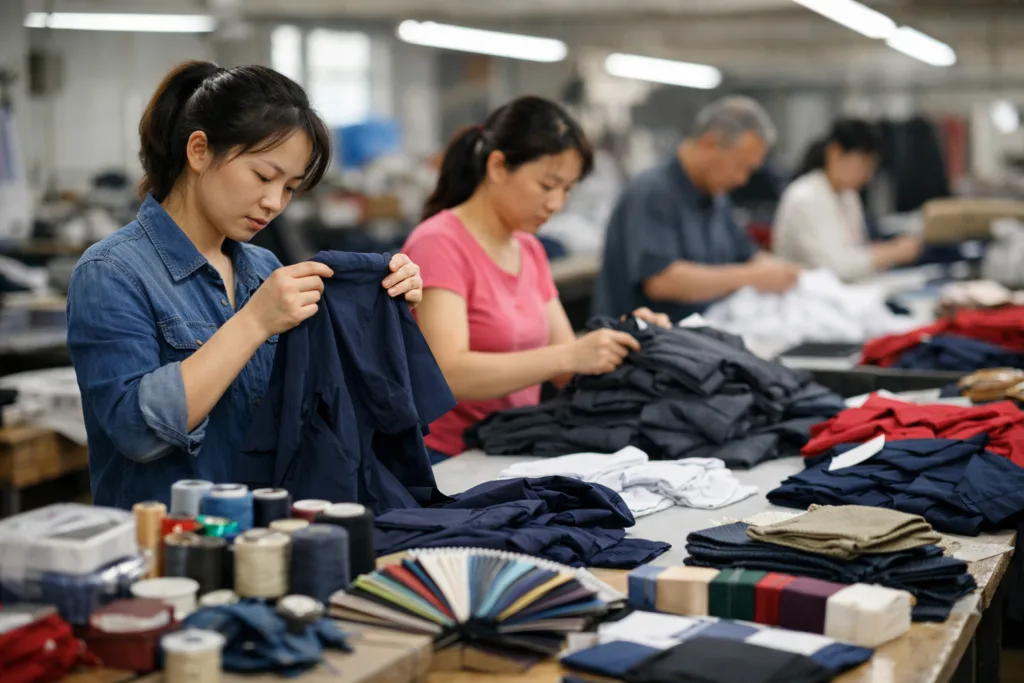
The reason why China’s fabric and trim ecosystem still gives brands a speed advantage comes down to ecosystem density, vertical integration, and unparalleled supplier coordination. Every step—label production, zipper sourcing, drawcord color-matching, patch delivery, and printing setup—takes less time because it’s local, reliable, and production-minded. For brands building on-time, high-impact collections, harnessing this ecosystem doesn’t just help—it’s often the difference between making the market or missing the moment. Supply chain resiliency and speed remain China’s strongest cards for agile apparel development.
Frequently Asked Questions
How do trims like labels and zippers affect apparel development timelines?
If labels, zippers, or other trims aren’t locally available or have long lead times, apparel production can be delayed by weeks. China’s dense trim ecosystem means these are sourced quickly, slashing approval and shipping delays.
Can brands get custom-made trims in small quantities in China?
Yes, China’s trim suppliers commonly offer low MOQ (minimum order quantity) production for labels, patches, zippers, and more, making it suitable for both large and small brands aiming for quick market launches.
What are the common pitfalls brands face when sourcing trims outside China?
Delays due to import logistics, limited local trim variety, and difficulty coordinating approvals. Production often moves slower and has more bottlenecks for non-standard trims.
Does having local trim vendors really reduce quality control risks?
Absolutely. Coordinated, local sourcing allows for faster sample review, defect correction, and synchronized quality checks—meaning fewer surprises in bulk runs.
How do garment manufacturers in China coordinate fabric and trim arrivals?
Manufacturers develop close partnerships with fabric mills and trim vendors, enabling just-in-time deliveries. They often test and finalize materials with each design iteration for maximum speed and reliability.
Where can I learn more about fast sampling and stable supply chains in China?
See our in-depth guides on fast sampling and why China’s apparel supply chain is consistently stable for actionable strategies and case studies.
Related Reading
- Discover Why Copying Full-Package Apparel Manufacturing Isn’t as Easy as It Looks
- China vs. India: 7 Critical Apparel Sourcing Differences Brands Must Know
- 25 Power Checks to Pick a Trustworthy Clothing Manufacturer in China
- What Really Makes Team Uniforms Win: Comfort, Identity & Durability Explained
- Low MOQ Team Clothing: 7 Essential Cost Truths Every Small Brand Needs