




Introduction: Understanding Custom Team Clothing Lead Times
Custom team clothing plays a vital role in brand identity, team unity, and professional presentation. But a key question always arises for coaches, club managers, and brand owners alike: How long does it take to manufacture custom team clothing? Navigating production schedules, design confirmations, and delivery logistics can feel complex. This article breaks down every stage that impacts your delivery date so you can plan smarter and avoid stressful delays.
What Is Custom Team Clothing?
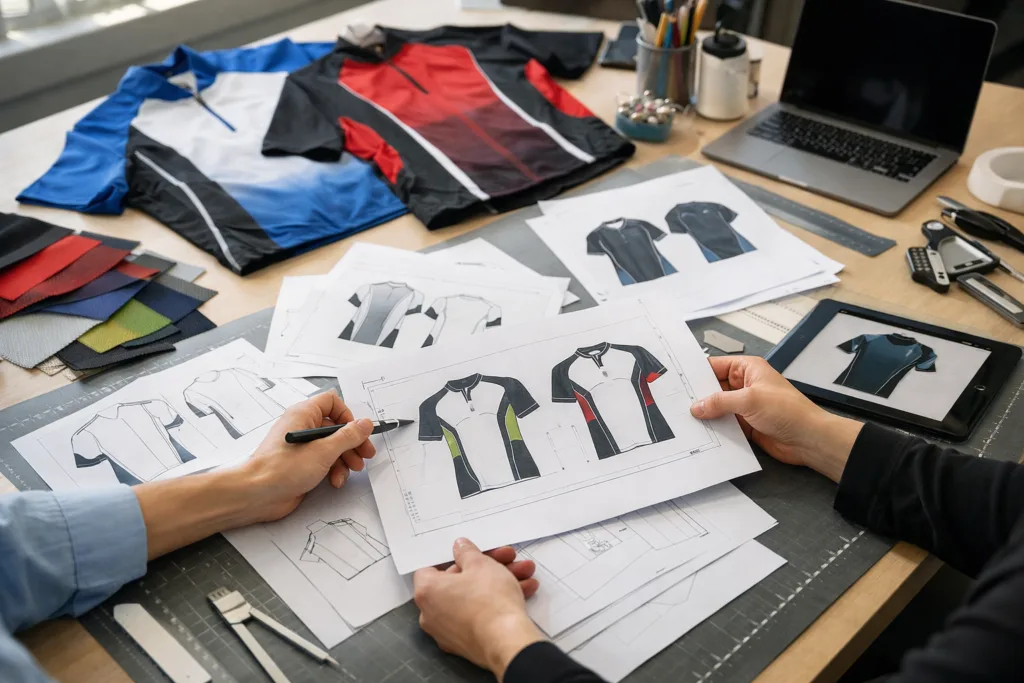
Custom team clothing refers to apparel designed and produced specifically for a group’s unique requirements—this could be team uniforms, club polos, event hoodies, or branded staff gear. Unlike off-the-shelf items, every detail—from fabrics and colors to fit and logo placement—is tailored to your order. This customization is what makes estimating custom team clothing lead time so important, as every project involves multiple production steps.
The Full Journey: Key Stages in Team Apparel Production Time
To answer “how long does it take to manufacture custom team clothing,” you need to understand these core stages:
- Design and Technical Preparation
- Sampling (Prototype Creation)
- Approval and Confirmation
- Mass Production
- Quality Control (QC) and Testing
- Packing and Shipment
Design & Technical Prep: The Foundation of Production Timing
Clear, complete technical files are essential for efficient custom team clothing lead time. This stage includes:
- Sharing artwork, logos, and color pantones
- Specifying garment fits, sizes, and trims
- Confirming fabrics or special finishes
If you don’t have full tech packs, expect 2–5 days for this step. Incomplete details or late changes can add unexpected weeks later on—always aim for clear, final specifications upfront. Proactive sizing planning is particularly crucial here and will reduce back-and-forth down the timeline.
Sampling: Testing Fit, Fabric, and Construction Methods
The sampling phase lets you see and touch a physical prototype before mass production starts. Timing depends on:
- Complexity of the design (simple T-shirts vs. multi-panel jackets)
- Availability of materials or trims
- Factory’s seasonal workload
For standard items, samples often take 7–12 days; niche items or new fabrics could take 2–3 weeks. Factories with ready pattern libraries (like Ninghow) can sometimes produce basic samples in a week, but custom colors, unique trims, or new sizing blocks add time. Fast, reliable sampling—especially when using globally established supply chains—is why brands often choose manufacturers with deep experience in team apparel.
Sample Review and Sign-Off: Getting It Right the First Time
Careful review of your sample helps catch sizing, color, or logo issues before bulk fabric is cut. This back-and-forth can add 3–7 days, depending on:
- Your decision-making speed
- Any needed adjustments (fit tweaks, embroidery, print alignment)
- Shipping time for physical samples (express courier, local approval, etc.)
Final Confirmation: The Step That Triggers Production
After approving your sample, a formal sign-off sets the clock ticking for bulk production. A delayed confirmation—even due to small logo changes—can easily extend your team apparel production time by days or weeks because fabric reservations, trims, and production slots must be rescheduled.
Material Sourcing: Fabric and Trims Procurement Dynamics
Ordering bulk fabric (dyed to order or custom) and trims (zippers, labels, badges) often takes 7–20 days. Delays occur if rare colors, sustainable materials, or branded accessories are required. Sourcing standard fabrics or trims from local stock can speed this step up significantly.
Bulk Production: Cutting, Sewing, and Decoration Workflow
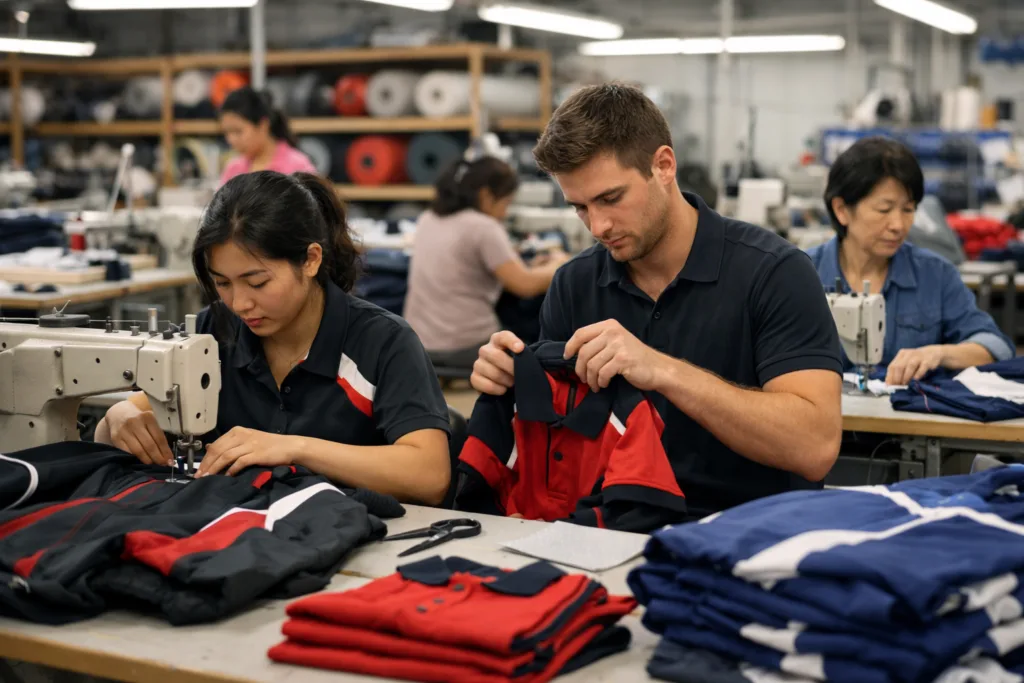
This stage covers fabric cutting, stitching, logo decoration (printing, embroidery), and main assembly. Production for most custom team clothing typically requires 14–30 days, depending on:
- Order quantity (small batches move quicker, large events take longer)
- Decoration method (simple prints are faster than multi-color embroidery)
- Production line availability and factory scheduling
Quality Control: Inspecting Every Detail Before Packing
Inspection includes fit checks, print alignment, color fastness, and overall construction. Depending on order size, QC can range from 1–4 days. Thorough QC (like measuring key points on a sample batch, which Ninghow always prioritizes) prevents returns and delays further down the chain.
Packing and Logistics: The Last Mile
Efficient sorting, labeling, and packaging keep your order organized and protect garments in transit. This step, often underestimated, takes 1–3 days, with a focus on accuracy—especially important for multi-size or personalized team orders.
Shipping: Freight Choices and Typical Delivery Times
Shipping times vary dramatically depending on shipping mode and destination. Express air (DHL/FedEx) can reach most regions in 3–7 days. Ocean freight (for large event or brand orders) usually requires 3–5 weeks, but is cost-effective for bigger volumes. Always factor in customs clearance and local delivery from port to final destination.
How Each Stage Adds Up: Typical Custom Team Clothing Lead Time Table
| Production Stage | Typical Duration (Working Days) |
|---|---|
| Design & Tech Prep | 2–5 |
| Sampling | 7–14 |
| Sample Approval | 3–7 |
| Material Sourcing | 7–20 |
| Production | 14–30 |
| Quality Control | 1–4 |
| Packing | 1–3 |
| Shipping (Air) | 3–7 |
| Shipping (Sea) | 25–35 |
Common Factors That Can Delay Production
Several issues regularly extend custom team clothing lead time. These include:
- Poorly defined size breakdowns (solved by smart bulk size planning)
- Late artwork or logo changes after sampling
- Custom materials that need extra lead time
- Factory peak seasons (plan early for back-to-school or sports season orders)
- Lack of prompt approval at each stage
Anticipate these, communicate clearly, and address questions fast to keep your production on track.
Rush Orders: What’s Possible and What’s Not?
Rush production is possible—in some cases. Factories can sometimes compress timelines by prioritizing your project, but this generally adds cost or is only feasible if materials and trims are in stock. Expect sampling or production to be streamlined, but not at the expense of QC or accurate sizing.
Strategic Tips to Reduce Lead Times
- Prepare clear files and specs at the start
- Choose in-stock fabrics / trims for faster delivery
- Respond quickly to sample review and sign-off requests
- Order well ahead of peak seasons (spring, summer, back-to-school)
- Ask your manufacturer about split shipments—air express for urgent uniforms, sea freight for the rest
Sampling Mistakes That Wreck Your Schedule
Issues in the sample phase are a top cause of project delay. These include missing artwork, unclear sizing, or not flagging comfort/fit concerns early. Learn how sampling protects team apparel orders by helping you avoid expensive errors later on.
Ninghow Insights: Factory Realities that Affect Lead Time
From years of running bulk teamwear lines, Ninghow has found the biggest delays happen with late spec changes or when brands seek unique fabrics after sampling starts. Smart planning and open communication mean smoother handoffs between each department, ensuring your batch moves seamlessly from sampling to sewing to packing with minimal downtime. The most predictable lead times are usually achieved when all trims, fabrics, and designs are locked in before a single yard is cut.
Why Approval Speed Matters More Than You Think
Many brands underestimate the time lost in the review and approval process, especially with large teams or school committees. Assign a key decision-maker to avoid “decision drag” and keep your apparel project on pace. Lost days here cannot always be made up in production.
Repeat Orders: How Reorders Can Slash Timelines
Once your specs and patterns are established, repeat orders run much faster—sometimes in half the original production time—since sampling, material sourcing, and fit confirmation are already resolved. Consider standardizing your core team styles to take advantage of these time-savings in future orders.
Bulk vs Small Batch Orders: Does Order Size Always Impact Timeline?
While bigger orders generally take longer to cut and sew, very small batches can sometimes experience delays too—factories may need to wait for free slots to run limited quantities. For small groups, check if there’s a minimum order quantity or specific small-batch queue in your chosen factory’s process.
OEM, ODM, or Hybrid: How Manufacturing Models Affect Production Time
OEM (Original Equipment Manufacturer) production follows your established designs strictly, which streamlines the process after first-time sampling. ODM (Original Design Manufacturer) projects, involving co-development of custom designs, may add weeks for prototyping and adjustment.
How Long Does It Take to Manufacture Custom Team Clothing?
On average, expect custom team clothing lead time from initial artwork to delivery to be:
- Air Shipping: 30–60 days (from design sign-off to your door)
- Sea Freight: 45–90 days (largely for bulk quantities)
Every order is unique—your best bet is to plan early, communicate fast, and confirm details upfront to avoid unnecessary delays. Delays most commonly happen due to late approvals, incomplete information, and out-of-stock materials.
Conclusion: Delivering On Time Means Planning Every Detail
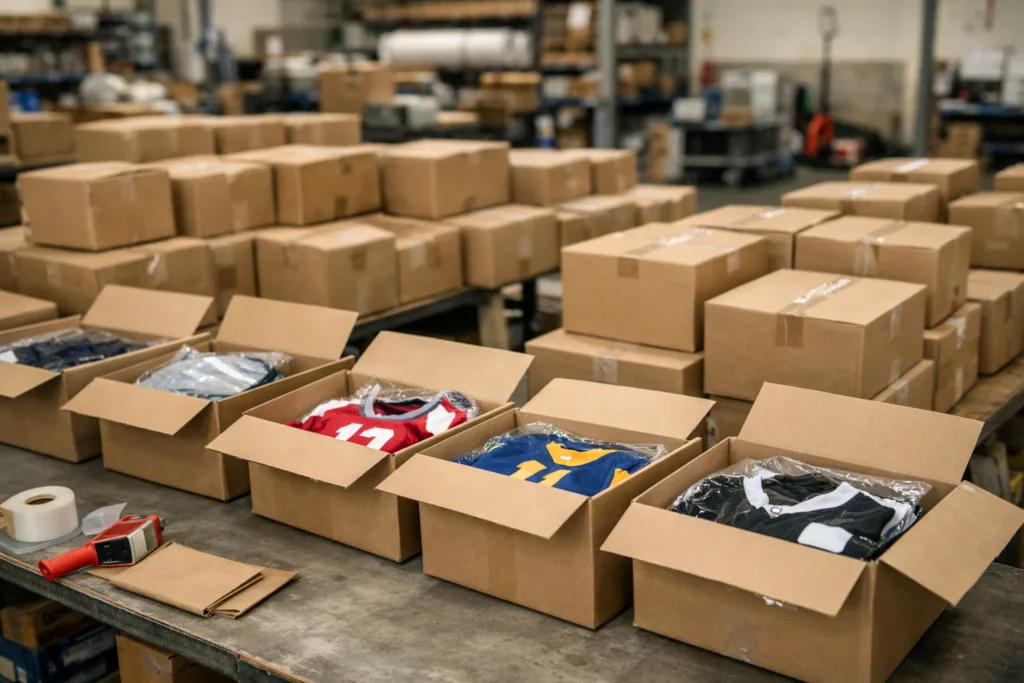
Manufacturing custom team clothing is a coordinated process, blending your vision with technical precision. By understanding each key production stage and its impact, you’re more likely to stay on schedule and avoid surprises. Plan ahead, clarify your requirements, and communicate consistently with your production partner. A proactive, detail-focused approach is the best insurance against late apparel deliveries—ensuring your team stands out, looking sharp, exactly when it matters.
Frequently Asked Questions
What is the fastest possible lead time for custom team clothing?
With all information ready and using in-stock materials, rush orders can be completed in as few as 15–21 days (plus shipping), but expect this only for simple designs and if your factory’s schedule allows.
Which step takes the most time in the process?
Material sourcing and mass production generally require the most days, especially if custom fabrics, embroidery, or multi-color prints are involved.
How can I reduce the custom team clothing lead time?
Prepare clear tech packs, confirm all details at the start, choose standard fabrics/trims, and approve samples quickly. Ordering ahead of peak season also helps.
Can changes be made after production starts?
Changes after production begins often cause significant delays and extra costs. Most factories suggest finalizing every detail before bulk processes start to stay on schedule.
Is it possible to speed up shipping?
Yes. Express air freight shortens delivery to 3–7 days for most destinations—however, it costs more than sea freight and is best reserved for urgent, smaller shipments.
Why is quality control not skipped in a rush order?
Skipping QC leads to sizing and branding errors, which are more disruptive and costly than any short production delays. Reliable factories always keep QC in the timeline, even for rush jobs.