




How to Plan Sizes for a Bulk Team Clothing Order
Planning sizes for a bulk team clothing order can be stressful, especially if you’re dealing with varying body types, activity requirements, and the pressure to avoid costly sizing mistakes. In this guide, we’ll demystify the process, showing you practical steps to collect the right data, set size ratios, and minimize errors when ordering apparel for any group—sports teams, staff, club members, or event crews.
Why Getting Team Clothing Sizes Right Matters
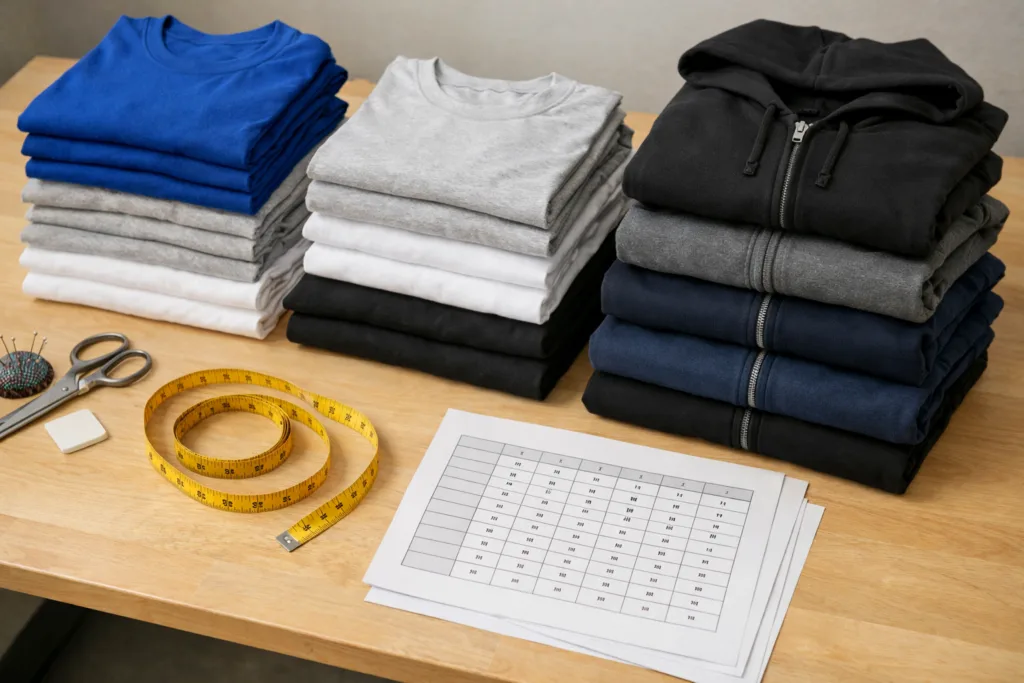
Incorrect sizing can lead to wasted money, unhappy teammates, and piles of unworn uniforms. Teams united in properly fitting clothing look confident and cohesive. Plus, right-sizing reduces costly re-orders and last-minute panic, fostering better event outcomes and smoother production cycles.
Understanding Team Clothing Size Planning: Core Concepts
Team clothing size planning involves collecting accurate size data, translating it to manufacturer size charts, and determining ratios or exact counts for bulk orders. The goal is to ensure every member receives comfortable, appropriately fitting apparel the first time around.
The Pitfalls of Guesswork and ‘Standard’ Ratios
Many first-time buyers rely on “standard” size ratios—like 1:2:2:1 for S:M:L:XL—because it seems hassle-free. However, these ratios rarely fit real-world teams due to unique demographics, gender splits, age ranges, and geographic differences. Guessing creates both shortages and leftovers.
Collecting Accurate Team Size Data: 3 Proven Methods
Direct Measurement by Team Members
Issuing a simple, easy-to-understand measurement chart and asking each member to measure themselves at home is effective. Be specific: bust/chest, waist, hips for tops and bottoms. Remind team members to use a tailor’s tape for consistency.
Physical Fitting Session
If budget and timing allow, a physical “fit session” is gold-standard. Trying on fit samples (borrowed from the manufacturer or using sample sets) lets each member choose their preferred size, considering both fit preference and mobility requirements.
Online Sizing Surveys with Clear Instructions
For distributed teams, digital surveys work well. Include clear size guides, visual diagrams, and manufacturer size charts. Always clarify if sizes are based on ‘body measurement’ or ‘garment finished size.’
What to Do With Incomplete or Delayed Size Info
If some team members don’t respond in time, reference past orders, demographic averages, or local apparel sales data—but build in a small buffer for extras in “medium” and “large” sizes to cover late additions or exchanges.
Choosing the Right Bulk Apparel Size Chart
One critical mistake is using the wrong size chart. Each manufacturer may use a different base pattern, fit style, or region standard (Asian, US, EU, etc.). Always request the exact bulk apparel size chart from your supplier. Do not assume a “medium” is the same everywhere; clarify measurement points and tolerances.
How to Set Size Ratios: A Step-by-Step Approach
- Analyze Collected Data: Tally how many people selected each size, separating men’s, women’s, and unisex if needed.
- Add Extra Buffer: Include 1–2 pieces in “high velocity” sizes for exchanges or growth, especially for youth teams or events with unpredictable attendance.
- Apply Multi-Gender or Age Adjustments: If your team has a broad age or gender range, consider splitting the order between men’s/women’s or adult/youth fit patterns.
Creating and Using a Team Size Breakdown Table
A table or spreadsheet makes size allocation transparent and reduces error. Example:
| Size | Respondents | Order Qty | Buffer | Total |
|---|---|---|---|---|
| S | 6 | 6 | 1 | 7 |
| M | 15 | 15 | 2 | 17 |
| L | 12 | 12 | 1 | 13 |
| XL | 7 | 7 | 1 | 8 |
Tackling Special Sizing Needs (Tall, Petite, Extended Sizes)
For teams with tall, petite, or extended-size requirements, custom or mixed-size ordering may be necessary. Talk with your supplier early—some will accommodate minor sleeve/length variations at no extra charge if planned in advance. See this resource on how garment measurements work for production to clarify details.
Key Sizing Terms Buyers Should Know
- Body Measurement: Tape-measure dimensions of the person’s body.
- Garment Finished Size: The laid-flat measurements of the clothing.
- Grading: Incremental changes between sizes (e.g., S to M equals 2cm wider in chest).
Top Sizing Challenges and Realistic Fixes
- Language Confusion: Clarify unit (cm/inch) and fit style (slim/regular/oversized).
- Regional Variation: Request regional size conversions if your team has international members.
- Fit Preference: Ask if the team wants a looser or tighter fit for specific apparel—athletic uniforms vs event polos require different approaches.
Reducing Sizing Error Rates: Practical Tips
- Use real samples where possible.
- Request a sample in each “problem size” (XS, XXL, etc.) from your supplier.
- Create a survey with visual aids for self-measurement.
Ninghow notes that for best results, a “pilot batch” (test run in a few sizes, pre-main order) quickly exposes issues like unexpected grading gaps or local fit expectations—especially for international teams or apparel launches.
Why Size Samples Can Save Your Project
Requesting pre-production samples (ideally in the critical sizes) is a top industry practice. It helps spot pattern problems, color variance, or fabric stretch that might affect fit. Investing in this small extra step reduces rework and returns. For more, see how samples help reduce risk in custom team clothing orders.
Understanding Minimum Order Quantity (MOQ) and Size Requirements
Bulk apparel manufacturers typically have MOQs per style, but some require minimums per size—e.g., at least 10pcs per size. Confirm your supplier’s requirements before finalizing your size breakdown to avoid unexpected charges or shortages. Explore more about MOQs in this guide to low MOQ team clothing.
Typical Size Distributions in Bulk Team Orders
While custom data is superior, the following can serve as a “last resort” for general adult teams (use cautiously):
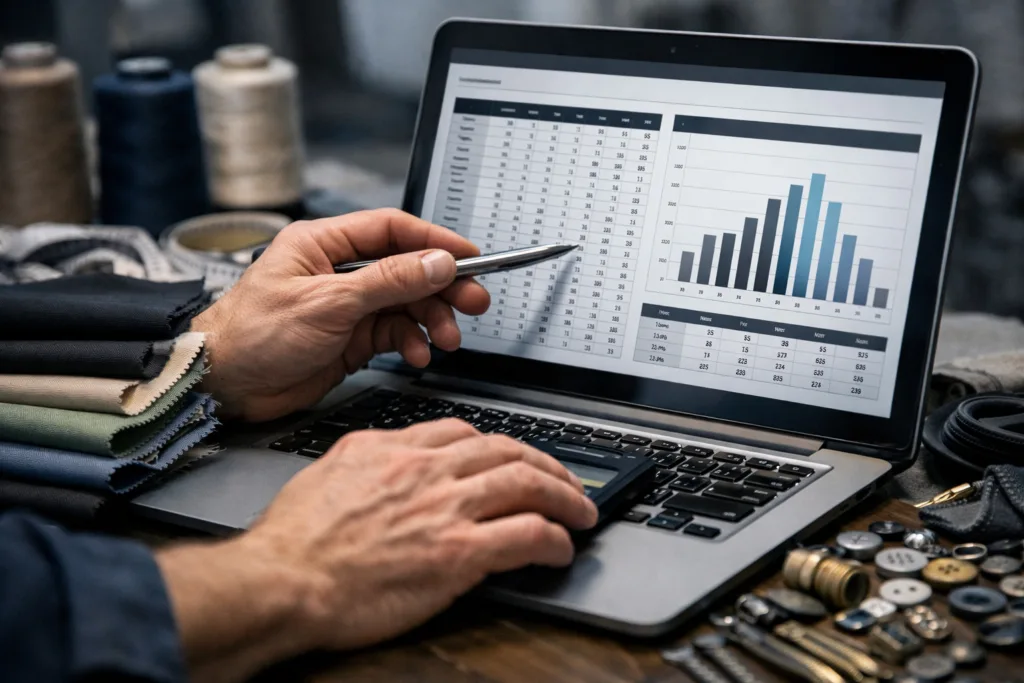
- S: 1 part
- M: 2 parts
- L: 2 parts
- XL: 1 part
Always adjust based on actual team profiles, local trends, or past order insights.
Common Questions About Bulk Apparel Size Charts
Does this ‘medium’ run large or small?—Ask for actual garment measurements and compare with an existing shirt or hoodie your team likes.
Can we mix unisex and gender-specific sizes?—Many suppliers allow it, but confirm early as this may affect prints or labeling.
How are youth/adult sizes split?—Supply your roster’s birth years or ages, and consider sizing up for teens close to adult conversion.
Case Study: School Team Hoodie Bulk Order
A school needed 140 hoodies for their band, ages 12–19, with a mix of genders and athletes. Their coordinator collected actual measurements, compared them to the supplier’s chart (checking if youth L matched adult S), and ordered extra ‘M’ and ‘L’ for late joiners. Result: Fewer than 2% sizing issues—a huge improvement versus guessing. See a practical breakdown for school team apparel in this team ordering guide for schools.
Sample Team Clothing Size Planning Table (Template)
| Size | Men | Women | Youth | Total |
|---|---|---|---|---|
| S | 3 | 4 | 2 | 9 |
| M | 9 | 10 | 4 | 23 |
| L | 12 | 7 | 3 | 22 |
| XL | 6 | 1 | – | 7 |
| XXL | 3 | – | – | 3 |
How to Communicate Your Size Plan to the Supplier
- Send your finalized table in Excel or PDF format.
- Provide both size counts and individual team member names if you need size labeling (names vs numbers on packaging).
- Double-check your size chart is the same version as the supplier’s production sample.
Labeling and Packing: Reducing Mix-Ups On Delivery
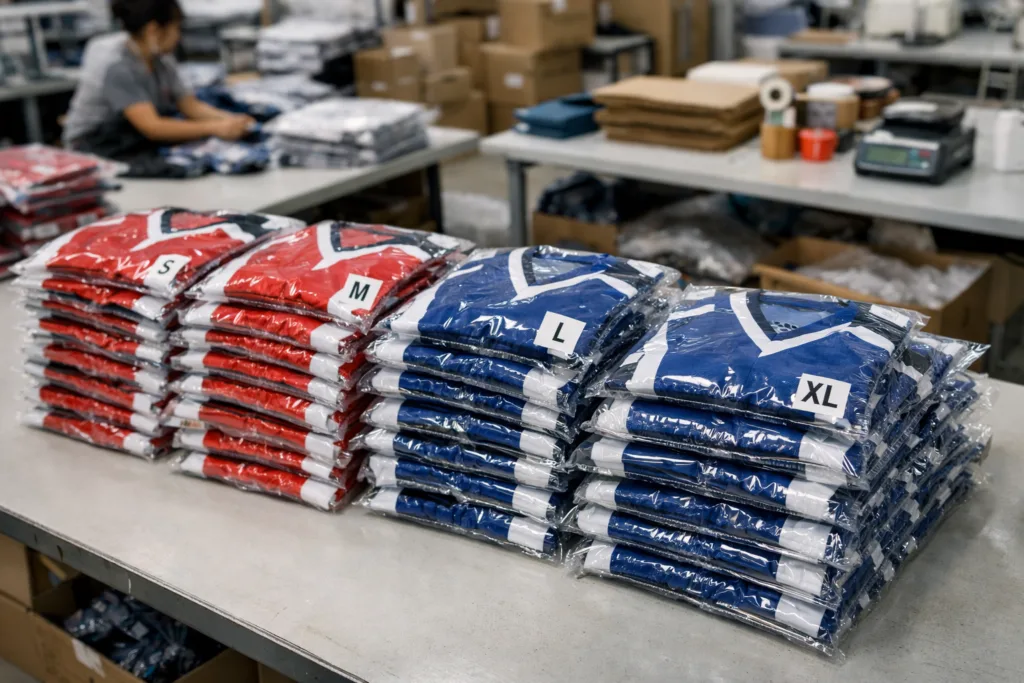
Request individual packaging with size stickers and (if needed) team member names. This extra clarity prevents mix-ups during distribution, especially in large groups or events with rushed deployment.
Planning for Returns, Exchanges, Last-Minute Joins
Order spares in high-frequency sizes. If events allow, have these extras on standby for late signups or last-minute swaps. This proactive step saves both time and embarrassment on team day.
Team Clothing Size Planning Trends—2024 and Beyond
- Growing demand for inclusive sizing (XXS–5XL, adjustable fits).
- Preference for athletic-fitted styles and gender-neutral options for clubs and company uniforms.
- More reliance on digital fit tools and apps for remote teams.
How Manufacturers View Size Planning Priorities
At the production floor level, manufacturers like Ninghow prioritize clarity, simplicity, and error-proofing every bulk team order. From client-supplied data to pre-cutting lists, details like split styles, logo placements, or packaging requests should be sorted during the size confirmation stage—not after production, when changes are costly. A clear size plan means fewer delays, better QC, and on-time delivery.
How to Plan Sizes for a Bulk Team Clothing Order: Recap
Bulk team clothing size planning is both art and science. Collect accurate measurements, never guess on “standard” ratios, and use manufacturer-supplied size charts. Build in a buffer for changes, and check requirements for MOQs or special fits. By taking a methodical, data-driven approach, you’ll reduce costly mistakes, boost team satisfaction, and keep your project on track from first fitting to final delivery.
Frequently Asked Questions
What’s the simplest way to collect team clothing sizes quickly?
Online surveys using the exact supplier’s size chart, with clear diagrams and deadline reminders, work best for most teams. Physical fit sessions are superior if possible.
How many extra items should I order for last-minute team joins?
A buffer of 1-2 pieces per high-frequency size (usually M or L) covers most unexpected needs and potential size exchanges.
Is it possible to order a mix of men’s, women’s, and youth sizes in one bulk order?
Yes, most manufacturers allow mixed-cut production if communicated early. Check if it affects MOQs or pricing since some suppliers require minimums by style or fit category.
What’s the best way to explain fit expectations to a supplier?
Share both your measurements and a photo or reference sample of the preferred fit (slim/regular/loose). Clarify fit intent (casual, athletic, corporate) to avoid misunderstandings.
How do I know if a supplier’s size chart matches my country’s sizing?
Always request direct garment measurements (chest, length, etc.) in addition to lettered sizes (S/M/L/etc.), since ‘M’ can differ greatly between regions. Compare with a well-fitting garment you already own.
How can I reduce returns due to sizing mistakes for my team?
Use tried-on fit samples, double-check survey instructions, add spares in popular sizes, and ensure clear labeling on packaging. These steps combined significantly reduce errors and frustration.