






Introduction: Why Speed Matters in Polo Shirt Development
In the world of apparel, knowing how to develop a new polo faster (critical path) can mean the difference between catching a trend and missing the boat. Time-to-market is especially crucial for polos—an evergreen staple where fit, collar style, placket construction, and fabric choices drive both sales and quality perception. This guide will walk you through proven strategies, common pitfalls, and the step-by-step critical path to launch your next polo quicker, without sacrificing standards or running into costly delays.
Understanding the Polo Shirt Development Timeline

Before diving into shortcuts and optimization tactics, let’s break down the typical polo development flow—design, fabric/trims sourcing, pattern making, sampling, approvals, manufacturing, and delivery. Realistically, development spans 6–12 weeks, but by focusing on bottlenecks and the true critical path, this can often be compressed. Early planning, sharp tech packs, and proactive communication can dramatically reduce downtime. See how rapid hoodie development compares to polos for additional context on timelines.
Critical Path Explained: How to Develop a New Polo Faster (Critical Path)
The critical path is the sequence of tasks where any delay directly postpones your launch. It includes initial design lock, fit sample approval, bulk fabric order, and final sample sign-off. Trimming excess wait time between these steps, and overlapping sourcing/sampling where possible, are the foundation of speed-to-market for polo development projects.
Key Elements: Collar, Placket, and Fabric Decisions
Polo shirt differentiation hinges on collar types (flat knit, rib, self-fabric), placket length (two/three button, zip), and fabric (cotton pique, jersey, blends). Each element adds technical complexity. For instance, collar knitting often has higher MOQ and lead time, while placket construction impacts both fit and sampling rhythm.
Fabric and Trim Sourcing: Fast Yet Reliable
Delays in fabric and trims can derail even the best-critical path plan. Focus on suppliers with ready stock or fast lab dip turnarounds, and approve substitute materials up front. For the ultimate polo, balance handfeel and durability. Consult these top fabric sourcing secrets for matching handfeel and performance in apparel.
Collar and Placket Sampling: Avoiding Common Pitfalls
Polo collars and plackets are infamous for causing fit and bulk production surprises if not addressed early. Get prototype collars and plackets sampled separately before committing to full samples. Check shrinkage, rolling, and construction tolerances.
Pattern Making and First Prototypes: Getting Fit Right Early
The initial pattern—especially for shoulder slope, body length, and neckline—sets the tone. Request digital patterns for review if possible. Catching mismatched placket or collar points now avoids costly re-sampling. Mistakes in early fit often lead to weeks of delays later. For advanced pattern strategies, see how to avoid costly pattern and fit revisions in apparel production.
Sample Types: From Proto to PPS
Polo development typically goes through proto (style), fit (measurement), SMS (salesman), and PPS (pre-production) sampling. Each step increases cost and time. Overlapping or combining steps conserves time—for example, using an SMS as a fit sample if fit is stable. Clear sample approval workflow is crucial.
Managing Sample Approval to Slash Rework
Each sample approval should be decisive and documented. Use approval forms for fit, construction, and appearance; reject, approve, or approve with comments. Document feedback visually. Learn how to eliminate rework with this winning sample approval workflow.
Polo Shirt Fit Approval: Technical Considerations
Establish a clear size spec and tolerance table. For polos, watch chest circumference, placket alignment, and collar stretch. Use controlled sample washing to anticipate shrinkage and cotton blend behavior. A common mistake is approving a garment based on dry measurements only, leading to post-wash fit surprises.
Production Fabric Approvals and Lab Dips
Many delays arise from late lab dip or bulk fabric shade approvals. Pre-set shade standards and require your supplier to submit lab dips alongside the first proto. Lock fabric supplier and colorways early. Approving trims together with main fabric shortens the critical path.
Optimizing the Placket: Construction, Stability, and QC
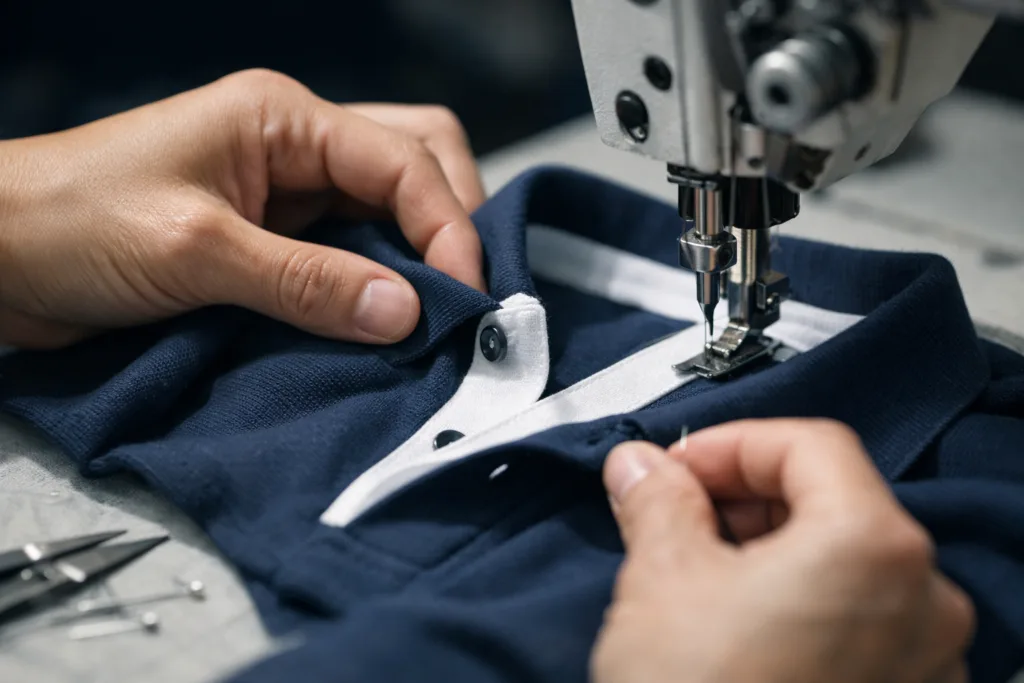
The placket can make or break a polo. Misaligned buttons, twisting, or puckering are common QC risks. Consider reinforcing lightweight plackets with stabilizers and confirm button spacing against sizing gradations. Smart technical design can prevent rework at the bulk stage.
Bulk Production Readiness: Checklist for Approval
Before giving the green light for bulk, confirm: fit is finalized, trims and fabrics are in-house and approved, and all sample comments are implemented. This prevents incorrect bulk runs and lost time.
De-risking with Parallel Steps: What Can Overlap?
Speed is amplified by overlapping certain paths. For example, start fabric lab dips and trims approvals while the first fit proto is being produced. Reserve bulk fabric as soon as the proto meets 80% of your targets, with clear contingency plans for minor corrections if needed.
Packing and Branding: Plan Upfront to Save Time
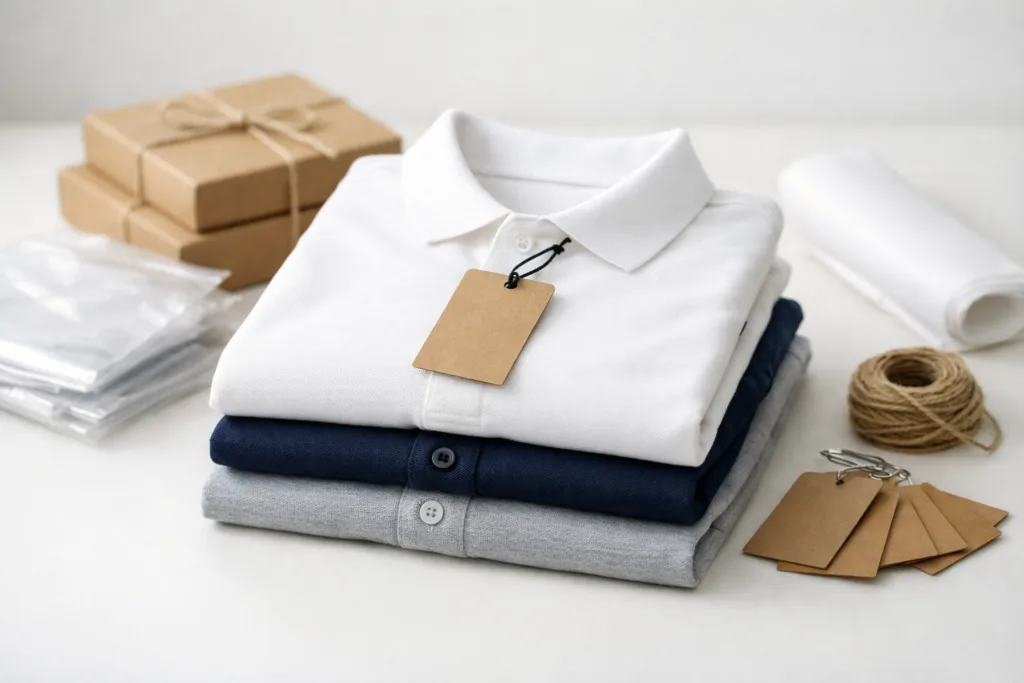
Brand labels, size pips, hangtags, and polybags are often an afterthought—but missing artwork or unclear requirements hold up shipments in the final days. Get branding and packing assets to your manufacturer in the first week. Even details like care label material and placement should be settled early.
Common Development Problems and How to Prevent Them
The most frequent roadblocks: unclear collar design, ambiguous placket spec, last-minute fabric changes, and missing size tolerance tables. Also, failing to define acceptable shrinkage or pilling levels leads to disputes at the QC stage. Transparency and upfront detail are the best tools for prevention.
Leveraging Tech Pack Detail for Speed and Accuracy
Your tech pack is the blueprint for success. Include artwork, detailed measurements, seam types, collar and placket construction diagrams, and reference standards for lab dips and trims. Ambiguous tech packs force endless clarification and re-sampling, significantly delaying the process.
The Role of Communication SOPs in Polo Shirt Development
Factory and brand must agree on a weekly (or even biweekly) progress update SOP covering all critical path checkpoints. In Ninghow’s experience, lack of regular milestone reporting is a root cause of missed deadlines and last-minute surprises. Always formalize your communication rhythm.
Key Factory Insight: Matching Design to Manufacturing Reality
It’s tempting to specify trendy collars or custom placket finishes, but not all factories are equally equipped. At Ninghow, we often advise brands to prioritize construction types proven in production—and to prototype risky features separately before full integration into the development path. This practice preserves speed and consistency in the final result.
Sample Approval Lead-Time Table: Compression Strategies
| Stage | Standard Lead-Time | Faster Approach |
|---|---|---|
| Design Lock | 3–5 Days | Final drawings up front |
| Fabric Lab Dip | 6–10 Days | Start in parallel with proto |
| 1st Proto | 7–14 Days | Rapid patterning + digital review |
| Fit Approval | 5–7 Days | Virtual fit sessions, annotate issues quickly |
| Bulk Fabric | 14–21 Days | Reserve at 80% confidence point |
| PPS Sample | 10–14 Days | Combine with sales samples if possible |
QC and Inline Quality Control: Proactive Rather Than Reactive
Don’t wait for the final inspection. Build in inline inspection points for collar firmness, placket alignment, and fabric pilling. This saves time on final rework. More on proactive inline QC can be found here.
Risk Control in Polo Development: Build Predictability Into Every Step
The biggest risks in accelerated development are miscommunication, unclear specs, and over-promising from factories or suppliers on lead-time. Instill routine risk review: every checkpoint should include a go/no-go for timeline, spec consistency, and raw material readiness.
Timeline Optimization: The 5-Day Compression Checklist
- Finalize design, packaging, and branding on Week 1
- Lock fabric, trims, and shade standards with backup options
- Approve collar and placket as sub-samples before integrating
- Overlap sample sewing and fabric lab dipping
- Formalize milestone review SOPs with the factory
- Pre-book bulk fabric when 80–90% confident
Essential Tools: Polo Shirt Development at a Glance
Use these tools to track and manage your project: GANTT charts for timeline, daily status dashboards, annotated tech packs, lab dip approval sheets, tolerance tables, and standardized feedback forms. Keeping documentation current and visible prevents bottlenecks and shortens the critical path.
How to Develop a New Polo Faster (Critical Path): Next-Level Tips for Speed and Quality
Regularly review your process for delays. Trust but verify each critical approval. Empower your team or factory to flag risks early. The best brands share their spec intent upfront and maintain strong SOPs from the first sketch to final inspection. No polo project should fall off schedule due to avoidable communication lapses or unclear specs.
Conclusion: Making Polo Shirt Development Quick, Reliable, and Repeatable
Speeding up your polo development requires clarity of communication, strict focus on the critical path, fast-tracked approvals (especially for key elements like collar, placket, and fabric), and proactive risk control. By documenting each checkpoint, leveraging parallel development steps, and ensuring feedback flows smoothly between brand and manufacturer, you can launch new polos quicker—and more reliably—every season.
Frequently Asked Questions
What is the fastest way to develop a new polo shirt?
Focus on overlapping steps, pre-approve materials, streamline sample approvals, and enforce a strict critical path with quick feedback rounds to compress timeline.
How do I avoid collar and placket problems in polo shirt development?
Prototype collars and plackets separately, check for warping or twisting early, and use technical drawings to communicate construction standards precisely to your supplier.
Why is fabric sourcing a bottleneck in developing polos?
Delays often occur because custom knits, shades, or special finishes increase lead-time. Secure ready-stock options or maintain relationships with fast-reacting mills to minimize waiting.
What are the most common reasons a polo development stalls?
Late fabric or label approvals, unclear fit specs, ambiguous size tolerances, or lack of technical details about collar/placket structures regularly delay production.
Can lab dips and sample sewing happen at the same time?
Yes. Many brands start on lab dips as soon as design is locked and proceed with proto sewing; minor color tweaks can be made before final production fabric order, saving days or even weeks.
How can shrinkage and post-wash fit be controlled?
Require controlled wash tests on early samples, document shrinkage limits, and base size specs on post-wash measurements, not just unwashed sample dimensions.