








Introduction: The Importance of Supplier Communication SOP for Apparel Production
Clear and systematic communication between apparel brands and their manufacturing partners remains the backbone of successful garment production in 2026. A strong Supplier Communication SOP for Apparel Production—especially in tech pack communication with factory—ensures everyone is working from the same playbook. Feedback loops, milestone confirmation, and weekly updates form a communication backbone that prevents costly errors, shortens production timelines, and builds genuine trust between all stakeholders.
Understanding Supplier Communication SOP for Apparel Production

A Supplier Communication SOP (Standard Operating Procedure) for apparel production is a structured process brands and factories use to align expectations, milestones, and actions. Its core goal? Limiting misinterpretation from design handoff through delivery, using clear tools like feedback templates, nodal checkpoints, and a reliable reporting cadence.
Why Tech Pack Communication with Factory Is Critical
Tech pack communication with factory teams is the vital first link in your production supply chain. Precise tech packs leave nothing to interpretation: they transform design intent into actionable factory instructions, covering fabrics, trims, sizing, labeling, and all tolerances. Miss a detail here, and you risk the classic domino effect—errors that compound through every process step. For more on what a factory needs to see in a great tech pack, explore the Tech Pack Template That Factories Follow, which details must-have sections for clear execution.
The Biggest Challenges: Miscommunication in Apparel Manufacturing
Mistakes often begin with mismatched understanding. Without templates, agreed confirmation points, or a rigorous weekly check-in, details slip—be it panel measurements, fabric weight, logo placements, or care labels. These issues cause delays, unnecessary sampling rounds, or even full production rework. Experienced teams build in procedures to catch these cracks before they widen.
Comment Templates: The Unsung Hero of Factory Feedback
Comment templates standardize feedback between brands and factories. Using set forms for style comments, fit notes, and production queries keeps responses focused and traceable throughout sampling and bulk production. For example, at Ninghow, garment technical teams attach annotated comment sheets at every fit sample review—reducing guesswork and creating a log of what’s been agreed, changed, or still unresolved. Tools like shared online comment templates keep workflow professional and transparent.
Key Confirmation Nodes: Where Alignment Counts Most
In any Supplier Communication SOP for Apparel Production, there are specific stages where explicit confirmation prevents future errors. These are known as confirmation nodes. Examples include initial fabric and trim approval, size set sign-off, pre-production sample (PPS) acceptance, and final production go-aheads. At each node, both sides must say “confirmed” (often in writing), attaching supporting photos or videos when possible.
Weekly Reporting Mechanism: Keeping Projects on Track
A weekly project report—often called a WIP (Work In Progress) report—is essential for maintaining alignment across timelines, approvals, and problem-solving. Each week, factories share status overviews: what’s approved, pending issues, urgent decisions needed, and any emerging delays. With this in place, brands can act fast and factories avoid surprises. Integrating the Apparel Production Timeline Breakdown offers a realistic framework for scheduling snag resolutions.
Reducing Misunderstandings: Proven Communication Processes
The foundation of reducing miscommunication is redundancy and visual clarity. Every key instruction—specifically those involving measurements, color codes, or placement—should be reinforced with annotated images, physical references, and shared vocabulary. Encourage direct, simple language and use translation only when necessary. Workshop SOP checklists with your suppliers to ensure mutual understanding and ownership at all levels.
Essential SOP Elements for Effective Tech Pack Communication
- Standardized tech pack document (PDF or digital format with consistent naming)
- Visual evidence (annotated images, turnarounds, swatch close-ups)
- Comment/feedback templates (so feedback is traceable and not lost in messy email chains)
- Approval/confirmation workflow (explicit checkpoints with written sign-off)
- Weekly update mechanism (WIP report with deadlines, issues, and owner)
Role Assignment and Communication Responsibility
Assign clear communication owners on both the brand and factory sides. A single point of contact (POC) reduces confusion and enables swift problem resolution. Rotate responsibilities only if transitions are documented with status handovers.
Sample Rounds: Using Feedback Templates in Practice
Each sample round (proto, fit, size set, PP) should follow the same feedback protocol: designer fills out a comment form, factory confirms understanding and attaches executed changes. Audit logs are particularly useful at fit and PP sample stages, as correction notes become the reference for bulk production. To deepen your QC knowledge, check out How to Slash Apparel Returns: AQL + Inline QC for Smarter Fashion Production.
Digital Collaboration Tools for Supplier Communication SOP
In 2026, brands and factories use online project boards (like Trello or Monday.com), real-time annotation apps, and dedicated feedback forms. These tools track asset versions, confirmation comments, and approval status—all time-stamped for full accountability.
Language and Cultural Factors in Tech Pack Communication
Translation errors and different “yes/no” cultures are constant threats. Use industry-standard terms, keep instructions visual, and clarify units—always specify metric/imperial and align on what approval means (silence does NOT mean agreement!).
Visual Aids: Enhancing Clarity at Every Stage
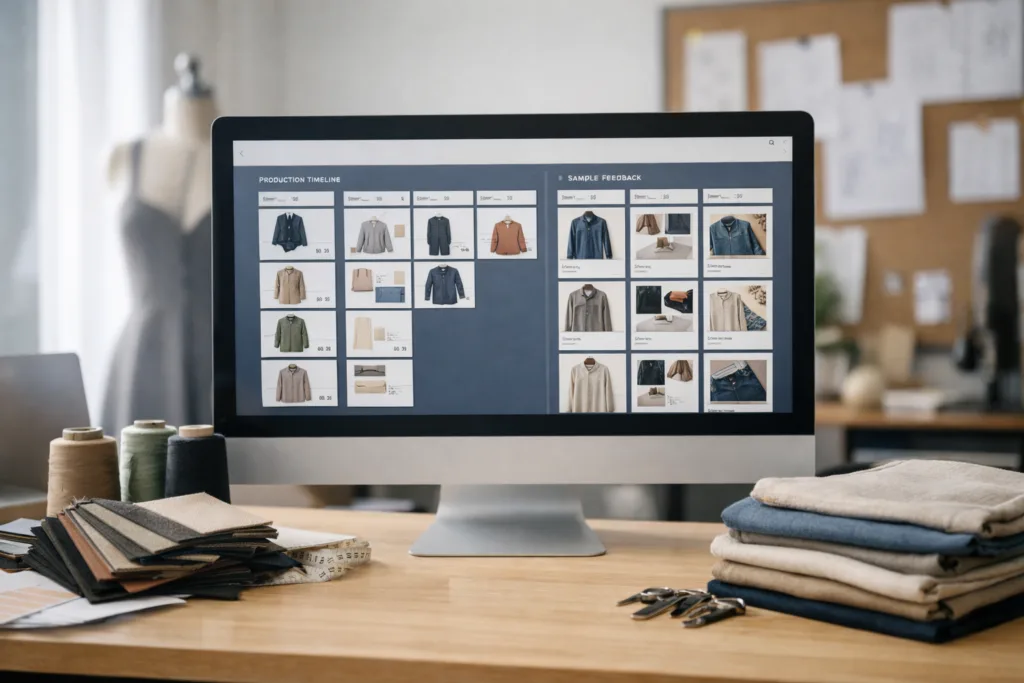
Annotated photos, videos of sample handling, and diagrams minimize wordy emails and catch issues a written note misses. Comparison tables (requested trim vs. available substitutable trim), for instance, give both parties a side-by-side reference for faster, clearer decision-making.
Handling Deviations: When Discrepancies Occur
If actual product deviates from the tech pack, flag it immediately in the weekly report. Use the agreed comment template for issue escalation, attach side-by-side evidence, and propose at least one workaround for timely resolution. Delaying communication only increases cost and risk.
Practical Example: Weekly Project Report (WIP) Template
| Item | Status | Owner | Deadline | Comments |
|---|---|---|---|---|
| Fabric Approval | Pending | Supplier | 2026-01-08 | Awaiting lab dip |
| PP Sample | Complete | Factory | 2026-01-12 | See comment sheet #2029 |
| Bulk Trims | In production | Factory | 2026-01-22 | Confirm hangtag size |
Milestone Confirmation Workflow
At each node, trigger a dual confirmation email or message. Attach annotated sample photos or videos as “proof,” and log both parties’ sign-off. Keep these records—mistakes in delivery are far easier to resolve when confirmation history is clear and indisputable.
Pre-Production Sample (PPS): The Last Checkpoint
PPS confirmation ensures bulk production matches exactly what was signed off: from fit and stitch density to care labels and hangtags. Both supplier and brand must confirm with comment forms and photo documentation. Any change here must be re-approved, not left as “understood.”
Reduce Misunderstandings with End-to-End SOP Checklists
- Start with a master tech pack with version control
- Issue a sample round comment form every time samples are exchanged
- Run mandatory milestone confirmations (fabrics/trims, fit, PPS, shipment)
- Record all approvals in shared online folders
- Send a concise, structured weekly project update (WIP report) and request action on overdue items
How Ninghow Communicates for Zero Surprises
Drawing from years on the factory floor, Ninghow teams prioritize annotating everything—samples, measurement charts, and comment templates. We’ve learned that silent assumptions breed mistakes, so every feedback round demands written logs, annotated visual aids, and dual confirmation before a project moves forward. This habit ensures smooth handoff throughout bulk production and is especially key for overseas clients who can’t review every sample in person.
Best Practices for Apparel Supplier Communication SOP
- Use referenced comment templates, not just emails
- Build in precise milestone checkpoints with sign-off logs
- Implement weekly reporting—with color-coded status and issue escalation
- Keep detailed sample feedback history for each style
- Resolve disputes by referencing signed-off, dated comments
Measuring Success: KPIs for Supplier Communication SOP
Track rates of sample turnaround with “no comments” (i.e., 100% approval on first try), number of error/dispute incidents, and delivery punctuality. Brands should expect steadily decreasing rounds of rework and reduced last-minute surprises.
Continuous Improvement of Your Communication SOP
Run debriefs with factories at the end of each season. Ask: Where did misunderstanding creep in? Were confirmation points missed or templates unclear? Update checklists, train teams, and improve the clarity of visual aids for the next round. Progress lies in evolution, not perfection.
Supplier Communication SOP for Apparel Production
A robust Supplier Communication SOP for Apparel Production built on transparent tech pack communication, tight feedback loops, and regular reporting is every brand’s quality insurance policy. It’s about giving manufacturing and brand teams the same map—and checking together at each crossroads. Revisit your SOP at least annually, update templates, and reinforce a culture of zero-assumption, dual confirmation at every milestone.
Conclusion: Supplier Communication SOP for Apparel Production—Your Quality Safety Net

Getting apparel manufacturing right comes down to one thing: shared understanding at every stage. With intentional supplier communication SOPs, you don’t just reduce mistakes—you build resilient, hassle-free relationships that yield reliable on-time deliveries. Apply these practical tools and protocols in every order cycle, and make seamless production the rule, not the exception.
Frequently Asked Questions
What should be included in a tech pack for clear factory communication?
A tech pack should include detailed measurements, labeled images, fabric and trim specs, construction details, colorways, labeling/packaging instructions, and tolerance notes—backed by reference swatches or photos when possible.
How often should brands request factory updates during apparel production?
Weekly updates are ideal for most active orders. This cadence helps both brands and factories catch small problems before they become major delays, keeping projects running smoothly.
What’s the best tool for comment/feedback exchange?
Shared comment templates (usually in Excel, Word, or via a project management tool) offer clarity, version control, and an audit trail. Email chains alone are high risk for misunderstandings.
Why do misunderstandings still happen with detailed tech packs?
Even the best tech packs are vulnerable to omitted images, confusing language, or misaligned terms—especially across languages or “common sense” assumptions. Confirming understanding at each key stage is critical.
Who should own communication on the brand side?
Assign one main point of contact responsible for all outbound/inbound conversations, approvals, and handoffs. This single-voice approach eliminates confusion and shortens response time.
How can you ensure factories follow the SOP steps?
Train factories during onboarding, share clear templates, and require written sign-offs at every key milestone. Consistent escalation and feedback improve adherence over time.
Related Reading
- Expert Insights: Winning MOQ Negotiations with Overseas Apparel Factories (2026 Guide)
- Top 50 Must-Ask Questions Before Placing Your First Apparel Purchase Order
- Discover the Hidden Costs of Garment Production Delays & How to Avoid Them
- Your Apparel Compliance Checklist: How to Pass Materials, Labels, and Product Testing in 2026
- Instant RFQ Template for Apparel Brands: Streamline Your Supplier Quotes