




Introduction to What Are Swimsuits Made Of?
Swimsuits may look simple, but the fabric choices behind them are anything but. Whether you’re lounging poolside or slicing through the lap lanes, the material composing your swimsuit can make or break your comfort, fit, durability, and performance. In this comprehensive guide, we’ll dive deep into what swimsuits are made of, spotlighting the main materials—especially nylon (polyamide) and spandex (elastane)—and how they shape every swim experience. If you’ve ever wondered why your favorite suit feels slick, dries fast, or stretches just right, you’re about to get an insider’s look at the science, sourcing, and manufacturing realities of swimsuit material.
Swimsuit Material: Why Fabric Matters Most
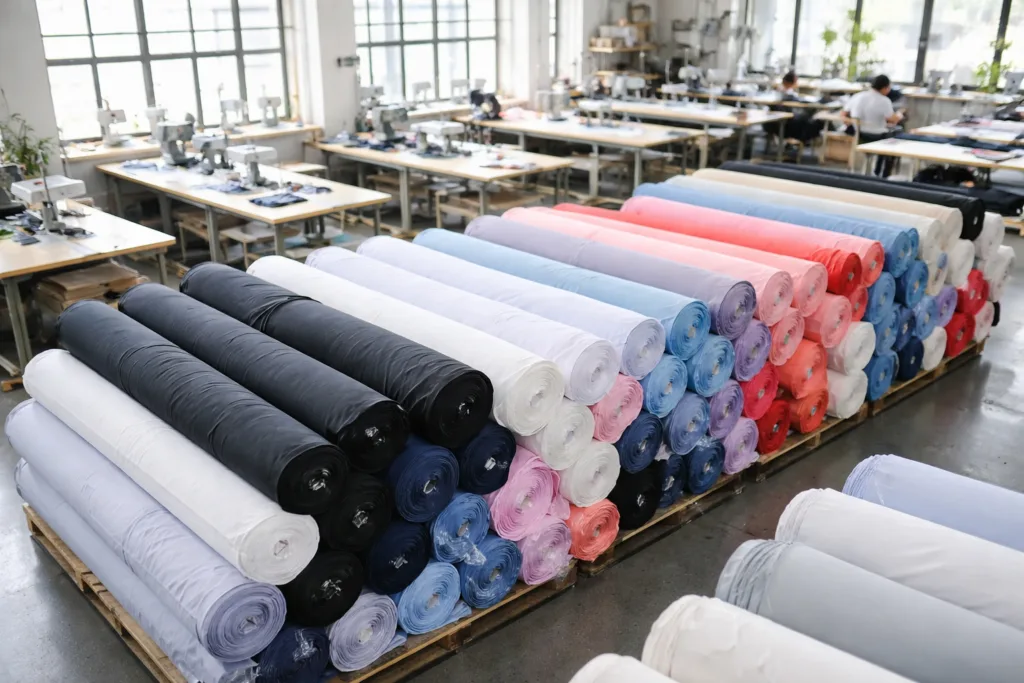
Swimsuit material isn’t just about aesthetics. It determines water resistance, stretch, drying speed, comfort, and even how long the suit lasts. Nylon and spandex dominate the market because they deliver the critical blend of performance and style swimmers demand. Knowing what your swimsuit is made of gives you a smarter perspective—whether you’re shopping for a new pair or planning a bulk order. Material decisions affect everything from fit and color retention to eco-friendly manufacturing choices.
The Evolution of Swimsuit Fabrics: From Cotton to Synthetics
Historically, swimsuits began with wool and cotton—materials that soaked up water and sagged. In the mid-20th century, synthetic fibers revolutionized swimwear. Today, nearly all modern swimsuits rely on blends of technical fibers for their unique advantages. Curious about how other apparel fabrics compare? Check out our manufacturer’s guide comparing cotton, slub & jersey for t-shirts for more insights.
The Two Core Swimsuit Materials: Nylon (Polyamide) & Spandex (Elastane)
Nylon and spandex are the undisputed champions in swimwear production. Why? Nylon provides lightweight strength, while spandex infuses stretch and shape retention. Most swimsuits use these in a 80/20 to 90/10 blend, achieving a delicate balance that supports active movement and stays snug against the body.
Properties of Nylon (Polyamide)
- Quick-drying
- Strong abrasion resistance
- Smooth, comfortable feel
- Lightweight and durable
Properties of Spandex (Elastane)
- Extreme stretch—up to 500% of original length
- Shape memory: holds fit over time
- Contributes to comfort and flexibility
Polyester: The Rising Alternative Swimsuit Material
Polyester is gaining market share, especially in competitive and team swimwear. It’s valued for its chlorine resistance and colorfastness. Polyester blends may sacrifice some softness but deliver longevity. For buyers managing bulk production, polyester offers economic and durability advantages worth considering.
Performance Comparison Table: Nylon vs Polyester vs Spandex
| Material | Strength | Stretch | Dry Speed | Chlorine Resistance |
|---|---|---|---|---|
| Nylon | High | Moderate | Fast | Low |
| Polyester | Moderate | Low | Moderate | High |
| Spandex | Low | Very High | Fast | Low |
Sourcing Swimsuit Material: Quality Factors and Industry Practices
In swimwear manufacturing, quality starts long before stitching. Selecting the right grade of yarn, managing blend ratios, and ensuring certified fabric treatments control how your suit performs after repeated use and washes. Manufacturers like Ninghow emphasize precise fabric sourcing and QC checkpoints before bulk production begins—especially when custom designs or batch orders are on the line. For a deeper look, see our guide on fabric and trim sourcing to match handfeel and performance.
Fabric Treatments and Finishes: Enhancing Swimsuit Durability
Swimsuits undergo specialized treatments: UV resistance, anti-pilling finishes, and sometimes antimicrobial coatings. These finishes help extend life, preserve color, and protect against chlorine and salt. If you’re developing a swimsuit line, these extras often matter for both buyer appeal and quality claims.
Chlorine Resistance: Why It Matters for Swimsuit Materials
Swimsuits face constant exposure to chlorine, which deteriorates fibers over time. Some new polyesters are formulated to resist chlorine, keeping their shape for longer and reducing the risk of baggy fits or faded colors.
Elastane/Spandex Content: How It Shapes Fit and Comfort
Elastane, often branded as spandex or Lycra, is the stretch component. The percentage of spandex directly influences the fit—a higher percentage means more body-hugging, athletic performance, and greater freedom of motion. But too much elastane can sacrifice durability or cause rapid loss of shape.
Choosing Swimsuit Material Blends for Different Activities
- Recreational swimming: Nylon/spandex blends for softness and stretch
- Competitive swim: Polyester/spandex blends for chlorine resistance
- Surf & active sports: Thicker nylon/spandex with reinforced seams
Sustainable Swimsuit Materials: Eco-Friendly Options
Eco-conscious buyers are now seeking recycled nylon, recycled polyester, and bio-based spandex. These fabrics reduce environmental impact and are often certified by standards. The manufacturing process must still balance performance with sustainability, so communication with your factory is critical. Curious about sustainable option evaluations? Check out our practical guide to sustainable fabrics for apparel buyers.
Swimsuit Lining Material: Added Comfort and Structure
Lining is often overlooked but plays a key role in opacity, shape retention, and extra comfort. Preferred lining materials include lightweight nylon or polyester mesh, sometimes with a bit of spandex for added stretch.
Mesh Vs. Solid Linings: Suit Performance and Feel
- Mesh: Breathable, dries quickly, ideal for athletic designs
- Solid: Smoother, adds structure, preferred for fashion-forward styles
Swimsuit Trims and Accessories: Elastic, Drawstrings, and Hardware
No swimsuit is complete without the right elastic bands, drawstrings, or closures. These trims should match fabric stretch and withstand water, sun, and chlorine. A poor-quality elastic or faulty hardware can spell disaster for bulk orders. Apparel manufacturers rigorously test these elements to prevent costly errors.
How Material Choices Impact Swimsuit Fit and Sizing
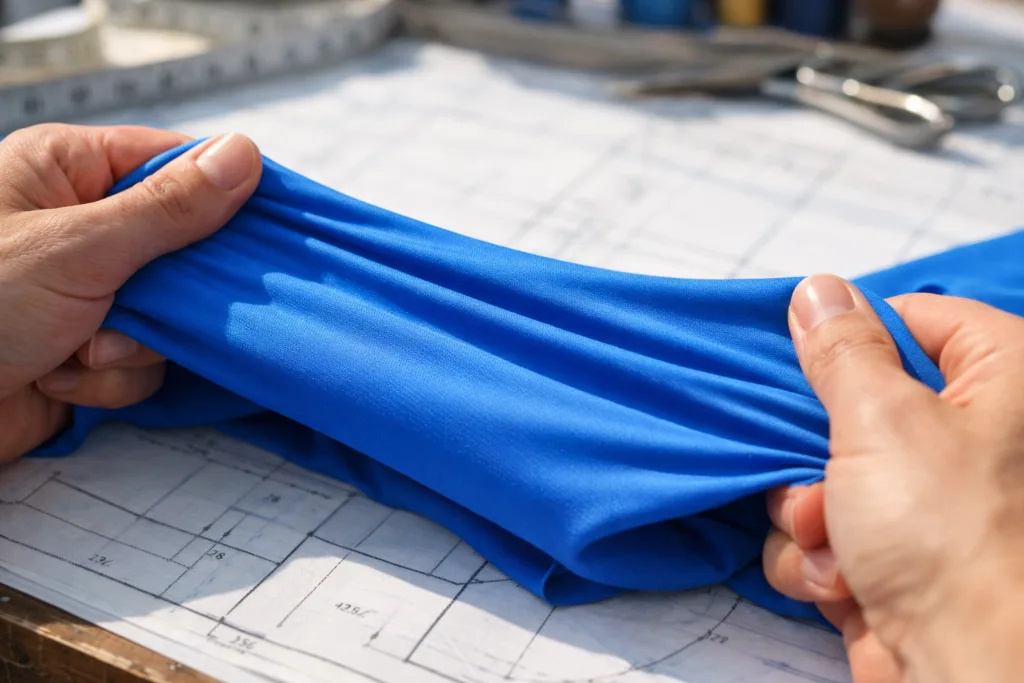
Swimsuit fit relies on stretch, shrinkage, and recovery properties. An accurate blend keeps sizes true after washing and use. Brands often conduct lab dips and pattern trials to verify material behavior before committing to production. Interested in deeper QC protocols? Explore our expertise on garment measurement tolerance and size spec control.
Swimsuit Material Care: Cleaning, Storage, and Longevity Tips
Caring for swimsuit material is simple but non-negotiable. Rinse suits in fresh water after each swim, avoid harsh detergents, and air dry. Store flat or hang gently. Never wring out or leave damp in a bag—this stretches fibers and causes premature breakdown.
Preventing Fading and Stretch Loss in Swimsuit Material
- Rinse immediately after chlorine exposure
- Use cold water and mild soap
- Dry in shade, avoid direct sunlight
Swimsuit Material Testing: Quality Assurance at the Factory Level
Every large manufacturer, including Ninghow, implements rigorous testing: stretch recovery, colorfastness, shrinkage, seam strength, and tear resistance. Random sample checks from batches prevent defective garments from reaching the customer. Experienced QC teams recognize subtle signs of early material failure and adjust sourcing accordingly.
Bulk Production Risks: Sourcing Swimsuit Material for Large Orders
Bulk orders magnify the impact of material selection. Hidden defects or inconsistent blends can ruin thousands of units. Factories must lock in reliable suppliers, batch test materials, and validate performance on sample garments before scaling up.
Pre-Production Sampling: Essential Steps for Swimsuit Material
- Order lab dips for color and shrinkage checks
- Sample both outer fabric and lining
- Assess trims compatibility and durability
- Check for certifications on recycled or eco fabrics
Swimsuit Material Certifications: OEKO-TEX, GRS, and More
Many buyers demand proof that materials are non-toxic, sustainable, or ethically sourced. Common certifications include OEKO-TEX (free from harmful substances), GRS (Global Recycled Standard), and GOTS (organic textiles). Not all suppliers have these, so request documentation early. For complete clarity, read our ultimate guide to OEKO-TEX vs GRS vs GOTS.
Key Challenges in Swimsuit Material Selection for Private Label Brands
Private label brands must balance cost, performance, and market expectations. Material choices influence not only the look and feel but also production timelines, minimum order quantities, and long-term brand reputation.
Common Mistakes When Sourcing Swimsuit Materials
- Ignoring stretch recovery tests
- Choosing only on price, not performance
- Neglecting certifications
- Skipping lining and trim QC checks
The Future of Swimsuit Materials: Innovations and Emerging Trends
Next-generation swimsuit fabrics are appearing—biodegradable yarns, UV-reflective finishes, multi-layer smart fibers for thermal regulation. Brands and manufacturers are collaborating on materials that perform better, last longer, and leave less environmental footprint.
Custom Swimsuit Fabric Development: What Brands Should Know
Want a signature feel or breakthrough performance? Manufacturers offer custom blend development, but the process requires extensive lab testing, sampling, and risk evaluation. Even experienced players like Ninghow warn brands about overpromising and underdelivering on new materials.
What Are Swimsuits Made Of? Final Takeaways

Most swimsuits are made of high-performance blends—nylon and spandex lead for stretch and softness; polyester shines in chlorine resistance. Lining, trims, and finishing treatments all play roles in the durability and comfort of the finished garment. Smart material choices reflect in both comfort and long-term value. Whether you’re a consumer, bulk buyer, or curious apparel entrepreneur, knowing what swimsuits are made of gives you a clear advantage in making the right decisions.
Frequently Asked Questions
What is the most common material used in swimsuits?
Nylon (polyamide) blended with spandex (elastane) is most commonly used, offering excellent stretch, comfort, and quick drying.
Why do competitive swimwear brands choose polyester?
Polyester stands out for its high chlorine resistance, color retention, and durability, making it ideal for repeated pool use in team and athletic swimsuits.
What percentage of spandex is best in a swimsuit?
Most swimsuits use 10–20% spandex for reliable stretch and shape retention. Going higher can impact durability, while lower may reduce comfort.
How can I tell if a swimsuit material is eco-friendly?
Look for recycled content and certifications like OEKO-TEX, GRS, or GOTS on the garment or tag. Ask your supplier for documentation.
Do swimwear linings affect comfort or performance?
Absolutely. Linings add comfort, smoothness, and help prevent transparency. Mesh linings are best for athletic use; solid linings for style and structure.
How should I care for my swimsuit material?
Rinse in cold water after every use, avoid wringing and harsh detergents, and air dry in shade to preserve fabric integrity and color.
Related Reading
- Understanding Comfort vs Durability in Clothing Fabrics
- Jersey Knit Fabric: The Quality Secret Behind Every Fav Tee
- Premium Clothing Manufacturing: 29 Steps You Can’t Ignore
- How to Achieve the Perfect Hoodie Fit—Without Baggy Mistakes
- The 2026 Guide to Print & Embroidery Quality—Avoiding Common Failures
