

Scoop Hem vs Straight Hem T-Shirts: Design Details, Fit Impact, and Manufacturing Secrets
Scoop rounded hem t-shirts vs their straight hem counterparts—on the surface, it seems like a simple style choice, but the hem shape you choose transforms everything from fit and silhouette to production cost and brand identity. This guide takes you inside the technical and visual decisions brands and apparel buyers face, explains the pros and cons of each hem detail, and reveals manufacturing realities you won’t hear in trend reports.
Understanding Scoop Hem and Straight Hem T-Shirts
What Is a Scoop Rounded Hem T-Shirt?
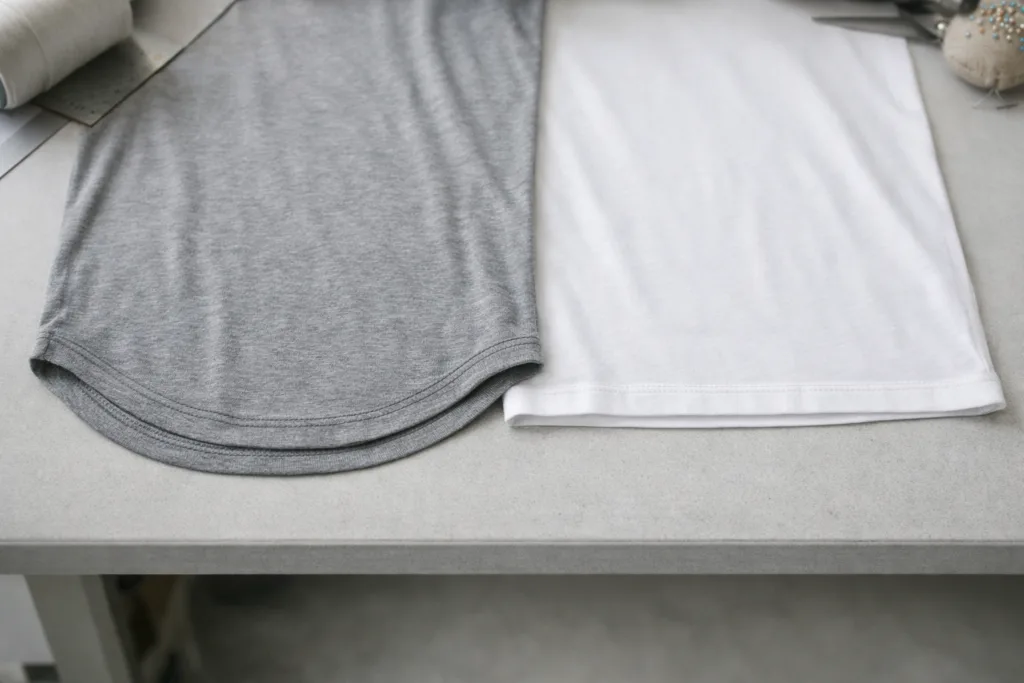
A scoop rounded hem t-shirt features a bottom edge that dips lower at the front and back, curving up at both side seams. This ‘swoop’ creates a rounded, almost semi-oval silhouette at the base of the t-shirt. Originally seen in athleisure and streetwear, it’s become a mainstream design for brands after a stylish, elongated look.
What Is a Straight Hem T-Shirt?
In contrast, a straight hem t-shirt has a completely flat lower edge—the front and back hem align horizontally and run parallel with the floor. This classic, traditional finish is universal, functional, and easy to layer, tuck in, or leave hanging for a clean, simple profile.
Visual Comparison Table: Scoop vs Straight Hem
| Feature | Scoop Hem T-Shirt | Straight Hem T-Shirt |
|---|---|---|
| Silhouette | Rounded—dips lower at front and back | Flat—straight across |
| Style Vibe | Trendy, modern, elongated | Classic, versatile, timeless |
| Pattern Complexity | Moderate to High (requires curved pattern) | Low (simple rectangular cut) |
| Manufacturing Cost | Usually slightly higher | Lower, efficient for bulk runs |
| Body Shape Effect | Lengthens torso visually | Uniform, can boxy if not tailored well |
Why Hem Design Matters: Real Impact on Fit and Style
Hem design is the unsung hero of t-shirt fit and silhouette. A scoop rounded hem t-shirt can create the illusion of a longer, slimmer body and add movement to an otherwise simple garment. Straight hems, on the other hand, keep things classic and work across all casual and uniform needs. Whether it’s hitting just below the hip or draping lower for streetwear layering, hem curves and lengths dictate how a tee frames the body.
The Most Common Use Cases for Each Hem Style
Scoop Hem: Modern, Athletic, and Street-Driven Looks
Scoop hems dominate in urban brands, athletic performance collections, and youth-focused drops. If you want unmistakable visual length, fashion-forward appeal, or a tee that works over leggings and joggers, choose a scoop hem shape.
Straight Hem: Everyday Classics and Uniform Programs
Straight hems anchor bulk programs for schools, corporate uniforms, and basics. Their even bottom is practical for tucking, classic fits, and any instance where subtlety and layering flexibility are top priorities.
Technical Pattern Making: How Hems Are Drawn and Cut
The scoop rounded hem requires meticulous curvature in the pattern—shaving precision millimeters from the sides while allowing for correct drape and length at the center. Incorrect curve gradients can cause side seam puckering or off-grain stretching. The straight hem is less complex, but even fraction errors can create a lopsided look when worn.
Stitch Types and Hem Finishing Techniques
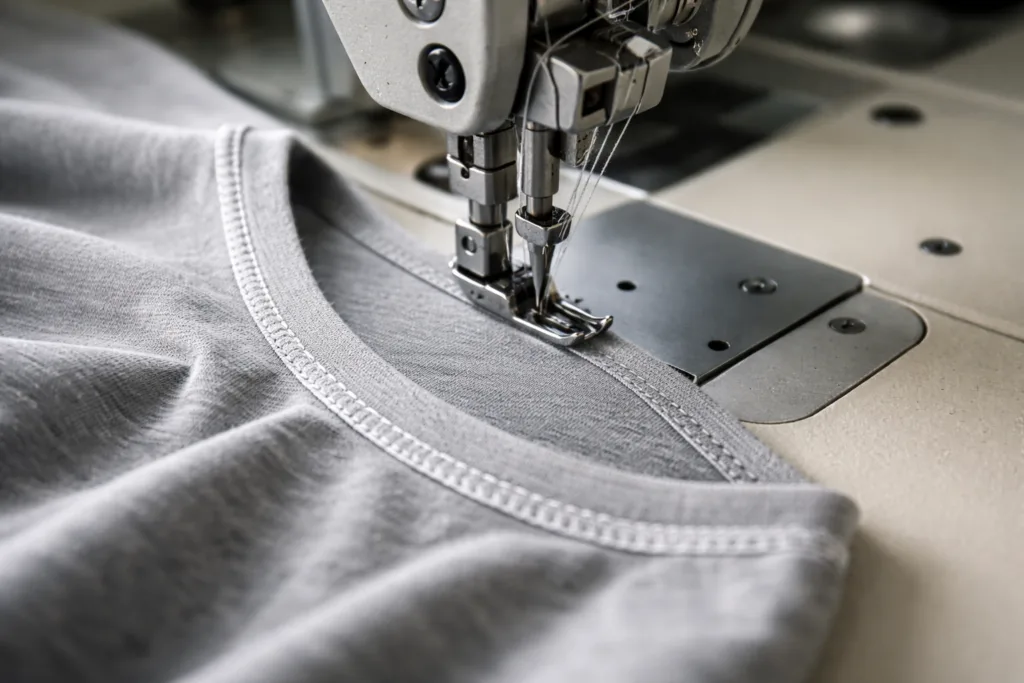
Whether choosing scoop or straight, hem strength and stretch depend on the finishing technique. Many manufacturers use a narrow twin-needle coverstitch for both, but scoop hems demand extra attention at the tight corners to keep the curve clean—any ‘bunching’ is magnified on the final product.
For more on identifying quality construction, check out this guide to seam strength tests.
Fabric Requirements and Considerations
Scoop hems generally require more fabric, especially if the curve is deep, and the cutting layout needs careful planning to minimize waste. Fabric with good recovery (a touch of spandex or strong jersey knit) is best, so the curve holds through multiple washes. Straight hems can work with cotton, blends, slub, or even recycled yarns.
For a deep-dive into t-shirt fabrics, see this comfort vs durability breakdown.
Manufacturing Realities: Cost, Speed, and Consistency
Factories run scoop and straight hems differently. Scoop hems slow down bulk lines because every curve demands operator focus; straight hems can be batch-stitched at speed. For brands, this could mean longer lead times or higher cost per piece for scoops, especially on complex colorways or tight deliveries.
Ninghow’s Factory Insight
Ninghow, as a garment manufacturer, finds that sample approval for scoop hem t-shirts often requires two pattern tries to achieve ‘photo-worthy’ symmetry. If brands forget to specify curve depth and side seam join angles, bulk runs risk inconsistency—pre-production sampling and clear pattern comments are essential to avoid surprises during final QC.
Design Detail Checklist for Scoop Rounded Hem T-Shirts
- Double-check hem curve depth in technical packs
- Add side seam notches to keep sewing accurate
- Request wear test samples to see drape after washing
- Choose fabric with enough stretch and snap-back
- Outline coverstitch or overlock type (flat and clean is best)
Design Detail Checklist for Straight Hem T-Shirts
- Specify hem depth—narrow for style, deep for durability
- Use interlock for heavyweights to prevent rolling
- Align patterns carefully for full-width graphics or prints
Branding, Customization, and Trend Cycles
Scoop hem t-shirts often signal ‘designer’ and ‘on-trend’; brands use contrasting stitch colors or raw edge effects to enhance the curve. Straight hems are a blank slate—great for allover printing, patch pockets, or custom rib trims.
Fit and Grading: How Hems Affect Different Body Types
The scoop hem flatters athletic and average builds, visually extending the legs and drawing eyes downward. For plus or boxy frames, a shallow scoop (not dramatic) offers interest without exaggerating shape. Straight hems suit all bodies, but must be graded perfectly, or risk a ‘tent’ effect when sized up.
See Oversized vs Regular Fit T-Shirts: The 7 Surprising Differences Shaping Trend-Driven Apparel for deeper fit insights.
Sizing, Fit Challenges, and Pattern Revisions
Common Issues with Scoop Hem Grading
Sizing up or down—even by one increment—can distort the curve unless the pattern is manually redrawn for each size. Digital grading tools help, but expert hand-overrides are often needed in high-end production.
Risks with Straight Hem Factory Patterns
For straight hem t-shirts, mass runs with automated patterns can yield ‘wavy’ hems due to fabric tension—factories should check hem straightness after batch pressing and cool-down.
Layering, Styling, and End-User Appeal
Scoop hem t-shirts pair best with joggers, jeans, or street shorts, often left untucked for visual effect. Straight hem t-shirts tuck easily into chinos, layer smartly under overshirts, and rarely clash with formal or casual wear.
Pattern-Making Pro Tips for Brand Buyers
- Communicate desired drape and finish photos to your factory
- List hem finish measurements in tech packs (width, style, fastening)
- Decide if you want a single or double curve (front and back, or just back)
Sustainability Factors: Waste, Yields, and Eco Options
Scoop hems, because of their pattern shape, can create slightly higher offcut (waste) rates. For eco-focused collections, discuss with your supplier about reusing cut waste, or optimizing nesting layouts to maximize yield. Modern factories like Ninghow deploy CAD software to reduce the impact, especially valuable with premium or recycled fabric costs rising.
Final Quality Control and Bulk Production Tips
- Request 100% hem inspection on scoop runs—look for symmetry and thread tension slip-ups
- Straight hem runs should have random batch checks; minor misalignment stands out on stacked lines
- Always review hem stretch recovery after pressing and folding for shipping
Trends: Who Is Choosing Each Style in 2024?
Active, youth, and fashion-driven brands are doubling down on scoop hem launches with oversized silhouettes. Traditional lines, businesswear, and school programs will continue to order straight hems for reliability and cost efficiency. Both can play in the same brand—capsule lines often drop scoop hems for exclusives while keeping straight hems in permanent inventory.
Scoop Rounded Hem T-Shirt Design Details
Scoop rounded hem t-shirt design is all about the curve’s depth, the placement of side seams, and the finish at the center front/back. Premium programs usually reinforce the curve with subtly denser stitching, and higher-end trims (like taped or split hems) add durability. Most importantly, the hem must match the brand’s visual DNA—too deep and it becomes a dress, too shallow and it’s indistinct from a straight cut.
How to Decide the Right Hem Style for Your Brand or Program
- Identify your target market’s style preferences and body shapes
- Review your supplier’s pattern capabilities and sample accuracy history
- Calculate projected cost versus marketing value—does a scoop hem’s extra appeal justify the complexity?
- Order pre-bulk samples for both hem finishes for a real-world comparison
Efficient Sampling, Approvals, and Final Bulk Orders
Request digital pattern renders, run fit sessions, and focus your comments on hem finish and evenness. Once you’ve chosen your style, lock down the pattern and confirm the finishing technique in your tech pack and purchase order. Clear documentation prevents costly reworks and keeps production deadlines on track.
Conclusion: Key Takeaways for Choosing Your T-Shirt Hem
The hem may seem small, but on a t-shirt, it sets everything. Scoop rounded hem t-shirts add trend, vertical visual interest, and an athletic/fashion feel but demand attention to pattern and production quality. Straight hem t-shirts work for everyday classics, are fit for mass programs, and ensure a versatile look with fewer risks. The ultimate choice comes down to brand DNA, end-user, budget, and supplier capabilities.
Frequently Asked Questions
What is the main visual difference between a scoop hem and straight hem t-shirt?
A scoop hem t-shirt has a curved, lowered bottom edge at the front and back, creating a rounded silhouette, while a straight hem t-shirt features a flat, even bottom that runs parallel to the ground.
Why do brands choose a scoop rounded hem for t-shirts?
Brands often choose a scoop rounded hem for a modern, elongated look that emphasizes body shape and movement, appealing to fashion-conscious consumers seeking a trend-driven, tailored fit.
Does hem shape affect fabric usage and cost?
Yes, scoop hems generally require more precise cutting, careful pattern nesting, and sometimes use slightly more fabric due to their deeper curve, potentially impacting material yield and production cost.
Are scoop hem t-shirts harder to manufacture?
Scoop hem t-shirts can be more challenging due to tight curves and the need for consistent stitching along rounded edges, requiring skill and careful QC to avoid distortion and unevenness.
Which hem style is better for layering outfits?
Scoop hem t-shirts layer well for modern streetwear or athleisure, adding a stylish visual line, while straight hems are more adaptable for tucking and formal combo layers.
How should brands choose between scoop and straight hem t-shirts?
Brands should consider their target market, desired silhouette, and cost structure—scoop hems for trend-driven looks and differentiation, straight hems for versatility and traditional styling.
