
Understanding Embroidery on Clothes
Custom embroidery on clothes transforms ordinary garments into unique and lasting pieces. This decoration technique uses thread to stitch patterns, logos, or letters onto fabric. From crisp company logos to colorful school crests, embroidery withstands regular washing, resists fading, and creates a dimensional look that printed designs can’t match.
Modern clothing manufacturers, such as Ninghow, combine advanced machines with skilled workers to ensure each stitch meets client expectations. Whether you need just a hundred uniform polos or thousands of embroidered jackets, understanding the process helps you plan your collection efficiently and cost-effectively.
The Custom Embroidery Workflow: From Design to Mass Production
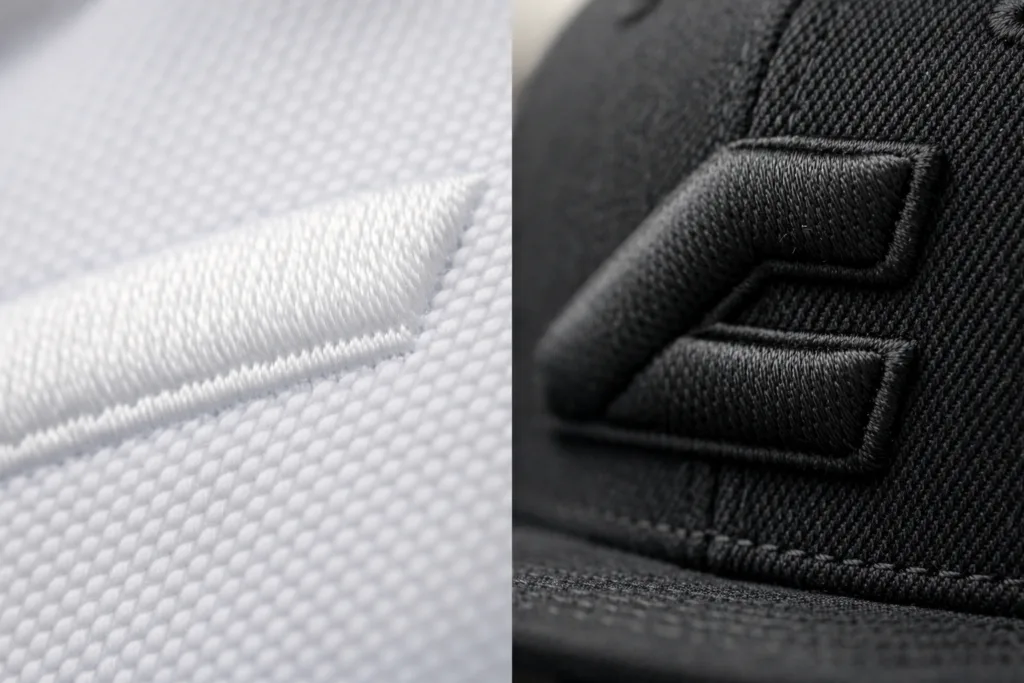
Top-quality embroidery makes a powerful impression, but getting there requires several precise steps. Let’s explore the workflow, from an initial design idea to bulk garment delivery.
Step 1: Embroidery Design Preparation
- Digital Art File: The process starts with a clear digital file, often in vector format (.ai, .eps, .pdf).
- Embroidery Digitizing: A specialist converts the logo or artwork into stitch instructions, specifying thread directions, density, and color breaks. This digitized file guides the embroidery machine.
Key Considerations for Artwork
- Avoid gradients and tiny text.
- Choose thread colors that contrast your garment fabric.
- Simple, bold logos usually stitch crisply and last longer.
Step 2: Material and Garment Selection
The best results depend on pairing the right fabric with your embroidery. Common apparel bases include:
- Polo Shirts: Usually made from combed cotton or poly-cotton piqué (180–220 gsm)
- T-shirts: Soft single jersey in cotton, cotton/elastane, or recycled polyester (160–200 gsm)
- Hoodies & Sweatshirts: Heavier French terry or fleece knits (280–340 gsm)
- Hats & Caps: Twill or canvas for sharp, raised embroidery
Fabric thickness, stretch, and texture affect edge sharpness and thread stability. Denim, canvas, or tightly woven cotton usually holds fine detail better than thin, stretchy knits.
Step 3: Sampling and Pre-Production Approval
Before mass production, factories like Ninghow create embroidery samples, also called “strike-offs,” on matching material. These samples test thread shades, backing types, and size placement.
- Lab dips ensure thread colors match your branding, usually based on Pantone standards.
- Placement is marked directly on pre-cut fabric or finished garments.
- Pre-production (PP) samples show the final design in the exact fabric and style.
Only after you approve these details does bulk embroidery begin.
Step 4: Bulk Embroidery Production
Batches now move to industrial embroidery machines—many head units can embroider dozens of garments at once. Trained operators program the digitized design, load thread cones, and position every piece using hoops or clamping frames. A tear-away or cut-away stabilizer is applied behind fabric, minimizing puckering and shifting during stitching.
Quality Control & Standards
- Operators check for broken stitches, skipped areas, and uneven tension after each run.
- Randomly selected pieces are washed to test thread colorfastness (ISO 105-C06) and seam stretch strength (ASTM D1683).
- Rejects are quickly repaired to maintain visual consistency.
Step 5: Finishing & Packaging
Embroidered pieces next go to trimming: excess threads and backing are removed, and garments are steamed to lift pile. Each batch is checked for size consistency (spec measurement tables), labeled, and folded to client requirements—single polybag or grouped ratio packs. Export cartons show order details, size breakdown, and barcode compliance as needed.
Types of Embroidery for Clothing
Embroidery on clothes offers many techniques, each with a distinct look, handfeel, and price point. Here are the key types you’ll encounter:
| Embroidery Type | Key Feature | Best For |
|---|---|---|
| Flat Embroidery | Stitches are flush with fabric | T-shirts, polos, uniforms, sweatshirts |
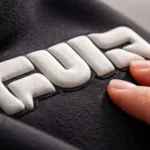
| 3D (Puff) Embroidery | Raised, foam-filled surface effect | Baseball caps, outerwear logos |
| Appliqué | Fabric patches stitched, then edges embroidered | Fashion hoodies, varsity-style jackets |
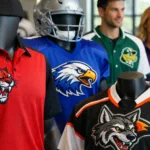
| Tackle Twill | Heavy twill letters/numbers sewn on, often double-layered | Sports jerseys |
Selecting Materials for Embroidery on Clothes
Embroidery thread comes in various fiber compositions, each suited for different applications. Most standard jobs use trilobal polyester or rayon thread, valued for their color brilliance and durability. Specialty threads, such as metallic or glow-in-the-dark, can add flair for fashion or promotional collections.
- Thread Weight: Most common is 40 wt.; finer threads (50-60 wt.) suit delicate details on dress shirts.
- Backing/Stabilizer: Choice depends on fabric weight and stretch. Tear-away for stable wovens, cut-away for knits.
- Fabric: Dense, smooth surfaces (twill, pique, poplin) help threads lay flatter and keep edges sharp.
Factories often conduct small embroidery tests on each fabric type before mass production to fine-tune tension and density. This ensures crisp logos and prevents puckering or thread breakage.
Decoration Placement & Sizing Standards
Where you put embroidery matters for both aesthetics and comfort. Popular placements include left chest (for logos), sleeve ends, center back neck, and cap fronts. Typical sizing for common placements:
- Left Chest: 3–4 inches (7.5–10 cm) wide, approx. 2 inches (5 cm) tall
- Center Back: 8–10 inches (20–25 cm) wide
- Sleeve: 2–3 inches (5–8 cm) wide
- Cap Front: 2.25 inches (6 cm) high by 4.5 inches (11.5 cm) wide (3D embroidery)
Always balance logo size with fabric type—a small design works best on lightweight knits, while jackets allow for larger, more intricate artwork.
Minimum Order Quantity (MOQ) for Embroidery on Clothes
Embroidery setup involves digitizing, machine calibration, and sampling, so most factories require a minimum order. Typical MOQs for embroidered clothing:
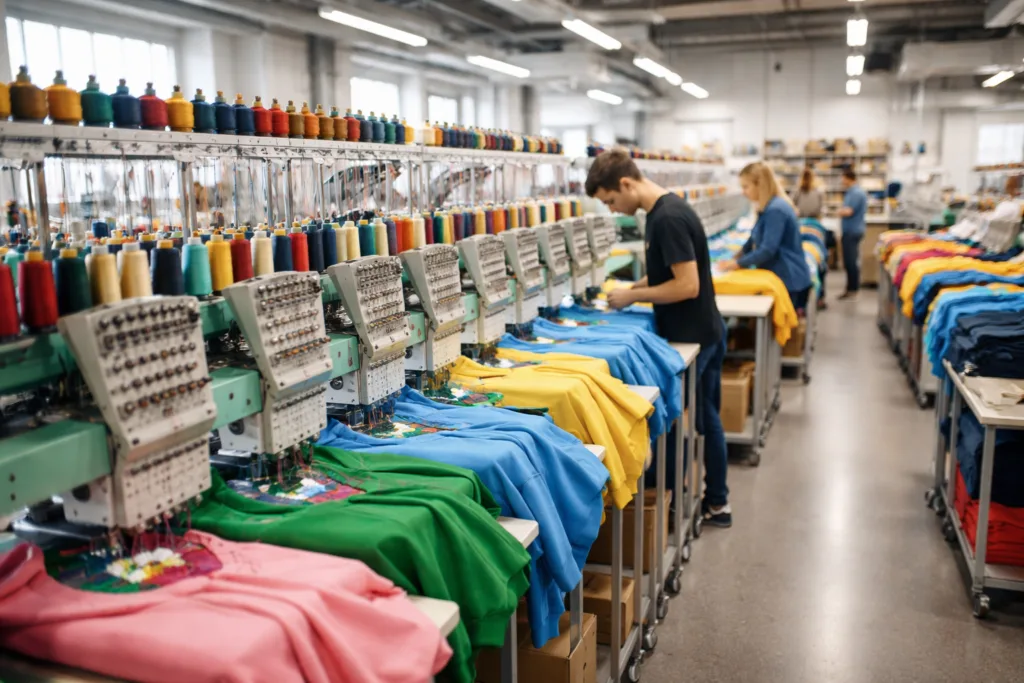
- Polo Shirts & T-shirts: 100–300 pcs per design
- Hoodies & Sweatshirts: 100–200 pcs per color/style
- Caps & Hats: 100 pcs per logo/color
- Jackets: 100 pcs per design/placement
Bigger designs with complex color changes often require higher MOQs to ensure machine efficiency and cost effectiveness. Factories like Ninghow can sometimes offer lower MOQs for premium orders but expect a charge for extra digitizing and sampling. Small runs may limit thread color options and production speed.
Quality Control for Embroidered Garments
Consistent quality means checking every batch for the following parameters:
- Stitch density and alignment (no missing or sagging areas)
- Colorfastness to washing, light, and rubbing (ISO 105/X12, AATCC 8)
- No fabric distortion or puckering around embroidery zones
- Tidy reverse, with excess threads trimmed and stabilizer properly removed
- Measurement against tech pack tolerances (+/- 0.5 cm as usual)
Some buyers require extra lab testing for high-stakes uses (uniforms, sports), including seam strength, pilling resistance (ISO 12945), and harmful substance screening (OEKO-TEX STANDARD 100). Reliable factories document outcomes for every lot.
Packing, Labels, and Logistics for Embroidered Apparel
After embroidery, garments move to final finishing—washing, steaming, folding, and polybagging. Each item receives main and care labels (following ISO 3758 symbol conventions), with hangtags applied if needed.
For large orders, apparel is packed by size ratio into export cartons. Carton marks show logo, style code, and quantity breakdown. Factories supply packing photos and documents for shipment tracking.
Delivery can be arranged with different Incoterms (EXW, FOB, CIF, or DDP) and lead times run from three to five weeks after sample approval, depending on order size and embroidery complexity.
Expert Tip: Clear tech packs and upfront color approvals speed up production, reduce revision costs, and ensure the first shipment meets standards.
Embroidery on Clothes: Cost, Lead Time, and Business Impact
Embroidery on clothes usually costs more per piece than direct print, especially for intricate or highly colored logos. Key factors affecting price and delivery:
- Logo size (more stitches = higher cost and longer run time)
- Number of thread colors (extra cones increase setup time)
- Garment base price, fabric weight, and finishing needs
- Order quantity (bulk rates apply above certain thresholds)
- Requested testing and compliance documentation
Fast, responsive service—like Ninghow’s OEM/ODM for sportswear, streetwear, and uniforms—lets clients launch collections on time and with full confidence in color, fit, and logo durability. Big volume buyers can secure better rates, but schedule lead-time for proper sampling and approval. Embroidery adds value by creating a premium look that justifies higher retail prices and improves brand recognition.
Embroidery on Clothes
Properly executed embroidery on clothes elevates a garment from plain to professional or fashion-forward. It’s the go-to choice for businesses seeking long-lasting, high-quality logo displays. From design setup to labeling and bulk packing, each step shapes your final product’s impact—and each decision carries trade-offs between cost, handfeel, color fastness, and minimum order sizes.
Whether you’re dressing a sports team, outfitting a company, or developing a new streetwear line, partnering with an expert apparel supplier is essential. With thorough preparation, clear designs, and well-defined specs, your embroidery program delivers durable, excellent outcomes every season.
Frequently Asked Questions
What is the difference between embroidery and printing on clothes?
Embroidery uses colored thread to stitch designs onto fabric, creating a raised, durable effect, while printing applies ink on the surface, ideal for intricate patterns but may fade faster.
How does custom embroidery affect garment price and lead time?
Embroidery usually increases price per piece and adds time for digitizing and sampling, but bulk orders and simple designs help keep costs and delivery times competitive.
What file type is best for embroidery design submission?
Submit clear vector files such as .ai or .eps for sharp digitizing results; avoid blurry JPGs, as they can reduce edge clarity in embroidery setup.
How do I choose the right placement and size for my embroidered logo?
Consider garment style and logo shape—common choices include left chest, sleeve, and cap front, with widths of 3–4 inches for best visibility and comfort.
What is a typical MOQ for custom embroidered clothing orders?
Minimum order quantities often start at 100–300 pieces per design, depending on garment type, color, and logo complexity; special runs may require higher quantities.
Can embroidery be used on any type of fabric?
Most stable woven and knit fabrics support embroidery, but thin, stretchy, or highly textured materials may need extra backing and sampling for sharp results.
