
Introduction: Can Bangladesh Replace China for Fashion Brands?
The global fashion industry is seeing major shifts. As brands rethink their sourcing strategies, “Can Bangladesh Replace China for Fashion Brands?” is on every apparel manager’s mind. With rising labor and compliance costs in China, and Bangladesh’s competitive edge in pricing, capacity, and mass production, is it finally time for brands to move their orders? Or do critical factors—like consistency, supply chain speed, and product complexity—mean China will remain essential? Let’s break down what really sets Bangladesh and China apart for fashion manufacturing.
Why Bangladesh’s Mass Production Model Attracts Global Fashion Brands
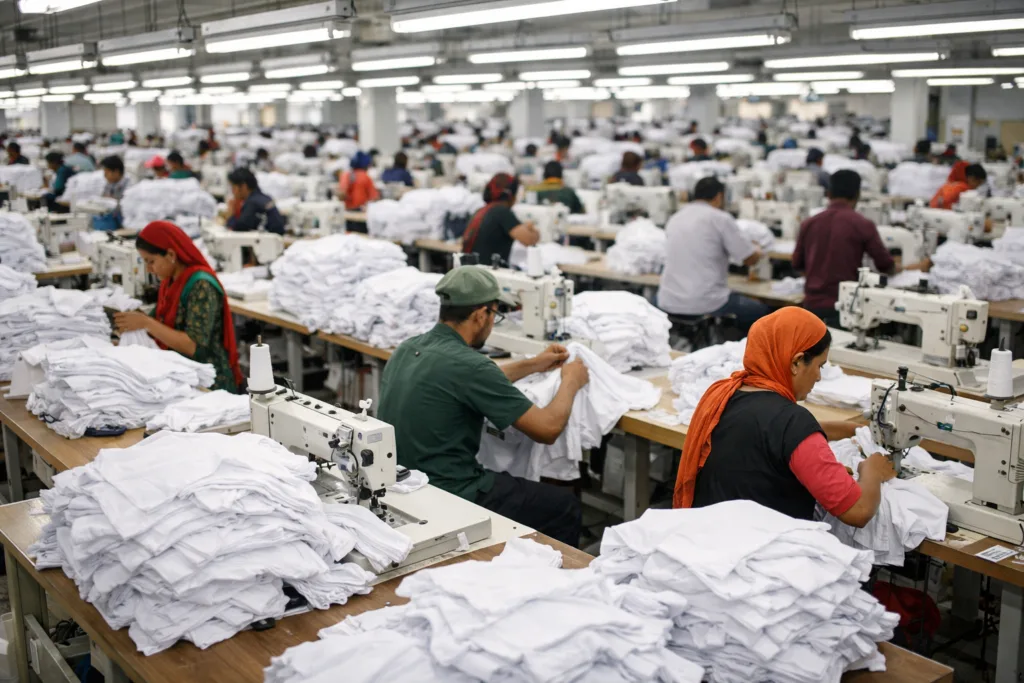
Bangladesh has become a magnet for global fashion brands, especially those seeking large volume, price-driven orders. With decades of growth in ready-made garments (RMG), the country offers:
- Massive workforce at globally competitive labor costs
- Highly specialized factories for core categories (T-shirts, sweatshirts, basic wovens)
- Strong government support and established garment clusters
| Factor | Bangladesh | China |
|---|---|---|
| Labor Cost | Very Low | Rising |
| MOQs (Minimum Order Quantities) | High (5,000+ units typical) | Flexible (as low as 200 units possible) |
| Product Range | Narrow (basic knits/wovens) | Wide (basic to highly technical) |
For brand owners prioritizing cost and large-volume staples, Bangladesh is hard to beat. Bulk orders for essentials are often delivered at a cost point few others can match.
The True Cost Advantage: Bangladesh vs. China Clothing Manufacturing
When comparing Bangladesh vs China clothing manufacturing, the cost story is straightforward for standardized products. Basic cotton T-shirts, mass-market hoodies, and simple children’s wear can sometimes be made in Bangladesh at 10–25% lower FOB rates versus China, driven by lower wages and utility costs. Bangladesh manufacturers often benefit from preferential trade agreements for duty-free access to EU, Canada, and Australia too.
However, there are trade-offs. Large orders and extended lead times are common, and cost savings can diminish with delays, rejections, or mass production errors. Savvy sourcing managers account for logistics risks and buffer inventory when crunching the total landed cost.
Order Types That Bangladesh Handles Best
Bangladesh excels at “high volume, low complexity” programs, including:
- Basic T-shirts, polos, tank tops
- Simple hoodies and sweatshirts
- Casual woven shirts and blouses
- School uniforms
- Entry-level jeans
Orders built around repeat styles, standardized colors, and relaxed fit profiles are common. Bangladesh’s production lines are equipped for millions of pieces per style, provided the design and trim requirements are stable.
For a step-by-step breakdown on matching order types to factories, see Choosing a Reliable Custom Team Clothing Manufacturer: 9 Must-Know Checks for Bulk Orders.
Why Complex Development Projects Still Belong in China
Despite Bangladesh’s advantages in mass apparel, China maintains dominance in orders that demand higher degrees of complexity, flexibility, and speed. These typically include:
- Performance athleticwear
- Jackets with multiple trims or technical finishes
- Private label apparel with unique branding
- Fast fashion programs needing 30–45 day repeats
- Capsule collections with low MOQs and frequent changes
Chinese factories have tightly integrated supply chains—from knitting and dyeing to trims, labels, and packaging—all within hours of each other. For example, quick switchovers on a sampling line, or personalized pattern tweaks, can be done within days, if not hours.
When discussing development in practice, Ninghow’s production teams find that projects requiring mid-line changes, embroidery trials, or branded hardware run smoother in China. Development teams there are accustomed to rapid feedback, smoother technical translation, and strong sampling discipline.
Understanding Quality Consistency Between Bangladesh and China
Consistent product quality—fit accuracy, stitching, colorfastness—remains a challenge when shifting orders. Both countries have world-class brands and factories, but the average factory profile differs.
| Quality Factor | Bangladesh | China |
|---|---|---|
| Fit Consistency | Good for basic blocks, less flexible for customized fits | Very high; sampling and QC are robust for varied fits |
| Stitching | Solid for mass basics | High, especially for technical or branded items |
| QC/Inspection | Client-arranged or 3rd Party often needed | Factory-led QC more reliable, especially for urgent or repeat orders |
If your program demands regular fit updates, detailed labeling, or fast turnaround on tweaks, China offers greater consistency and flexibility, a point covered in depth in The Real Reason Brands Trust China for Every Repeat Apparel Order.
Development Flexibility: Lead Times, Sampling, and Customization
Development flexibility often makes or breaks a sourcing program. China has honed this art with “speed to sample,” seamless hand-offs between product manager and line, and highly responsive pattern making. Brands can request custom fits, specialty fabrics, or branded trims and see a proto sewn up in a matter of days.
By contrast, Bangladesh typically handles fit and branding tweaks more slowly, especially for smaller runs. Lead times for SMS and top-of-production samples are often “one more week” than in China. For brands relying on speed and quick sell-in, it’s an important difference—detailed in Unlocking Speed: Why Fast Sampling Still Favors China for Apparel Brands.
How Bangladesh and China Handle Bulk Reorders and Restocking
Bulk reorders (“repeat runs”) are fundamental for team, promo, and private label brands. China’s integration and mature system mean orders can be placed, sampled, and delivered in 30–45 days—sometimes less. Bangladesh reorders, especially if below their “mass run” threshold, may face longer wait times, as factories prioritize larger contracts ahead in the queuing system.
In practical terms, if a retailer needs 2,000 T-shirts restocked in two weeks, the answer is almost always China. Bangladesh might request a higher run or a longer lead time to justify the line change. This production rhythm was covered in How to Choose a Smart Clothing Manufacturer: 25 Critical Steps for China vs Overseas Success.
Bangladesh vs China: Sourcing Sins and Hidden Costs for Fashion Brands
Switching suppliers isn’t just about price per unit. Shipping delays, communication gaps, last-minute compliance requests, and unclear quality specs can erode savings. Brands sometimes find that Bangladesh’s lower labor cost is eaten up by buffer stock, extra sampling rounds, or increased air shipping.
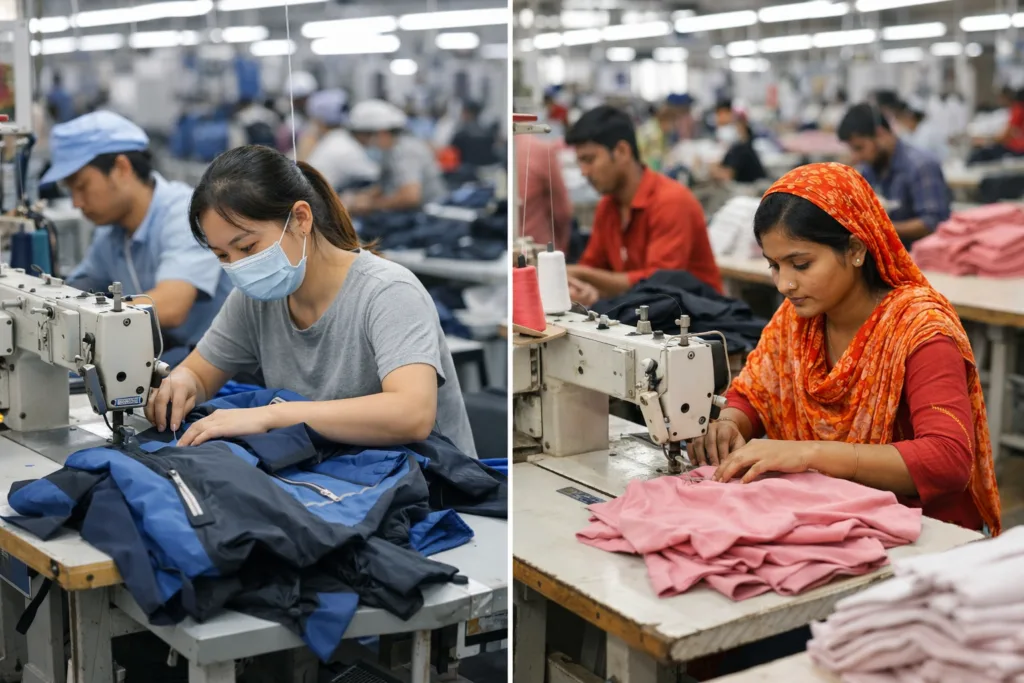
For example, while Bangladesh offers duty-free options, longer transit windows and port congestion can offset these gains. If your brand has a high cost of being out of stock, speed loses out to “price-first” strategies. This is the focus of 7 Hidden Costs of an Unstable Apparel Supply Chain Brands Can’t Ignore.
Environmental & Social Compliance: How Do China and Bangladesh Compare?
Brands are under more pressure than ever for ethical sourcing. Both countries have made big steps—Bangladesh with Accord/Alliance safety initiatives, China with upgraded labor and wage laws. Top Bangladesh factories offer WRAP, BSCI, or Accord certifications, especially those serving leading EU/US brands. However, compliance at the bottom end can be less reliable, and on-site factory visits are a must.
China, while also not immune to labor concerns, generally offers more standardized systems for transparency within the export-focused zones. Sourcing managers should always audit, no matter the origin.
Order Quantities and Sourcing Flexibility: Where Each Country Shines
China’s apparel manufacturing ecosystem is legendary for handling MOQ orders—all the way from 200 to tens of thousands of units—across category and complexity. Bangladesh, on the other hand, thrives on large, standardized runs (usually 3,000–15,000 units per color/style), making it tougher for startups or mid-size brands wanting small batch production.
Supply Chain Integration and Fabric Sourcing Power
China’s vertical integration is a major advantage. You’ll find everything from technical synthetics, recycled/certified cottons, to ultra-soft jerseys available within a day’s drive of most major manufacturing cities. Bangladesh imports much of its fabric, especially synthetics, from China, which can add weeks to the timeline and make innovation slower.
Brands that need the latest moisture-wicking, odor-control, or certified organic textiles often find it easier to develop, tweak, and approve those in China.
Packing, Labeling, and Logistics Efficiency
Every detail matters: custom hangtags, easy-scan barcodes, EAN/UPC labeling, and branded packaging. China’s logistics teams are used to customizing packing lists, color-coded size breakdowns, and unique carton requirements (even for small orders). Bangladeshi plants are improving, but the smoothness of China’s logistics can make a big difference for e-commerce, private label, and just-in-time models.
This flexibility is crucial for brands wanting to stand out with custom labeling, explained further in another guide on custom apparel labels and packaging.
Bangladesh’s Place in the Modern Fashion Sourcing Mix
Bangladesh is a global leader for basic and mid-market apparel, especially where the product is simple and volumes are high. Flagship programs for many top UK and EU retailers have run through Dhaka and Chittagong for decades. However, the modern sourcing manager uses a “portfolio approach”—allocating basics to cost-focused markets (like Bangladesh), and technical or brand-anchored SKUs to China or Vietnam.
Which brings us back to the big theme: Is a full switch from China to Bangladesh smart for your brand? For high-complexity launches, fashion-forward fits, and flexible restocking, the answer is rarely a clear yes. A mixed model nearly always works best.
Can Bangladesh Replace China for Fashion Brands?
The answer depends on what your brand values most. Are you building a catalog of affordable, basic teamwear? Bangladesh may deliver unbeatable costs at scale. Is speed-to-market, unique design, and reorder capacity critical? In that case, China’s supply chain is near impossible to match for flexibility and control.
As brands balance cost, risk, and creative ambition, many land on a hybrid model: allocate core, stable programs to Bangladesh; keep reactive, fast-changing lines in China; and always audit for quality, safety, and reliable partners. For practical sourcing playbooks, you might explore Should You Move Production Out of China? 7 Key Factors for Smarter Apparel Sourcing for a deeper decision framework.
Conclusion: Smart Sourcing Means Knowing the Trade-Offs
Making the switch between Bangladesh and China for your fashion brand is more than a price tag comparison. It’s about understanding the hidden costs in quality, flexibility, restocking, and control. Bangladesh brings world-class value for the right kind of orders—mass, basic, price-sensitive. China brings speed, complexity, and a full menu of supply chain solutions for the rest. Most winning sourcing programs now blend both, maximizing fit for every order type. As the industry keeps evolving, knowing when—and how—to balance each will make your brand stronger for seasons to come.
Frequently Asked Questions
What kinds of apparel orders are best suited to Bangladesh?
Large-volume, cost-driven basics like T-shirts, polos, and simple woven styles are ideal for Bangladesh. The country is well-equipped to handle repeat, mass-market programs at very competitive prices.
Where does China outperform Bangladesh in fashion manufacturing?
China excels at technically complex, highly customized, or fast-turnaround orders. This includes athleticwear, private label programs, and smaller runs requiring flexible development or frequent style changes.
How do lead times compare between Bangladesh and China?
Bangladesh generally has longer lead times due to imported fabrics and queue management for big contracts. China is faster for samples, restocks, and smaller batch production due to integrated supply chains.
Is the quality consistent when producing in Bangladesh vs. China?
Consistent quality is possible in both countries, but China offers more flexibility and proven QC for changing fits, fast reorders, or complex details. Bangladesh’s strengths are in stable, repeated basics.
Can small brands source efficiently from Bangladesh?
Small brands often struggle with Bangladesh’s higher MOQs and infrastructure geared toward mass orders. China is more accommodating for low-MOQ programs and frequent design changes.
What are the biggest risks when moving production from China to Bangladesh?
Risks can include longer development and transit times, less flexibility for urgent restocks, and increased need for on-site quality control. Brands should audit and plan carefully before shifting major programs.
Related Reading
- How Fast Sampling Gives China the Edge in Fashion Sourcing
- Why China’s Apparel Supply Chain Remains Exceptionally Stable in 2026
- 7 Essential Sourcing Questions Before Moving Production Out of China
- Launching Strong with Private Label Team Clothing: Key Steps for Brands
- How to Find a Reliable Chinese Clothing Manufacturer (and Avoid Pitfalls)
