


Introduction: Why Fabric Weight Matters for Custom Hoodies
Choosing the best fabric weight for custom hoodies is one of the first—and most important—decisions apparel brands, merch buyers, and teamwear organizers face. The weight of your hoodie fabric directly shapes comfort, warmth, durability, cost, and how your garments are perceived in the market. Whether you’re outfitting a streetwear line or producing functional team uniforms, understanding the difference between 10 oz, 12 oz, and 16 oz hoodie fabrics will help you select the right material for your project and audience.
A useful next step is to explore Choosing the right hoodie manufacturer is crucial for quality. Readers planning the next sourcing step may want to review this resource for a focused look at production capabilities, production scope, and manufacturer positioning in the custom hoodie category.
Understanding Fabric Weight: What Does “oz” Mean?
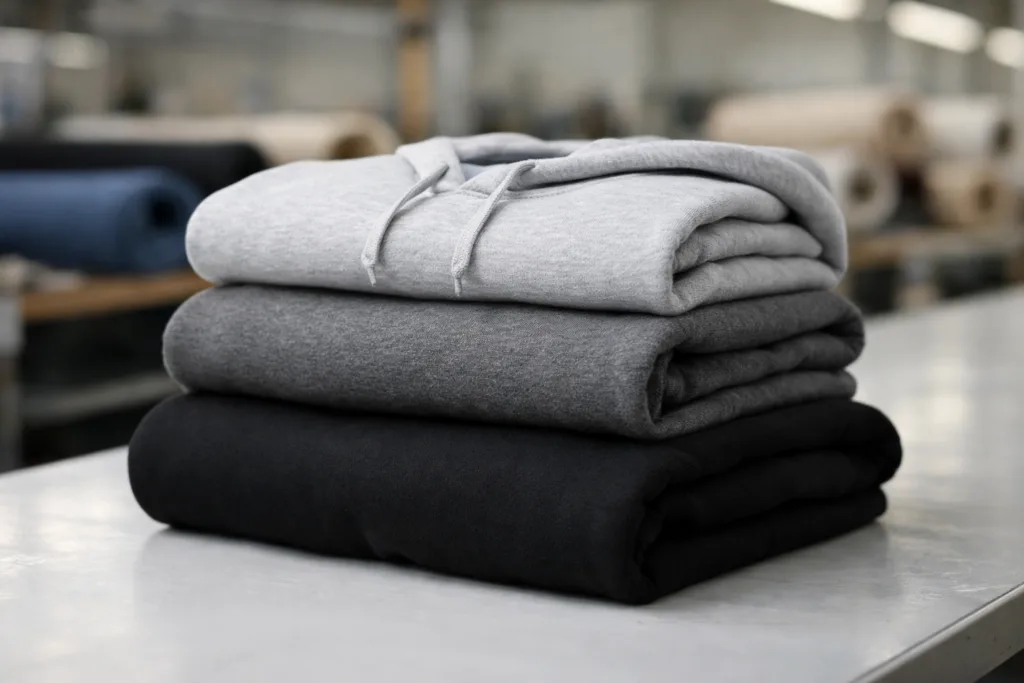
Fabric weight (measured in ounces per square yard, or gsm for grams per square meter) expresses how heavy or dense a material is. In hoodies, common weights include 10 oz, 12 oz, and 16 oz—each with its own impact on drape, coziness, cost, shipping weight, and even retail price positioning. Heavier does not always mean “better”—fit, function, and fashion trends all play a part.
Streetwear, Teamwear, Merch, and Retail: Distinct Needs, Distinct Weights
Let’s break down the four main types of hoodie projects and how fabric weight matters for each:
- Streetwear: Prioritizes structure, hand-feel, and street presence—often opting for heavier fabrics (12 oz or 16 oz) to achieve an oversized fit and premium look.
- Teamwear: Focuses on mobility, durability, and layerability—balancing warmth and movement. 10 oz or 12 oz is common.
- Merch: Seeks cost-effectiveness, fast-turn production, and versatility. Usually ranges between 10 oz and 12 oz.
- Retail: Mainstream brands care about audience comfort, shelf appeal, and price point—using a range, but 12 oz is the most versatile.
Comparison Table: 10 oz vs 12 oz vs 16 oz Hoodies
| Fabric Weight | Hand-Feel | Typical Uses | Durability | Cost | Shipping/Logistics |
|---|---|---|---|---|---|
| 10 oz | Flexible, lighter, comfortable | Teamwear, merch, everyday retail | Good, less bulky | Lowest | Lower shipping cost |
| 12 oz | Balanced, structure, soft yet substantial | Streetwear, retail, mid-tier merch | High, holds shape well | Mid-range | Average weight |
| 16 oz | Heavy, plush, “luxury” feel | Premium streetwear, cold climates, select retail | Very high, rigid structure | Highest | Bulky; higher shipping cost |
How Fabric Weight Impacts Hand-Feel and Comfort
Fabric weight dramatically affects how a hoodie feels in hand and on body. Lighter weights (10 oz) yield a more relaxed, drapier fit, ideal for activewear or markets where layering is key. With 16 oz, you get a denser, more molded silhouette and a strong “presence,” which streetwear brands love for their drop shoulders and boxy fits. Midweight (12 oz) offers the most versatility, providing substance without over-committing on bulk.
Hoodie Fabric Weight and Pattern/Fit Considerations
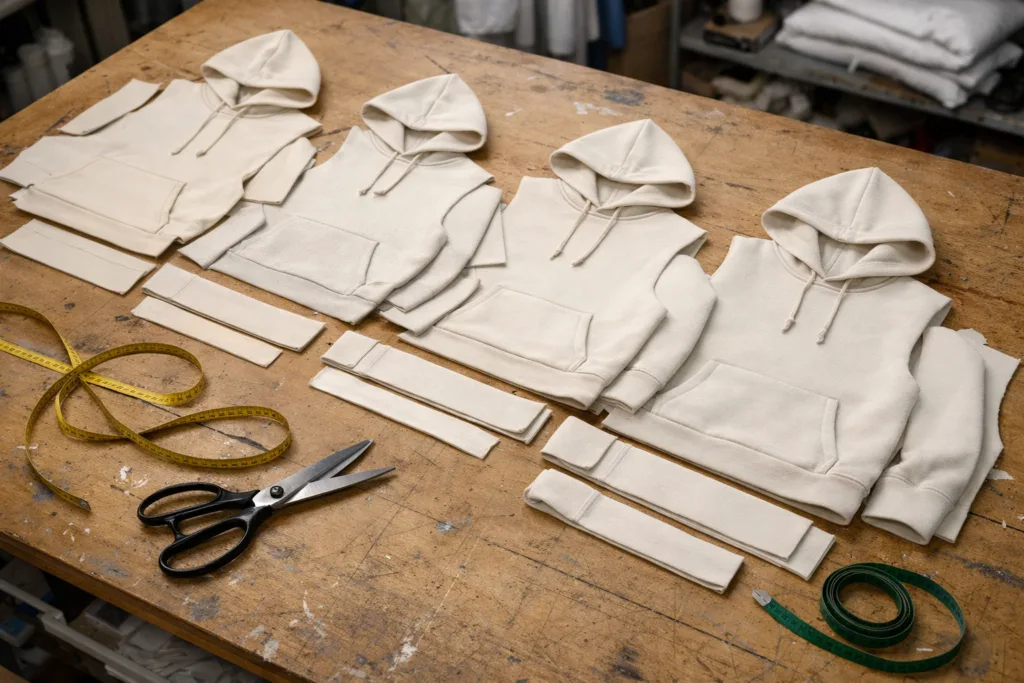
Heavier fabrics require a more thoughtful pattern—an oversized look in 16 oz stays structured and stands out, while a fitted cut in lightweight 10 oz fabric skims the body. Ninghow’s pattern makers often adjust seam allowances, panel shapes, and ribbing tension to accommodate how the fabric will perform when sewn, ensuring consistency from sample to full production run.
Warmth and Weather: Choosing Based on Season and Climate
The colder it gets, the more sense it makes to opt for heavier weights like 16 oz. In mild or indoor settings, 10 oz is lightweight enough for comfort without overheating. For versatile, three-season use—or retail lines that aim for broad market appeal—12 oz is a practical winner.
Cost, Manufacturing, and Shipping Impact
Heavier fabrics cost more—not just in raw materials, but throughout production and logistics. 16 oz hoodies require sturdier sewing machines, often command higher MOQs (minimum order quantities), and add significantly to bulk shipping fees. This makes them suitable for premium-priced retail or hype-driven streetwear brands where unit economics can support the cost. On the other hand, merch and teamwear buyers may prefer 10 oz or 12 oz to balance durability with affordable multi-unit distribution.
Visual Appeal: Fabric Weight’s Role in Retail Shelf Presence
Heavier hoodies often stand out on shelves due to their thickness and structure—an aesthetic that signals “premium” in streetwear and boutique retail. Lighter weights may appeal for sportier, technical, or youth-focused lines. Your target customer’s expectations and the story your brand tells both influence the right choice.
Brand Perception and Retail Positioning
The market segment you want to address also guides your fabric weight choice. 16 oz hoodies align with luxury, limited drops, and influencers, enhancing the sense of exclusivity. Meanwhile, 10 oz is accessible, approachable, and tends to move fast in team orders or high-volume merch projects. Mainstream retail sits comfortably at 12 oz for balancing quality and price.
Suitability for Embellishments: Embroidery, Printing, and More
Bolder embroidery and patches tend to hold better on midweight and heavyweight fabrics, while lighter weights are ideal for screenprints and DTG (direct-to-garment) graphics. Heavier weights resist puckering and distortion during embellishment, retaining a professional finish over time.
Caring for Different Hoodie Fabric Weights
Heavier hoodies (16 oz) may take longer to dry and can shrink more noticeably if not properly prewashed or handled during finishing. Lower weights require careful QC to prevent stretching or misshaping after repeated washes. An experienced factory (like Ninghow) typically double-checks shrinkage rates in lab dips and sample rounds to avoid post-sale surprises during bulk apparel production.
How Weights Affect Bulk Orders for Brands and Teams
High-weight hoodies increase both unit price and shipping cost. Lighter hoodies ship cheaper and may allow for faster production cycles. For brand or team projects exceeding hundreds of units, even minor differences in fabric weight can dramatically impact final cost and shipping logistics. Bulk buyers should scope out their exact needs before committing, weighing the trade-offs in their context. For more insights, see Tips for selecting a custom team clothing manufacturer.
Raw Material Insights: Cotton Content and Yarn Structure
Not all heavyweight hoodies are created equal. A 100% cotton heavyweight hoodie offers maximum comfort and breathability, but can be pricier and less shrink-resistant than blended fabrics. Carefully spun yarns give a softer surface and reduce pilling—which is especially critical for high-gsm garments. Knowledgeable manufacturers help clients balance 100% cotton’s pros and cons against the cost and resilience of blends.
Color, Dye, and Finish: How They Interact with Weight
Dark, saturated colors sometimes show more surface fuzz on heavier brushed fabrics. Pre-washed or pigment-dyed finishes soften the hand and add character to heavyweight garments—popular in street fashion. If you’re considering custom-dyes or washes, consult your manufacturer early to guarantee colorfastness and finish uniformity, especially in dense 16 oz garments.
Sustainability and Lifecycle Considerations
Heavier hoodies (especially 100% cotton heavyweight options) might use more resources in production and shipping but can outlast their lighter counterparts if cared for properly. Brand buyers seeking longevity and reduced garment turnover may lean towards higher weights for a lower long-term replacement rate.
Regional and Climate-Specific Preferences
Consider the climate of your target market. Colder regions love premium heavyweight hoodies for warmth, while lighter and midweight hoodies perform well in milder zones. Retail buyers serving wide geographies may benefit from midweight (12 oz) for versatility and broad appeal.
Streetwear Project Deep-Dive: Why 16 oz Stands Out
In streetwear, looks and presence matter. The thick, structured feel of a 16 oz hoodie supports boxy, oversized fits and dramatic silhouettes—plus, it simply feels “expensive” to the hand. High weight is often part of the storytelling—a marker of scarcity and luxury in drop culture.
Teamwear and Sports: Why Lighter May Be Smarter
For teams, 10 oz (sometimes 12 oz) makes hoodies comfortable, breathable, and easy to layer over uniforms or under outerwear. Lighter hoodies help with active movement and don’t overburden athletes during travel. QC checks for stretch recovery and abrasion resistance are extra important here, as these garments see heavy rotation and frequent washing.
Merchandise: Balancing Cost and Perceived Quality
Merch buyers walk a fine line. Opting for 10 oz or 12 oz keeps costs manageable, especially for high-quantity events or giveaways. However, artwork placement and anticipated wash cycles guide whether to invest in a slightly heavier fabric for durability. Ensure the weight meets audience expectations so fans wear your merch long after the event.
Retail Buyers: The Safe Bet of 12 oz Hoodies
For most retail programs, 12 oz is the “Goldilocks” zone—thick enough for a premium feel, light enough for year-round sales. It bridges the gap between bulk economics and shelf aesthetics, keeping your assortment competitive and your price points flexible. For a deep dive into the brand impact, check The impact of custom team hoodies on brand identity.
16 oz Hoodie, Heavyweight Hoodies, Heavy Weight Cotton Hoodie, 100 Cotton Heavyweight Hoodie
When your brand wants to communicate true quality and warmth, 16 oz hoodies made from 100% cotton become the statement piece. These heavyweight options convey luxury, resist wind, and provide the satisfying heft that premium customers expect. However, the production process is more demanding: pattern accuracy, needle strength, and tension control in sewing, as well as final QC, all require shop-floor expertise. Discussing these details early with your manufacturer helps prevent costly reworks and ensures your heavyweight hoodie will deliver exactly the vibe and value your market demands.
Potential Cost Breakdown: How Weight Hits the Margins
A quick example: 10 oz fleece might shave 10-20% off your landed cost per unit versus 16 oz. For a merch drop of 500 pieces, this can be the difference between a breakeven project and one with healthy margin even after embroidery or printing. Shipping costs also scale up with heavier goods—especially for international deliveries.
Production Timelines: Does Weight Change Lead Time?
Heavier fabrics may slow down production ever so slightly, as they take longer to cut and require more careful seaming. However, seasoned factories adjust their workflow and can handle both heavy and lighter custom hoodie projects with reliable turnaround. Sampling and fit-checks are particularly important for 16 oz garments to ensure consistent sizing and finish.
Common Pitfalls in Choosing Hoodie Weight
It’s tempting to chase the highest gsm for “perceived quality,” but that’s not always best. Overspecifying can drive up costs with little benefit for your customer. Conversely, going too light can leave your project feeling cheap and hurt retail pricing power. Always balance target market, function, and your brand story before locking in a weight.
Manufacturer Insights: Advice Before You Place Your Order
From initial sample to bulk run, collaborate closely with your manufacturing partner. Share your market positioning, intended fit, key features, and branding strategy up front. Be specific about the end use (streetwear, teamwear, merch, etc.) so adjustments can be made in pattern cutting, trim selection, and QC protocol. For more on how to approach pre-production, reference our practical tips at Ninghow or consult our vertical production guide.
Conclusion: Choosing Best for Your Brand’s Custom Hoodie
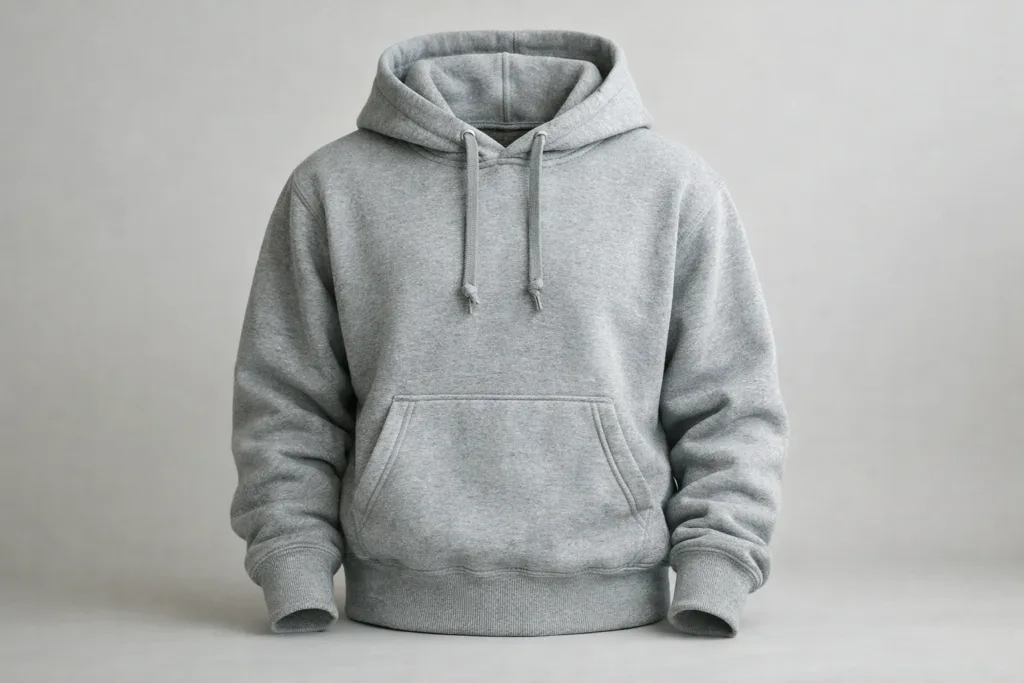
The right fabric weight for custom hoodies depends on more than just a number on a spec sheet. For city-cool streetwear, premium 16 oz cotton rules. Teamwear benefits from flexibility and breathability—often at 10 oz. Merch buyers must weigh cost, fast production, and perceived value, making 10–12 oz ideal. Retail programs usually succeed with 12 oz, hitting the sweet spot between performance and profit. Align your choice with target audience, market positioning, and production realities to make your next hoodie drop a hands-down success.
Frequently Asked Questions
What is the main difference between 10 oz, 12 oz, and 16 oz hoodie fabrics?
The primary difference is in thickness, warmth, and structural feel. 10 oz is lighter, easier to layer, and more flexible, while 16 oz offers heft and warmth suited for premium or cold-weather applications. 12 oz strikes the best balance for year-round versatility and is favored in retail.
Is a 16 oz hoodie always better quality than lighter options?
Not always—while 16 oz gives a luxurious, heavy look and feel, it may not be the most functional or cost-effective choice for all markets. Suitability depends on your brand’s intent, customer needs, and where the garments will be worn.
How does fabric weight affect embroidery or screenprinting?
Heavier and midweight fabrics (12–16 oz) hold embroidery and patches well, with less distortion. Lighter materials suit screenprints but can stretch or warp under dense embellishments. Choose processes that match your chosen weight for best results.
Does choosing a heavier fabric increase my hoodie’s cost?
Yes. Heavier fabrics increase not just raw material costs but also impact sewing complexity and shipping expenses. A 16 oz hoodie typically carries a higher per-unit and logistics price compared to 10 oz or 12 oz options.
What type of projects are best for heavyweight, 100% cotton hoodies?
Heavyweight, 100% cotton hoodies shine in premium streetwear, limited edition drops, and cold-climate retail programs, where warmth, structure, and tactile luxury are critical for the end customer.
How should I decide on fabric weight for a team order or bulk merch?
Consider balance—choose a weight that offers comfort and durability at a price point that fits your project budget. For large team or event orders, 10 oz to 12 oz generally provides the best value and wearability.
