

Yes, a factory can develop apparel from a physical garment when the buyer supplies the garment, confirms authorization, documents the intended changes, and provides measurements and a target quantity. The process is not a request to reproduce an unexplained object. It is a controlled conversion from an authorized reference sample into an original production specification. Ninghow describes accepting reference samples or design inputs during development; its Sampling & Product Development guidance also shows why measurements, tolerances, construction, and decoration need to be defined before sample approval.
This reference garment development checklist begins with a retain-change-propose analysis. It then checks authorization and condition, records measurements and wash history, and inspects construction, materials, components, and decoration. Photographs are useful for initial review, but they cannot establish every fiber, finish, internal construction, or performance requirement.
Start With a Retain–Change–Propose Analysis of the Reference Garment
Start by converting the garment into a decision record with 3 columns: retain, change, and propose. This makes garment sample analysis more useful than a general statement such as “make it similar.” It also gives the buyer and development team a shared list for pattern work, material selection, sampling, and approval.
| Category | What to record | Buyer decision |
|---|---|---|
| Retain | Visible details to preserve, such as overall silhouette, pocket position, collar shape, color appearance, label position, or decoration location. | Confirm which features are mandatory and which may vary within an agreed range. |
| Change | Explicit differences, such as body measurements, fit, fabric, trims, closure, artwork, logo, packaging, or intended use. | State the required new result and provide measurements, artwork, or material preferences where available. |
| Propose | Factory suggestions for a substitute material, construction detail, component, decoration method, or pattern adjustment. | Approve, reject, or request evidence before the proposal becomes part of the specification. |
Minimum development brief
- Reference garment photographs: front, back, inside, detail views, labels, seams, trims, and areas to be modified.
- Point-of-measure information, including the garment’s condition and measurement method.
- A written list of retained details and requested changes.
- Target quantity, intended end use, target wearer, and relevant size range.
- Permission to analyze the garment and use the resulting development information for production review.
This is clothing development from a physical sample, not automatic one-to-one copying. Authorization to analyze a garment does not automatically authorize the use of a third party’s trademark, artwork, or protected design. The buyer should confirm ownership or development permission before sharing the sample, photographs, or branded decoration.
Use “propose” carefully. A replacement fabric that looks similar may differ in hand feel, stretch, dimensional change, sewing behavior, or tested performance. A photograph can support an initial visual decision, but it cannot confirm exact fiber content, GSM, finish chemistry, seam construction hidden inside the garment, or a performance result. Those details remain open until supplier records, physical inspection, or appropriate testing provides evidence.
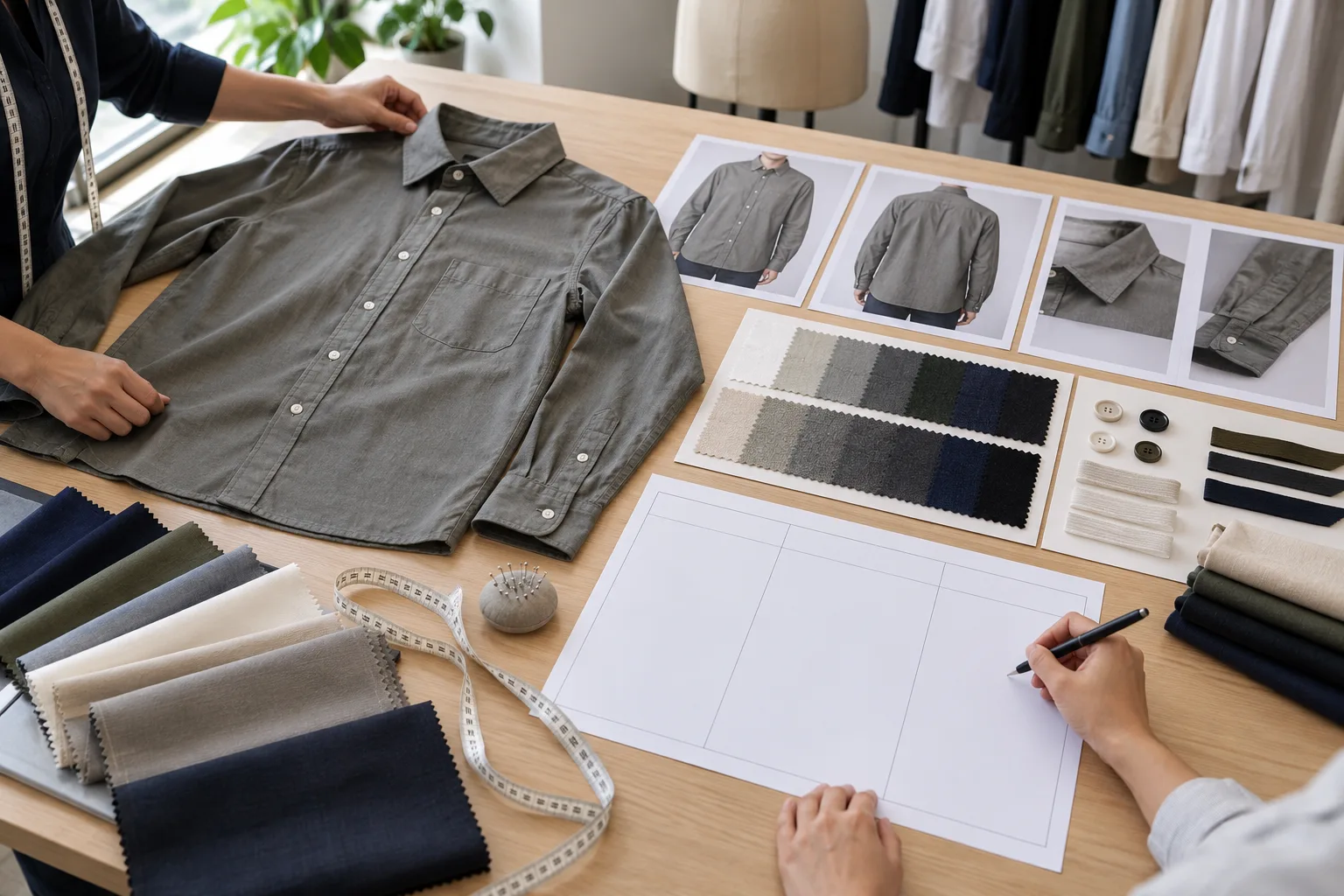
Confirm Authorization, Reference Condition, and the Intended End Use
Before measuring, record who owns or authorizes the reference garment and what the permission covers. The intake should state whether the garment may be analyzed, photographed, adapted, used to develop samples, and considered for production. Keep this authorization separate from a general statement that the buyer likes the design.
Reference intake checklist
- Garment category, style name, sample identifier, and intake date.
- Owner or authorized submitting party, plus the permitted development scope.
- Intended wearer, use environment, target market, and expected care conditions.
- Condition: new, worn, washed, dry-cleaned, industrially laundered, altered, stretched, stained, damaged, or repaired.
- Buyer objective: visual similarity, a specified fit, comparable hand feel, a replacement material, or a revised performance requirement.
- Requested changes, target quantity, size range, decoration versions, and packaging requirements.
Photograph the garment before handling it further. Capture the front, back, inside, labels, care information, seams, hems, closures, pockets, trims, decoration, and every area identified for modification. Add the date and condition notes to the record. A worn or altered garment may show the effects of use rather than the intended original specification, so those observations should not be treated as production requirements without confirmation.
Separate current condition from intended finished specification. For example, a stretched neckline may be a defect, a consequence of repeated wear, or an intentional fit feature. The buyer must identify which interpretation applies. This distinction prevents the development team from building an accidental distortion into the new pattern.
The same review should clarify what “similar” means for the project. A buyer may prioritize silhouette and decoration while accepting a different fabric. Another may need the same fit but a different material and revised care requirement. These are different adaptation decisions and should be written as separate requirements before sampling begins.
Measure the Reference Garment and Record Its Wash History
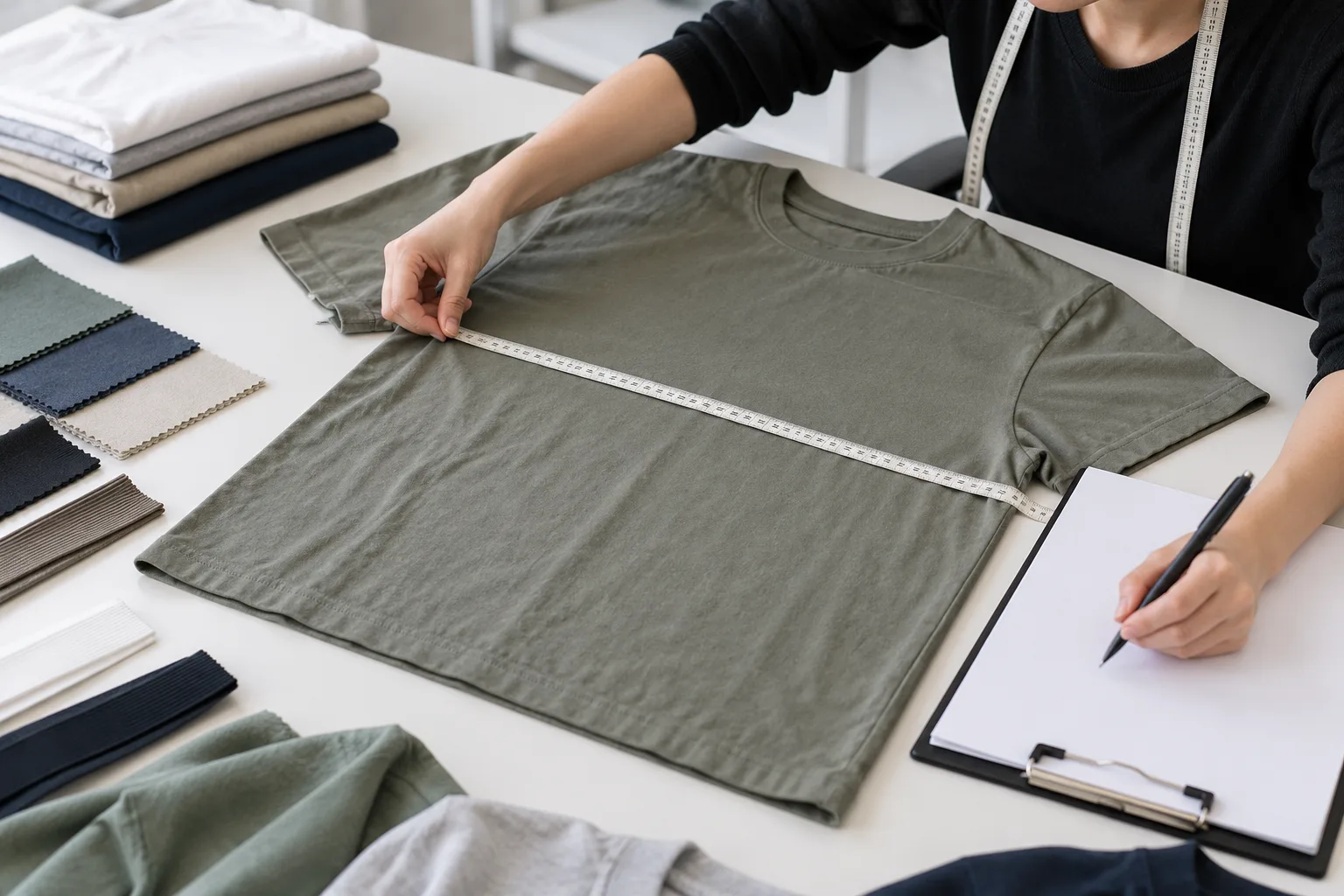
Measure the physical garment in a repeatable condition and record how each measurement was taken. Lay the garment flat when appropriate, avoid pulling unless stretch measurement is intentional, and note visible distortion. The measurement sheet should identify the point of measure, position, method, units, and any uncertainty.
Record the relevant points of measure
- Top or outerwear: body length, chest or width, shoulder, sleeve length, cuff or opening, collar or neckline, and hem.
- Bottoms: waist, rise, inseam, outseam, thigh, knee, and leg opening.
- Category-specific areas: pocket dimensions, placket length, hood opening, elastic length, panel width, or other fit-critical details.
Do not treat measurements from a washed reference as the original production pattern. Washing, dry cleaning, industrial laundering, repeated wear, moisture, heat, and stretching can change dimensions or shape. Record the known history and distinguish measured-after-care dimensions from the intended pre-care specification. If the history is unknown, mark it as unknown rather than assuming the garment represents an unwashed standard.
For important fit decisions, compare the reference measurements with the buyer’s target size chart and, where relevant, wearer feedback. A reference garment can show how one sample currently fits; it does not by itself establish a complete graded size range or prove that the fit will remain stable after care.
Dimensional-change evidence also needs the correct scope. Fabric dimensional-change testing and garment dimensional-change testing answer different questions. If dimensional stability matters, identify the actual material or garment, the care conditions, the measurement points, and the comparison method. A record should identify the tested article and method before its result is used to support a product claim; ASTM’s textile standards catalogue provides relevant context for textile specifications and test methods.
Inspect Seams, Components, Materials, and Decoration Beyond the Photos
Physical inspection adds information that photographs cannot reliably provide. Examine the garment inside and out, and map enough of its construction to guide pattern development and sewing instructions. Record what is visible as a fact, and mark anything inferred or unconfirmed.
Inspect and separate the evidence
- Construction: seam types, seam allowances where visible, stitch appearance, hems, binding, facings, pockets, reinforcements, and internal finishing.
- Components: closures, buttons, zippers, elastic, drawcords, rib, labels, care labels, hangtags, and packaging elements.
- Materials: color, surface appearance, drape, apparent weight, stretch behavior, and hand feel, while treating exact fiber content, GSM, and finish chemistry as unconfirmed without supporting evidence.
- Decoration: embroidery, print, patch, transfer, artwork version, location, dimensions, colors, and authorization.
Some details may require supplier documentation, material identification, testing, or inspection of a sacrificial sample. Do not describe a proposed substitute as equivalent simply because its composition or appearance seems similar. Review the affected appearance, fit, sewing process, decoration, and performance requirements before approval.
Record logo and artwork variations separately. Different artwork sizes, locations, colors, and coverage can create different approval questions even when the base garment remains unchanged. A clear reference sample adaptation record should therefore connect each decoration version to its artwork, placement, dimensions, colors, authorization, and sample decision.
Build a Difference List That Separates Facts, Unknowns, and Required Tests
That record becomes the working difference list: the document that turns observations and buyer decisions into an intended finished specification. It should make clear what comes from the reference garment, what the buyer requested, what the manufacturer proposes, and what still needs evidence.
Use one line for each meaningful feature rather than combining unrelated decisions. A single line might cover the neckline construction, while another covers fabric weight, another the care label, and another the decoration placement. This keeps approvals specific and makes later sample comments easier to trace.
| Field | What to record |
|---|---|
| Reference feature | Observed point of measure, material, component, construction, finish, or artwork |
| Current condition | What was actually seen or measured, including wear, washing, distortion, or missing information |
| Requested change | The buyer’s required difference from the reference |
| Proposed specification | The intended measurement, material, construction, trim, decoration, label, or packaging instruction |
| Evidence status | Inspected, buyer-supplied, proposed, sample-confirmed, or test-required |
| Owner and next action | Person responsible for approval, testing, file revision, or sample review |
Classify each line as confirmed by inspection, buyer-supplied, manufacturer-proposed, or requiring testing or sample confirmation. A photograph may confirm the presence and approximate position of a pocket, but it may not confirm its internal construction, material composition, durability, or dimensional behavior after washing.
Include fit and sizing, fabric and trims, seam construction, decoration, labels, packaging, care instructions, intended use, and target quantity where relevant. Flag conflicts early. For example, a requested relaxed fit may not match the reference measurements, or a replacement fabric may have different shrinkage and alter the approved silhouette. A decoration change may also affect placement balance, stitch coverage, or the appearance of the base material.
For every material substitution, compare the original and proposed material for visible appearance, hand feel, stretch, thickness, dimensional behavior, sewing implications, and decoration impact. Record which points are observed and which require a swatch, garment sample, supplier document, or test. Similar composition or GSM alone does not establish that materials are interchangeable.
Give the difference list a version number, issue date, and approval status. The pattern, sample, costing, and production teams should work from the same approved version. When a change is made, record the affected files, sample parts, testing needs, commercial or timing implications, and written buyer decision before the change is carried forward.
Use Pattern Development and Sample Rounds to Prove the Adaptation
Once the difference list is approved for development, convert it into pattern, measurement, construction, material, trim, decoration, label, and packaging instructions. The physical reference remains evidence, but it is no longer the complete technical file. The development brief must state the intended finished specification in terms another team can interpret and review.
The first development sample should answer a defined question: has the reference structure been translated while applying the agreed changes? Review the silhouette, key measurements, seam placement, components, visible finish, decoration position, and major differences. Do not use this round to silently settle an unresolved fabric, fit, or performance requirement.
Later samples should have distinct purposes. A fit sample can address balance and wearer fit. A size-set sample can review grading and size-to-size consistency. A pre-production sample can confirm the approved production state, including actual materials, trims, decoration, labels, and packaging details. Ninghow’s published sampling guidance distinguishes these sample purposes; the applicable sequence and sample requirements remain project-dependent.
Set acceptance points before reviewing each sample:
- Measurements and tolerances at agreed points of measure
- Silhouette, balance, and fit against the intended use
- Seam construction, component function, and visible finish
- Decoration artwork, position, dimensions, and color version
- Labels, care information, packaging, and size identification
For uniforms, teamwear, or active-use garments, a planned wearer trial can add practical feedback on movement, comfort, fit, and use conditions. Define the target wearer group, sizes, tasks, duration, wash or care conditions, and a consistent feedback form. Treat the results as project evidence rather than as a general performance certification.
After each review, compare the current sample with the prior approved version. Record every deviation with a measurement, photograph, comment, or file reference where appropriate. Mark each item as accepted, corrected, or carried forward for validation. A substitute fabric or trim should not be treated as equivalent until the affected appearance, fit, process, decoration, and required performance points have been reviewed and approved.
Prepare the Buyer Handover Before Bulk Production Is Considered
Before requesting a manufacturing decision, assemble a handover that lets the development team distinguish fixed requirements from open choices. A physical reference garment is useful evidence, but the enquiry should also explain what may change and what the finished garment must achieve.
Buyer handover checklist
- Clear photos of the front, back, inside, seams, components, labels, decoration, and notable details
- The physical reference garment where practical, with its ownership or development authorization
- Point-of-measure data, size information, and notes on whether the garment is new, washed, worn, stretched, or repaired
- Intended end use, wearer group, climate or activity considerations, and target sizes
- A retain–change–propose list identifying fixed decisions and areas open to manufacturer proposals
- Fabric, trim, label, care, packaging, and decoration expectations, including artwork files and logo authorization
- Target quantity and destination for the enquiry
- Any requested material substitutions, required tests, wearer feedback, or acceptance criteria
Ask for written confirmation of the adapted specification, sample purpose, open risks, required tests or sample checks, approval owner, and change-control method. Before bulk production is considered, resolve an unapproved substitute, conflicting measurement, incomplete decoration version, or missing authorization. Ninghow’s stated order process places sample approval and order confirmation before bulk material purchasing, subject to project-specific confirmation.
Two hypothetical decisions
1. Private-label adaptation. A brand supplies an authorized overshirt and wants the same general silhouette with a different fabric, woven label, care label, and packaging. Available evidence includes reference photos, measurements, the requested label files, and a target quantity. The evidence gap is whether the proposed fabric changes shrinkage, hand feel, drape, or decoration placement. Outcome: Clarify. Compare the materials, confirm the revised specification, and use a development sample before treating the adaptation as approved.
2. Teamwear adaptation. A buyer supplies an authorized base garment and requests several logo versions across multiple sizes for active use. Available evidence includes the base sample, artwork files, placement requests, size requirements, and intended wearer activity. The evidence gap is practical fit and movement feedback across the selected sizes, plus confirmation of each logo version. Outcome: Pause bulk approval until the version matrix, size review, and defined wearer or sample checks are completed.
A qualified enquiry should therefore end with a decision status: Go when authorization, core specifications, and approval ownership are clear; Clarify when a defined sample, comparison, or document is still needed; or Pause when a material, fit, decoration, or ownership issue could change the finished specification. This creates a defensible handover without assuming that the reference garment can be reproduced one-to-one.
For a project review, send Ninghow clear reference-garment photos, the physical sample or its available details, point-of-measure data, wash condition, authorization, intended use, target sizes, requested changes, decoration and label files, packaging expectations, target quantity, and destination.
Frequently Asked Questions
Can a factory work from a physical garment?
Yes, a factory can use an authorized physical garment as development evidence. It still needs measurements, condition and wash-history notes, intended use, requested changes, and approval decisions. The garment should be translated into a documented specification and samples; it should not be treated as a complete technical file or an automatic instruction to copy it exactly.
Which specifications cannot be confirmed from photographs?
Photographs usually cannot confirm fiber composition, GSM, thickness, shrinkage, stretch recovery, internal seam construction, stitch details, color standard, trim specifications, care performance, or dimensional change after washing. They may show visible features and approximate placement, but material identity, construction, fit, and performance often require inspection, documentation, swatches, measurements, samples, or testing.
Should a washed reference be measured differently?
Yes. Measure a washed or worn reference as a record of its current condition, and identify the wash process if known. Do not assume those dimensions represent the original pattern. Note distortion, stretching, shrinkage, repairs, and wear, then use development samples or relevant dimensional checks to establish the intended finished measurements.
How should changes from the reference be documented?
Use a version-controlled difference list. Record the reference feature, observed condition, requested change, proposed specification, evidence status, responsible approver, and next action. Include affected measurements, materials, trims, decoration, labels, packaging, tests, and samples. Add a version number and approval date so pattern, sampling, costing, and production teams use the same change record.
What should I send with a reference garment for development review?
Send clear photos, the physical reference where practical, authorization, point-of-measure data, wash condition, intended use, target sizes, requested changes, decoration and label files, packaging expectations, target quantity, and destination. Also identify which requirements are fixed and which are open to proposals. This gives the development team enough context to separate confirmed facts from unresolved questions.
Can a factory suggest replacement fabrics or trims for a reference garment?
Yes, a factory may propose replacement fabrics or trims, but the proposal should be documented as a change rather than assumed equivalent. Compare appearance, hand feel, dimensions, sewing implications, decoration impact, and relevant performance needs. Review a swatch or sample and obtain buyer approval before treating the substitute as part of the intended finished specification.