




When brands compare OEM polo shirts vs ready-made polos, the real question is not only which option is cheaper today. It is which option gives the right balance of fit, fabric control, brand identity, and replenishment logic for the next season.
For teams that want to review polo shirt manufacturing options before committing to an order, the most useful starting point is to map the product to the business goal. If you need a repeatable private label polo with your own fit, trims, and packaging, Ninghow can support fabric selection, sampling, logo application, and bulk production planning from the beginning.
What is an OEM polo shirt and how is it different from a ready-made blank polo?
An OEM polo shirt is developed to your specifications. That can include fabric composition, GSM, collar shape, placket length, button style, fit, labeling, and finishing. A ready-made blank polo is an existing stock garment with a fixed spec that you decorate after purchase.
From a sourcing perspective, OEM is a product development project, while a blank polo is a purchase decision. OEM gives the brand more control, but it also asks for clearer briefs, sample approvals, and production planning. Blank polos reduce development work, but you accept the supplier’s existing choices on fit, fabric, and construction.
- OEM polo shirts are stronger when the goal is brand identity, size consistency, and long-term repeat orders.
- Ready-made polos are stronger when speed, low upfront commitment, and simple logo placement matter more than uniqueness.
- OEM usually starts with a tech pack, sample, and production approval flow, while blanks often move directly to decoration or resale.
Key takeaway: If your polo is part of a real brand system, OEM usually creates more value. If the shirt is only needed for a short-term event or fast test, ready-made can be the simpler path.
For buyers who want to compare OEM and ODM garment production paths, the difference is simple: OEM follows your full product brief, while ODM usually starts from a supplier’s base model and adapts it.
OEM polo shirts vs ready-made polos at a glance
| Decision factor | OEM polo shirts | Ready-made polos | Best fit |
|---|---|---|---|
| Design control | Full control over pattern, collar, placket, trims, and finishing | Limited to existing stock shape and size run | OEM for branded collections |
| Fabric choice | Chosen to spec, including composition, GSM, and handfeel | Fixed fabric already selected by the supplier | OEM when performance matters |
| Fit and sizing | Custom grading can improve consistency across the size curve | Standard size chart only | OEM for repeatable brand fit |
| Logo and branding | Labels, embroidery, printing, hangtags, and packaging can all be planned together | Usually decoration added after purchase | OEM for private label |
| MOQ | Usually higher because materials and production are planned for your order | Often lower because the shirt already exists in stock | Blank for very small tests |
| Lead time | Longer because sampling and approval are part of the process | Faster because development is already done | Blank for urgent needs |
| Brand value | Higher differentiation and stronger long-term positioning | Lower differentiation unless decoration is very strong | OEM for growth brands |
The table is useful because the better choice is not always the one with the lowest initial price. It is the one that matches the time horizon, brand promise, and replenishment plan of the project.
Where OEM creates stronger brand value
OEM matters most when a polo shirt is expected to do more than cover a logo. The shirt should feel like it belongs to the brand, not just carry the brand name.
Design freedom and unique details
With OEM, you can change the parts that customers notice first. Collar shape, cuff finish, placket length, contrast tipping, side vents, and button style can all be aligned with your brand story.
- A flatter collar can feel cleaner and more modern.
- A structured pique body can feel more classic and durable.
- Hidden placket details can make a basic polo look more premium without overcomplicating the garment.
- Special trims and label placements help separate a brand from generic wholesale items.
Fabric control and product performance
Fabric choice is often the real reason OEM wins. Many brands want to choose between cotton pique, polyester pique, cotton-poly blends, or stretch blends based on breathability, recovery, opacity, and care behavior. GSM also matters because a heavier shirt usually feels more substantial, while a lighter one can feel cooler but may need more care in construction and opacity.
From our manufacturing perspective, the best fabric is not the most expensive fabric. It is the fabric that matches the use case, the market price point, and the expected wear pattern. A golf brand may want crisp appearance and quick drying behavior, while a school or workwear program may care more about durability and easy washing.
Fit, sizing, and grading
Blank polos usually come with a supplier’s standard fit, which can be acceptable for promotions but risky for brand building. OEM lets you refine shoulder width, body length, sleeve opening, and grade rules across sizes so the fit feels intentional from small to plus sizes.
That consistency matters because buyers notice when one size fits dramatically differently from another. A well-built size set reduces returns, improves repeat orders, and makes it easier for sales teams to recommend the line with confidence.
Logo application and branding methods
OEM also gives you more control over how branding is built into the garment. Embroidery, screen printing, heat transfer, woven labels, printed neck labels, hangtags, and packaging can all be planned as one system instead of separate decisions.
If the shirt is only decorated after purchase, the brand story can feel incomplete. When the logo method, label format, and packaging all match the garment quality, the polo becomes a real private label product rather than just a decorated blank.
When a project is being built as a private label line rather than a one-off order, we usually see the strongest value in detail consistency. If that is your goal, it helps to evaluate private label clothing support early, because labels, hangtags, and packaging all affect the final brand experience.
MOQ, lead time, and replenishment planning
Ready-made polos often look easier because the supplier already has stock. OEM polos may ask for a higher MOQ, but the trade-off is that the order is built around your brand instead of a generic blank.
The right decision depends on how the shirt will be used. If you need a very small number of units for a short campaign, blank polos can reduce risk. If you expect repeat demand, private label expansion, or a season-by-season assortment, OEM usually becomes more efficient over time.
If your first order is small or you are testing fit and color demand, it can still be smart to review small-batch apparel production support before deciding that OEM is out of reach. A lower MOQ can sometimes be structured with limited colors, shared fabric, or simplified trims.
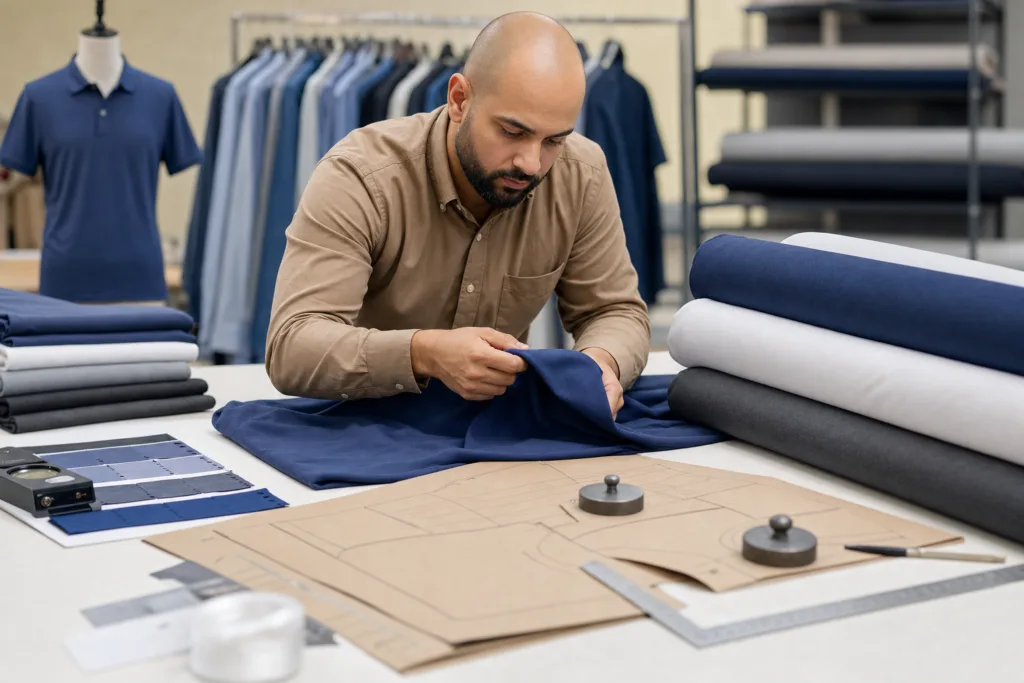
| Stage | OEM polo shirts | Ready-made polos |
|---|---|---|
| Sampling | Usually required before bulk | Usually not needed unless decorating |
| Production scheduling | Fabric, trim, and sewing capacity must be booked | Stock is already available, so scheduling is lighter |
| Replenishment | Can be planned into a repeat program with the same spec | Depends on stock availability from the supplier |
| Change control | Spec changes should be managed carefully | Very limited change control because the item already exists |
Unit cost: why the cheapest blank is not always the cheapest program
Blank polos can look cheaper because the unit price is obvious and the order can move fast. But the real cost of a polo program should include decoration, freight, relabeling, rejected sizes, fit problems, and the sales value of looking too generic.
OEM sometimes appears more expensive on paper because sampling, pattern work, and custom development are visible costs. Yet those costs can be justified if they reduce customer complaints, improve margin positioning, and support repeated orders at a higher perceived value.
| Cost driver | OEM impact | Ready-made impact |
|---|---|---|
| Development | Higher upfront investment | Very low or none |
| Material selection | Can be optimized to your target cost and performance | Already fixed by the supplier |
| Decoration | Can be designed into the product from day one | Added after purchase |
| Risk of mismatch | Lower when samples are approved carefully | Higher if the stock fit or fabric is not ideal |
| Long-term value | Usually stronger for brand growth | Usually weaker unless the decoration program is strong |
What buyers should check before bulk production
A good polo decision is not only about the garment. It is also about how clearly the sourcing process is documented before the bulk order starts.
- Confirm the fabric composition, GSM, and handfeel in writing.
- Approve the size spec and grading logic, not just the sample appearance.
- Check embroidery placement, print size, and label artwork before production.
- Review shrinkage, color matching, and wash performance expectations.
- Align packaging, hangtags, and carton instructions before the first cut.
For programs entering the U.S. market, the U.S. apparel and textile compliance checklist is a useful reference point for labeling and documentation discipline. OEM projects usually touch more of these details because the garment is being built around your brand information, not taken from a stock item.
Key takeaway: The fewer assumptions you leave to the factory, the lower the chance of costly surprises after bulk production starts.
How to choose the right OEM polo shirt manufacturer
The right manufacturer should be able to explain the product before the order is placed. If the supplier cannot clearly discuss fabric options, sample revisions, trim sourcing, or quality checkpoints, the project will be harder to manage later.
At Ninghow, we usually recommend asking for the full development path: fabric swatches, size spec, sample timeline, label plan, and inspection checkpoints. A manufacturer that can explain each step clearly is easier to manage during bulk production.
- Ask how they handle fabric sourcing if the first choice is not available.
- Ask how many sample rounds are realistic before bulk approval.
- Ask whether they can support embroidery, printing, and private label finishing in one workflow.
- Ask how they manage inspection, packing, and carton labeling for bulk shipment.
Clear answers matter more than polished sales language. In OEM polo programs, communication quality is often the best predictor of production quality.
Common mistakes brands make when choosing between OEM and ready-made polos
The biggest mistake is comparing only the unit price. A blank polo can be the wrong product at a low price, while OEM can be the right product at a higher but better-supported price.
Another common mistake is assuming all polos are interchangeable. Two shirts with the same logo can perform very differently if the fabric, fit, collar recovery, or label presentation is weak.
- Choosing a blank polo before checking whether the fit matches the target customer.
- Approving a sample without confirming size grading across the full run.
- Using the wrong logo method for the fabric weight or use case.
- Skipping label and packaging planning until after production starts.
- Underestimating how much brand value is lost when the shirt looks generic.
The final mistake is treating OEM as only a cost question. For brands that want repeat business, retail credibility, and a stronger product story, the manufacturing decision is part of the brand strategy.
Final recommendation: when OEM polo shirts are the better choice
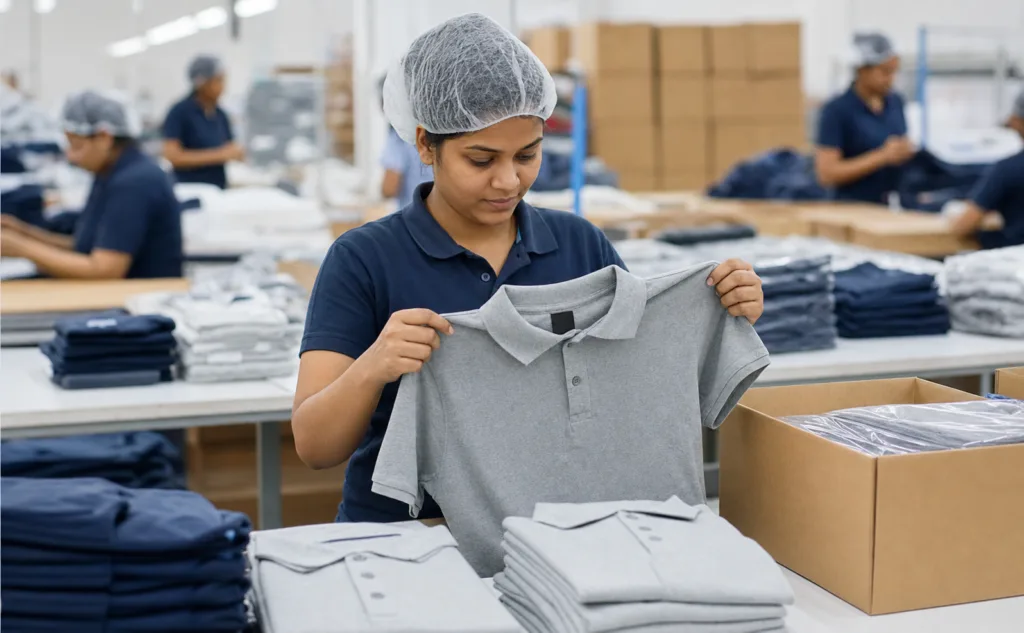
OEM polo shirts are usually the better choice when the shirt needs to support brand building, not just serve as an item of clothing. If you care about fit consistency, fabric selection, private label details, and a product that can be reordered with confidence, OEM gives you the better foundation.
Ready-made polos can still be useful for events, urgent timelines, and simple decoration programs. But when the goal is to create a recognizable polo line that customers can buy again, OEM is usually the stronger path for long-term sourcing and brand value.
In the end, OEM polo shirts vs ready-made polos is not a debate about good versus bad. It is a decision about what kind of business the polo is supposed to support.
FAQs
Is OEM better for brand building than ready-made polos?
Yes, OEM is usually better for brand building because it gives you control over fit, fabric, trims, labels, and packaging. That control makes the polo feel like part of your brand system instead of a generic stock item with a logo added later.
When do ready-made polos make more sense?
Ready-made polos make more sense for events, promotions, and short-term testing where speed matters more than product uniqueness. They are also useful when you need a simple solution and do not want to invest in sampling or development.
How does MOQ differ between OEM and blank polos?
OEM usually requires a higher MOQ because fabric, trims, and production are planned around your order. Ready-made polos can often be bought in smaller quantities because the supplier already has stock.
Which option usually has faster lead time?
Ready-made polos usually have faster lead time because there is no new development stage. OEM takes longer because sampling, approval, and scheduled bulk production are part of the workflow.
Can blank polos still be private label?
Yes, blank polos can still be private label, but the result is more limited if the base shirt stays unchanged. Labels, hangtags, and decoration help, yet the fit and fabric remain generic unless the garment is developed from scratch.
What should I check before choosing an OEM manufacturer?
You should check fabric options, size spec, sample timeline, decoration methods, QC checkpoints, and packaging support before choosing an OEM manufacturer. Those details show whether the supplier can execute the full program, not just quote a price.