



Introduction: Why MOQ, Sampling, and Lead Time Decisions Matter for Apparel Buyers
When choosing a clothing manufacturer, MOQ (Minimum Order Quantity), sampling, and lead time are among the first points buyers want clearly explained. These factors determine your startup cost, time-to-market, and overall risk profile—especially for first-time orders. Every garment brand, whether launching a single hoodie or scaling season drops, faces the same fundamental questions: What is the lowest possible MOQ? How does sampling work? Are lead times firm or flexible? In this guide, we’ll answer these questions, offer low-risk tips to get started, and help you gain a factory-floor understanding of how to negotiate and plan effectively.
What Is MOQ? A Fast, Practical Definition for Clothing Buyers
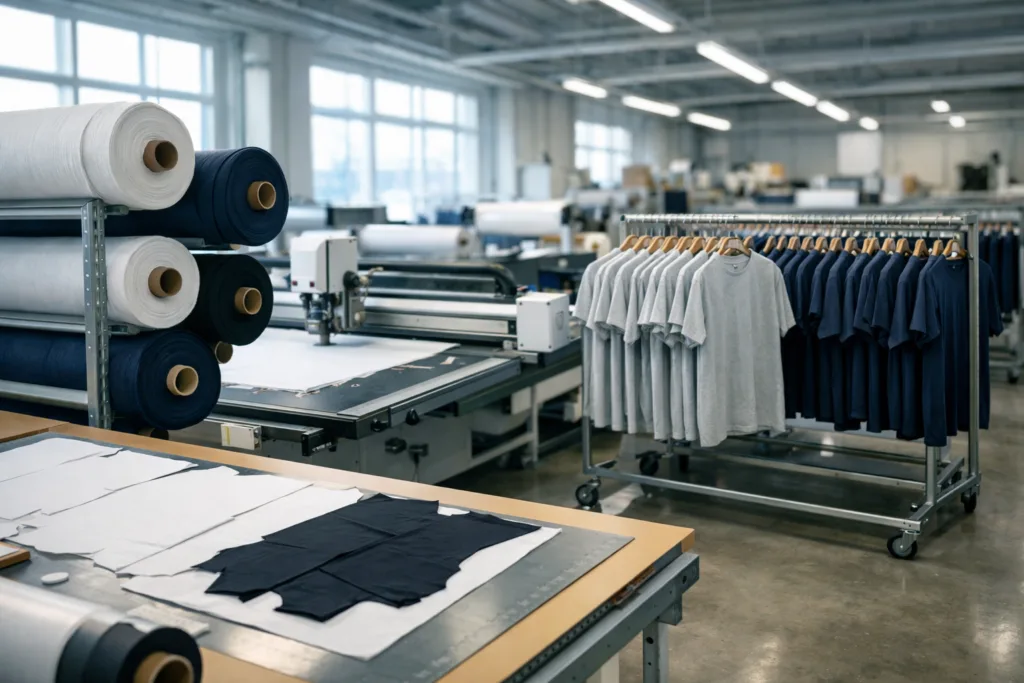
MOQ stands for Minimum Order Quantity—the smallest number of units a manufacturer will accept per style, color, or total order. For clothing, this varies by process, material, and the production line setup. Brands launching new lines often ask: “Can I order 100 pieces per design or just 500 mixed across all styles?”
MOQs protect factories from inefficiency (high cost for small runs), but also let buyers access better pricing layers as their quantities climb. Knowing the true MOQ “break points”—where set-up or fabric costs drop—is key for smart negotiation. For hands-on tips, see our in-depth guide to apparel MOQ negotiation that decodes factory logic.
Why Suppliers Set MOQs: Shop-Floor Realities, Not Just Policy
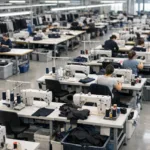
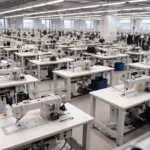
Clothing manufacturer MOQs aren’t just corporate rules. They reflect fabric dye-lot sizes, sewing line capacity, and trim minimums from upstream vendors. For example, custom color fabric may require a dye-lot MOQ from the mill, while a branded zipper’s factory might impose its own minimum.
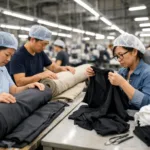
At Ninghow, we often explain to buyers: breaking a batch into too many colors or sizes turns a 500-piece order into a dozen micro-runs, each less efficient. That’s why MOQs exist—to balance setup time, fabric utilization, and cost, ensuring both buyer value and factory sustainability.
Common FAQ: Clothing Manufacturer MOQ, Sampling, and Lead Time
Let’s tackle the most frequent buyer questions head-on, using clear examples and factory-based answers.
What’s the lowest MOQ for custom clothing?
There’s no universal answer, but many established garment factories quote 200-500 units per style/color as a base MOQ. Some will accept lower MOQs for simple styles, but costs per piece rise. For fully custom fabrics or washes, the MOQ depends on mill and dye-lot policies—a good reason to clarify requirements early and ask about stock fabrics or trims that allow lower MOQs.
Can I mix sizes, colors, or styles to hit the MOQ?
Usually, you can mix sizes freely—but splitting colors or entirely different styles may each have their own sub-MOQ due to fabric and trim constraints. For better flexibility, some factories offer “mix and match” solutions—details in their bulk order playbook.
How does sampling work before production?
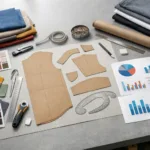
Sample stages include: proto/sample, fit sample, and pre-production sample (PPS). This is your chance to approve design, fit, materials, and finishing details. Clear sample types and a defined workflow minimize rework and miscommunication between buyer and factory.
How many rounds of sampling should I expect?
Most successful orders require at least 2-3 sample rounds. Prototypes come first, then fit/confirmation samples. Final PPS is your last checkpoint before mass production begins. Fast-tracking this process isn’t just about speed—it’s about locking in decisions. Discover why reducing sampling time lowers both cost and errors.
What is the typical lead time for clothing production?
Standard lead time (after sample approval and deposit) ranges from 30 to 90 days depending on style complexity, order quantity, and season. Base fabrics might be ready in weeks; custom developments take longer, especially if special trims or eco-certification (like OEKO-TEX or GOTS) are required.
How to Minimize Risk When Starting With Low MOQ Orders
Launching new products means risk—excess stock, slow sell-through, or quality surprises. Here’s how experienced buyers minimize risk:
- Request sample yardage or “short runs” for trial launches.
- Select stock fabrics and trims instead of custom mills to reduce MOQ urgency.
- Clarify lead times and buffer for peak/factory holidays (e.g., Chinese New Year, Golden Week).
- Negotiate flexible packaging or labeling to avoid leftover branded materials on repeat orders (details in this packaging requirements guide).
MOQ, Sampling, Lead Time FAQ (Buyer-First)
Below is a concise, no-fluff FAQ digest so you have answers at hand for your next factory or sourcing call.
| Question | Quick Answer |
|---|---|
| How low can MOQ go? | For stock fabrics: as low as 100 units; for custom dye or trims: 200–500+, sometimes higher. Check with factory upfront. |
| What increases MOQ unexpectedly? | Too many colors, size splits below 50 pcs/size, or custom branded trims increase MOQ or unit costs quickly. |
| Which sample is “production ready”? | PPS (Pre-Production Sample) reflects all fabrics/fit/labels—your final approval before mass production. |
| Best timing for sampling? | Finish your design/tech pack before requesting. Then allow at least 2-3 weeks buffer per round. |
| What can delay lead time? | Late sample approvals, custom fabric delays, holidays, or last-minute spec/PO changes are the main causes. |
| How early should I start? | For new brands, begin sampling at least 4-6 months before your target delivery window. This gives time for fixes if needed. |
How Sampling Affects MOQ and Lead Time—A Practical View
Sampling is not a separate process but directly impacts factory setup, MOQ, and the delivery calendar. The more revisions or uncertainties during the sample phase, the higher your risk of missed launches and unsold stock. Factories like Ninghow prioritize ultra-clear sample approval because each rejected round delays fabric bookings.
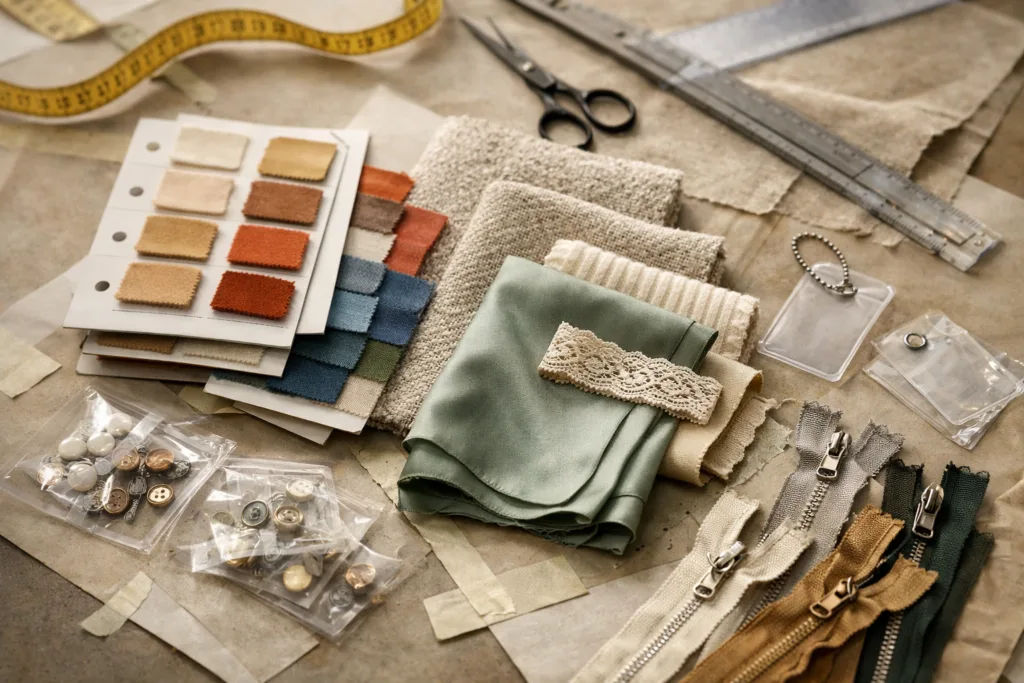
Actionable advice: lock in print/embroidery artwork early, and request your PPS with final fabric, not substitutes. This avoids measurement or color surprises downstream (see exact sample approval workflow in this in-depth guide).
Lead Time Exposed: From PO Approval to Doorstep Delivery
Lead time is more than just the quoted calendar days—it is a sum of fabric procurement, pattern making, cutting, sewing, QC, and shipping. Unexpected events (fabric scarcities, label delays, customs checks) add days if not buffered at each major milestone.
If your market launch is date-critical (for events or seasonal drops), ask for a stepwise delivery Gantt chart from your supplier. Learn why seasoned buyers always pad lead times and what they do to avoid bottlenecks in this split shipment/seasonal drop guide.
MOQ Negotiation: Smart Tactics Every Brand Can Use
Don’t just ask to “lower the MOQ”—show willingness to adapt. For example:
- Consolidate body fabrics across multiple styles.
- Choose universal trims and fewer Pantone matches.
- Accept “split delivery” (part order now, balance later).
Offering consistent reorders or bundling multiple seasons can also unlock negotiation room.
Special Case: Embroidery, Printing, and Other Customization MOQs
Decorations, such as embroidery or screen-print, carry sub-MOQs—often 100 to 300 pieces for a run, due to set-up time and raw material costs. Want custom branding without huge minimums? Get your full step-by-step breakdown in this custom embroidery and print process article.
Practical Timeline: How Long Will Your Apparel Sampling & Production REALLY Take?
| Stage | Timing (Typical) | Buyer Tips |
|---|---|---|
| Proto/Design Sample | 10-20 days | Confirm tech pack, supply reference sample for accuracy boost. |
| Fit Sample | 10-14 days after approval | Issue fit comments fast to avoid cascading delays. |
| PPS (Pre-Production Sample) | 7-10 days | Check all branding/labels match spec, no late changes allowed! |
| Bulk Production | 30-60 days | Check holiday windows, don’t forget QC sampling requests. |
| Shipping & Delivery | 7–45 days (express vs ocean) | Weigh cost/speed options—air, sea, or hybrid for urgent lots. |
How Small Brands and Startups Can Lower MOQ (and Cost) Without Sacrificing Quality
For resource-limited buyers, the sweet spot is a low-risk, small-batch launch with room to scale if demand proves out. Key tactics include:
- Choose stock materials (factories often hold surplus classic knits/wovens)
- Simplify style—limit custom trims, artwork placements, or wash effects
- Negotiate split runs (“pilot” batch plus reorders vs. committing to big volumes up front)
- Consider grouping orders with other brands for shared MOQ savings (some apparel hubs support co-batching at the mill level)
FAQ Recap: MOQ, Sampling, Lead Time Short Answers Every Buyer Should Know
Feeling lost in a maze of jargon? Keep this cheat sheet handy for your next sourcing call:
- MOQ? 200–500 units (varies by process/fabric)
- Samples? 2–3 rounds typical: proto, fit, PPS
- Lead time? 30–90 days (order to ship); longer for custom/peak seasons
- How to start? Select stock fabrics, clarify color/label limits to lower initial barriers
- Delays? Late approvals, spec changes, or custom component issues (avoid last-minute surprises by prepping documentation & decisions early)
Conclusion: Confident First Orders—What to Prioritize and How to Control Risks
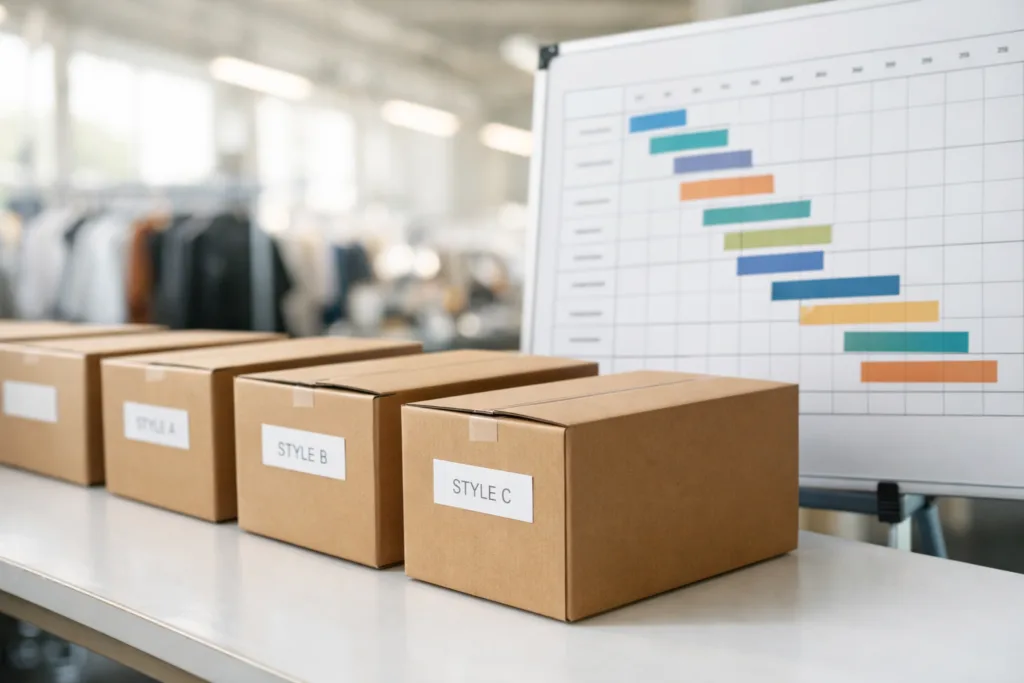
Success starts before your PO: clarify MOQ expectations, sample timelines, and realistic lead times. Use stock materials and proven sample steps to unlock low-risk trial runs. Always pad your calendar, confirm details in writing, and—if possible—partner with a factory that communicates spot-on. Small tweaks now mean less waste, faster launches, and less stress as your brand scales. Factory realities matter; the smarter your prep, the better your margin and outcome. Now, you’re ready for calm, no-surprise clothing manufacturing.
Frequently Asked Questions
What does MOQ mean in clothing manufacturing?
MOQ stands for Minimum Order Quantity—the lowest number of pieces a factory will accept for a production run, usually set by style, color, or total order.
Can I negotiate MOQ with factories?
Yes. Most factories are open to negotiation if you accept simpler materials, fewer trims, or group styles by shared fabric.
How many sample rounds are common before mass production?
Plan on two or three sample rounds—proto, fit, and a final pre-production sample—before final production approval.
How long does the sampling process take?
Usually 3-8 weeks, depending on your feedback speed and decision making. Allow more time for complex designs or first-time factory partners.
Why can lead times change after my PO?
Lead times may shift due to fabric/trims supply delays, holidays, or slow approvals of samples/specs. Confirm critical paths early to reduce surprises.
What factors impact the lowest achievable MOQ?
Key influence points include stock fabric/trims, fewer colors or sizes, and less custom branding or finishing. Simplicity enables lower MOQ deals.
Related Reading
- Your Stepwise Private Label Clothing Manufacturer Checklist—From Sketch to Delivery
- The Essential 50 Buyer Questions to Ask Before First Apparel Purchase Orders
- Winning Strategies for On-Time Seasonal Drops via Delivery Buffers & Split Shipments
- The Simple Sample Approval Workflow That Eliminates Apparel Rework
- A 24-Hour Quickstart Timeline for Hoodie Product Development