







Introduction: The Science and Craft Behind Hoodie Manufacturing
Hoodies are more than just comfort clothing—they’re a technical product that must balance warmth, durability, and brand style. Understanding how we manufacture hoodies (GSM, fleece, durability) is essential for apparel buyers, designers, and anyone aiming for consistent quality and fit. Our process prioritizes optimal GSM selection, fleece options, and wear-resistant construction to exceed both buyer expectations and real-world demands.
Hoodie Manufacturing Overview: From Fiber to Final Stitch
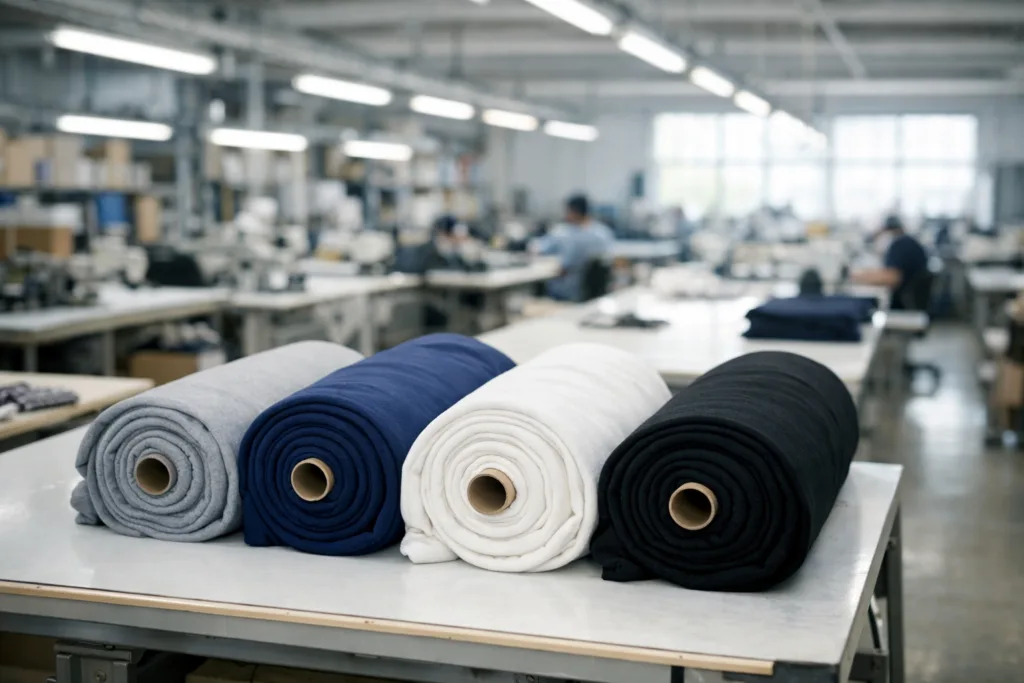
The hoodie manufacturing process covers everything from initial fabric sourcing to inspection after packing. We consider GSM (grams per square meter) for density, fleece for warmth and softness, and robust stitching for lasting wear. The end goal: a hoodie you can trust to withstand washes and daily use.
Why GSM Matters: The Foundation of Hoodie Fabric
GSM is the baseline measurement for hoodie fabric weight and density. Higher GSM generally means thicker material and greater warmth, while lower GSM is lighter and suited for warmer climates or athletic use. For buyers seeking a balance, matching handfeel and performance is key when choosing hoodie GSM.
Typical GSM Ranges for Hoodies
- 180–240 GSM: Lightweight and breathable, ideal for spring/summer
- 280–360 GSM: Medium weight, versatile for all seasons
- 380–480 GSM: Heavyweight, preferred for winter or premium lines
Choosing GSM Based on Brand Goals
Athletic brands favor lower GSM for moisture control, while streetwear and luxury lines opt for higher GSM for structure and durability. Custom GSM tailoring is possible for OEM and private label projects.
Fleece Types Explained: Loopback vs Brushed
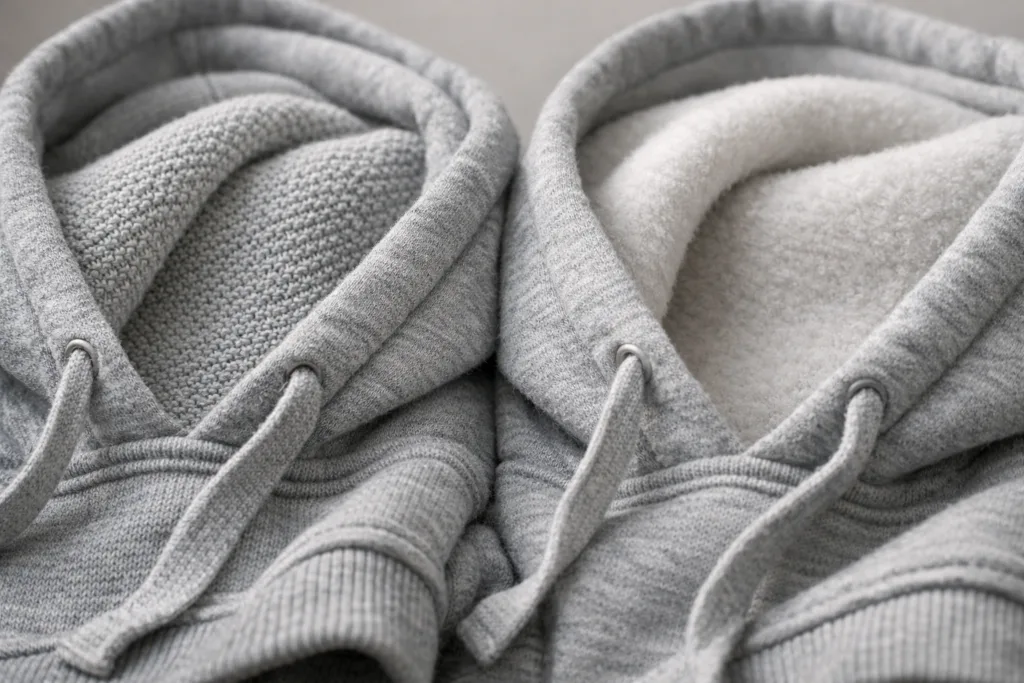
Fleece fabric is the soul of a hoodie. The two main choices: loopback (French terry) or brushed fleece. Both affect warmth, softness, and bulk. As a balanced apparel line requires strategic fleece selection for style and function.
Loopback Fleece
Features unbrushed loops on the fabric’s interior. This provides breathability and light insulation—ideal for activewear or layering.
Brushed Fleece
The inside surface is brushed to create a soft, plush texture, maximizing warmth and comfort. Preferred for winter wear or luxury hoodies.
Durability Factors in Hoodie Manufacturing
Durability is not a single factor—it’s a combination of fabric quality, stitching standards, and finishing. Rigorous material selection and reinforced seams ensure hoodies resist shrinkage, pilling, and seam splits.
Stitching Standards: Ensuring Lasting Quality
- Double-needle seams for strength
- Bar-tacking at stress points (pocket corners, hood edges)
- Thread choice: polyester blends for longevity
Wash Resistance
Fabrics are tested for shrinkage and colorfastness. Learn more about shrinkage and colorfastness tests for apparel buyers.
Fabric Selection: Sourcing, Testing, and Matching
Before production starts, hoodie manufacturers invest in careful fabric sourcing. Ninghow recommends GSM and fleece choices based on client requirements, then tests swatches for feel, elasticity, and shrinkage. A practical tip: Always request lab dip for color matching and handle tests before approving bulk fabric.
Yarn Quality: Why Starting Materials Matter
The yarn’s fiber blend—usually cotton, polyester, or both—sets the stage for end fabric performance. Pure cotton is soft and breathable but may shrink more, while blended yarns (cotton/poly) reduce shrinkage and boost durability.
Fabric Finishing: Enhancing Softness and Performance
Finishing processes—like anti-pilling treatments, brushing, or enzyme washes—impact how the hoodie feels, drapes, and resists wear. These steps are vital for brand quality and customer satisfaction.
Pattern and Fit: Precision, Grading, and Brand Consistency
Pattern-making is the blueprint for fit and proportion. Whether it’s relaxed, athletic, or oversized, careful grading ensures size consistency and brand identity. Ninghow’s team checks patterns and samples for precise shoulder width, sleeve length, and hood size, minimizing costly revisions and buyer returns.
Cutting and Bundling: The Start of Bulk Production
Once fabric is approved, it’s spread and cut using CAD patterns. Accurate cutting ensures minimal waste and predictable fit. Bundled pieces are then organized by color, size, and style for sewing.
Sewing: Machinery, Skill, and Quality Controls
Sewing is where hoodie durability is truly locked in. Operators use flatlock, overlock, and coverstitch machines as needed. For high-traffic points, bar-tacking adds strength. During sewing, QC staff check for alignment, stitch quality, and seam strength.
Trims and Accessories: Drawstrings, Zippers, and Labels
Trims can make or break a hoodie’s appeal and function. Common trims include:
- Drawstrings: Cotton, polyester, or metal-tipped
- Zippers: YKK or SBS for smooth operation
- Labels: Size, care, fiber content—crucial for compliance (see garment labeling requirements for details)
Hood Construction: Shape, Lining, and Function
Hood design ranges from simple to complex: lined/unlined, double-layered, flat or shaped. Proper hood construction prevents stretching and distortion.
Pockets: Placement, Style, and Reinforcement
Kangaroo pockets are classic, but zippered or patch pockets are popular too. The pocket must be reinforced at stress points to avoid tearing.
Printing and Embroidery: Brand Identity with Quality Control
Hoodies carry brand logos and artwork via screen printing, sublimation, or embroidery. Learn more about print and embroidery quality standards. Test placement, adhesion, and wash durability before bulk runs.
Quality Control in Hoodie Manufacturing
Inline QC and final inspection ensure every hoodie passes fit, finish, and function tests. Reliable QC prevents costly rework. For brands, see returns reduction playbook to avoid post-delivery headaches.
Testing for Shrinkage, Colorfastness, and Seam Strength
Fabrics undergo lab testing for shrinkage (washed and measured), colorfastness (resistance to fading), and seam strength (pull tests). These ensure hoodie performance aligns with brand standards.
Packaging: Compliance, Presentation, and Shipping Prep
Proper packaging protects hoodies during transit and meets retailer requirements. Polybags, hang tags, and carton labeling are checked for accuracy. Compliant packaging avoids customs delays and ensures smooth delivery.
Delivery and Lead Times: Managing Buyer Expectations
Production timelines depend on fabric sourcing, sampling, bulk runs, and QC. Typical lead is 4–8 weeks. Brand buyers should plan ahead, review production updates, and confirm shipping modes for each order.
Sustainability in Hoodie Manufacturing
Eco-friendly practices include using recycled yarns, OEKO-TEX certified fabric, and responsible wastewater treatment. Sustainable hoodies meet rising buyer and consumer demand for responsible sourcing.
How We Manufacture Hoodies (GSM, Fleece, Durability)
“How we manufacture hoodies (GSM, fleece, durability)” blends science, brand vision, and practical manufacturing. Each stage—from GSM choice to QC testing—is designed for reliability and fit. Buyers and brands can partner with manufacturers like Ninghow who value fit accuracy, honest fabric selection, and predictable QC. Keeping these principles in focus ensures hoodies stay comfortable and wearable, wash after wash.
Common Pitfalls and Tips for Apparel Buyers

- Avoid low GSM when targeting premium markets
- Insist on pre-production sample fit and wash tests
- Check care label accuracy for compliance
- Confirm trim quality—cheap drawstrings and zippers lead to returns
- Request detailed QC reports and test data
Frequently Asked Questions
What is the ideal GSM for hoodies?
Most brands use 280–380 GSM for year-round wear, but higher GSM is best for colder climates or premium lines.
How are fleece fabrics different?
Loopback fleece is light and breathable, while brushed fleece offers softness and extra warmth—choose based on season and usage.
What makes a hoodie durable?
Quality yarn, robust stitching (double-needle, bar-tack), and proper finishing treatments ensure long-lasting hoodies that survive many washes.
How do manufacturers prevent shrinkage?
Fabrics are pre-washed and tested for shrinkage, and blends with polyester help reduce shrinking compared to pure cotton.
Can buyers request custom GSM or fabric blends?
Yes. Private label manufacturers can source or blend GSM, yarn, and fleece types to fit brand goals and function requirements.
How is quality control performed in hoodie factories?
QC includes inline checks, final inspections, shrinkage tests, seam strength pulls, and careful finished product reviews before shipping.
Related Reading
- The 24-Hour Hoodie Development Timeline: Secrets for Speed and Risk Control
- Ultimate Guide: Matching Hoodie and Sweatpants Sets for All Seasons
- Packaging Compliance Made Easy: Avoid Shipment Risks in Apparel
- Eliminate Rework: The Winning Garment Sample Approval Workflow
- Cost, Speed, or Strategy? Apparel Shipping Options Explained