







Introduction: The Precise Craft Behind Golf Polo Manufacturing
Golf polos combine style, performance, and comfort—making them an apparel classic for brands, teams, and businesses. But manufacturing them is no simple task. In this guide, “How We Manufacture Golf Polos,” we reveal exactly how a technical garment manufacturer approaches fabric selection, collar design, placket construction, pattern making, QC, and custom options. If you are searching for a reliable golf polo manufacturer or want to understand production from the inside, you’re in the right place.
Fabric Choices and Technical Considerations

The fabric defines a polo’s performance, comfort, and longevity. Leading golf polo manufacturers typically source technical knits that balance moisture management, stretch, and durability. Common choices include polyester (for sweat-wicking), poly-cotton blends (for comfort), and recycled or sustainable yarns. Quality consistency is critical here. Read more about sustainable fabrics for apparel buyers and why choosing certified material matters for modern brands.
Knitting Construction and Yarn Dyes
Piqué, jersey, and interlock are the most popular polo knitting techniques. Each affects breathability and handfeel. For example, double-knit piqué delivers extra structure, while featherweight jersey offers maximum breathability for hot-weather wear. Yarn-dyed fabrics keep colors vibrant over time, fending off fade even after repeated washes.
Moisture-Wicking and Antimicrobial Treatments
Performance finishes keep the wearer dry and comfortable. For sports brands, fabric is often pretreated with wicking or antimicrobial coatings—features you’ll find called out in technical product spec sheets.
Pattern Development and Fit Accuracy
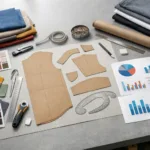
The right fit is nonnegotiable for golf polos, which must allow a perfect range of movement. Manufacturers invest in tailored pattern-making to control garment proportions, seam placement, and shoulder slope. Consistency isn’t just about templates; it means rigorous sample testing and iteration. If you want to avoid costly fit errors, check out these tips for reducing costly garment pattern and fit revisions.
Size Specifications and Tolerance
Brands typically submit a tech pack with target measurements. A trusted manufacturer reviews these, applying industry-standard tolerances (e.g., +/- 0.5 cm on chest width). Accurate grading ensures each size stays true—one of the silent secrets to low returns and customer satisfaction.
Sample Approval Workflow
Before bulk production, a “pre-production sample” (PPS) cycles through prototyping, fit reviews, and buyer signoff. Manufacturers usually share detailed sample comments, adjustment logs, and photo proofs to avoid later confusion.
Collar and Placket Construction Options
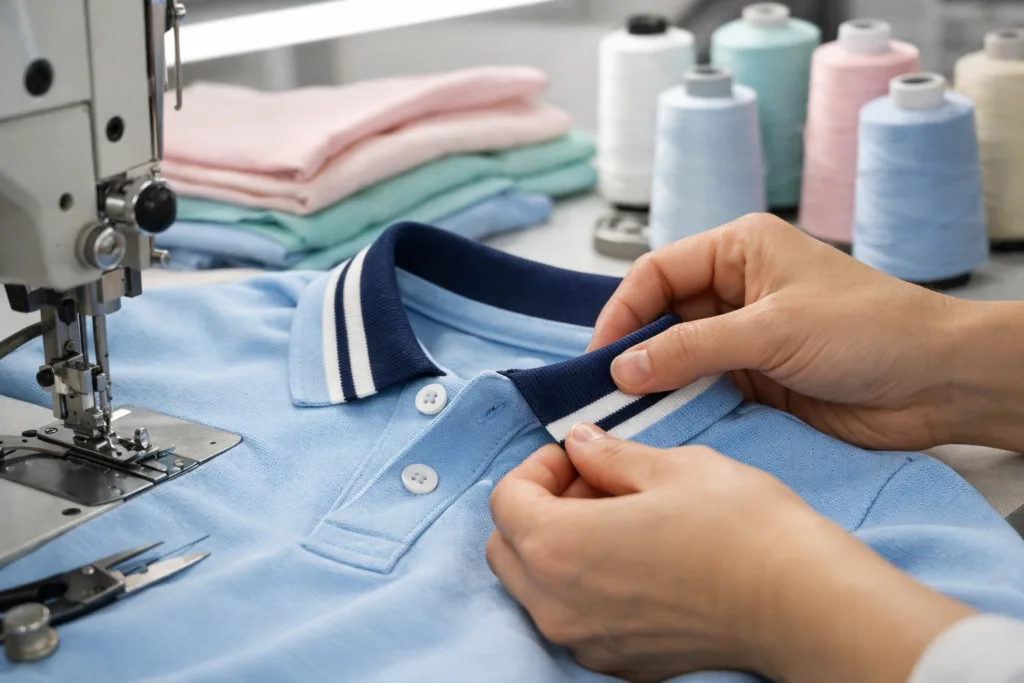
The collar and placket define both the look and function of a golf polo. Classic flat knit collars are standard, but brands may opt for ribbed, contrast-tipped, or structured options. Button plackets come in fused, unfused, or even zip styles, each with its cost and technical trade-offs. To accelerate development, see these steps to develop a new polo faster.
Collar Materials and Shape Control
A professional golf polo manufacturer controls collar roll, symmetry, and thickness with the right interfacing and edge stitching. Higher-end polos may use reinforced fusing or silicone piping to keep collar points crisp after washing.
Button and Placket Detailing
Button selection seems minor, but the right buttons improve durability and style. Many brands select eco-resin or pearlized options, sometimes engraved for personalization. Buttonholes are closely checked for neatness; the placket’s underlay prevents gaping.
Color, Embellishment, and Branding Techniques
Golf polos are canvases for club, company, or team branding. Manufacturers employ embroidery (direct or patch), heat transfer, or silk screen and sublimation prints, depending on design complexity and budget. For a technical breakdown, compare silk screen vs sublimation printing for polos and activewear.
Embroidery Quality Control
Denser, well-executed embroidery outlasts lighter fills. Stitch density, colorfastness, and backing are checked in bulk QC. Thread trims should be clean, and underlays undetectable from the outside.
Print Longevity and Colorfastness
Garment prints must withstand repeated washing and direct sunlight. Manufacturers test dry rub, wet rub, and home laundering to ensure colors hold up season after season.
Quality Control (QC): Inspection Points Specific to Golf Polos
Golf polos endure frequent washing, sun exposure, and stretching. That’s why reputable factories stage quality checks at several phases. A standard QC process includes:
- Fabric QC: Checking for slubs, holes, shade variance, and shrinkage before cutting
- Panel Inspection: Confirming cut panels match pattern specs
- Assembly QC: Verifying construction at critical points (collar, placket, sleeve join, hem taping)
- Finishing QC: Loose thread removal, pucker detection, washing and pressing
- Packing QC: Ensuring folding, labeling, and polybagging meet buyer requirements
For more detail on test protocols, see the Embroidery Quality Guide and this practical sample approval process workflow.
Customization Options: From Fabric to Packaging
No two brands want exactly the same polo. A robust manufacturer offers a wide menu of customization options:
- Fabric type: recycled poly, bamboo blends, mercerized cotton
- Collar style: tipping, print, rib, fused, or self-collar
- Placket style: 2-button, 3-button, covered, zip, or contrast placket
- Branding: embroidery, patches, screen print, heat transfer (including placement/sizing)
- Labeling: main neck label, wash care, hem tab, RFID, or hangtags
- Packaging: individual polybags, retail boxes, custom folding, silica gel for shipping
Minimum order quantities (MOQs) may vary depending on the level of customization, complexity of trims, and colorways.
Packing, Shipping, and Compliance Essentials
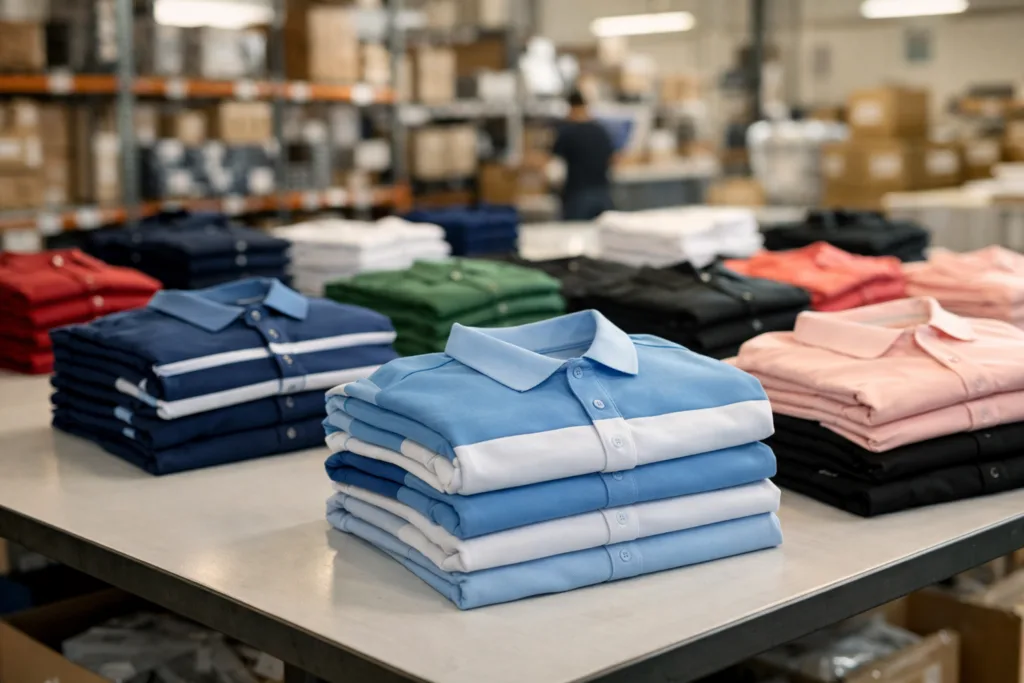
Buyers expect apparel to arrive crisp, labeled, and ready to retail—or be distributed directly to teams and events. Proper folding, size runs per carton, and carton sealing are small but crucial details for golf polo shipments. Regulations like fiber content labeling, OEKO-TEX/GOTS/GRS certification, and EUTR/REACH compliance are not optional: major brands require documentary proof for every batch. Ninghow makes sure compliance is double-checked during the pre-shipment audit, sharing all packing lists and certificates for transparency.
How We Manufacture Golf Polos
Every polo batch starts with clear communication—often based on a tech pack outlining specs, colors, branding positions, trims, and packaging style. Here’s a simplified summary of the process:
- Review buyer requirements and clarify any missing details
- Order materials and lab-dip approvals for color confirmation
- Pattern making, grading, and cutting with fit sample development
- PPS for buyer approval, including all branding details
- Bulk fabric cutting, automated when possible for consistency
- Sewing in quality-focused production lines, with inline QC
- Post-construction pressing, thread trim, and 100% final inspection
- Retail packaging and shipment preparation, including carton checks
With attention to detail at each stage, the risks of fit issues, spec mismatches, or branding errors drop substantially.
Real-World Manufacturing Insights: Notes from the Shop Floor
A golf polo may look simple, but the shop floor tells a different story. For instance, many brands overlook the challenge of keeping collar shapes stable after several washes—this hinges on both interlining selection and correct pressing methods.
At Ninghow, it’s been found that bulk color shade control tends to drift with recycled yarn blends; lab dips and inline shade panels are essential. Another insider tip: tightly controlled measurement tolerances (0.5–1 cm), especially around the chest, make for consistent shelf presentation and fewer returns.
Conclusion: Manufacturing Golf Polos with Precision and Flexibility
Manufacturing a golf polo is about consistency, flexibility, and problem prevention at every phase—from technical fabric engineering to last-mile packaging. Choosing a manufacturing partner who understands the nuances of fit, compliance, and branding ensures you deliver quality polos, on time and on brand.
Frequently Asked Questions
What are the most common fabrics for golf polos?
Polyester and poly-cotton blends are most popular, but sustainable options like recycled poly and bamboo blends are rising in demand.
How do manufacturers ensure sizing is accurate?
They use detailed pattern grading, strict measurement tolerances, and sampled fit tests to keep sizing consistent across batches.
Can golf polos be customized in small quantities?
While it’s possible, most manufacturers require a minimum order quantity, but some offer lower MOQs for specific customization levels.
What QC checks are unique to golf polos?
Critical points include collar symmetry, buttonhole alignment, colorfastness in prints, and final folding/labeling accuracy.
How are branded logos typically applied?
Most brands use embroidery or heat transfer; complex designs may use a patch or combo technique depending on appearance and budget.
What documents are needed for compliance in apparel shipments?
Essential documents include fiber content labels, factory certifications (e.g., OEKO-TEX, GRS, GOTS), and customs paperwork per destination.