








Introduction: Why Packaging Compliance Matters in Apparel Shipments
Packaging compliance for apparel shipments is often overlooked, but it’s essential for delivering products safely, efficiently, and legally. Apparel buyers, brands, and manufacturers must navigate a web of requirements—from barcodes and warning labels to carton markings and recycling icons. If any piece is missing or wrong, shipments can be delayed, rejected, or fined. Packaging requirements apparel include a mix of legal standards, logistical needs, and customer expectations. This guide explains the rules, industry pain points, and how to avoid common shipment disasters.
Overview of Packaging Compliance for Apparel Shipments

Packaging compliance for apparel shipments means following global, regional, and retailer-specific rules that cover labeling, documentation, materials, and carton specs. It’s the difference between smooth delivery and stalled containers at customs.
Global Standards in Apparel Packaging
Internationally, apparel packaging must meet the standards set by organizations such as ISO, ASTM, and major import markets like the European Union and the United States. These standards affect carton dimensions, material strength, and labeling practices.
Packaging Compliance in the US and EU
In the US, regulations like the Fair Packaging and Labeling Act require accuracy in product labeling. The EU adds layers of compliance with the Packaging and Packaging Waste Directive, which demands clear recycling markings and proper material codes.
Key Barcodes, Warnings, and Recycling Icons for Apparel Packaging
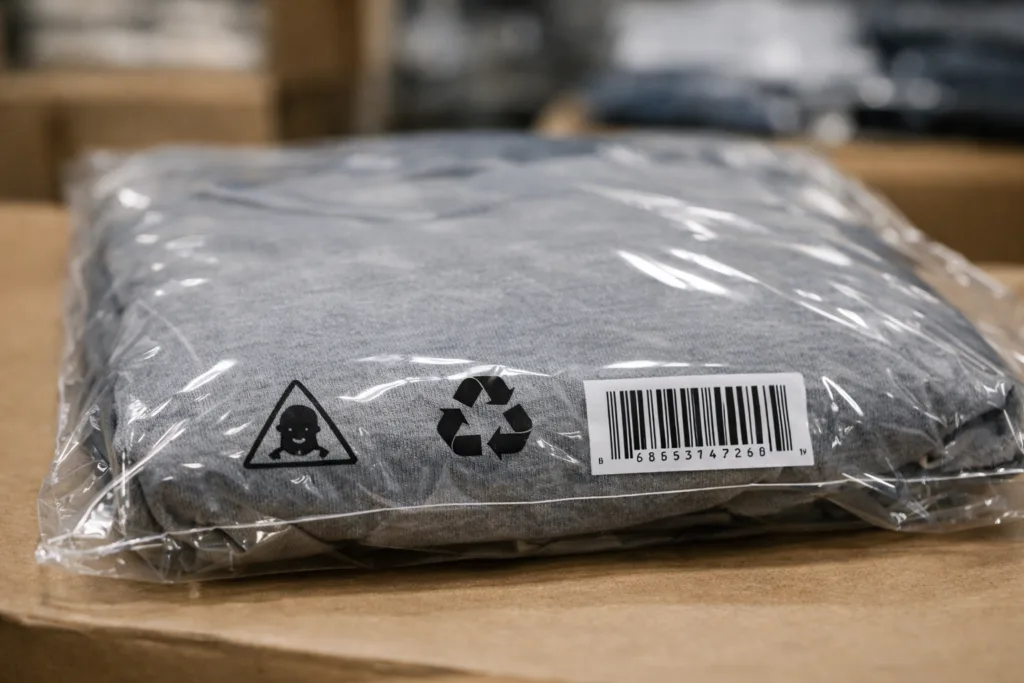
Every apparel shipment must display labels that meet both logistical and safety requirements. Barcodes automate warehouse management. Warning labels protect users and meet legal standards. Recycling symbols show environmental responsibility.
Types of Barcodes Used in Apparel Shipments
- UPC (Universal Product Code) – Used in North America.
- EAN (European Article Number) – Used internationally.
- QR Codes – Sometimes adopted for smart packaging.
These barcodes must be clear, scannable, and correctly assigned to each SKU. Rejected barcodes mean returns or relabeling costs.
Mandatory Warning Labels
- Plastic Bag Suffocation Warnings: “Warning: To avoid danger of suffocation, keep this plastic bag away from babies and children.”
- Age and Choking Hazard Labels: Needed for certain children’s apparel.
Missing or unclear warnings can trigger customs holds, especially in the US, Canada, and EU.
Recycling and Environmental Markings Explained
- Mobius Loop (three arrows) indicates recyclability.
- Material Identification Codes (e.g., PET 1, HDPE 2) must match packaging material.
- Green Dot symbol used in some European countries.
Retailers and countries like Germany and France check these icons before accepting goods. Without them, shipments might be rejected.
Critical Paper Carton Markings for Apparel Shipments
The outside of every carton is as important as what’s inside. Carton markings provide information for customs, warehouses, and retailers. Failure to follow the right format or content causes confusion and delays.
Carton Marking Essentials
- PO Number and Style Number: Uniquely identifies shipment and item.
- Carton Number and Total Cartons: Ensures all cartons are accounted for.
- SKU, Quantity, and Size Breakdown: Details for inventory auditing.
- Country of Origin: Legal requirement in most countries.
- Gross Weight, Net Weight, and Dimensions: Critical for logistics.
- Handling Markings: E.g., “This Side Up,” “Fragile,” or “Do Not Stack.”
For more on accurate customs paperwork, see Essential Customs Documents for Faster Apparel Shipping.
Placement and Size of Carton Markings
Carton markings need to be large enough to be easily read (often minimum letter height requirements) and placed on at least two sides (front and side) for visibility.
Special Carton Codes and Retailer Requirements
Major retailers may require proprietary codes or extra labeling (e.g., Walmart or Target compliance labels). Always check retailer-specific manuals before packing.
Common Packaging Mistakes that Lead to Shipment Failures
Minor errors in labeling, documentation, or material choice can unravel months of production. The most frequent issues for packaging requirements apparel shipments include:
Barcodes Don’t Scan Properly
Incorrect print resolution, placement, or code assignment can cause warehouse or customs scanners to fail—resulting in relabeling costs, inventory confusion, or shipment holds.
Missing or Incorrect Compliance Labels
Examples include missing warning labels on polybags, wrong age warnings on children’s clothing, or outdated recycling icons.
Unspecified or Weak Cartons
Light-weight paper cartons might collapse during stacking if not specified using correct burst/edge crush resistance. Damaged goods risk returns and lost retailer trust.
Poor Placement and Legibility of Markings
If carton labels are smudged, sized too small, or placed on bottom flaps, they may not be scanned or checked—leading to rejected deliveries or extended warehouse time.
Wrong Documentation or Incomplete Packing List
Packing lists must match carton contents exactly. Any mismatch flags customs inspection and delays, a frequent mistake when paperwork is rushed or changed last minute. Refer to the Apparel Compliance Checklist for full details.
Packaging Materials: Strength, Safety, and Sustainability
Your choice of packaging materials influences compliance, protection, and brand image. Most apparel shipments use corrugated cardboard cartons and polybags. The correct carton strength (measured by edge crush test or burst strength) is critical for protecting goods. Increasingly, brands seek sustainable materials.
Standard Packaging Materials for Apparel Shipments
- Corrugated Cardboard Cartons
- LDPE/HDPE Polybags (with or without recycled content)
- Paper Wrap or Tissue for premium goods
All packaging must comply with regulations on materials composition, toxicity, and recyclability.
Sustainability Trends and Compliance
More retailers require recycled content, recyclable markings, or certifications. For tips on verifying sustainable materials, check How Brands Verify Sustainability Claims.
What Inspectors, Customs Agents, and Retailers Check in Apparel Packaging
Before products reach store shelves, inspectors and customs officials conduct rigorous checks on packaging.
- Are barcodes and labels present and scannable?
- Are warning and recycling icons properly applied?
- Does the packing list match the physical contents?
- Is carton strength sufficient for transit?
Customs Clearance: Packaging Must-Dos
Prepare a detailed packing list, match all product descriptions, and ensure all labeling meets import country requirements. Even minor documentation mistakes can result in costly delays.
Paper Carton Marking Pitfalls: Real Mistakes and Solutions
Incorrect carton markings are surprisingly common—even among experienced factories. For example, carton numbers might skip a digit, style codes could be inverted, or the country of origin missing (triggering fines).
Case Study: What Went Wrong and How to Fix
One shipment to a global retailer was held due to carton numbers not matching the packing list. The factory had reused old cartons, failing to update the style number and PO. Result: re-marking the cartons on-site cost two extra days and led to store launch delays. To prevent such scenarios, double-check all carton markings against the packing list before loading containers.
Checklist for Flawless Apparel Packaging Compliance
Use this simple checklist to catch mistakes and stay compliant:
- Apply accurate, scannable barcodes—check every batch with a barcode reader.
- Add required warnings in correct languages (check importer country).
- Use strong, legal cartons—verify edge crush/burst strength.
- Place all carton markings visibly (at least two sides), using minimum letter size.
- Include recycling and environmental icons if required by retailer/importer.
- Double-check the packing list with actual packed contents.
- Update all paperwork before the container is sealed.
Further reduce costly returns by controlling quality from pattern to packing; see The Actionable Returns Reduction Playbook for Apparel Brands.
Ninghow’s Practical Shop Floor Insight on Packaging Mistakes
At Ninghow, a garment manufacturer, practical experience shows two common sources of packaging errors: rushed relabeling when PO changes last minute, and using leftover cartons without updated markings. These mistakes often stem from tight shipment deadlines. Experienced production leads insist on line-by-line cartoning checks and a final sign-off with the shipping team—never skip this step to prevent headaches at customs.
How to Avoid Common Apparel Shipment Packaging Failures
Most failures can be prevented by a systematic approach:
- Insist on sample cartons marked exactly as final shipment.
- Require a live labeling check before sealing containers.
- Conduct pre-shipment audits with QC teams.
- Keep open communication with buyers—share packing lists and marking proofs for confirmation.
Supplier-Brand Coordination for Zero Packaging Errors
Brands and manufacturers should exchange clear marking templates and compliance instructions upfront. Build buffer time for packing correction before shipment cutoff.
Documentation Essentials: The Paper Trail You Need
Besides physical packaging, you need full documentation:
- Packing List (matches all cartons)
- Compliance Declarations (recycling, warning, country of origin)
- Barcode assignments (SKU listing)
- Retailer-specific compliance forms
Missing a single sheet can mean re-export or storage fees. For advanced compliance, refer to How to Master Apparel Sample Types: From Proto to PPS on sample approvals linked to packaging.
How Technology Helps Apparel Packaging Compliance
Software systems now track packing list accuracy, carton markings, and barcodes automatically. Factories use real-time checklists, barcode readers, and digital QC records for each shipment. These solutions reduce manual error and boost compliance.
Common Software Integrations in Apparel Shipments
- Packing list automation tools
- Barcode verification apps
- Retailer compliance portal uploads
Digital tools create an audit trail—a lifeline if customs challenge your shipment.
Best Practices for Long-Term Apparel Packaging Compliance
To consistently meet packaging requirements apparel, develop standard operating procedures:
- Train packing teams regularly
- Share clear marking templates
- Use only fresh, compliant cartons
- Double-check every barcode and label
- Update paperwork with every shipment change
Packaging Requirements Apparel
Packaging requirements apparel go far beyond making clothes look presentable. They cover regulatory marks, shipping efficiency, retailer rules, and end-customer experience. Mastering these details means faster customs clearance, fewer returns, and strong retailer relationships.
Conclusion: Stay Prepared—Packaging Compliance Pays Off

Apparel shipments face complex risks, all beginning with packaging compliance. Following carton marking rules, applying the right labels, and checking documentation ensures smooth customs clearance and happy retailers. Invest in proper processes and quality checks—the cost of doing it right is always less than the cost of fixing mistakes. Stay ahead and ship with confidence.
Frequently Asked Questions
Which carton markings are absolutely mandatory for apparel shipments?
Packing list, PO number, style number, country of origin, finished goods barcode, and carton number breakdown are essential on every carton. Retailers may require extra marks like handling or hazard warnings.
What happens if my shipment misses a suffocation warning on plastic bags?
Shipments without proper suffocation warnings can be detained, fined, or rejected by customs, especially in the US and EU. Always add compliant warnings for every region shipped to.
How do I verify that my packaging meets recycling requirements?
Check official recycling codes, such as Mobius Loop and material code (e.g., PET 1, HDPE 2), then confirm with importer and retailer guidelines. Some countries demand specific icons and declarations.
Why is it risky to reuse cartons from previous shipments?
Reused cartons often have outdated or incorrect markings (wrong PO, style number, or carton count), causing confusion and customs delays. Always use fresh cartons with accurate labeling.
What should be included in the apparel shipment packing list?
Include every style, color, size breakdown, carton number, PO number, and quantities. Packing list must match shipment contents exactly to avoid customs inspection or delivery refusals.
How do technology solutions help reduce packaging mistakes?
Barcode scanners and packing automation tools catch labeling errors early, produce audit trails, and streamline compliance documentation, minimizing manual mistakes and saving time and costs.
Related Reading
- Essential Guide to Garment Labeling: Get All 12 Elements Right
- Sourcing Fabric and Trims: Secrets to Consistent Handfeel
- QC Reporting Checklist: Zero-Surprise Communication with Your Factory
- Weekly Production Updates That Prevent Surprise Delays
- Air vs Sea vs Express: Choosing Your Apparel Shipping Strategy