







Understanding Sustainability Claims Verification
In today’s fashion and apparel industry, consumers, regulators, and retailers are all holding brands accountable for their sustainability claims. But how do brands actually verify what they say? Whether it’s “organic cotton,” “water-saving processing,” or “fair wages,” the process of sustainability claims verification ensures these statements are backed by real, traceable evidence. This article dives deep into the verifiable evidence types, supply chain recordkeeping, and best practices for external communications, helping brands navigate compliance and build genuine trust.
Why Sustainability Claims Matter

Brands make sustainability claims to appeal to conscious buyers and meet legal requirements. However, without proper verification, such claims can become empty promises—sometimes even resulting in penalties for greenwashing. Regulators, like the EU and FTC, now require that claims be substantiated with evidence, making verification a central piece of sustainability strategy.
Types of Verifiable Evidence for Sustainability
There are several evidence types brands can use for sustainability claims verification:
- Third-Party Certifications (e.g., GOTS, OEKO-TEX, Fair Trade)
- Material Testing Reports from accredited labs
- Chain-of-Custody Documentation
- Internal Lifecycle Analyses
- Supplier Declarations & Audits
For example, when using sustainable fabrics, many brands consult detailed lab reports to ensure safety standards. (See: A Practical Guide to Sustainable Fabrics for Apparel Buyers.)
What Counts as Acceptable Documentation?
Documentation must be traceable, up-to-date, and relevant. Acceptable records include:
- Valid certificates issued by recognized third parties
- Testing results showing compliance with eco-label standards
- Invoices and transaction certificates for material flow
- Internal QC reports from audited processes
Each document should clearly link back to the claim in question, not just general sustainability statements.
Common Types of Sustainability Claims in Fashion
Typical claims verified in the apparel industry include:
- Recycled content percentage
- Organic certification
- Chemical safety (e.g., azo-free, heavy metal compliance)
- Water and energy savings in manufacturing
- Worker welfare (fair wages, safe working conditions)
Want a deeper dive into material compliance? Brands often review The Critical Truths About REACH, AZO, and Heavy Metals Every Apparel Buyer Must Know.
Key Steps for Verifying Sustainability Claims
How do brands turn standards into practical action? The steps typically include:
- Identifying claim type and data sources
- Collecting all relevant supply chain records
- Validating supporting evidence through third-party or independent audits
- Maintaining records for periodic review
- Updating statements as supply chain changes
Maintaining Supply Chain Records
Solid recordkeeping is the backbone of trustable sustainability claims. Brands need:
- Purchase records, transaction certificates, and batch tracking
- Supplier audit reports and correspondence logs
- QC and lab test results for every shipment
- Up-to-date certificates from all sources
Ninghow, as a garment manufacturer, stresses the importance of regular document checks before every outgoing shipment—to prevent mislabeling and avoid later disputes.
Examples of Accepted Evidence (Table)
| Claim Type | Accepted Evidence | Who Issues It? |
|---|---|---|
| Organic Cotton | GOTS or Organic Content Standard Certificate | Accredited Certifier |
| Recycled Polyester | GRS Transaction Certificate | Supplier / 3rd Party Auditor |
| Azo-Free Fabric | Lab Test Report (Azo-Free) | Certified Laboratory |
| Fair Wages | Internal Payroll Records + Audit | Brand/Supplier + Auditor |
| Water Saving | Process Data, Water Bills | Factory + Utility Provider |
How to Audit Supply Chains for Proof
Brands use periodic audits—which can be announced or surprise checks—carried out by qualified auditors or trusted partners. These audits cover everything from inventory records to social welfare practices. High-risk suppliers or materials may be targeted for extra scrutiny. For a repeatable framework, refer to How to Run a Clothing Factory Audit (On-site & Video).
Testing and Lab Reports: The Cornerstone of Evidence
Independent lab testing verifies that materials meet eco and safety standards. Reports should include all relevant batch numbers and test results—especially for restricted substances like azo dyes and heavy metals.
Chain-of-Custody Tracking Explained
Chain-of-custody (CoC) documents trace a material from origin to finished garment. This helps confirm that, for example, recycled fiber is really recycled—not just claimed. Brands must collect every step’s record, from raw material to finished product delivery.
Supplier Declarations and Keeping Everyone Honest
While supplier declarations are easy to get, brands should supplement them with independent audits or lab tests. Relying only on supplier statements risks errors and exaggeration.
LCAs and Full Supply Chain Analysis
Some brands invest in Life Cycle Assessment (LCA) to measure environmental impact. LCAs document the footprint from fiber to finished garment, offering deeper insights for advanced sustainability claims verification.
How to Present Verified Claims to the Public
Brands must be clear, specific, and evidence-backed. Instead of “eco-friendly,” say “Contains 65% GRS-certified recycled polyester, as verified by Transaction Certificates 0031-5 and 0031-7.”
- Avoid vague language
- Always date your claim and supporting records
- Be transparent about exactly what is verified
Common Pitfalls: What Fails Verification?
Some common missteps include:

- Using expired certificates or old test results
- Offering supplier statements without 3rd party proof
- Overgeneralizing claims (e.g., “all our products” vs. “this product”)
- Neglecting updates when supply chains change
Regulatory Requirements for Sustainability Claims Verification
Major markets have legal rules. In the EU, the Green Claims Directive sets out strict evidence and reporting requirements. In the US, the FTC’s Green Guides apply. Each market may require different proof and documentation storage timeframes.
Technology for Automating Document Collection
Specialized compliance software or cloud platforms can help manage certificates, supply chain data, and real-time updates, making it easier to handle evidence across global suppliers. This reduces human error and saves time during audits.
Best Practices for Small and Large Brands
For small brands, start with your best-selling SKU and focus on one or two claims. For larger brands, implement internal controls, annual training, and automation tools to scale documentation and verification efforts across collections.
Communicating Verified Claims Effectively
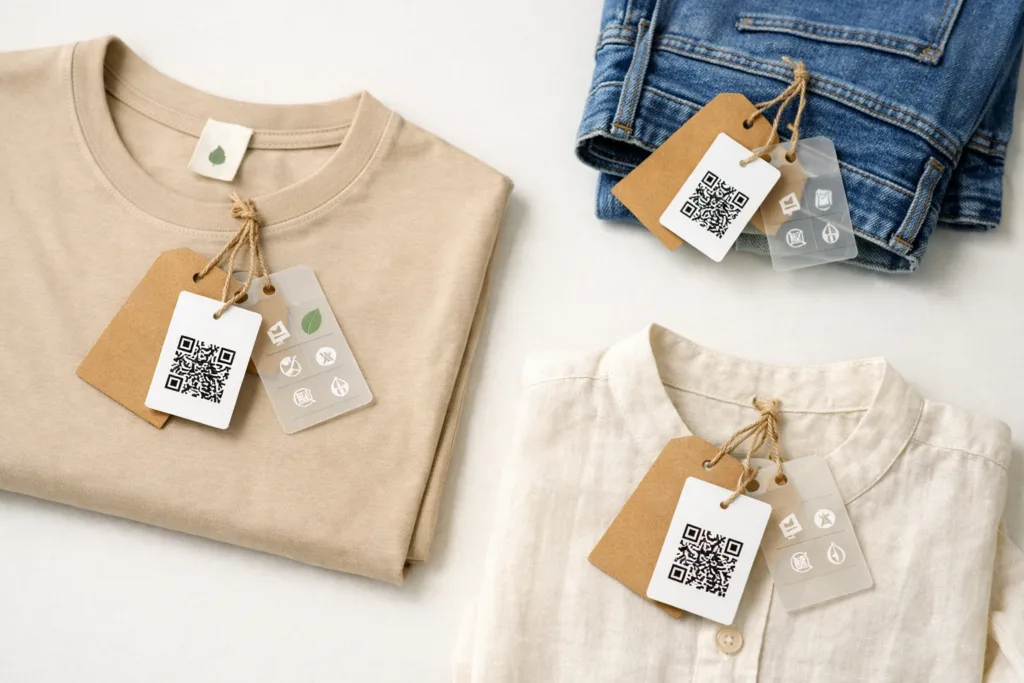
Clear external communication ensures that customers, retailers, and regulators trust your brand. Use accessible language, reference exact certificates, and provide evidence links or QR codes on product labels. For guidance on compliant garment labeling, see Garment Labeling Requirements: The 12 Essential Elements You Can’t Miss.
Training Teams in Sustainability Verification
Regular staff training helps avoid mistakes in claim documentation, material sourcing, and communications. This is especially crucial for product development, QC, and sourcing teams. Brands like Ninghow run semi-annual workshops to keep everyone updated.
Managing Subcontractors and Tier 2/3 Suppliers
Verification must extend beyond direct suppliers; brands need to check if subcontractors down the chain are also providing accurate evidence. Failure here is a common greenwashing trap.
Updates & Periodic Review: Keeping Your Claims Fresh
Supply chains change, suppliers switch, and standards evolve. Brands must review and update claims—and supporting documents—at least annually or whenever a major change occurs.
A Case Study: How a Leading Apparel Brand Handles Verification
One leading outdoor apparel brand starts by mapping each claim to a supply chain record, then requires certificates before approving final packaging text. They periodically audit high-risk suppliers and run quarterly retraining for QC and sourcing teams. This helps reduce risk and quickly spot inconsistencies in supplier declarations or certificates.
The Role of Third-Party Certifications in Trust
Third-party certifications give customers and partners peace of mind. When brands use recognized standards (e.g., GOTS, GRS, OEKO-TEX), verification is faster and external audits run more smoothly.
The Bottom Line: Why Consistency Matters in Verification
Consistent procedures build trust and protect against greenwashing fines. Brands who repeat the steps—collect, audit, communicate—reduce the chance of mistakes and ensure compliance as regulations tighten worldwide.
How Brands Verify Sustainability Claims
Brands verify sustainability claims using traceable documentation, supply chain audits, credible lab tests, and independent certifications. For ongoing success, leading manufacturers like Ninghow recommend aligning supplier onboarding, QC, and communications to ensure every claim is up-to-date and supported by verifiable, reproducible evidence.
Conclusion: Building Long-Term Trust with Evidence-Based Claims
To summarize, credible sustainability claims require solid evidence—traceable, current, and issued or checked by trusted parties. Companies must build records at every supply chain step, carry out regular audits and staff training, and communicate findings clearly. Documenting the process not only meets legal requirements but establishes the brand as a trustworthy partner to regulators, retailers, and modern, conscious consumers alike.
Frequently Asked Questions
What is sustainability claims verification?
It is the process by which brands collect and review evidence—like certificates, tests, and audit reports—to prove their sustainability statements are accurate and trustworthy.
What types of evidence should brands collect?
Brands should gather third-party certificates, lab test results, supply chain transaction records, and independent audit findings, all closely linking to the actual claim made about a product or process.
How often should claims and evidence be updated?
At least annually, or whenever supply chains change. Periodic reviews keep evidence current and reduce the risk of greenwashing or legal non-compliance.
What if a supplier only provides a self-declaration?
Self-declarations are not enough; brands should seek independent lab tests or third-party certifications to back up supplier statements for stronger, trusted verification.
Can small brands afford to verify sustainability claims?
Yes; small brands can start by verifying their top-selling products or main claims and build up practices as they grow, focusing on the highest-impact areas first.
What’s the role of technology in managing verification?
Compliance management software and cloud platforms streamline certificate collection, organize supply chain data, and automate updates, making the verification process less manual and error-prone.
Related Reading
- How Weekly Production Updates Prevent Surprises in Clothing Orders
- Mastering Sample Approval: A Workflow that Stops Apparel Rework
- Seasonal Product Drop Success: Planning Buffers & Split Shipments
- 7 Secrets to Matching Fabric Handfeel & Trim Performance
- Reduce Returns: How Brands Use AQL and Inline Quality Control