






Introduction: Why REACH, AZO, and Heavy Metals Matter for Apparel Buyers
Apparel brands and buyers are facing increasing scrutiny over fabric compliance, especially with Europe’s REACH regulations, AZO dye restrictions, and heavy metal content rules. Staying on top of these requirements is crucial—not just for legal compliance, but for protecting your brand, ensuring consumer safety, and mitigating costly recalls. In this guide, we’ll demystify these requirements, spotlight high-risk products, and outline exactly what proof you need from your clothing factories. Whether you seek AZO free fabric, compliant trims, or traceable test reports, this is your practical reference for quality control and risk reduction.
Understanding REACH: The EU’s Gold Standard for Chemical Compliance
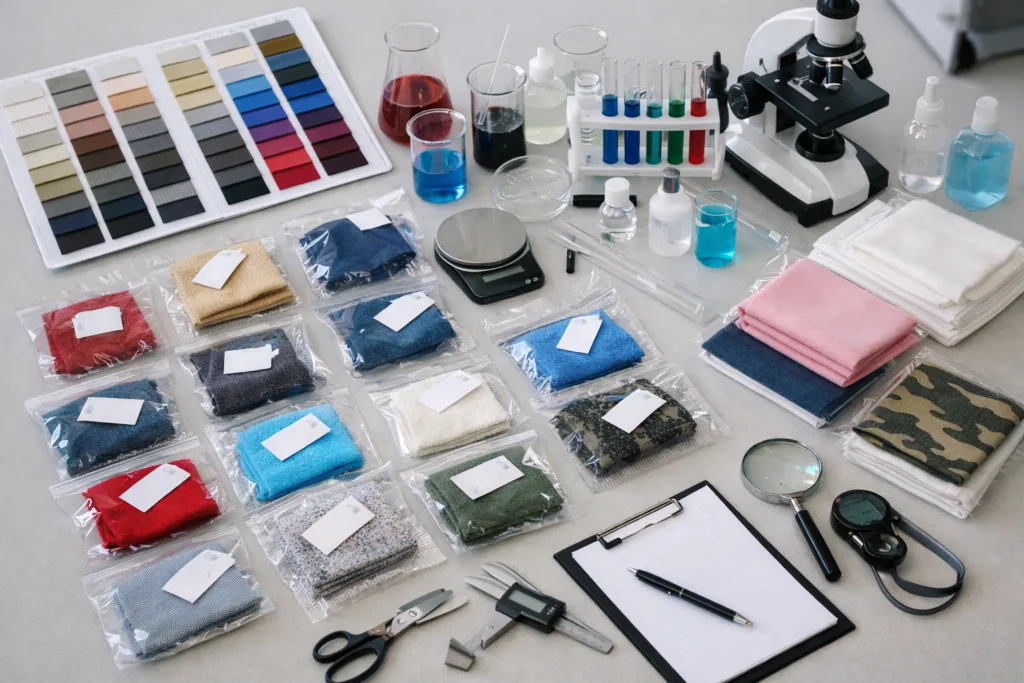
REACH (Registration, Evaluation, Authorisation and Restriction of Chemicals) is the European regulation controlling chemicals in all products, with particularly strict standards on textiles. Manufacturers and importers must ensure no banned substances or only allowed concentrations are present in their fabrics, trims, or inks. Key restricted groups under REACH include AZO dyes (which can form carcinogenic amines) and heavy metals (like lead, chromium VI, and cadmium).
The Scope: What Does REACH Cover for Apparel?
- All textiles touching the skin: shirts, hoodies, underwear, children’s wear
- Trims and accessories: buttons, zippers, snaps, embroidery thread, labels
- Printing and dyeing chemicals: screenprint inks, dyestuffs, coatings
- Packaging materials—if directly contacting the product
Who Is Liable Under REACH?
Importers, brands, and resellers placing goods on the EU market are ultimately responsible. Factories and suppliers provide proof, but buyers must verify compliance or face the risk of customs holds, recalls, and fines.
What Are AZO Dyes? Why Are They Restricted?
AZO dyes are an extensive group of synthetic colorants popular in textiles because of their brightness and cost-effectiveness. However, some AZO dyes can break down, releasing aromatic amines linked to cancer. This triggered strict limits in REACH and China’s GB18401 standard—leading to the rise of AZO free fabric sourcing.
Which Garments Are at Highest Risk for AZO Dyes?
- Brightly colored or deep red/black cotton and viscose fabrics
- Children’s wear (higher sensitivity, extra audits common in EU/UK)
- Printed apparel (screen prints, sublimation, pigment-dyed items)
To minimize risk, brands often require AZO free fabric certification from their mills, and routine batch-level testing of production lots.
Heavy Metals: Lead, Chromium, Cadmium, and More
Heavy metals are another focus of both REACH and US CPSC regulations. They can be found not just in dyes, but in metallic trims, zippers, buttons, screen print, and even some washing/blasting finishes. High-profile recalls have centered on lead in children’s wear or cadmium in accessories.
Which Apparel Products Are Most At Risk?
- Any garment with painted trims, coated snaps, or metallic prints
- Embroidered pieces—due to metal in thread dyeing
- Children’s clothing and accessories, babywear, and jewelry
The Common List of Restricted Substances: Need-to-Know for Buyers
| Substance Group | Example Items Affected | Risk Level | Test Method |
|---|---|---|---|
| AZO Dyes | Colored fabrics, prints | High (reds, blacks) | EN 14362-1 |
| Lead & Heavy Metals | Prints, trims, snaps | High (children’s wear) | EN 71-3, US EPA 3050B |
| Formaldehyde | Resin-finishes, easy-care | Medium-High | ISO 14184-1 |
| Phthalates | Plastic prints/PVC trims | High | EN 14372 |
| NPEO/APEO | Sportswear, water repellent | Medium | OEKO-TEX 100 |
Product Categories at Highest Risk: Buyer Priority Checklist
- Babies’ and Children’s Clothing: AZO, lead, phthalate checks are legally required in the EU, USA, UK, and elsewhere.
- Brightly Dyed Garments: High risk for AZO dyes unless certified; especially neon, red, orange, black.
- Screen/Heat Transfers & Metallic Inks: Prone to high heavy metal/phthalate levels.
- Accessories and Trims: Buttons, rivets, and synthetic labels can be a compliance “blind spot.”
How to Ask Your Factory for Proof: Compliance Strategies
Asking a simple “Are your fabrics AZO free?” is not enough. Skilled buyers require traceable, batch-level documentation from suppliers—especially for the EU and children’s ranges. Here’s how:
Best Practice Documentation Check List
- Test reports: Preferably from a reputable third-party lab—covering each restricted substance relevant to your market.
- Material declarations: For all inputs (main fabric, trims, prints, zippers)—factory must specify AZO status and heavy metal test results.
- Lab certifications: OEKO-TEX Standard 100, GOTS organic, or Bluesign certificates are useful, but are not a substitute for a test report tied to your batch.
- Batch-level sample retention: Ask the factory to retain production samples for post-shipment challenges.
- Specify compliance in purchase order and tech pack: This makes your requirements enforceable. For a detailed sample approval flow, see the winning sample approval workflow for garment brands.
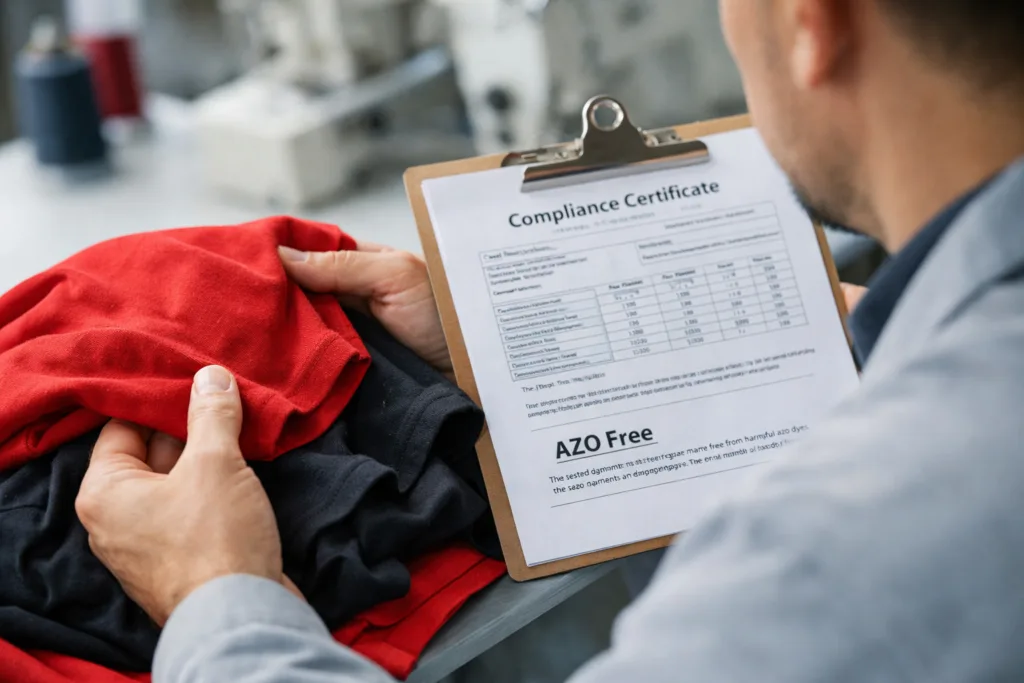
What Does an AZO Free Fabric Certificate Look Like?
An authentic certificate will include:
- Supplier and buyer name, test lab, test date, batch or PO number
- Actual test method (e.g. EN 14362-1:2012), signed by the lab
- Limit values and result (“not detected” or “below X mg/kg”)
If anything is missing or the date is too old, request an updated report or a third-party test.
How Should Buyers Specify Chemical Compliance in Orders?
It’s critical to call out requirements in your purchase order and technical documentation:
- List each substance restriction—such as “AZO free as per EN 14362-1” or “Lead & cadmium below REACH thresholds.”
- State that batch-specific reports and declarations are required for shipment approval.
- If you need private label solutions, reference end-to-end private label clothing QC checklists for integration into your sourcing workflow.
Red Flags: How to Spot Weak or Fake Compliance Proof
- No lab report issued in last 12 months
- Supplier only has “generic” certificates, not sample-specific tests
- Manufacturer appears on compliance watch lists or has customs alerts
When in doubt, buyers can commission independent fabric or trim testing and should run spot factory audits to verify control processes.
How Often Do Fabrics Actually Fail These Tests?
Recent industry data suggests that up to 15% of “budget source” fabric lots tested for the EU fail at least one REACH check, usually AZO or formaldehyde. Failures are common when switching suppliers, using leftover greige, or buying trims separately from main fabrics. Ninghow recommends random batch-level testing when switching suppliers or when introducing new colors—especially for high-risk products or children’s apparel. This pragmatic sample retention and retest habit improves compliance confidence.
Can Compliance Be Guaranteed for Every Shipment?
While “zero fail” is the goal, in practice, batch-level discrepancies do happen—especially with new color recipes, third-party print houses, or rush orders. Maintaining an updated supplier list and embedding testing into critical path planning is the best prevention. It’s always wise to allow buffer time for resampling in your seasonal drop planning, as outlined in strategic seasonal drop planning guides.
Ninghow Insights: Factory-Level Reality on REACH / AZO Controls
From the factory side, real production compliance is about controlling raw material sources and never mixing “leftover” batch fabric with new lots. At Ninghow, production lines document split lots with color numbers and supplier codes for traceability. The experience shows that solid color tracking, sample retention, and clear buyer requirements embedded in PO tech packs dramatically reduce accidental fails and keep lead times reliable.
Cost Implications: Does Compliance Actually Mean Higher Prices?
- Certified compliant dyestuff/material may cost 1-3% more—but is much cheaper than a recall or customs seizure.
- Testing fees (by batch, per colorway) are a minimal insurance cost relative to the total production value.
- Scrambling to redo failed lots due to missing compliance is far more expensive and leads to lost time, broken delivery promises, and in some cases, returned goods.
How to Build a Smart Apparel Compliance File
- Log all test reports, supplier declarations, and purchase specifications by PO number
- Retain sample approval photos & batch swatches for 12–24 months
- Review supplier performance regularly and update test lists as REACH/SVHCs evolve
The Buyer’s AZO Free & REACH Compliance Workflow
- Identify high-risk product types (color, customer group, application)
- Require sample- and batch-specific compliance docs in each PO
- Retain records and random spot test when in doubt
- Audit upstream supplier material sources annually
Communicating with Suppliers: Essential Phrases and Key Questions
To get the right answers, be specific in your language. For example:
- “Please provide the most recent batch-specific AZO and heavy metal compliance tests for these colorways.”
- “Are all metal trims third-party tested (e.g., SGS, Intertek) and certified?”
- “Will test reports reference my PO number on the certificate?”
Handling Non-Compliance or Test Failures
If results are out of spec, follow a clear, enforceable protocol:
- Hold shipment until retest passes
- Quarantine or reject affected lots
- Escalate issues to supplier leadership; threaten and, if necessary, follow through with canceled POs for repeat issues
How to Keep Up as Standards Evolve: Ongoing Monitoring
Both REACH and local standards (e.g., UK, US CPSC, Japan, South Korea) are regularly updated. Subscribe to industry newsletters, and review compliance checklists at least quarterly. Practical, up-to-date compliance guidance can also be found in resources like the apparel compliance checklist.
The Future: New “Watch List” Substances and Trends
REACH’s list of “Substances of Very High Concern” (SVHC) is expanding every year. Microplastics, PFAS, and other “forever chemicals” are likely to join the same regulatory spotlight as AZO dyes and heavy metals in the near future. Buyers should expect stricter global harmonization and prepare for transparent reporting and provenance down to the batch level.
Conclusion: Taking Charge of REACH / AZO / Heavy Metals Compliance

Apparel buyers and brands who control their supply chain documentation, require batch-level test reports, and build compliance into every PO are well-positioned to avoid disruptions, protect their reputation, and tap into premium markets. Staying ahead means knowing your risk areas, asking the right questions, and partnering with factories that actually implement traceability—not just promise it. Plan for regular audits and update your compliance checklists as regulations evolve. The result is safer apparel, predictable shipments, and solid supply chain trust.
Frequently Asked Questions
What does “AZO free fabric” really mean?
It means the fabric does not contain restricted AZO dyes that can break down into carcinogenic amines, complying with EU REACH standards.
How can I prove my apparel meets REACH regulations?
Obtain third-party lab test reports for all key restricted substances (AZO, heavy metals, phthalates) for every production batch or colorway.
Which products need the most careful testing?
Children’s wear, brightly colored garments, printed/fashion apparel, and those with lots of trims or metallic elements pose the highest risk and require regular testing.
Can a tech pack or PO specify compliance needs?
Yes, always specify substance restrictions and required test reports directly in your tech pack and purchase order documentation for enforceability.
How often should I request new compliance tests?
For critical products (children’s, EU-destined, high-visibility lines), request batch-specific tests every shipment or colorway; for stable basics, at least quarterly or on supplier change.
Are certifications like OEKO-TEX enough for proof?
They help but do not replace batch-specific third-party lab reports, which directly confirm compliance for your actual goods and production run.