





Getting Started: Silk Screening vs Sublimation Printing
Choosing the best method for applying designs to fabric can shape the look, feel, and performance of your apparel. The silkscreen vs sublimation debate runs strong for brands and creative teams planning quality printed garments. Each method uses unique processes, materials, and finishes. To pick the right one for your needs, you must look at durability, fabric compatibility, color vibrancy, cost, minimum order quantities (MOQ), and even the final handfeel of your product.
This guide covers the essentials of silk screening and sublimation printing for clothing, comparing where they excel and how to match each to your project. Whether for sports teams, lifestyle collections, promotional gear, or activewear, understanding the differences helps you make informed choices with partners like Ninghow—known for their precision printing and manufacturing expertise.
Silk Screening: Definition and Process
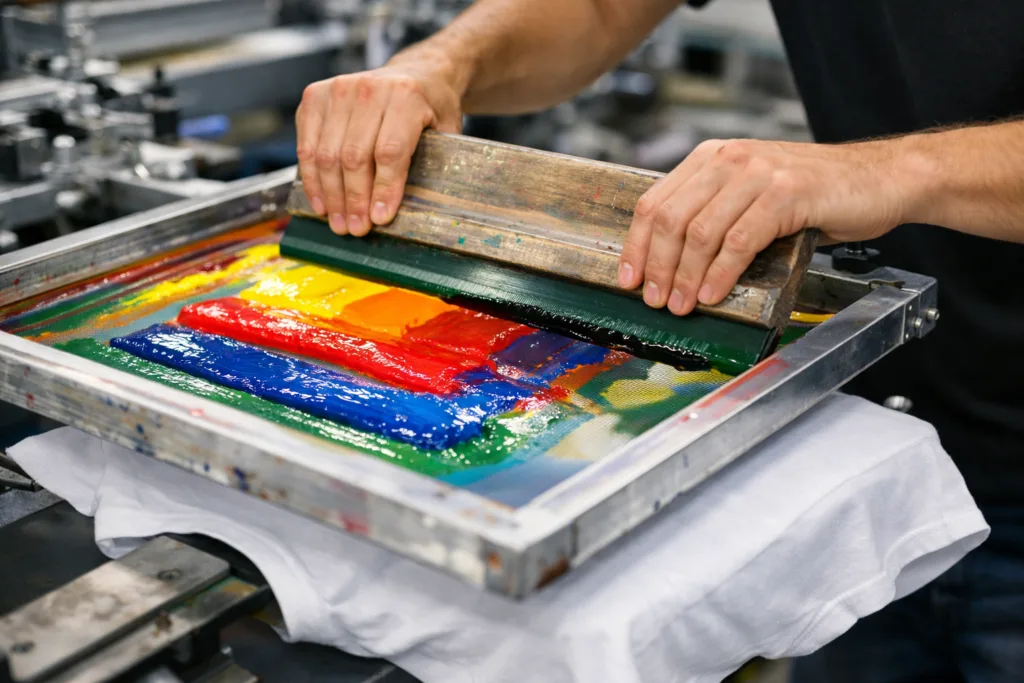
Silk screening, also called screen printing, is one of the oldest and most reliable methods for printing on fabric. It works by using a fine mesh screen—originally made from silk, now usually polyester—to transfer ink onto the garment. Each color in your design gets a unique screen, creating sharp, layered prints that stand out on all kinds of clothing.
How Silk Screening Works
- A technician prepares a mesh screen for each color in the artwork.
- Stencil areas block out where ink should not pass through.
- Ink is pressed through the mesh with a squeegee, layer by layer.
- Each layer is dried or cured for durability.
Typical Fabrics and Garment Types
- Combed cotton (especially 20s, 24s, 32s counts)
- Piqué for polos
- Single jersey and French terry for T-shirts, sweatshirts, and hoodies
Ink Options and Effects
Screen printers can choose from plastisol ink (great for durability and sharp color), water-based ink (soft handfeel, eco-friendlier), and discharge ink (removes shirt dye for a faded look). Specialty inks include flock, metallic, glitter, high-density, or puff (for 3D logos).
Advantages
- Works on cotton, blends, and thick fabrics
- Brilliant, opaque colors with great coverage
- Custom effects and ink textures
- Very durable when properly cured
Ideal For
Higher-quantity runs due to initial setup cost. Great for uniforms, teamwear, event apparel, and streetwear basics needing standout color or effects.
Sublimation Printing: Technology Explained
Sublimation printing uses heat to transfer dye directly into the fibers of synthetic fabrics—most often polyester. No ink sits on top of the cloth. Instead, the design becomes part of the material, leaving a smooth finish that won’t crack or peel.
The Sublimation Workflow
- Designs are printed first onto special transfer paper with sublimation inks.
- The paper is placed onto the garment or fabric panel.
- High heat and pressure turn the inks to gas, which binds to polyester fibers.
- The print fuses inside the fabric, then cools to form a long-lasting image.
Best-Suited Fabrics
- 100% polyester (including recycled rPET)
- Polyester blends with at least 80% poly content
- Some treated performance knits, poplins, and wovens
Color and Design Outcomes
- Full, edge-to-edge coverage (all-over prints)
- Photo-realistic detail and bright, fade-resistant colors
- Breathable finish with no extra handfeel
Advantages
- Unlimited colors and sharp gradients
- Perfect for vibrant sports uniforms, athleisure, and activewear
- No setup fees for new designs (low MOQ friendly after equipment investment)
Limitations
Not suitable for dark cottons or natural fibers—works best on white or light poly fabrics. Prone to color shifting if substrates aren’t properly pretreated and lab-dipped.
Silkscreen vs Sublimation: Side-by-Side Comparison
To help you choose, here is a direct table comparison of silkscreen and sublimation across the most important production and performance factors.
| Feature | Silk Screening | Sublimation Printing |
|---|---|---|
| Compatible Fabrics | Cotton, blends, most synthetics | Polyester (>80%), light colors best |
| Color Vibrancy | Opaque, highly saturated | Bold on poly, vibrant gradients |
| Handfeel | Can be felt if ink is thick | Zero handfeel/part of fabric |
| MOQ | Higher (30–100+ typical) | Low—single piece possible |
| Cost Efficiency | Better for larger runs | Small runs/one-offs economical |
| Design Limits | Up to 8–10 colors best | No color limit, photo detail possible |
| Durability | Excellent if cured, but may crack over years | Never cracks or peels |
| Special Effects | Puff, metallic, HD, gloss, flock | Limited—photoreal prints only |
| Lead Time | Screens + setup 7–14 days | Fast for samples, bulk depends on panel prep |
| Sustainability | Water-based/eco inks available | Less chemical waste, high yield |
Which Method Fits Your Collection?
Your print method must match your material, usage, and target customer. Below are top scenarios and best practices for both techniques. When in doubt, Ninghow’s team reviews your tech packs and advises the optimal route.
Choose Silkscreen If…
- Your garment is 100% cotton, heavier blends, or pique knit (polo look)
- You want a classic opaque logo or special tactile effects
- The design is bold, not photo-like (think uniforms, basics, fashion tees)
- Larger order size allows you to spread screen setup fees
- Brand standard calls for plastisol or specialty inks
Choose Sublimation If…
- You use mostly polyester or performance blends (e.g., rPET, poly-spandex)
- You need all-over, seamless, or gradient prints (sports kits)
- On-demand production (samples, custom events) or smaller batch flexibility is needed
- Your brand requires photo-quality, edge-to-edge color and a smooth handfeel
- Bolder colorfastness to washing and sunlight is essential
Silk Screening and Sublimation in Action: Production Insights
Both silkscreen and sublimation fit tightly controlled, professional apparel manufacturing lines like those at Ninghow. Success depends on proper setup, quality materials, and advanced finishing.
Key Steps in Silk Screen Printing at Scale
- Artwork Prep: Graphics separated layer by layer; films generated for exposure.
- Screen Making: Emulsion-coated mesh screens exposed and washed for stencils.
- Fabrication: Bulk orders require precise fabric relaxation (to ensure size/fit consistency), marker making, and auto/manual cutting with grainline attention.
- Print Application: Experienced operators control squeegee speed, pressure, and curing tunnel temperature for each fabric type. Compaction keeps shrinkage under 5% after washing (test to ASTM D2420 guideline).
- Final QC: Inline/endline checks, AQL sampling (ANSI/ASQ Z1.4), and needle detection for major buyers.
How Mass Sublimation Differs
- Pretreatment: White/light poly knits are cut to panels—best for all-over prints where seam alignment is critical (especially in sports jerseys).
- Color Lab: Strike-offs match client Pantone swatches and manage bulk shade bands for consistency across massive lots.
- Heat Press: Large format presses produce sharp, wrap-around prints. Accurate time/pressure curves prevent distortion or ghosting.
- Assembly: Printed panels then join with performance rib collars, coverstitch hems, and robust label/care tag attachment.
- Testing & Compliance: Products often reviewed for colorfastness (ISO 105-C06), dimensional change (AATCC 135/150), and OEKO-TEX compliance.
Silkscreen vs Sublimation: Cost, Lead Time & MOQ Factors
Cost in silkscreen is driven by screen setup for each color, but prices drop sharply above 100 pieces per design. Sublimation requires less setup and shines for small runs or one-off samples. For full collections, print efficiency improves if similar base fabrics are used. Calculating true cost means asking about ink, pretreatment, paneling (for sublimation), and finishing options.
Lead Time varies—expect 7 to 14 days for silkscreen (add more for large orders or complex art), and 5 to 12 days for sublimation sample runs since setup is digital. Mass production depends on material stock and finishing requirements.
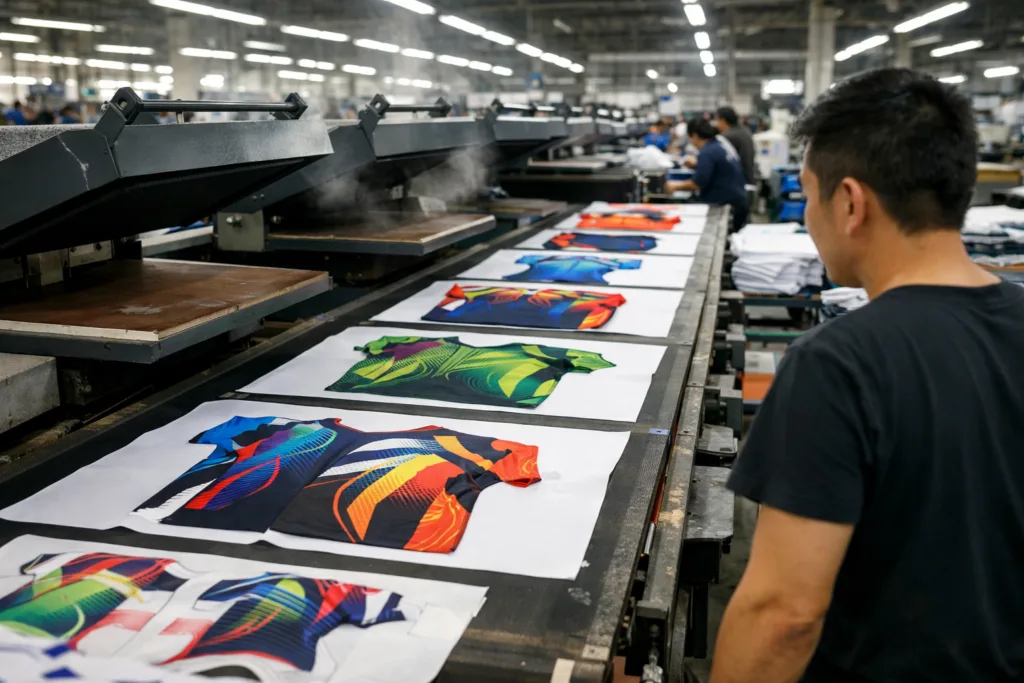
MOQs are closest to zero for sublimation, perfect for limited editions or event promos. Silkscreen is best above 50–100 pieces per design, especially when multicolor work is involved.
Match Your Brand with the Best Fit
Both silk screening and sublimation deliver high-quality prints when processes respect fabric type, design intent, and customer expectations. Fashion brands often use silkscreen for vintage graphics, streetwear logos, or custom color effects. Performance and sports labels lean on sublimation for all-over, featherlight, fade-proof prints. Promotional buyers may mix both depending on the style needs per garment or campaign.
Ninghow focuses on flexible OEM and ODM services, helping brands across sports, lifestyle, and promotional sectors make smarter print decisions. Their team guides you from tech pack through sample, bulk production, and quality assurance, always recommending the most reliable and cost-efficient printing method.
Care, Longevity & Compliance
Durable prints keep your customers happy, reducing returns and keeping your brand strong. For silkscreen, always cure properly between each print stage and double-check for ink adhesion and wash stability (per AATCC 61 and AATCC 8). Sublimation, when done right on quality polyester, offers resistance to fading and wear—even with heavy washing and exposure to sweat or sunlight.
Apparel destined for regulated markets should follow OEKO-TEX Standard 100 (for harmful substances limits), and ensure that all labels, inks, and accessories meet regional rules (such as California Prop 65 or EU REACH guidelines for chemicals and labeling).
Silkscreen vs Sublimation: Decision Guide Summary
Looking for crisp, classic branding on natural fibers or complex effects? Lean towards silkscreen, especially on cotton-rich bases. For ultra-light, fadeproof, or limitless color on poly or activewear, pick sublimation. Assess your chosen garment style, design vision, target order size, and fit tolerances. When real results matter, review test prints with your manufacturer and always request pre-production samples before going bulk.
Expert Tip: For mixed collections—such as polos, T-shirts, and jackets—don’t hesitate to combine both methods. Many streetwear and sports brands blend silkscreen and sublimation for the broadest creative palette.
Silkscreen vs Sublimation
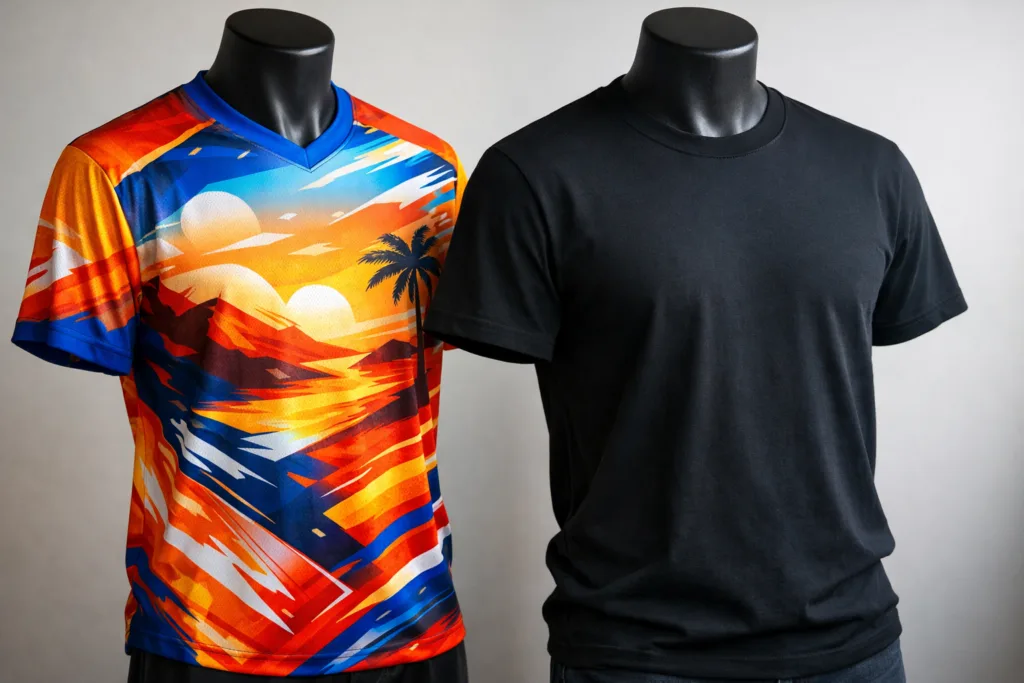
Knowing the core strengths of silkscreen vs sublimation brings you closer to flawless, brand-right apparel. Both methods are pillars of modern clothing manufacturing, each with advanced technical controls and quality benchmarks. Partner with experienced suppliers like Ninghow, who will match the right print to your fabric, function, and brand story—every time.
Frequently Asked Questions
What fabrics are best for silk screening and sublimation?
Silk screening works well on cotton, cotton blends, and heavier knits, while sublimation is best with white or light-colored polyester or poly blends above 80% content.
Is the print durable after many washes?
Sublimation prints become part of the fabric and never crack or peel; silkscreen prints remain strong if cured and cared for, but may show wear on high-stretch garments over time.
Can I print complex, photo-like designs with silkscreen?
Silkscreen excels at bold, clean graphics but is limited to 8–10 colors and cannot reproduce fine photographic detail, which is where sublimation stands out.
What is the minimum order quantity (MOQ) for each method?
Silkscreen is most cost-efficient for orders above 50 pieces per design, while sublimation can handle one-off, sample, or limited runs with no minimums after setup.
Are both methods suitable for kids’ or eco-friendly apparel?
Yes. Both can use OEKO-TEX or GOTS certified inks and fabrics. Always review safety and environmental certifications with your manufacturer before bulk production.
How fast can I get production samples with each method?
Sublimation sample prints can be ready in 5–7 days, while silkscreen sample timelines range from 7–14 days including screen setup and artwork approval.