








Understanding the Tech Pack Template That Factories Follow
In the fast-paced world of fashion and product manufacturing, a tech pack template that factories follow is the essential blueprint for a seamless production process. Whether you’re a designer, brand manager, or production lead, mastering this document is the surest way to avoid costly misunderstandings and ensure your vision translates perfectly from concept to reality. But what exactly should a tech pack contain, and why do factories value it so highly? Read on for insights, practical guidance, and ready-to-use solutions for building a flawless tech pack.
What Is a Tech Pack Template?

A tech pack template serves as the ultimate instruction manual for factories. It contains all the technical details needed to turn your design into a manufactured product. With a well-structured tech pack, you minimize errors, prevent quality issues, and streamline communication with production partners. In today’s highly competitive market, having a robust tech pack is no longer optional—it’s a necessity.
Why Factories Rely on Tech Pack Templates
Factories look to the tech pack template as their definitive guide for every step in production. With clear specifications, they reduce back-and-forth communication and make the sampling and bulk process much more efficient. By following a complete, standardized template, errors are minimized, timelines shrink, and production quality improves significantly.
Core Modules Every Tech Pack Should Include
A solid tech pack template that factories follow typically includes these crucial modules:
- Cover Page: Key contact info, product name, version, and date.
- Design Sketches: Clear front, back, and side views—flat and 3D illustrations if possible.
- Bill of Materials (BOM): Detailed list of all fabrics, trims, and labels, including codes and suppliers.
- Construction Details: Precise stitch types, seam allowances, finishing methods, and special instructions.
- Colorways and Artwork: Color specs (Pantone codes), print placement and techniques, logo guidelines.
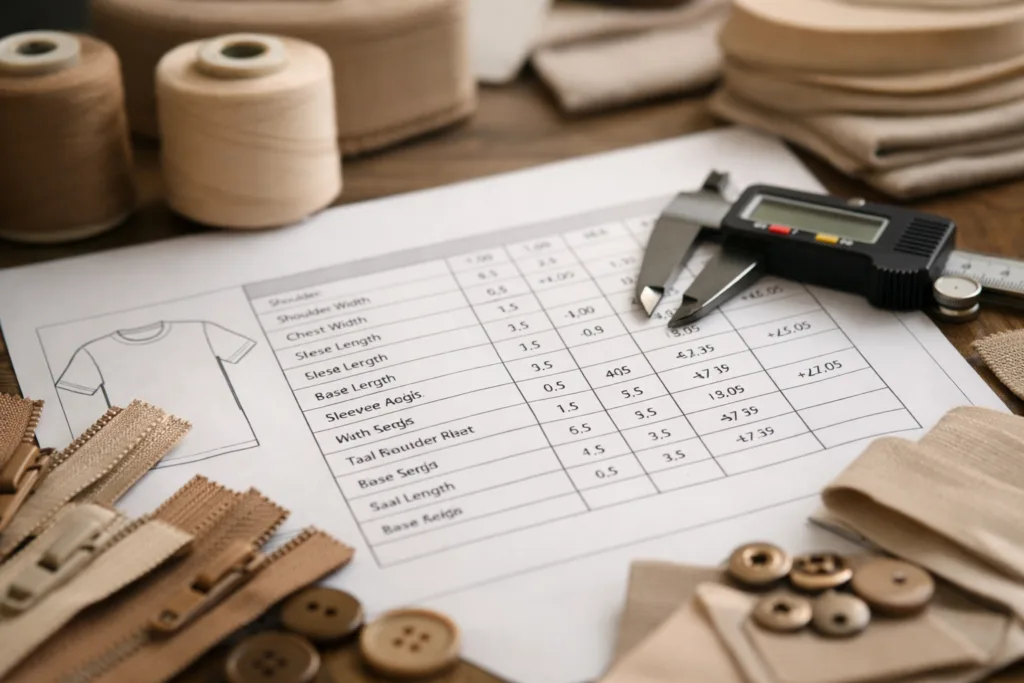
- Measurement Specs (Spec Sheet): Full table of garment or product measurements across all sizes.
- Grading Rules: How each size varies from the base fit.
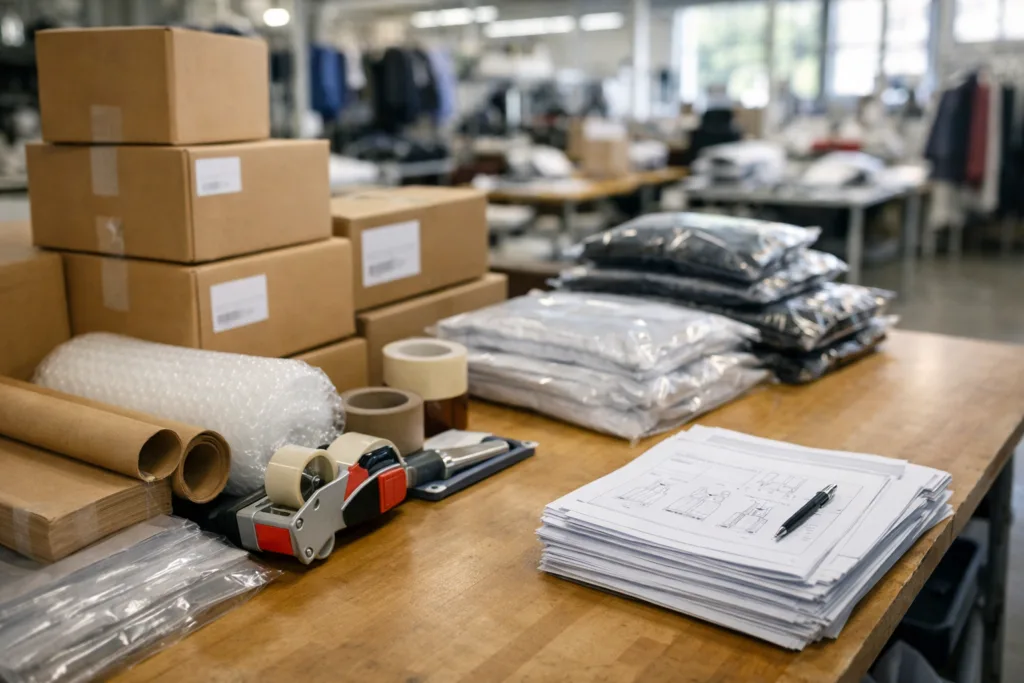
- Labeling & Packing Info: Care labels, hangtags, packaging, carton specs, and folding instructions.
- Sampling & Testing Requirements: Fit, colorfastness, function, and any compliance standards.
- Revision History: Records of document updates, version control, and summary of changes.
Common Tech Pack Template Mistakes and Omissions
No tech pack is perfect, but some errors recur more often:
- Missing or incomplete measurement specs
- Unclear material or trim references
- Vague artwork or logo placement guides
- No grading rules or size breakdowns
- No finishing method details (e.g., seam type)
- Lack of clear packaging instructions
- Outdated or missing revision histories
Avoiding these pitfalls can dramatically improve your production outcomes.
The Ideal Tech Pack Template Structure
Use the following structure as a model for your next project. Factories appreciate this clarity:
| Section | Contents | Importance |
|---|---|---|
| Cover Page | Product, contacts, version | Identification |
| Sketches | Front/back/side, colorways | Visual clarity |
| BOM | Fabrics, trims, suppliers | Materials precision |
| Construction | Stitching, finishes | Assembly instructions |
| Measurement Spec | Size charts, fit | Quality control |
| Grading | Size scaling rules | Fit consistency |
| Artwork/Labels | Print files, placements | Brand consistency |
| Packing | Labels, folding, cartons | Delivery standards |
| Testing | Sample, lab, compliance | Risk reduction |
| Revision Log | Updates, change records | Version control |
Step-by-Step: How to Fill Out a Tech Pack Template
To create a thorough tech pack that factories follow with ease, proceed as follows:
- Start with a clear cover page: Include all version and contact data.
- Add technical sketches: Use both flats and 3D if available.
- Detail materials in the BOM: Specify every fabric, trim, and color.
- Add construction breakdowns: Explain seams, stitches, and finishes.
- Complete your measurement specs: Use a standardized table format.
- Clarify grading and sizing: List how each size differs from the base model.
- Insert labeling, packaging, and branding guidelines.
- Include all sample/testing requirements and compliance info.
- Update your revision history with each change.
Tech Pack必备模块 Explained
In both Chinese and global supply chains, Tech Pack必备模块 refers to the “must-have modules” in any professional tech pack template. These modules ensure that communication is unambiguous and that expectations are aligned from the start. Brands and factories, whether local or abroad, should standardize their pack templates according to these fundamental sections for optimal workflow and flawless production.
Real-World Impact: Why Standardization Matters
If you’re working with multiple suppliers, following a consistent tech pack template helps streamline your onboarding process. For instance, suppliers like Ninghow—an OEM/private label manufacturer—prioritize standardized tech packs to guarantee every specification is captured before sampling or bulk order begins. By maintaining discipline in your template, you position your production for fewer errors and faster lead times.
How Tech Pack Templates Reduce Factory Errors
Factories handle hundreds of orders simultaneously, increasing the risk of confusion. A strong tech pack template that factories follow serves as a contract, offering clarity on what is and isn’t included. This accountability drives up both product quality and delivery speed, keeping your brand reputation intact and customers satisfied.
Examples of Tech Pack Templates You Can Use
For immediate implementation, here are some downloadable or modifiable structures that many leading brands and manufacturers use:
- Adobe Illustrator/PDF templates: Great for design-heavy packs.
- Excel/Google Sheets templates: Ideal for collaborative editing, clear measurement specs, and quick updates.
- Dedicated tech pack platforms: Like Techpacker or WFX, which offer cloud-based solutions, version control, and real-time collaboration with factory teams.
Choose the tool best aligned with your product and team preferences, ensuring it supports every core module as described earlier.
Key Elements Most Often Missed
The most frequently overlooked details in tech packs are precise tolerance levels (how much size variance is allowed), detailed finishing techniques (binding, hemming), and logistical details like custom packaging specs. These “minor” pieces can derail an entire production run if not included up front.
How to Avoid Common Mistakes in Your Tech Pack
Always review your tech pack against a standardized checklist before sending it to production. Collaborate with your factory contact—many, including quality-focused ones like Ninghow, will provide feedback on missing or unclear details. Treat tech pack creation as an iterative process for best results.
How Ninghow Approaches OEM Tech Pack Templates
At Ninghow, tech pack creation is integrated into the full manufacturing service. Their technical teams cross-verify every section—materials, constructions, labeling, and compliance—to ensure nothing is missed. For OEM/private label clients, custom modules are often added to fit unique branding or certification requirements. Standardization is matched with flexibility for each partner.
If you’re considering a reliable manufacturer, it’s worth learning how factories like Ninghow approach real-world customization and production.
Copy-Ready Tech Pack Template Structure
Create your next tech pack using this copy-ready template outline, which factories trust for its clarity:
- Cover Page
- Technical Sketches & Colorways
- Bill of Materials
- Construction/Assembly Instructions
- Measurement Spec Sheet
- Grading Rules
- Artwork Placement & Labeling
- Packing & Carton Instructions
- Sample/Testing Procedures
- Revision History
Each module should be its own page or clearly labeled section in your document. Share in PDF or online format for best version control.
How Tech Pack Templates Support Customization
As brands seek to differentiate with unique trims, eco-friendly materials, or specialized fits, a robust tech pack template makes it simple to specify every nuance. Factories, including global partners like Ninghow, rely on clear tech packs to translate brands’ creative needs into actionable production steps, ensuring no design intent is lost.
Best Tools for Creating Tech Packs
Beyond static templates, consider tools such as:
- Adobe Illustrator: Professional, design-focused, easily shared.
- Google Sheets: Collaborative, version-friendly, ideal for remote teams.
- Techpacker & Similar SaaS Platforms: Integrated communication, approval flows, and template libraries.
Match your tool to your team’s skill sets and factory communication needs for smooth execution.
Tech Pack FAQs and Troubleshooting Tips
Whenever mistakes occur, review FAQs or connect with your factory contact. Clarify ambiguous items, ask about factory-preferred template formats, and always confirm critical specs before starting bulk.
Conclusion: Mastering the Tech Pack Template That Factories Follow
Success in international or domestic production depends on the strength of your tech pack. By building a comprehensive, copy-ready template and understanding the modules factories expect, you’ll reap the benefits of clearer communications, faster sampling, and better quality control. Use the structure and strategies outlined here to empower your next production run—your partners will thank you, and your brand reputation will shine.
Frequently Asked Questions
What is a tech pack template used for?
A tech pack template is used to detail every technical specification for a product, ensuring factories can manufacture exactly what you envision without miscommunication.
What must be included in the tech pack template that factories follow?
Key modules: cover page, design sketches, BOM, construction details, measurement specs, grading rules, artwork and label placements, packing info, and revision history.
How can missing sections in a tech pack affect production?
Omitting crucial information—like measurements or material codes—leads to quality issues, delays, or requires costly samples and rework.
How often should the tech pack be updated?
Update the tech pack with any changes in design, materials, or specs before each new sampling round or order revision to avoid mistakes.
Can tech packs be customized for different products?
Absolutely. Templates should be adapted for each product type, adding or removing modules as needed to match complexity and factory requirements.
Which file format is best for sharing tech packs with factories?
PDFs for structure and visual clarity; Excel or Google Sheets for editable measurement tables; some factories prefer online platforms for real-time updates.