








Apparel Waste Reduction
Apparel waste reduction matters not just for sustainability. It cuts costs, improves material yields, and supports responsible fashion. Factories like Ninghow prioritize smart cutting techniques and precise print placement from the design stage. These steps minimize scrap and boost the value delivered to brands. Let’s explore methods for marker efficiency, panel optimization for sublimation, and how modern CAD helps fashion manufacturers plan every roll with precision.
Why Waste Reduction Is Critical in Modern Apparel
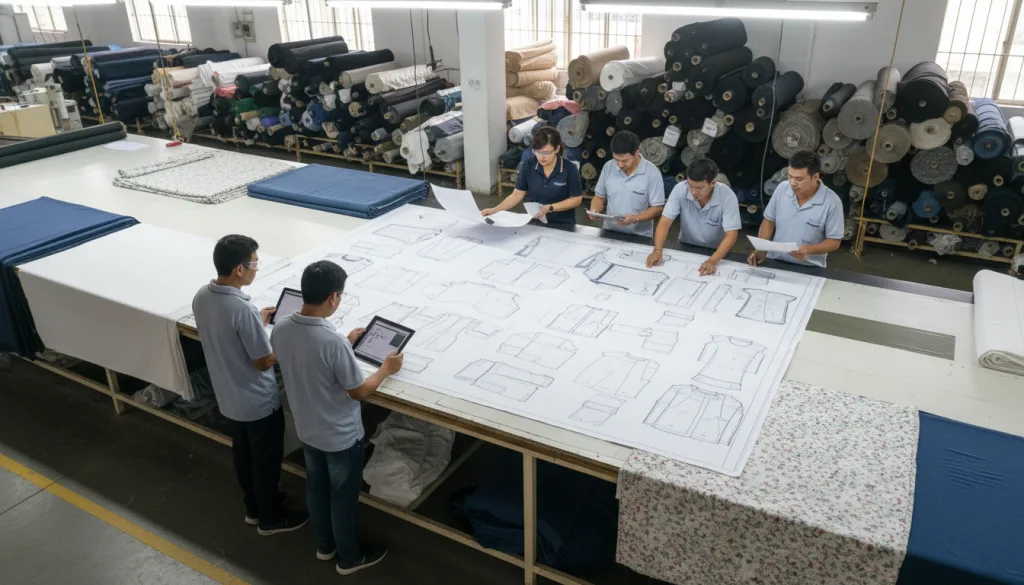
Fabric is often the most expensive part of a garment. Wasted textiles mean wasted money and resources. In addition, brands face pressure to prove their environmental responsibility to customers and regulators. Apparel waste reduction starts with the right fabric choices, but true efficiency depends on how pieces are planned, cut, and printed. For Ninghow, this means focusing on technical process from pattern to shipment.
Business and Environmental Impact
- Lower material costs per finished piece
- Reduced landfill burden and improved eco profile
- Greater production accuracy and order consistency
- Potential for higher profit margins at scale
- Stronger market appeal for responsible brands
Challenges in Reducing Apparel Waste
Common issues include irregular-shaped patterns, loose tolerances, manual errors, and under-optimized marker layouts. It’s crucial to address these using digital workflows and skilled production teams.
Marker Efficiency: The Foundation of Smart Cutting
Marker efficiency is a core measure of how well fabric is utilized during cutting. A marker is a layout plan that arranges all pattern pieces for a garment on a given width and length of fabric. Well-designed markers squeeze pattern pieces together, leaving minimal gaps or unusable edges.
How Marker Efficiency Is Calculated
| Marker Technique | Typical Utilization | Best Use Scenario |
|---|---|---|
| Manual Marking | ~75-82% | Small runs; artisan cut |
| Basic CAD Marker | 80-87% | Standard bulk production |
| Nesting Optimization | 88-92% | Complex shapes; mass runs |
Key Strategies to Improve Marker Efficiency
- Use fabric width effectively: Align pieces with width and grainline to avoid waste on selvedges.
- Rotate and nest irregular shapes: CAD software can rotate pieces for maximum density without violating grainline requirements.
- Grade size sets together: Combining multiple sizes in one marker minimizes offcuts.
- Slim down seam allowances: Only allow what cutting and sewing require.
- Engineer symmetry: Make symmetrical pieces if the design allows to improve stacking and fitting.
Panel Optimization for Sublimation and Large Prints
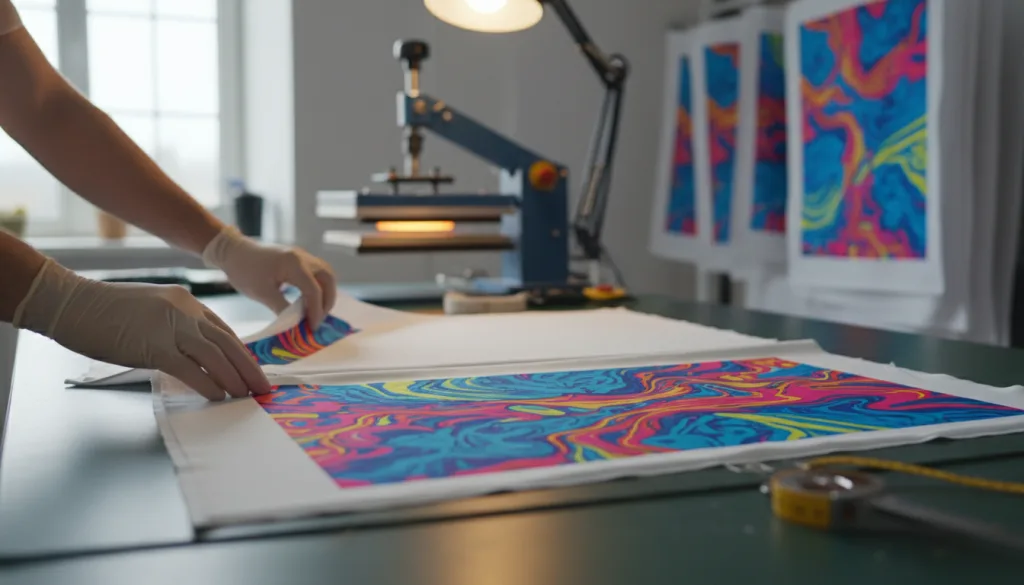
Sublimation is a printing technique where dye is transferred onto polyester fabrics under heat. For allover prints or engineered graphics, panel optimization ensures artwork aligns with garment shapes, while reducing excess print waste.
Steps in Optimizing Panels
- Digitize pattern panels using precise CAD measurements.
- Place print elements to avoid overlap and ensure artwork fits each panel exactly.
- Organize multiple panels per print sheet—this lets printers use full area and minimizes unused portions.
- Account for stretch and shrinkage: Pre-test print alignment with sample panels washed to production specs.
- Plan for print bleed and safe zones: Avoid visible white edges at seams by extending graphics past cut lines.
Ninghow’s Technical Checklist for Sublimation Panel Waste Reduction
- Use graded panel CAD files—verify size sets before printing.
- Conduct ink/fabric compatibility tests for sharpest print edges.
- Apply marker nesting for panel print sheets, using nesting algorithms.
- Perform cut-back checks against marker files post-print.
- Document print-to-panel yield and update patterns for future runs.
Fabric Roll Planning: The Overlooked Waste Factor
Fabric rolls can vary in width, length, and shade. Efficient roll planning means knowing how much material is needed for each size, color, and batch. The goal is to avoid leftover roll ends, shade mismatches, or short yields that result in uncontrolled waste.
Fabric Roll Planning Steps
- Confirm actual roll widths and inspect for flaws/holes before cutting.
- Batch rolls by shade via lab dips, controlling shade bands to ensure color consistency.
- Calculate yardage/length needed by marker yield and order size breakdown.
- Label rolls by order, color, and shade, tracking batch origins and quantity.
- Use software to allocate roll ends to matching panels on sub-runs.
Reducing Waste with Roll-Specific Markers
Rather than using generic markers, Ninghow’s team designs markers tailored to the exact width of each roll. This allows cutting teams to maximize yield, especially critical for premium materials or small runs. Excess roll ends are logged and allocated to size sets for use in future orders—ensuring nothing is forgotten or wasted.
Ninghow’s CAD Workflows for Waste-Smart Planning
Ninghow invests in advanced CAD (Computer-Aided Design) systems to streamline pattern making, marker layout, and print file alignment. These tools go beyond simply digitizing shapes. They run optimization models that simulate how each pattern piece fits on fabric—and how print artwork must be positioned to minimize overlap and loss.
How Ninghow’s Workflow Improves Efficiency
- Digital pattern libraries hold master files, size sets, and sewing allowances for all garments.
- Markers are auto-generated using nesting software based on ordered quantities and actual roll size.
- Print placement files are reviewed together with cut files prior to bulk production.
- Cutting teams use auto-cutters guided by CAD data, reducing manual error and optimizing fabric use.
- Quality control tracks finished panels against digital specs using AQL sampling and spec tables.
Panel and Marker File Cross-Check
The factory cross-checks panel files with cutting markers for each run. Any unaligned print elements or excess margins are flagged for correction before final approval. This step prevents accidental waste and ensures that even complex sublimation prints are delivered as planned—without extra trimming or misaligned graphics.
Material Choices That Support Waste Reduction
Fabric selection strongly affects waste rates. Wider rolls, stable knits, and patterns engineered for lay efficiency can each help factories get more yield per square meter. Let’s compare some common materials against their manufacturing properties.
| Material | Cutting Stability | Suggested Use |
|---|---|---|
| Combed Cotton (single jersey, 20s/24s/32s) | High | Tees, polos; easy marker nesting |
| rPET (recycled polyester) | Medium-High | Sublimation; engineered panels |
| Pique Knit Cotton | High | Polo shirts; stable edges |
| Organic GOTS-Certified Cotton | Medium | Eco-lifestyle tees; varies by batch |
| Interlock Knit | Very High | Smooth cutting; activewear |
| Modal/Viscose | Medium | Soft feel basics |
Fabric Shrinkage & Pre-Compaction
Pre-shrinking and compaction reduce the risk of post-cutting distortion. Stabilized fabrics enable tighter marker planning and fewer waste adjustments at the QC stage.
Quality Control for Waste Reduction
Waste-smart processes extend to quality control. Inline checks catch errors early, before they lead to scrap. Measurement tables, puckering inspections, and colorfastness tests (ISO 105, AATCC standards) ensure every piece is usable and fits order specs.
QC Procedures That Prevent Waste
- Endline checks for cut size vs. spec table values
- Shade control to avoid mismatched panels in assembly
- Batch assignment tracking, so re-cuts use correct roll ends
- Needle detection for metal contamination; critical for children’s wear
- Wash testing for shrinkage, colorfastness, and stability
Packaging and Logistics to Avoid Cut Scrap
Efficient folding, polybag sizing, and carton configuration ensure garments aren’t damaged or made unusable in transit. Ninghow tailors packaging methods to fit the ratio of garment sizes produced, using hangtags, woven labels, and carton marks that support order sorting down the line.
Packaging Steps That Minimize Waste
- Pack in size ratio blocks per order
- Use carton configuration matching actual garment shape
- Label according to country compliance (ISO 3758 symbols)
- Plan logistics for grouped delivery to reduce extra handling
Applications: From Sportswear to Promo Programs
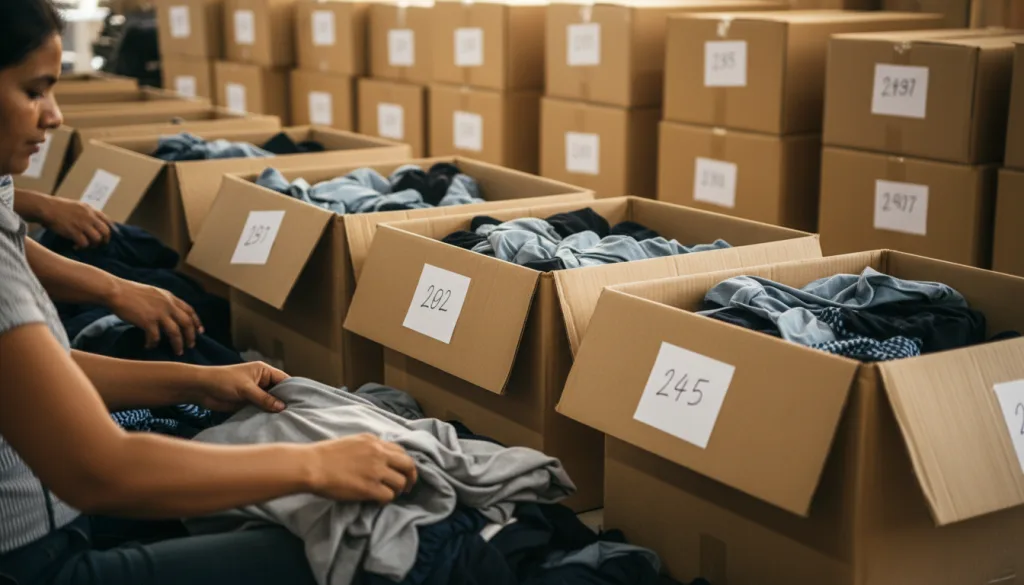
Waste-smart cutting and print placement are essential in sectors like golf apparel, uniforms, and promotional events—where complex graphics and tight deadlines meet high volume. Ninghow’s workflows are tuned for classic polos, hoodies, technical T-shirts, and lifestyle collections. By combining expert marker planning, panel print checks, fabric roll tracking, and strict QC, waste is held below industry norms, often as low as 8% on many runs.
Industries Benefiting Most
- Sports and teamwear (custom logos, engineered fit)
- Streetwear basics (highly consistent sizing)
- Promotional apparel (value-driven, single size)
- Resort/athleisure (large allover prints)
- Corporate uniforms (batch color/shade control)
Expert Takeaway: “Every step in factory planning—from digital markers to careful panel placement—turns into real savings for brands willing to invest upfront. At Ninghow, craftsmanship and technology align to minimize scrap and deliver consistent, on-brand results.”
Frequently Asked Questions
What is marker efficiency in apparel cutting?
Marker efficiency refers to how well a fabric marker layout uses available cloth, reducing gaps and maximizing usable pieces per roll.
How does optimizing print panel placement reduce waste?
By positioning artwork to fit panels precisely, optimized placement limits excess print material and unwanted trimming, saving costs.
Why is fabric roll planning important for waste reduction?
Good roll planning matches actual fabric length and width to garment needs, avoiding leftover roll ends and ensuring color consistency.
How do CAD workflows help in apparel waste reduction?
CAD workflows automate marker layout, nesting, and print placement, improving fabric yields and reducing manual planning errors.
Which fabrics are best for minimizing apparel waste?
Stable knits like combed cotton jersey, pique, and interlock with wide rolls support tight marker layouts and lower scrap rates.
Can apparel waste reduction benefit branding and sales?
Yes. Efficient waste practices lower costs, boost sustainability profiles, and appeal to buyers wanting value and responsibility.