



Pillar Content:Clothing Manufacturing Process
Manufacturing sportswear is about combining durability, comfort, and style. Sewing plays a major role in making active garments strong yet flexible. In this article, we explore the top 5 sewing techniques used in sportswear manufacturing that ensure long-lasting performance and comfort. If you are looking for expert sewing methods for activewear—you’re in the right place.
Flatlock Stitch – For Seamless Comfort
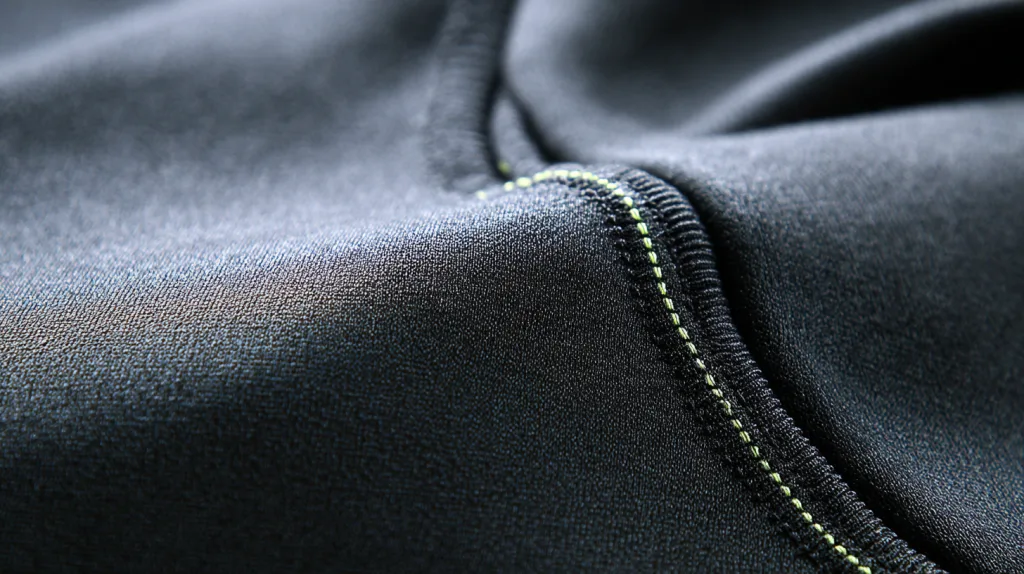
When athletes run, stretch, or jump, seams that rub or chafe can be a big problem. This is why the flatlock stitch is widely used in sportswear manufacturing for its smooth, soft, and nearly flat seams.
Basic principle of flatlock stitch
A flatlock stitch overlaps two pieces of fabric and locks them together with interlaced threads, creating a flat and flexible seam. It usually uses a special flatlock sewing machine.
Benefits in sportswear
- Chafe-free comfort: seams lie flat against the skin, minimizing irritation during activity.
- Elastic flexibility: the stitch stretches easily with fabric, great for athletic motion.
- Lightweight finish: avoids bulky seam allowances, keeping gear light.
Typical use cases
Flatlock stitching is common in:
- Compression tops and leggings
- Yoga wear and performance tees
- Swimwear and base layer tops
Overlock Stitch – Strong & Durable
For joining raw edges quickly and securely, the overlock stitch stands out. It trims, sews, and finishes the edge in one go.
How overlock stitch works
An overlock (serger) machine trims the fabric edge and encloses it with thread loops. It uses multiple threads that wrap around the edge, sealing it cleanly.
Advantages in high-stress areas
- Durable edge finish avoids fraying and maintains shape.
- Elastic seam strength—can handle high-stress zones like underarms and side seams.
- Fast production—great for high-volume sportswear manufacturing.
Comparison with other stitches
| Stitch Type | Edge Finish | Flexibility | Durability |
|---|---|---|---|
| Overlock | Clean, trimmed | High | Very high |
| Lockstitch | Raw edge or folded | Moderate | High |
| Flatlock | Flat, smooth | High | Moderate–High |
Coverstitch – Perfect for Stretch Fabrics
Leg openings, waistbands, and hems on stretch garments need flexibility and durability. That’s where the coverstitch comes in.
Coverstitch mechanics
A coverstitch machine uses two or more needles on top and a looper thread underneath to cover the raw edge of folded fabric—creating parallel rows of stitches on top and a loop on the underside.
Why it suits stretchy fabrics
- Hem stretches freely—ideal for knits, jerseys, and spandex blends.
- Clean, professional finish—looks neat on both sides.
- Strong hem that resists rolling and seam failure.
Common sportswear garments
- Active shorts and leggings hems
- Performance T-shirt lower hems
- Athletic jacket cuffs and waistbands
Lockstitch – Standard for Precision
The lockstitch is the classic sewing stitch, balancing precision and quality—perfect for sportswear areas where both strength and neat appearance matter.
Lockstitch mechanism
A lockstitch uses an upper thread and lower bobbin thread that interlock in the fabric layer. It is done with a standard sewing machine.
Precision and appearance
- Clean, straight lines—great for visible seams or panels.
- Adjustable stitch length and tension—polished finish.
- Versatile across fabrics—works on woven or knit materials.
Limitations and workarounds
- Less stretch than overlock or coverstitch—so often combined with stretch needle or ballpoint needle.
- Edge fraying—may require finishing with overlock or binding.
Bartack Stitch – Reinforcing Stress Points
High-wear areas like pocket openings or belt loops need reinforcement. The bartack stitch provides that extra strength.
What is bartack stitch
A bartack is a short, dense zig-zag stitch that locks thread back and forth over a small area—often done with a bartacker machine.
Where to reinforce
Common stress points in sportswear include:
- Pockets (openings or corners)
- Waistband loops
- Zipper ends
- Strap attachments
Durability benefits
- Extra thread density resists seam ripping under tension.
- Small footprint—adds strength without bulk.
- Quick to apply in production.
How Ninghow Applies Sewing Techniques in Sportswear
At Ninghow, we specialize in high-quality, durable sportswear. Our process is built on expert sewing techniques, custom capabilities, and strong production standards.
Ninghow’s manufacturing process
- Fabric sourcing & testing: We begin with performance fabrics—moisture-wicking, four-way stretch, or compression fabrics. Every batch undergoes tensile, stretch, and wash testing.
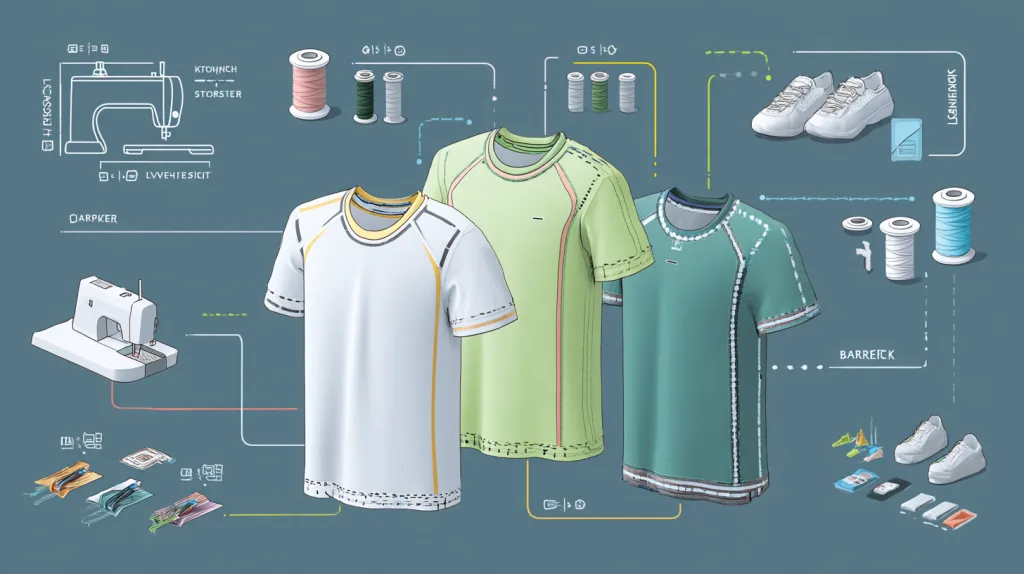
- Technique selection: Based on garment design and function, we choose seams like flatlock for softness, overlock for edges, coverstitch for hems, lockstitch for detail, and bartack for reinforcement.
- Skilled sewing team: Our operators are trained in sportswear-specific stitches, using high-quality flatlock, sergers, coverstitchers, and bartack machines.
- Customized production: We offer OEM and ODM services, and work with no minimum order quantity (no MOQ)—perfect for small batches, designers, or test runs.
- Quality control: Every garment gets inspected for seam strength, stretch retention, and finish quality before packaging.
Customization, OEM/ODM, no MOQ model
Our flexible setup supports:
- Small to medium brands seeking unique sportswear lines.
- Startups testing new designs without large minimums.
- Private labels and international distributors wanting tailored activewear.
Quality testing and examples
For example, our compression leggings featuring flatlock inside seams and coverstitch hems passed ISO tensile strength tests with over 30% more seam stretch than industry standard. This ensures comfort without seam failure.
Frequently Asked Questions (FAQ)
How long does it take to produce a sportswear garment using these techniques?
At Ninghow, typical turn-around time is 2–4 weeks for small batches, depending on design complexity and fabric availability.
Do you require a minimum order quantity (MOQ)?
No. Ninghow operates with no MOQ, ideal for samplers or limited runs.
Which sewing technique is best for sportswear shorts?
Overlock for edges, coverstitch for hems, and bartack for pocket openings make shorts durable and flexible.
What are the most commonly used fabrics in sportswear production?
Popular choices are polyester-spandex blends, nylon-elastane, and performance knits with moisture-wicking and stretch properties.
How do you test seam durability?
We conduct tensile strength tests, wash tests, and stretch cycle testing. Our flatlock seams maintain elasticity after 50 wash cycles.
Do you offer customization beyond sewing technique?
Yes. We support ODM/OEM services, custom labels, trims, packaging, and even small-scale design modifications per client requirements.
Conclusion
Creating high-quality sportswear manufacturing starts with choosing the right stitches. Flatlock stitches deliver comfort, overlock ensures strong, clean edges, coverstitch gives professional stretch-friendly hems, lockstitch offers precision, and bartack adds reinforcement where it matters most. At Ninghow, we combine these techniques with flexible OEM/ODM services, no minimum order requirements, and rigorous quality controls to bring you durable, comfortable activewear.