



Types of Fabric: Understanding Foundations for Clothing Manufacturing
The types of fabric used in clothing manufacturing shape the look, feel, and performance of every garment. Choices range from soft organic cotton to high-tech blends. Factories like Ninghow evaluate fabric types for quality, durability, and application before any cutting begins. Knowing each material’s strengths helps create clothing that fits well, lasts longer, and suits different markets.
Fabric Classification: Natural, Synthetic, and Blends Explained
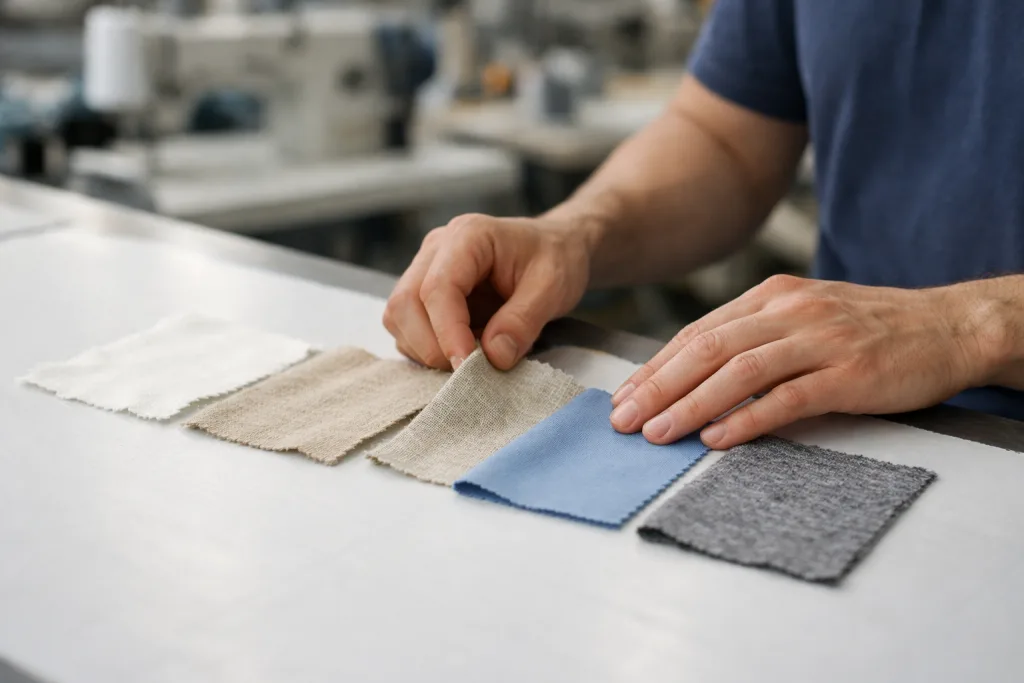
Fabrics divide into three main groups: natural fibers, synthetic fibers, and blends. This classification affects everything from sourcing and sustainability to price and the garment’s properties. Selecting the right group matters for comfort, function, and compliance.
Natural Fibers
Natural fibers come from plants or animals. Examples include cotton, linen, wool, and silk. They offer breathability, softness, and moisture absorption, making them ideal for everyday wear.
Cotton
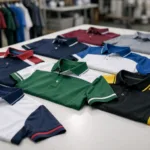
Cotton is the foundation of casual and promotional wear. Combed cotton uses longer, cleaner fibers for smoother handfeel. GSM (grams per square meter) ranges from lightweight 160 gsm (for T-shirts) to stout 240 gsm (for heavier polos).
Linen
Linen’s crisp texture and excellent breathability shine in resort and summer clothing.
Wool
Used for suits, sweaters, or winter layering, wool provides natural insulation and warmth.
Silk
Silk delivers a luxurious drape, favored in formal, evening, or high-end sportswear.
Synthetic Fibers
Synthetic fibers originate from chemical processes. Polyester and nylon are the best known. These fabrics provide strength, wrinkle resistance, and easy care.
Polyester
Polyester dominates athletic and promotional apparel because it resists stretching and shrinking, and offers moisture management.
Nylon
Nylon’s durability suits outerwear and sports accessories exposed to rough use.
Other Synthetic Fibers
Elastane (spandex/lycra) adds stretch; modal and viscose supply soft, fluid drape for lifestyle wear.
Blended Fabrics
Blends combine natural and synthetic fibers for balanced benefits. Common examples include cotton/polyester mixes. These improve washability, reduce cost, and enhance performance (like moisture-wicking or quick-dry).
Comparing Fabric Types: Properties and Applications
Selecting a fabric means weighing its appearance, performance, and best-use scenario. Below is a quick comparison table:
| Fabric Type | Main Properties | Typical GSM | Best Use Cases |
|---|---|---|---|
| Combed Cotton | Smooth, breathable | 160–240 | T-shirts, polo shirts, sweatshirts |
| Linen | Breezy, crisp | 120–190 | Summer shirts, resort wear |
| Wool | Warm, insulating | 180–500 | Sweaters, suits, coats |
| Polyester | Durable, wrinkle-resistant | 140–240 | Sportswear, uniforms, promotional |
| Cotton/Poly Blend | Soft, durable, easy-care | 180–220 | Polo shirts, uniforms, athleisure |
| Elastane Blend | Stretchy, shape-retaining | 180–260 | Activewear, yoga pants, fitted T-shirts |
Fabric Structure: Knits and Wovens for Different Garments
The structure—knit or woven—determines flexibility, weight, and use. Knit fabrics (like jersey or pique) form the backbone of casual and sports garments. Woven fabrics (twill, poplin) supply stability for shirts, pants, and uniforms.
Knit Fabrics
- Single Jersey: Lightweight, flexible; T-shirts, dresses.
- Pique: Textured, stable; polo shirts.
- Interlock/French Terry: Midweight, soft; sweatshirts, hoodies.
- Fleece: Warm, plush; outerwear, sweaters.
Woven Fabrics
- Twill: Diagonal rib; pants, jackets.
- Poplin: Smooth finish; dress shirts, uniforms.
- Canvas: Heavy-duty; bags, outerwear.
Specialty Finishes: Performance and Comfort Innovations
Modern clothing needs more than basic fabric. Finishes—surface treatments or chemical applications—boost fabric’s properties. Some common finishes and their impact:
- Moisture-Wicking: Draws sweat away from skin (key for sports).
- Anti-Odor/Antimicrobial: Reduces bacteria, keeping clothes fresher longer.
- UV Protection: Shields skin from sunlight (critical for outdoor wear).
- Stain Release: Eases cleaning and increases garment appeal in uniforms or kidswear.
- Brushed/Peach Finish: Adds softness to fleece and terry.
- Pre-Shrink/Compaction: Keeps garment size stable after washing.
Expert Takeaway: The right finish can help sports T-shirts dry faster, streetwear keep colors sharp, or work uniforms resist stains.
Color, Lab Dip, and Batch Control in Fabric Selection
Factory color matching starts with lab dips—small swatches dyed to Pantone shades before bulk order. Manufacturers ensure consistency by approving strike-offs and controlling shade bands within large batches. This precision prevents mismatched pieces and ensures brand consistency from the first roll to the last box shipped.
Bulk Color Approval
Bulk production only starts when color meets client specifications, passing lab and factory checks for shade, fastness, and evenness.
Fabric Cutting, Patterns, and Construction Tolerances
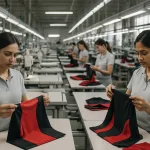
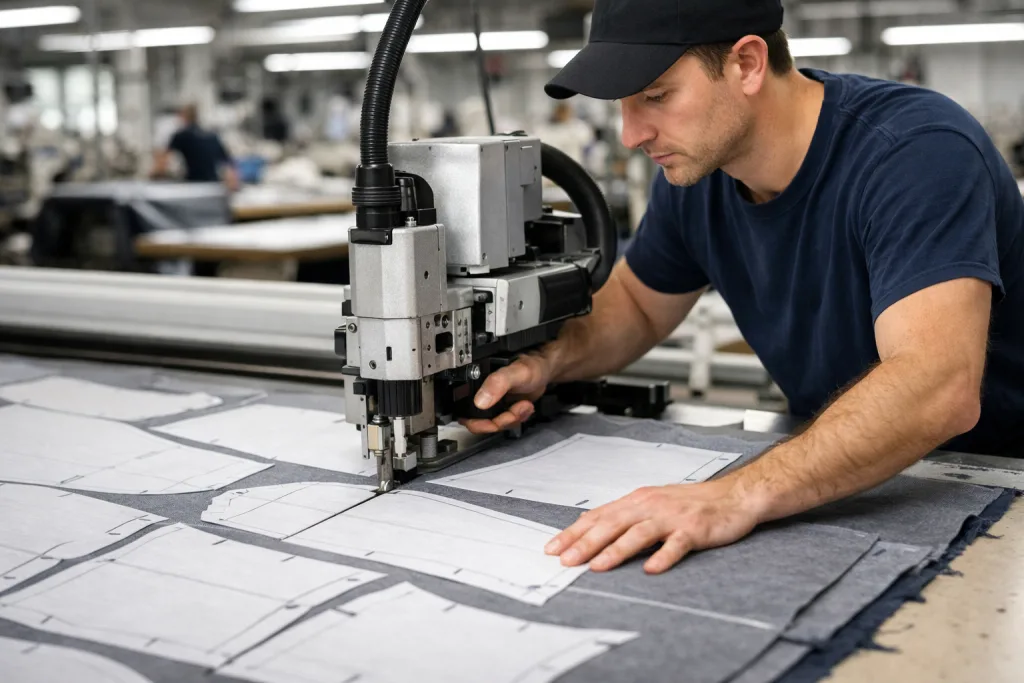
After fabric selection, markers—layout plans for each garment—are used to minimize waste and ensure fit. Tech packs guide every measurement. Modern factories deploy auto-cutters or precise manual cutting to preserve seam allowances and grain direction. Tolerances, or allowed measurement variations, must stay tight (usually ±0.5–1 cm) for consistent fit, vital for brands like Ninghow.
Cutting and Notching
Cut edges are notched for joining; grainline control keeps clothes sitting well on the body.
Sewing, Assembly, and Decoration Techniques
Stitch selection shapes strength and comfort. Garment sewing relies on different machine operations:
- ISO 301 Lockstitch for main seams
- ISO 401 Chainstitch for flexibility
- Coverstitch for hems (especially knits)
- Bartacks for stress points (pockets, belt loops)
Decoration Methods
- Screen Printing: Vibrant, durable (plastisol for bold color, water-based for soft hand)
- Sublimation: Full-color prints; works only on polyester
- Embroidery: Precise, textured logos or names—sometimes with 3D/puff for effect
- Heat Transfer: Good for fast, flexible decoration; appropriate for smaller runs
- Direct-to-Garment (DTG): Best for complex designs on cotton-based fabrics
Decision factors for decoration include intended use (promotional or daily), longevity, feel, and minimum order quantity.
Quality Control, Testing, and Compliance Standards
Reliable clothing manufacturers like Ninghow enforce strict quality checks, following protocols such as AQL (Acceptance Quality Limit), ANSI/ASQ Z1.4 sampling, and physical testing.
Common Fabric Tests
- Colorfastness: Tests like ISO 105-C06 and AATCC 61 ensure color does not bleed or fade.
- Dimensional Stability: AATCC 135 verifies shrinkage is within tolerance.
- Pilling & Seam Strength: ISO 12945 and ASTM D1683 are used for long-term wear checks.
- Compliance: OEKO-TEX STANDARD 100 assures no harmful substances. Factories also follow BSCI, GOTS, and SEDEX audit standards where required.
QC teams use calibrated spec measuring tables, check for puckering, and monitor for skew in finished pieces.
Applications: Matching Fabric Types to Clothing Categories
Choosing the right types of fabric connects directly to the apparel’s intended use. Factories tailor each run for purpose, environment, and style. Here are common matches:
- Sports/Golf Apparel: Polyester, blends with moisture-wicking and UV finish—stays cool and clean.
- Uniforms/Teams: Durable cotton-poly blends for easy care and logo decoration.
- Streetwear Basics: Combed cotton, organic cotton for smooth finish and upmarket appeal.
- Promotional Events: Low-cost jersey, poplin, or poly tees—easy to print, sharp look.
- Resort/Beachwear: Linen, modal, viscose for breezy comfort; vibrant color control is key.
- Athleisure/Yoga: High-stretch blends with elastane—shape-retaining and multi-activity use.
- Corporate Programs: Premium cotton, blends, and classic wovens for sharp branding and comfort.
Measured choices—fabric, weave, finish—deliver strong business outcomes: longer-lasting clothes, better color retention, precise fit, and reliable delivery.
Types of Fabric

To summarize, understanding types of fabric is the cornerstone for building quality apparel. Whether natural, synthetic, or blended, each fabric type suits specific applications, from sports and workwear to streetwear and corporate uniforms. Good manufacturers match materials, finishes, and construction methods to business needs, ensuring cost, fit, and longevity align with the final vision.
Frequently Asked Questions
What are the main types of fabric used in clothing manufacturing?
The main types are natural fibers like cotton and linen, synthetic fibers like polyester and nylon, and blended fabrics that combine both for balanced benefits.
Which fabric is best for sports apparel?
Polyester and polyester blends with moisture-wicking and UV protection finishes are best for sports apparel, offering comfort and durability.
How do cotton and polyester differ in clothing?
Cotton offers softness and breathability, while polyester is more durable, wrinkle-resistant, and better suited for performance wear.
Why are blended fabrics popular in uniforms?
Blended fabrics provide better washability, color retention, and cost-effectiveness, making uniforms more practical for repeated use.
How is fabric quality tested in apparel manufacturing?
Fabric quality is tested through standards like ISO for colorfastness, AATCC for shrinkage, and OEKO-TEX for chemical safety, among others.
What does GSM mean in relation to fabric?
GSM stands for grams per square meter and measures fabric weight; it helps determine thickness and suitability for the garment type.
