
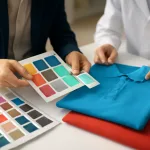







The best fabric for hoodies is not one universal material. For a B2B product, the right choice depends on the wearer, climate, target price, comfort expectations, care routine, decoration method, and required service life. Fabric selection affects softness, breathability, warmth, moisture management, durability, fit stability, and production risk, so it should be defined in the product brief before sampling. Brands building a sustainability-focused range may also review organic cotton apparel manufacturing support alongside other material options.
First principle: choose the performance target before choosing the fiber. A warm winter streetwear hoodie, a lightweight summer layer, and a recovery lounge garment should not automatically use the same construction.
Match hoodie fabric to the product use case
Start by describing where and how the hoodie will be worn. This prevents a soft hand feel from becoming the only selection criterion.
- Everyday and streetwear: Cotton-rich fleece or French terry can balance comfort, structure, and a familiar appearance. The final choice depends on season, silhouette, and expected wash frequency.
- Loungewear: A soft cotton blend, modal blend, or lighter knit may suit relaxed products where drape and next-to-skin feel matter more than abrasion resistance.
- Active or travel use: Polyester or a blended fabric may support faster moisture handling and shape retention, but the supplier should document the exact composition and validate the finished garment.
- Warm seasonal collections: Lightweight, unbrushed French terry can provide a layerable option without the insulating surface of fleece.
- Cold-weather collections: Brushed fleece generally offers more warmth and insulation, although added weight, bulk, drying behavior, and pilling risk must be considered.
Also define the commercial context: target retail price, expected care routine, decoration, climate, and planned size range. A fabric that feels excellent in a showroom may be unsuitable if it shrinks excessively, cannot support the planned print, or requires care instructions that conflict with the customer promise.
Hoodie fabric specifications buyers should compare

Composition identifies the fiber ingredients and their percentages, such as cotton, polyester, modal, or elastane. Fiber content influences hand feel and performance, but it does not fully describe the product. Two fabrics with the same composition can behave differently because of yarn, knitting, finishing, and dyeing.
GSM means grams per square metre and is a measure of fabric weight. Higher GSM often indicates a denser or heavier fabric, but it does not alone prove warmth, quality, or durability. Compare GSM with thickness, knit structure, drape, and the intended season.
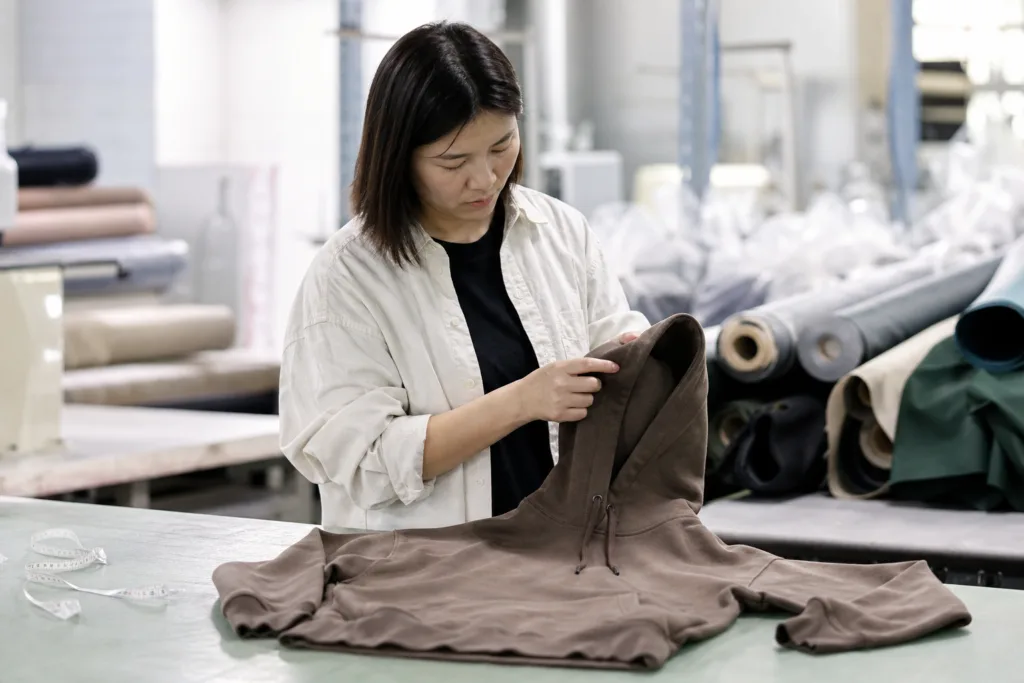
Knit construction matters. French terry has a smoother outer face and looped inner surface. The loops can make it more breathable and suitable for layering. Fleece is typically brushed on the inside, creating a softer, loftier surface that helps retain warmth. Brushing can change hand feel, bulk, shedding, and pilling behavior, so it should be assessed on the actual sample.
Ask the manufacturer to state whether the surface is brushed or unbrushed, whether stretch is built into the knit or added through elastane, and how the fabric is expected to respond after washing. Request composition records and relevant test results rather than treating terms such as “premium” or “comfort” as technical specifications.
Cotton, blends, and organic cotton: practical trade-offs
100% cotton can offer a natural hand feel and breathability, making it suitable for casual and comfort-led hoodies. However, cotton may shrink or lose shape if the fabric and garment are not properly stabilized. It can also dry more slowly than some synthetic alternatives.
Cotton-polyester blends often balance cotton softness with improved shape retention, durability, and easier care. The blend ratio changes the result: more cotton may support a natural hand feel, while more polyester can affect drying behavior, color appearance, and surface feel. A blend is not automatically better; it should match the use case and price position.
Organic cotton may support a sustainability-focused product position while retaining cotton’s familiar softness and breathability. Buyers should request traceability and applicable certification evidence. Organic status alone does not prove lower overall impact, since processing, dyeing, transport, durability, and care also matter.
For development teams, record composition, GSM, construction, finish, color standard, shrinkage allowance, and decoration requirements in one fabric brief. This gives a manufacturer a clear basis for Ninghow to discuss material selection without relying on vague quality language.
French terry versus fleece for sampling
Choose French terry when breathability, layering, and a lighter or less insulated feel are priorities. Choose fleece when warmth and a soft brushed interior are central to the product brief. Neither construction is automatically the best: weight, loop or brush quality, rib matching, shrinkage, pilling, and finishing can materially change the result.
Before bulk approval, compare swatches and a garment sample after washing. Review hand feel, dimensional change, color appearance, seam behavior, hood shape, cuffs, and decoration. Document the approved standard through hoodie fabric sampling and PPS development, then use that standard for production checks.
Specialist Fibers and Performance Options
Bamboo-derived rayon and modal can provide a smooth hand feel, fluid drape, and useful breathability for lighter comfort products. They should not be treated as interchangeable with bamboo fiber or as automatic sustainability solutions. Ask for the exact fiber type, blend ratio, processing description, and supplier documentation. Performance depends on construction and finishing as much as the fiber name.
Wool blends, including merino blends, may add warmth and odor-management potential in premium seasonal products, but they require careful care guidance and cost evaluation. Polyester and recycled polyester can support durability, moisture handling, and shape retention. Nylon may improve abrasion resistance, while elastane adds stretch but can affect heat sensitivity and long-term recovery. Compare pilling, color appearance, washing requirements, and decoration compatibility on the finished garment rather than selecting a fiber from its label alone.
A Conditional Decision Framework
Use a conditional recommendation instead of a universal ranking. For a cold-weather hoodie where insulation and a substantial hand feel are priorities, begin with a heavier brushed fleece and verify pilling, shrinkage, and hood stability. For a versatile everyday style, a cotton-polyester blend can balance softness, structure, and care convenience. For a light layering piece, consider unbrushed French terry with a weight suitable for the target climate. For active or travel use, evaluate a performance-oriented synthetic blend, while checking whether its surface feel and appearance match the brand position.
Write the assumption beside every choice: intended climate, activity level, target price, decoration, desired drape, and expected washing routine. This makes the fabric brief reviewable and allows the manufacturer to propose alternatives without losing the original product objective.
Manufacturing Details That Change the Result
Specify GSM together with composition, knit construction, width, stretch direction, finish, and color standard. Confirm the acceptable composition tolerance and whether rib fabric is intended to match the body fabric in color, recovery, and wash behavior. Shrinkage allowance should be considered in pattern development, especially for cotton-rich knits and brushed surfaces.
Decoration also affects selection. Request print and embroidery trials on the actual fabric because loops, brushing, stretch, and surface density can change registration, adhesion, puckering, or visual sharpness. Custom colors may require additional development and approval stages. Discuss fabric availability, dyeing, sampling, testing, and production sequencing early because each decision can affect the development calendar without assuming a fixed supplier lead time.
Sampling and Quality-Control Checkpoints
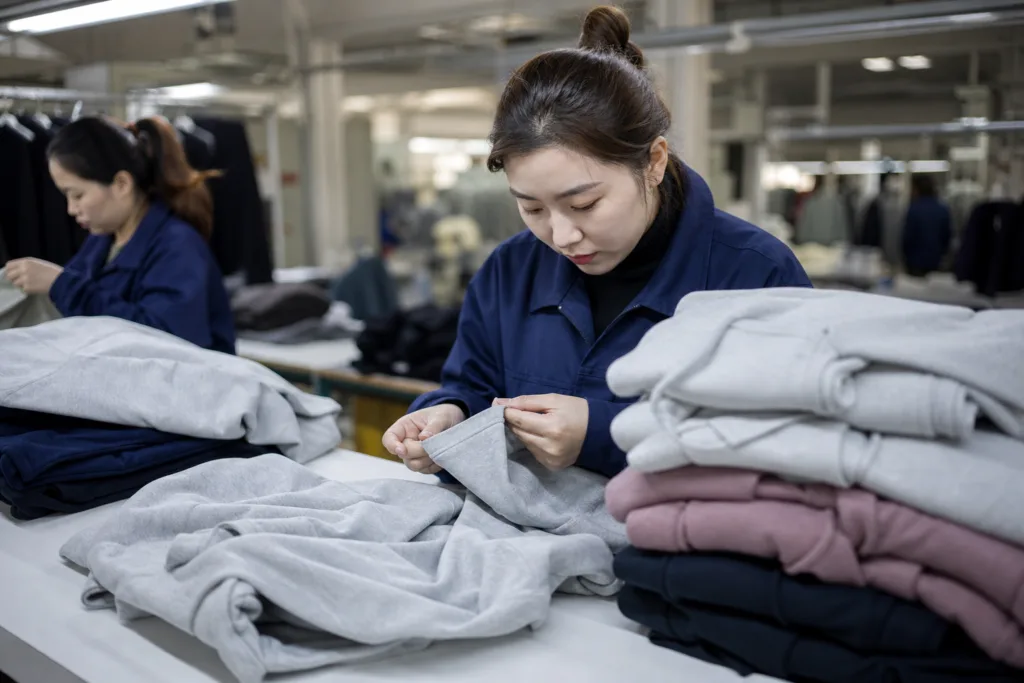
Review swatches or lab dips before approving a proto sample, then compare the approved sample with a washed version. Record hand feel, color, GSM, dimensions, fit, hood shape, cuff recovery, seam appearance, and decoration results. Where relevant, request evidence for dimensional stability, pilling, colorfastness, and seam strength. The exact test method and acceptance criteria should be agreed before bulk production.
Use a documented approval standard for fabric and garment quality control. Production checks should compare bulk fabric and finished garments with that standard, including shade consistency between body panels and rib components. Keep approved swatches, measurement tolerances, wash instructions, and decoration references together so different teams evaluate the same product requirements.
Sourcing, Cost, and Order Planning
Fiber price is only one part of commercial viability. GSM, blend ratio, finishing, custom color, development rounds, testing, sampling, minimum order requirements, and replenishment planning can all influence the landed product cost. A lower-cost fabric may become less attractive if it creates more shrinkage claims, unstable color, difficult decoration, or inconsistent repeat orders.
Ask the manufacturer which composition and construction are available for the intended quantity, what documentation can support the material claim, how color approval is managed, and which fabric properties require testing. Also ask how substitutions would be communicated if the original fabric becomes unavailable. For sustainability-focused products, discuss traceability and applicable evidence through material testing and sustainability compliance rather than relying on an unverified material description.
Care and Product-Lifespan Guidance
Care instructions should reflect the tested fabric and finished garment. In general, washing with similar colors, avoiding excessive heat, treating stains promptly, and following the stated drying method can help protect color, shape, and surface condition. Buyers should approve the final care label only after reviewing the manufacturer’s instructions and the garment’s tested behavior. For reference, textile care symbols are explained in the GINETEX care symbols guide.
Conclusion: Turn the Brief Into a Sample
The best fabric for hoodies is the material that satisfies a defined use case at an acceptable cost and risk level. Convert the target customer, climate, comfort expectation, performance needs, care routine, decoration, composition, GSM, construction, and quality checkpoints into a written brief. Then compare samples before approving bulk production. This process gives every supplier conversation a measurable direction and helps protect the intended product experience through manufacturing.
Buyer FAQs
What is the best fabric for hoodies for everyday wear?
A cotton-rich fleece or French terry can suit everyday wear, but the choice depends on climate, desired warmth, care expectations, and target price. Validate shrinkage, pilling, colorfastness, and hand feel on the finished sample.
Is 100% cotton a good choice for wholesale hoodies?
100% cotton can offer a familiar soft hand feel and breathability, but buyers should manage shrinkage, drying behavior, and shape retention. A cotton-polyester blend may be more practical when easier care and dimensional stability are priorities.
Which hoodie fabric is best for summer collections?
Lightweight, unbrushed French terry or another breathable knit may suit summer layering. The correct choice depends on climate, garment silhouette, GSM, drape, and whether the product needs moisture handling or stretch.
What does 80/20 hoodie fabric mean?
An 80/20 fabric usually identifies an 80 percent and 20 percent fiber blend, but the specific fibers must be confirmed. Buyers should assess the blend’s hand feel, shrinkage, color behavior, durability, care needs, and decoration performance.
How should buyers compare fleece and French terry?
Compare the actual construction, GSM, inner surface, warmth, breathability, pilling behavior, shrinkage, and layering suitability. Brushed fleece is generally warmer, while unbrushed French terry is often more breathable and versatile for lighter use.
What should a manufacturer provide before bulk hoodie production?
Request a clear composition and fabric specification, approved color or lab dip, sample garments, care guidance, decoration results, and agreed quality checkpoints. Ask for applicable testing or sustainability documentation when the product brief makes those claims.