







Setting the Standard in Packaging, Labeling & Care: Compliance Without Waste
Packaging, labeling, and garment care might sound like background operations, but they play a leading role in sportswear’s journey from factory to fan. The right choices not only ensure legal compliance, but also reflect your brand’s quality and sustainability values. With tightening regulations and rising consumer expectations, making smart packaging decisions has never been more important.
Understanding Sportswear Packaging Requirements
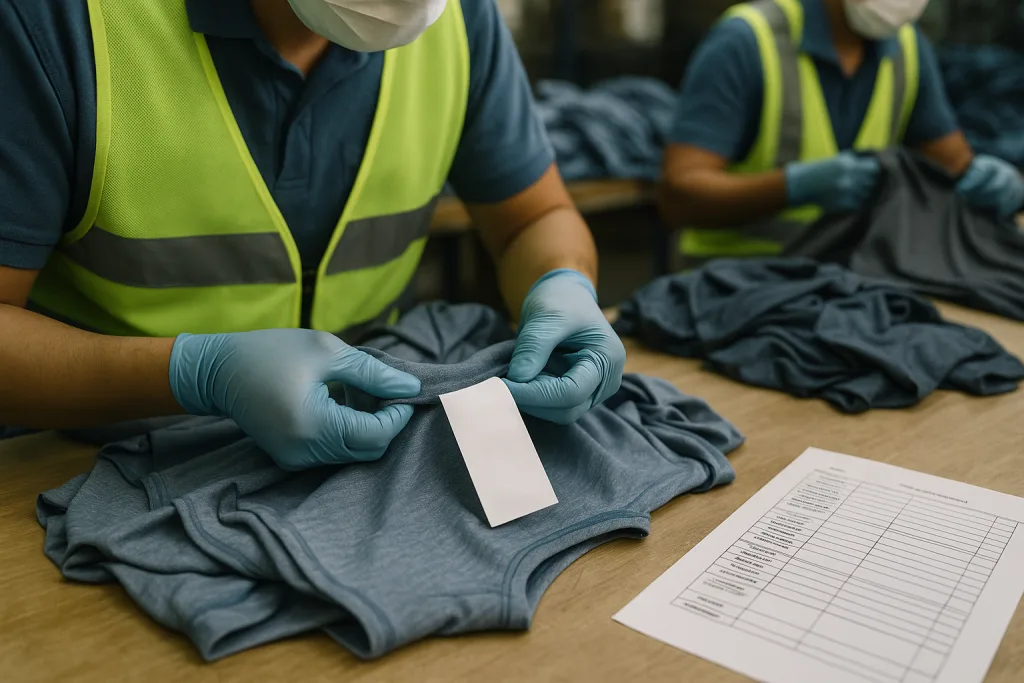
Sportswear packaging requirements cover more than just physical protection. Each element—from fiber content labels to polybag materials, barcode standards, and carton specs—shapes how your product moves through the supply chain and arrives with customers. Inaccurate or non-compliant packaging can delay shipments, trigger customs holds, or even lead to fines. On the positive side, responsible packaging design can reduce waste, enhance brand image, and open doors to new markets. At Ninghow, these principles guide every step of the process, whether for OEM or private-label programs.
Fiber Content & Care Label Rules
Labels tell the story of every garment, both to authorities and to end users. Care and fiber content labels must meet strict national and regional requirements, such as the U.S. Federal Trade Commission’s Textile Fiber Products Identification Act or the European Union’s Regulation (EU) No 1007/2011. The label typically includes:
- Fiber content (e.g., 65% recycled polyester / 35% cotton)
- Country of origin (e.g., Made in China or Cambodia)
- Care instructions, using ISO 3758 care symbols and clear English text (e.g., “Machine wash cold, tumble dry low”)
- RN number or importer address (for US/Canada/EU markets)
Common care labeling fabrics include soft satin, organic cotton, or recycled polyester. For sportswear, labels must withstand multiple washes, sweat exposure, and mechanical friction. Woven labels are preferred for longevity; printed labels offer flexibility on lighter knits or seamless apparel. For global brands, dual-language or multilingual labels are standard—and eco-focused labels often highlight certifications such as GOTS or OEKO-TEX Standard 100.
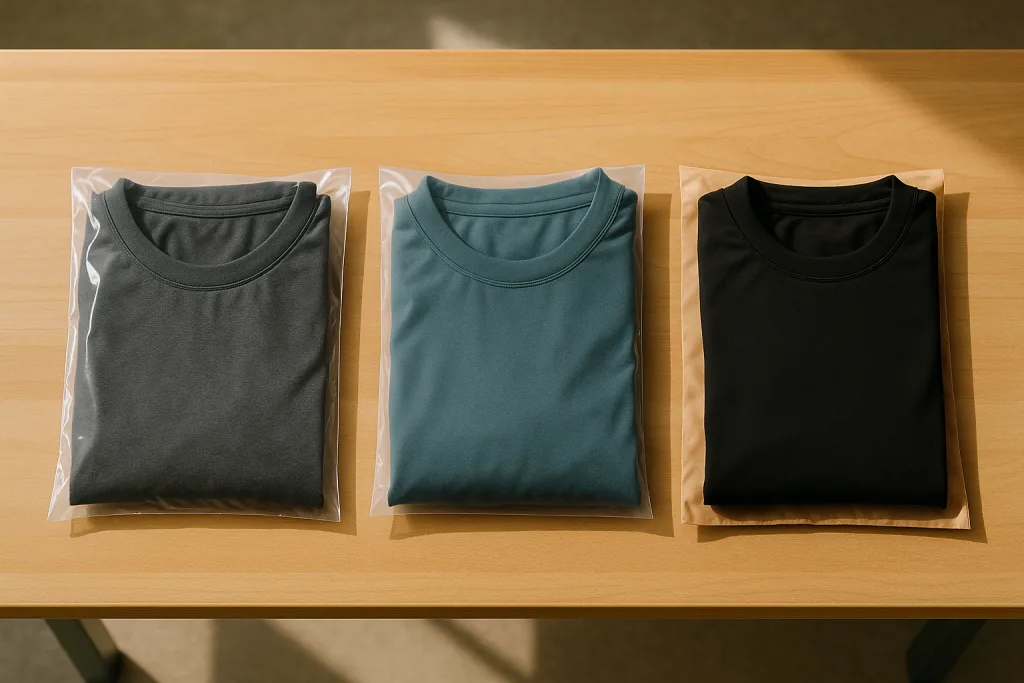
Polybag Options: Biodegradable & Recycled Choices
Each sportswear garment typically leaves the factory sealed inside a polybag. The right choice balances cost, order protection, and environmental impact. Here’s a fast comparison:
| Polybag Type | Material | Main Benefits | Points to Consider | Best Use |
|---|---|---|---|---|
| Conventional LDPE | Virgin low-density polyethylene | Strong, low cost, clear | Not biodegradable, adds to landfill | Mass retail, budget-focused lines |
| Recycled PE (rPE) | Post-consumer or post-industrial recycled polyethylene | Lessens footprint, supports circularity | May be cloudier, modest cost up | Eco-conscious DTC, premium retail |
| Biodegradable | PLA, PBAT, or compostable blends | Breaks down faster, supports green values | Higher cost, shelf-life considerations | Eco-brands, outdoor/sports markets |
Bag thickness usually ranges from 30–60 microns. Most brands specify self-adhesive recycled-content mailers and replace plastic stickers with printed logos or biodegradable seals. For restricted chemical compliance (e.g., REACH), all inks and adhesives must also be safe for apparel.
Carton Specifications: Durability Meets Detail
Cartons move apparel through global logistics chains. Strong, compliant cartons prevent shipment losses and avoid costly claims. Key carton specs include:
- Material: B- or C-flute corrugated, 5-ply for larger boxes
- Dimensions: Balanced to fill 20’/40’ containers efficiently; common sizes 60x40x30 cm, 65x45x35 cm
- Carton weight: Usually ≤15-20 kg per box to avoid worker injuries
- Closure: Water-activated or non-solvent tapes; staples avoided for safety
- Markings: Clear ship-to address, PO/reference, style, size range, quantity, barcode/UPC/EAN
Export Packing and Incoterms
Export cartons must meet the importer’s requirements—including ISPM 15 mark for wood packaging, and special stacking/crush strength for air vs. sea shipments. Incoterm (EXW, FOB, CIF, DDP) influences packing documentation, labeling, and responsibilities.
Barcodes, Hangtags & Trims: Tracking with Precision
Barcodes ensure each item is trackable from warehouse to checkout. Most brands standardize on UPC (US/Canada), EAN (Europe), or QR codes (DTC, omnichannel).
Common Barcode Applications
- Tear-off price stickers (retail, destination-customized)
- Printed-on hangtags (brand + product info, batch number)
- Sewn-in or heat-pressed care labels (for bulk, warehouse use)
- Carton box stickers (for order/carton traceability)
Hangtags signal brand value and may include certifications such as BCI or OEKO-TEX for added trust. Decorative trims must comply with restricted substance rules and be durable through warehousing and transit. At Ninghow, all trims face needle detection checks and batch aging tests before shipment.
Retail vs. DTC Packaging: Designing for Each Channel
Packaging for retail spaces and direct-to-consumer (DTC) orders might look similar, but their goals differ.
Retail Packaging
- Polybag + carton: basic, standardized, optimized for shelf restocking
- UPC/EAN stickers: required for store scanning
- Hangtags: emphasize brand, sports tech features
- Size/ratio packs: grouped to store planograms (e.g., 2S/2M/2L/1XL per case)
- Less focus on unboxing or presentation
DTC Packaging
- Mailer bag or box: branded and recyclable, ready for doorstep delivery
- Minimal or no extra polybag where possible (to cut waste)
- Printed inserts: care tips, returns process, brand story
- Personal touches: tissue paper, stickers, QR codes for product registration
- Focus on the unboxing experience and reduced plastic
Expert Takeaway: Sustainable DTC packaging is a brand loyalty driver—72% of consumers favor brands with minimalist, eco-conscious packaging.
Testing, Compliance & Global Regulations
Testing verifies each packaging component meets global requirements. Key tests and certifications include:
- Colorfastness to wash and sweat for printed packaging elements (ISO 105)
- Material composition verification (ISO 1833), esp. for recycled or compostable claims
- Adhesive and ink migration (REACH, CPSIA, RoHS-compliant)
- Drop, stacking, and crush testing for cartons
- Needle detection and metal scan for trims, essential for athletic uniforms and youth apparel
- Label durability across repeated laundering cycles (AATCC 135, ISO 6330)
Meeting OEKO-TEX, GOTS, and BSCI standards at packaging and trim level assures customers and major retailers about environmental and social responsibility. All compliance certificates should be retained for at least five years in case of audit.
Minimizing Packaging Waste Without Sacrificing Compliance
Reducing packaging waste starts at the design phase. Brands are moving beyond traditional plastics, opting for FSC-certified paper wraps, recycled polybags, or even garment folding techniques that allow for smaller, lighter packaging. Polyless packaging (no individual bagging) is rising, especially for DTC, provided garments remain protected.
Careful marker making and cutting also shrink offcut waste. Smart size bundling ensures ratio efficiency, while digital order management can prevent overpacking. At Ninghow, routine waste audits highlight improvement ideas—every saved gram adds up over thousands of cartons shipped.
Packaging, Labeling & Care: Compliance Without Waste

Sportswear packaging requirements shape every stage of the apparel lifecycle. From hard-wearing care labels on moisture-wicking polyester, through recycled polybags designed for easy custom clearing, to robust, barcode-tracked export cartons, each step matters. Brands must stay current on market-specific compliance, leverage new materials and trimming solutions, and never overlook the business impact of waste. A partner like Ninghow supports these goals with precision, reliability, and the agile adoption of best practices.
Frequently Asked Questions
What is required on a sportswear care label?
Care labels must show fiber content, country of origin, care instructions with ISO 3758 symbols, and importer/distributor details, customized by market.
Are biodegradable polybags accepted in retail supply chains?
Many retailers accept biodegradable or recycled polybags but require evidence of compliance and must test for shelf-life, strength, and transparency.
How are export cartons labeled for customs clearance?
Export cartons need clear markings—address, PO or style, size and quantity, barcodes, and any destination-required symbols or compliance marks.
What barcode standard is used for US retail sportswear?
UPC codes are standard for US retail, with each SKU assigned a unique number for inventory control and point-of-sale scanning.
How do DTC packaging requirements differ from retail?
DTC packaging focuses on branded mailers, recyclable or minimal packaging, personal touches, and a better unboxing experience rather than shelf display.
What tests confirm packaging compliance for sportswear?
Key tests include material composition, colorfastness, adhesive migration, needle detection, carton drop testing, and label durability after laundering.
