







Organic Cotton vs Conventional Cotton – Farming Practices
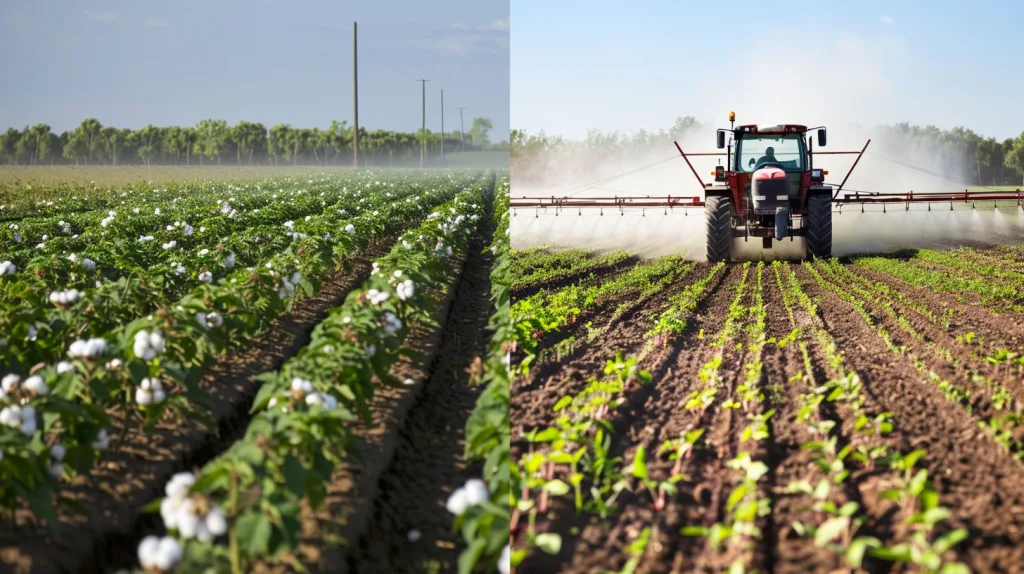
Organic and conventional cotton differ significantly in how they are cultivated. These differences have a direct impact on environmental sustainability, crop yield, and health effects for farmers and ecosystems.
Understanding the differences between organic cotton vs conventional cotton is crucial for sustainable sourcing decisions.
Use of Chemicals and Pesticides
Organic cotton is grown without synthetic fertilizers or pesticides. Instead, it uses natural compost, insect-repelling plants, and crop rotation to manage pests and soil nutrients. Conventional cotton, on the other hand, relies heavily on chemical inputs, accounting for about 16% of the world’s insecticide use despite occupying only 2.5% of cultivated land.
When comparing organic cotton vs conventional cotton, the reliance on chemicals is a notable contrast.
GMO vs Non-GMO Seeds
Organic cotton strictly prohibits genetically modified organisms (GMOs). This helps preserve seed diversity and protects against the monopolization of cotton genetics. In contrast, conventional cotton often uses GMO seeds engineered for pest resistance or increased yield, which can lead to long-term ecological consequences and seed dependency.
It’s essential to evaluate the implications of choosing organic cotton vs conventional cotton in your supply chain.
Soil Health and Biodiversity
Organic practices prioritize soil regeneration through composting, crop rotation, and minimal tillage. These practices boost biodiversity and microbial life. Conventional farming methods often lead to soil degradation, erosion, and reduced biodiversity due to chemical overuse and monocropping.
Cost and Price Comparison in B2B Markets
Cost is a major consideration for B2B buyers. Understanding the short- and long-term financial implications of organic vs conventional cotton is essential for strategic sourcing.
The choice between organic cotton vs conventional cotton has significant financial ramifications for businesses.
Short-Term Production Costs
Organic cotton tends to have higher production costs due to manual labor, organic certification, and smaller scale operations. Conventional cotton, benefiting from industrial-scale mechanization and chemical aids, is typically cheaper upfront.
Buyers should weigh the benefits of organic cotton vs conventional cotton in terms of long-term sustainability.
Long-Term Financial Impact
While more expensive at first, organic cotton offers long-term savings through higher product quality, fewer returns, and better brand positioning. As consumer demand for sustainable products rises, investing in organic cotton can offer a strong return on investment.
Ultimately, the trade-offs between organic cotton vs conventional cotton can influence brand perception.
Availability and MOQ (Minimum Order Quantity)
Historically, organic cotton faced availability and MOQ issues. Today, more suppliers—like Ninghow—offer low or no MOQ and global delivery, making it easier for B2B buyers to source sustainably without inventory stress.
Quality and Comfort Differences in Cotton Fabrics

Cotton isn’t just about cost—it’s also about the quality and comfort your customers experience.
Fabric Feel and Skin Sensitivity
Organic cotton is often softer because the fibers are not broken down by harsh chemicals. It is also free from residues that can irritate sensitive skin, making it ideal for baby clothes, undergarments, and luxury apparel.
For those concerned about skin sensitivity, the choice of organic cotton vs conventional cotton is particularly important.
Durability and Lifespan
Due to the preservation of the fiber’s natural structure, organic cotton fabrics can last longer with proper care. Conventional cotton may weaken over time due to chemical processing, reducing its lifespan.
Investing in organic cotton vs conventional cotton can also be considered in terms of durability and lifespan.
Color Retention and Finishing
Organic cotton fabrics tend to retain color better when dyed with low-impact, eco-friendly dyes. Conventional cotton often undergoes harsh bleaching and finishing processes that can affect color retention and fabric feel.
When analyzing color retention, the comparison of organic cotton vs conventional cotton reveals key differences.
Why Brands Switch from Conventional to Organic Cotton

More brands—large and small—are transitioning to organic cotton due to growing sustainability demands and business incentives.
The transition from conventional to organic cotton reflects the growing trend of prioritizing organic cotton vs conventional cotton.
CSR and Regulatory Compliance
Using organic cotton helps brands meet Corporate Social Responsibility (CSR) goals and comply with environmental regulations. Certifications like GOTS and OEKO-TEX provide added credibility for B2B buyers.
Consumer Demand and Market Trends
Eco-conscious consumers now expect brands to offer sustainable products. Brands that switch to organic cotton often gain access to a broader customer base and see stronger loyalty and engagement.
Marketing strategies should emphasize the benefits of organic cotton vs conventional cotton to attract eco-conscious consumers.
Case Studies of Successful Transition
Major fashion houses like Stella McCartney, and mainstream retailers like H&M, have successfully incorporated organic cotton into their collections. These shifts have enhanced their brand image and reduced environmental impact without compromising product quality.
Learn about Ninghow’s custom-made organic cotton clothing solutions
Conclusion: Choosing the Right Cotton for Your Business
For B2B buyers, the choice between organic cotton vs conventional cotton isn’t just about price. It’s about aligning with market trends, meeting regulatory standards, and offering better products to end consumers. Organic cotton vs conventional cotton provides a responsible, long-term solution for businesses committed to sustainability.
FAQ: B2B Concerns About Organic vs Conventional Cotton
1. Is organic cotton always more expensive?
It typically costs more upfront but can lead to savings in returns, waste reduction, and improved brand equity.
2. Can organic cotton meet large-scale production needs?
Yes. The global supply of organic cotton has expanded significantly, and many suppliers now support bulk orders.
3. Are certifications necessary for B2B organic cotton sourcing?
While not mandatory, certifications like GOTS ensure quality and ethical practices, making them highly recommended.
4. Does organic cotton shrink more than conventional cotton?
Both types shrink similarly if untreated. Pre-shrunk or blended fabrics reduce shrinkage risks.
5. What’s the MOQ for sourcing organic cotton from Ninghow?
Ninghow offers flexible options with low or no MOQ, making it accessible for businesses of all sizes.
6. Is there a performance difference in athletic or technical wear?
Organic cotton is breathable and skin-friendly. For performance wear, it’s often blended with recycled synthetics for added functionality.
Related Reading
- Organic Cotton Clothing Solutions
- What Is Organic Cotton? Benefits for Brands and the Environment
- Certifications in Organic Cotton Clothing: GOTS, OEKO-TEX, Fairtrade Explained
