
Jacquard vs Brocade: Key Differences Explained
When designers and apparel manufacturers talk about luxury woven textiles, two words come up again and again: Jacquard and Brocade. Both feature striking patterns. Both signal prestige. But what sets Jacquard apart from Brocade? Getting specific about their weave methods, cost implications, and best clothing uses helps brands choose with confidence—and ensures garments deliver the right look and feel.
Understanding Jacquard Weaving
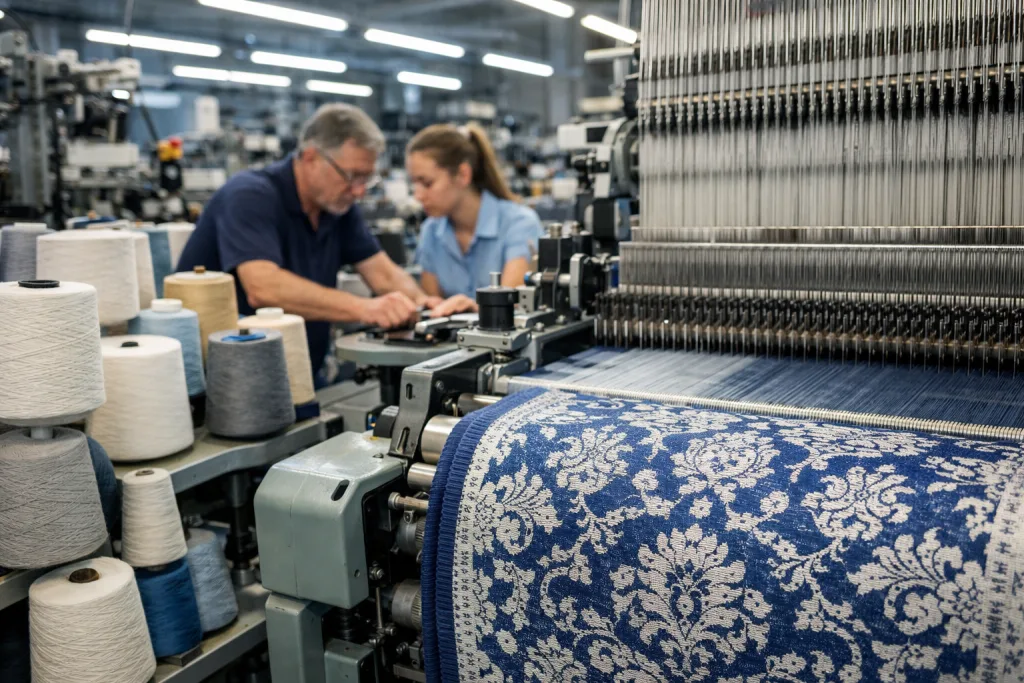
A Jacquard fabric refers to any textile woven on a Jacquard loom, a clever machine invented in France in the early 1800s. The Jacquard loom allows weavers to control each warp thread separately. This unlocks almost endless pattern possibilities, from subtle textures to highly complex designs. Apparel brands prize Jacquard for its crisp pattern definition and consistent quality.
How Jacquard Looms Work
The Jacquard weaving process uses punch cards or digital systems to guide each thread. This approach achieves intricate shapes and textures without the need for embroidery or prints. Materials range from cotton and silk to polyester blends—often in densities between 150 gsm (grams per square meter) for lighter shirts and up to 320 gsm for heavier jackets.
Performance and Handfeel
Jacquard fabrics tend to be smooth yet substantial. Their patterns feel integrated, not sitting on top of the fabric. Advanced finishes—like moisture wicking, peach finish, and anti-odor treatments—are easy to add during production, especially when working with fiber blends.
Brocade Fabric: Luxurious Tradition
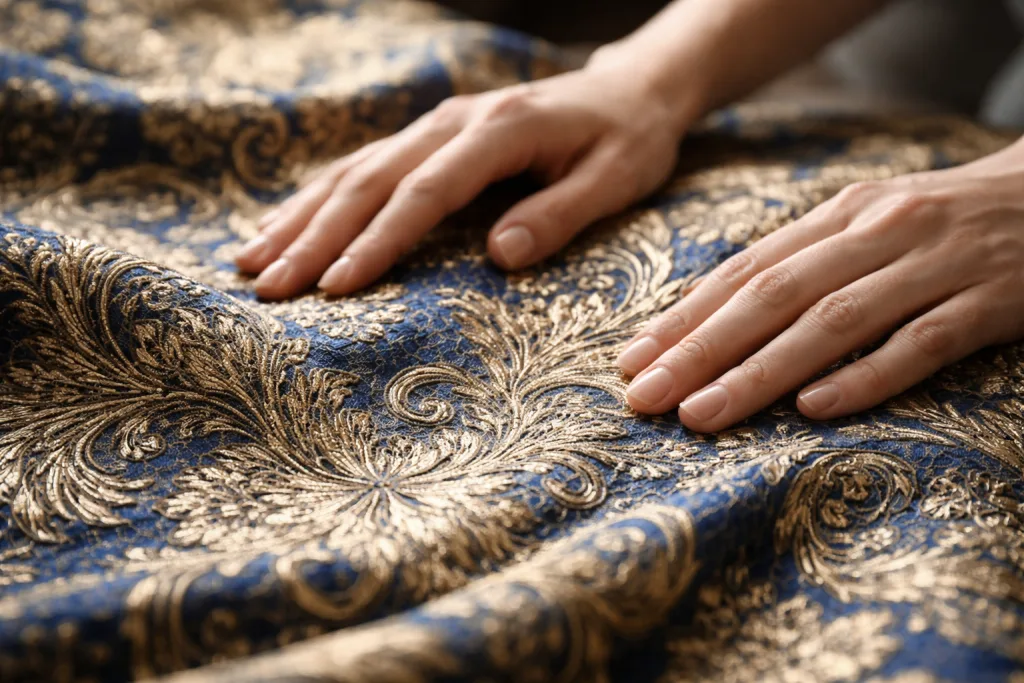
Brocade weaving takes the Jacquard technique and adds a layer of luxury. Brocade is defined by its raised, decorative patterns—often incorporating metallic threads. The result: a textured surface where motifs stand out in relief, sometimes shimmering as the wearer moves. Historically, brocade signaled royalty and high status in both Eastern and Western cultures.
Defining Brocade Weaving
Brocade production still relies on Jacquard looms but demands extra labor and material. Additional weft threads create the raised patterns, sometimes floating loosely in back or anchored tightly to the surface. Brocades are typically woven with silk, rayon, or polyester plus metallic yarns.
Visual and Tactile Qualities
Brocade fabric feels heavier and stiffer than most Jacquards. Its motifs are bold, with clear relief. Metallics give a luster that regular Jacquard lacks. This makes brocade a favorite for formal dresses, evening wear, and ceremonial garments.
Comparing Jacquard vs Brocade: Weaving Methods
The technical differences between Jacquard and brocade weaving shape how each fabric looks, feels, and behaves in finished garments. Here’s a direct comparison:
| Feature | Jacquard | Brocade |
|---|---|---|
| Weaving Technique | Individual warp thread control; patterns woven into fabric | Jacquard technique plus extra weft for raised, often metallic, motifs |
| Pattern Type | Flat, integrated patterns; soft to touch | Raised, relief patterns; bold texture |
| Common Fibers | Cotton, polyester, silk, wool | Silk, polyester, rayon, metallic yarns |
| Production Time | Standard (efficient on modern looms) | Longer (more labor for motif work) |
| Fabric Weight (GSM) | 150–320 gsm | 220–400 gsm |
| Typical Applications | Polo shirts, T-shirts, jackets, uniforms, upholstery | Formal wear, gowns, costumes, luxury accessories |
Expert Takeaway
Jacquard offers versatility and subtlety for everyday garments, while brocade shines in special occasion or decorative uses where dramatic texture is key.
Material Choices Impact Function and Cost
Both Jacquard and brocade can start with the same loom technology, but materials drive differences in end use and price:
- Combed cotton Jacquard is comfortably soft and ideal for premium polos and T-shirts. GSM typically ranges 160–220 for shirts.
- Polyester Jacquard enhances durability and stretch, often chosen for activewear and uniforms. Moisture-wicking finishes are common.
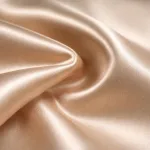
- Silk Brocade gives a rich sheen, often used for dresses and wedding attire. Expect weights over 220 gsm, sometimes up to 400 gsm.
- Metallic brocade uses blended filament yarns for a luminous effect, suitable for accessories or trims.
Color Development and Shade Control
Precision color matters for both fabrics. Brands use Pantone matching, lab dips, and batch control processes to guarantee shade consistency. High-end brocades sometimes require strike-offs for every color–especially when metallic threads are involved.
Cost Analysis: Jacquard vs Brocade Production
Production costs depend on complexity, material choice, and labor. Here is a direct comparison:
- Jacquard woven fabrics: Lower cost per meter due to efficient automated looms; ability to scale up for B2B programs.
- Brocade with metallic/silk motifs: Up to 2–3x higher cost due to extra yarns, slower weave speed, and special finishing.
- MOQ (Minimum Order Quantity) for Jacquards is typically lower than brocade, making Jacquard ideal for activewear brands and promotional programs.
- Brocade can be cost-prohibitive for mass-market garments but perfect for limited editions or bespoke uniforms.
When Cost is Paramount
Brands aiming for affordable yet upscale textures should consider Jacquard. For eye-catching statement pieces, brocade is worth the splurge. Ninghow consults clients on balancing cost and aesthetics; using Jacquard for core items and reserving brocade for accent pieces is a common strategy.
Best Garment Uses: Jacquard vs Brocade
Understanding which clothing styles work best with each fabric makes sourcing decisions straightforward:
Jacquard Applications
- Polo shirts – fine or textured Jacquard blends offer crisp graphics and stable fit.
- Lightweight jackets – Jacquard weaves add body and structure, especially for sports teams or corporate programs.
- Uniforms – durable, colorfast Jacquard stands up to repeated washing and wear, a core value for B2B manufacturing at Ninghow.
- Activewear basics – moisture-wicking poly Jacquard improves comfort.
- Fashion streetwear – complex patterns lend brand identity.
Brocade Applications
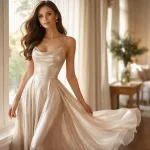
- Evening dresses and gowns – for dramatic, regal appearance.
- Costume and stage wear – brocade’s bold texture catches stage lights.
- Ceremonial jackets and robes – preferred for traditional ceremonies.
- Luxury accessories – bags, scarves, shoes using small brocade panels.
- High-fashion trims – subtle brocade in collars, cuffs, and waistbands.
Quality Control and Testing Standards
Ensuring stability, durability, and color consistency is vital for both Jacquard and brocade production. From inline fabric checks to lab testing on the finished garment, standards play a big role:
- Colorfastness: Color migration and bleed are tested against ISO 105-C06 for home laundering and ASTM D5589 for durability.
- Dimensional stability: Garments undergo wash tests (AATCC 135/150) to verify shrinkage within tolerance—no more than 3% for best-in-class polos.
- Seam strength: Brocade’s thicker construction gets extra attention using ASTM D1683 for seam bust strength.
- Pilling resistance: For high-wear garments, ISO 12945 evaluates surface fuzz.
- Compliance: OEKO-TEX STANDARD 100 certifies both Jacquard and brocade for safe skin contact—essential for uniforms and kids’ apparel.
Decoration and Embellishment: Print vs Jacquard Weave
Brands often choose between printing patterns on plain fabric or weaving motifs with Jacquard. Here’s why Jacquard has the edge for depth and longevity:
- Jacquard weaves resist fading and washing out, unlike surface prints. Patterns are part of the fabric itself.
- Brocade’s raised motifs can be combined with embroidery or heat transfer for special effects on luxury items.
- Screen printing (plastisol, water-based) works well on Jacquard, but half-tones and gradients look crisper on flat-woven Jacquard.
- DTF/DTG prints (direct to film/direct to garment) support personalized small runs, popular for promotional programs.
Handfeel and Branding
Ninghow pays special attention to decoration handfeel—so branding elements stay soft on skin and durable after repeated washing.
Manufacturing and Sourcing Considerations
Choosing the right supplier is essential. Here are critical factors:
Factory Equipment and Craftsmanship
Top-tier factories run advanced Jacquard looms with digital pattern control. Brocade production requires skilled operators for metallic and silk yarn handling. SMV (Standard Minute Value) and line balancing keep costs predictable while meeting high quality standards.
Sustainability in Production
Brands seeking low-impact materials can opt for recycled polyester (rPET) Jacquard or organic cotton for tees and polos. The GOTS (Global Organic Textile Standard) and OEKO-TEX certification remain benchmarks for responsible sourcing and manufacturing.
Jacquard vs Brocade
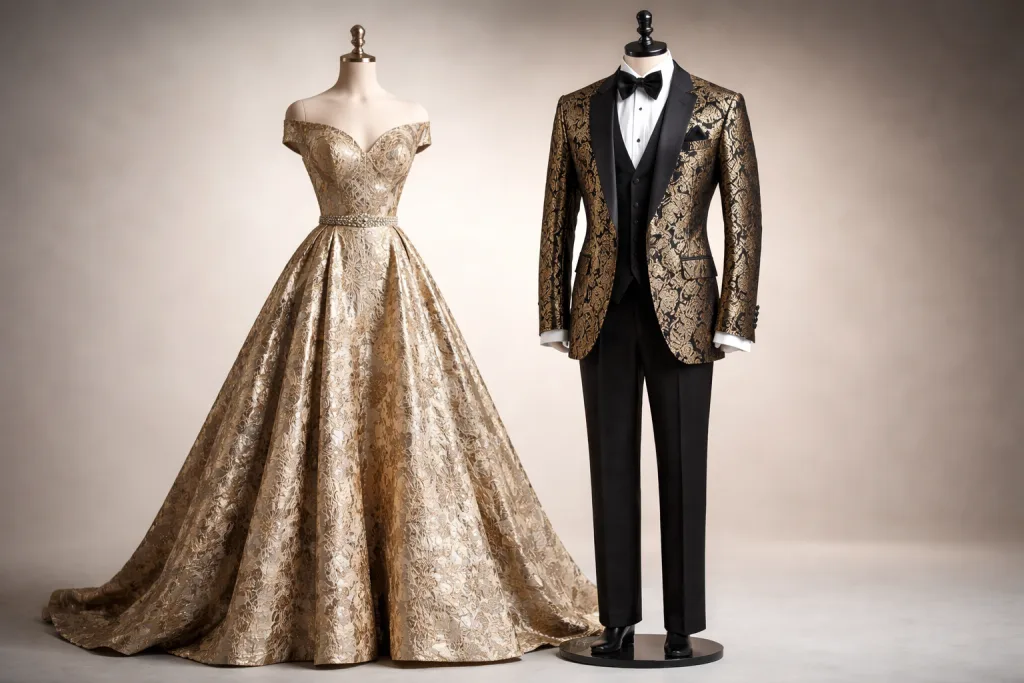
Ultimately, Jacquard and brocade offer distinct beauty through woven technology. Jacquard delivers versatile patterns suitable for everything from daily wear and uniforms to premium streetwear. Brocade stands out in ceremonial, luxury, and statement pieces with its bold, raised motifs. When selecting fabric, brands must weigh the balance between cost, comfort, visual impact, and durability. For reliable and high-quality production—from custom polos to ornate brocade jackets—Ninghow’s expertise helps apparel businesses achieve the desired result with fit consistency and craftsmanship at the heart of every piece.
Frequently Asked Questions
What is the main difference between Jacquard and brocade?
Jacquard refers to the weaving method, allowing intricate patterns, while brocade uses extra weft for raised, often metallic motifs giving a textured appearance.
Which is more expensive—Jacquard or brocade?
Brocade tends to be more expensive due to labor-intensive weaving, use of metallic yarns, and higher GSM compared to standard Jacquard.
Which garments work best with Jacquard fabrics?
Jacquard suits polo shirts, T-shirts, uniforms, jackets, and activewear because of its versatility, comfort, and sharp pattern definition.
What is brocade’s main application in fashion?
Brocade is favored for evening dresses, ceremonial wear, costumes, and luxury accessories because of its dramatic, raised patterns and sheen.
Can Jacquard and brocade be made with sustainable materials?
Yes, both can use organic cotton, recycled polyester, and OEKO-TEX-certified yarns to support sustainable and responsible apparel production.
How does decoration differ on Jacquard vs brocade?
Jacquard patterns are woven in, providing long-lasting color and detail; brocade may combine weaving with embroidery for special effects.
