







Understanding Hoodie vs Sweater
Many people use the terms “hoodie” and “sweater” interchangeably, but these two garments are quite different. Whether you are a fashion buyer, a sports apparel manager, or developing your own brand, knowing their distinctions helps you make better style and sourcing decisions. This guide compares the structure, style, use, and design factors of both hoodies and sweaters, with actionable advice for clothing development.
Structural Differences: Hoodie vs Sweater
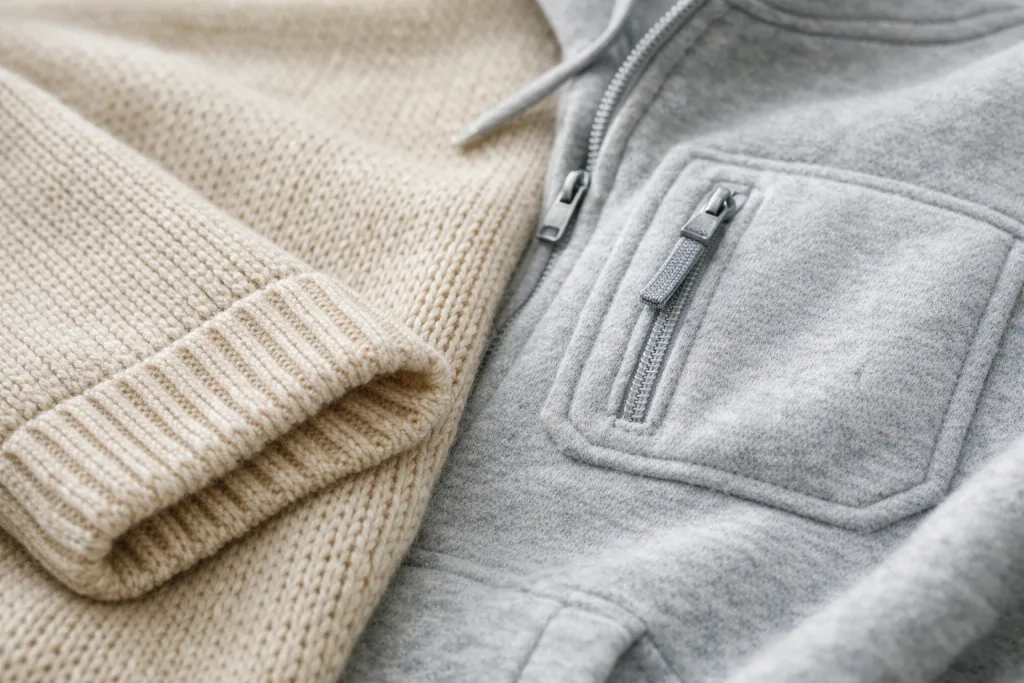
The biggest difference between a hoodie and a sweater is in their construction. A hoodie is defined by its attached hood and often features a front pocket or zipper. Most sweaters lack a hood and usually have cleaner silhouettes, like crewnecks or V-necks.
| Feature | Hoodie | Sweater |
|---|---|---|
| Main distinguishing part | Attached hood | No hood |
| Neckline | Hood with drawstring; sometimes zip | Crew, V-neck, turtleneck |
| Pockets | Kangaroo/front pocket, zip pockets | Usually no pocket |
| Closure | Pullover or zip-front | Pullover style |
| Fabric types | Fleece, French terry, jersey, rPET blends | Wool, cotton, acrylic, blended knits |
| Best GSM range | 280–360 gsm (mid-heavy) | 180–320 gsm (varies by knit/yarn) |
Construction Details
- Hoodie: Constructed using knits like cotton fleece, French terry, or brushed polyester. Often includes ribbed cuffs and hem for shape.
- Sweater: Made with yarns by knitting; can be handknit or machine-knit. Common stitches include jersey, rib, cable, and waffle. Typically finished with a self or ribbed hem and cuffs.
Manufacturing Considerations
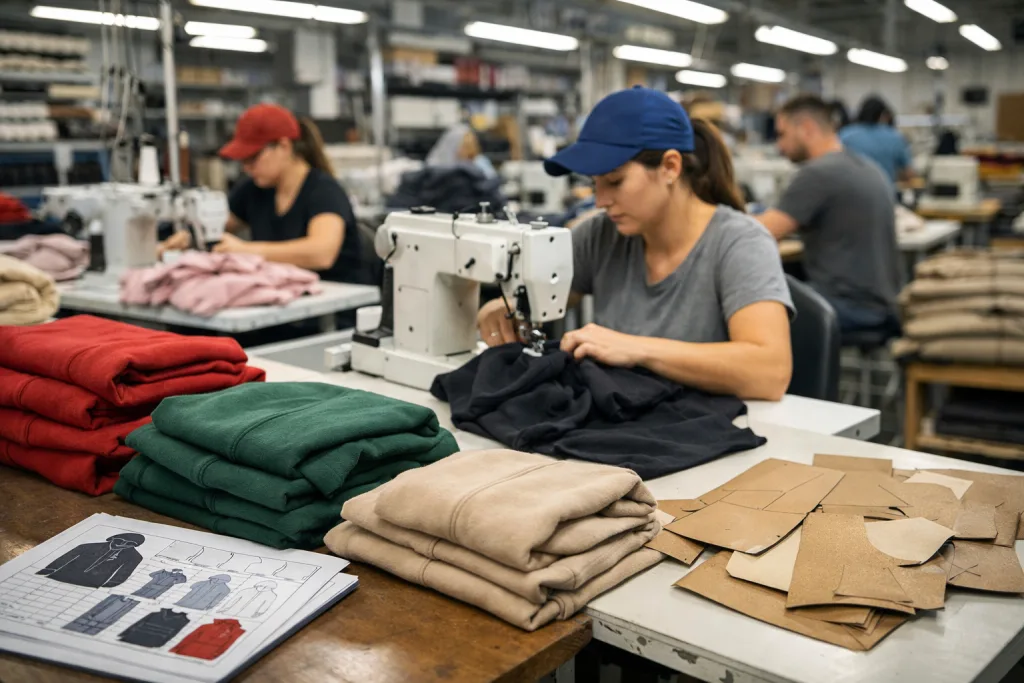
Brands such as Ninghow use different machinery and assembly lines for hoodies and sweaters. Hoodie production involves cutting stable knit fabrics and sewing with coverstitch and overlock (ISO 406/504); sweaters are produced by knitting machines, with emphasis on yarn count and tension. This makes hoodies quicker to scale for mass production, while sweaters require careful knitting calibration for fit and feel.
Style and Fit: Differences in Vibe and Shape
Hoodies communicate a laid-back, athletic, or streetwear character, while sweaters lean more classic, smart, or preppy. A large part of these traits come from silhouette, detail, and finishing touches.
Hoodie Styles
- Pullover Hoodie: A classic, often with kangaroo pocket.
- Zip-Up Hoodie: Easy to layer, versatile for temperature changes.
- Oversized Hoodie: Trending in streetwear for its comfort and bold proportions.
Sweater Styles
- Crewneck Sweater: Understated for layering or solo wear.
- V-Neck Sweater: Pairs well with collared shirts for a refined look.
- Turtleneck Sweater: Offers warmth, often seen in fall/winter collections.
Fit and Sizing
Hoodies typically have a relaxed fit, with dropped shoulders and extra room for activity. Sweaters can be fitted, slim, or relaxed, though most classic designs favor a neater silhouette. Sleeve construction also differs: hoodies often use set-in sleeves for mobility, while sweaters might feature fully fashioned or raglan sleeve assembly for better drape.
Fabric and Performance: Comfort in Context
Material choice defines comfort, durability, and seasonality for hoodies and sweaters. Each is suited to different scenarios and wear requirements.
Hoodie Fabrics
- Fleece (cotton or poly blends): Soft, insulating, and ideal for cool weather.
- French Terry: Loopback knit for midweight warmth with less bulk.
- Performance Knits: rPET, elastane blends for stretch, wicking, and activewear properties.
Sweater Fabrics
- Wool and Merino: Superior warmth; can be fine-gauge (dressy) or chunky (casual).
- Cotton yarns: Breathable for milder climates, easy to wash.
- Acrylic or Blends: Cost-effective, colorfast, lower pilling risk for bulk production.
Performance Finishes
Hoodies often use pre-shrink, anti-pilling, or moisture-wicking treatments. Brands like Ninghow monitor fabric stability with wash and dimensional change testing (AATCC 135), adjusting GSM for final use needs. Sweaters may get anti-pilling or softeners to improve handfeel or colorfastness for darker yarns (ISO 105-C06/X12 tested).
Functional Use Cases: When to Choose a Hoodie or Sweater
Choosing between a hoodie and a sweater depends on the wearer’s activities, dress code, and climate. Both pieces have strengths in different situations.
- Active/Sport Use: Hoodies excel in warm-up, gym, travel, and sports lifestyle merchandise. Sweat-wicking blends add performance value.
- Streetwear/Youth Fashion: Oversized or graphic hoodies are central to youth and street style. Print or embroidery options expand creative potential.
- Office/Preppy Dress: Sweaters, especially crew and V-necks in merino or fine cotton, offer smart yet approachable style. Easy to layer over shirts or Oxford cloth.
- Casual Underlayer: Lightweight sweaters double as transitional layers in spring or fall. Hoodies provide casual warmth and informal coverage for outdoors.
- Promotional/Campaigns: Hoodies serve well for branded events or team orders due to print area and matte finish; sweaters offer premium impressions for corporate gifting.
Expert Take: “For versatile mass-market appeal, invest in high-quality fleece hoodies and classic cotton sweaters. Focus on consistent sizing and finish so every piece delivers comfort and long wear.”
Brand Development Tips: Hoodie vs Sweater for Your Collection
Deciding what to launch in your next line? Consider these factors.
Target Market & Brand Identity
If your customer values sport, mobility, and informality, start with hoodies. If your brand speaks to classic, collegiate, or office style, lead with sweaters. Many brands find success offering both, with seasonal color updates and limited-edition collabs.
MOQ, Cost, and Lead Time
- Hoodies: MOQ of 300 units is standard at Ninghow for custom colors, with a lead time of 35–45 days. Decoration (screen print, embroidery) can affect cost and time.
- Sweaters: Require longer setup due to yarn sourcing and knitting. MOQ and timing are higher, since knitting lines are less flexible than cut-and-sew.
Fit and Quality
Spec out graded size sets with testing for shrinkage, seam strength (ASTM D1683), and pilling. For hoodies, test pocket seams and drawstrings; for sweaters, check gauge regularity and recovery.
Sustainable Options
Brands can stand out using organic cotton, GOTS-certified yarns, or recycled poly blends. This trend grows in both hoodies and sweaters, driving appeal for eco-aware buyers.
Designing for Longevity: Materials, Decoration, and Compliance
Longevity comes from fabric choice and finishing, but also from compliance and quality control.
Material Selection
Choose combed cotton for a smooth, strong hoodie base (20s or 24s). For sweaters, select long-staple cotton or fine Merino wool to reduce pilling and fuzz, especially at heavy contact points. Yarns should be lab-dipped and tested for shade consistency before bulk knitting.
Decoration Methods
- Hoodies: Best decorated with screen print (water-based or plastisol), embroidery, DTG, or heat transfer. Large flat areas allow bold graphics. Screen print provides affordable branding; embroidery offers a premium touch but may affect fabric drape.
- Sweaters: Can be intarsia-knit (patterned during knitting), embroidered, or finished with applique. Direct prints are less stable because of the yarn’s texture and stretch.
Testing and Compliance
Quality-controlled brands test for colorfastness, stability, and harmful substances. This includes standards like OEKO-TEX STANDARD 100, REACH chemical compliance, and U.S. Prop. 65 for trims and inks. Wash, stretch, and wear-testing prevent customer returns. Ninghow routinely checks both hoodie and sweater lines against these standards.
Case Studies: Hoodie vs Sweater in Real Brands
Several activewear and streetwear brands reveal the power of getting hoodie vs sweater strategy right.
Sports Teams and Promotional Apparel
Teams regularly choose custom hoodies for players and fans. Polyester-cotton blends with vibrant screen prints are common, and production focuses on color durability, print area, and cost-effective mass orders.
Men’s Lifestyle Brands
Many modern brands use sweaters in fine yarns and staple shades to elevate casual looks. Demand for sustainable yarns is rising, as is interest in performance sweaters that combine moisture-wicking and classic style for long office days.
Streetwear Collections
Hoodies dominate in drop culture, driven by oversized fits, unique dye techniques (tie-dye, pigment wash), and bold graphics. Limited runs create demand; brands emphasize custom details like woven labels and unique packaging, all done in low-MOQ at trusted factories.
Future Trends: Hoodie vs Sweater in Apparel Development
Hoodies and sweaters continually evolve. In performance apparel, seamless sweater knits and hoodies with 4-way stretch are expanding. Sustainable and recycled fabrics gain market share every year.
Technological Advancements
- Adoption of digital and all-over sublimation print for polyester hoodies.
- Automation of sweater knitting (fully fashioned) for improved sizing and less waste.
- Implementation of smart wearables, such as heating panels in hoodies and sweaters for winter sports or outdoor workwear.
Eco-Friendly Approaches
Brands use LCA (life-cycle assessment) to compare carbon impact for various hoodie and sweater constructions. Recycled cotton/poly blends, natural dyes, and waterless finishing techniques are now standard at forward-thinking manufacturers.
Hoodie vs Sweater

Summing up, hoodies and sweaters each shine in specific scenarios. For informal, versatile style or athletic needs, hoodies deliver comfort and branding options. For elevated, timeless looks or business casual, sweaters offer elegance and warmth. Apparel developers should balance fabric choice, finish, fit, and compliance to succeed in both categories. Ninghow supports brands by offering both hoodie and sweater production, emphasizing consistency in sizing, finishing, and sustainability throughout the collection life cycle.
Frequently Asked Questions
What is the main difference between a hoodie and a sweater?
A hoodie always has an attached hood and usually a pocket, while a sweater has no hood and comes in styles like crewneck, V-neck, or turtleneck.
Which is warmer, a hoodie or a sweater?
Warmth depends on material and thickness. Fleece hoodies and chunky wool sweaters both offer strong warmth, but material weight (GSM) matters most.
When should I choose a hoodie over a sweater?
Pick a hoodie for informal events, activewear, team gear, streetwear, or outdoor layering, especially if you want branding or need a hood.
Are hoodies or sweaters better for office or school uniforms?
Sweaters are usually better for office, classroom, or formal uniforms, while hoodies suit team sports or student leisure wear.
How should brands decide between producing hoodies and sweaters?
Base your choice on your brand identity, customer lifestyle, season, desired price point, and MOQ flexibility. Many brands offer both to broaden appeal.
What are the best fabrics for quality hoodies and sweaters?
For hoodies: combed cotton fleece or poly blends (280–360 gsm). For sweaters: fine merino, cotton yarns, or stable blends with anti-pilling finishes.
