

Embroidery vs Puff Print: Which Is Better for Hoodies?
Choosing between embroidery and puff print for hoodies can shape how your garments feel, last, and look. Both styles bring unique benefits, but the right choice depends on your brand’s needs and your customers’ expectations. This deep dive explores how each technique performs in appearance, cost, and washability—crucial factors for every clothing label.
Understanding Embroidery for Hoodies
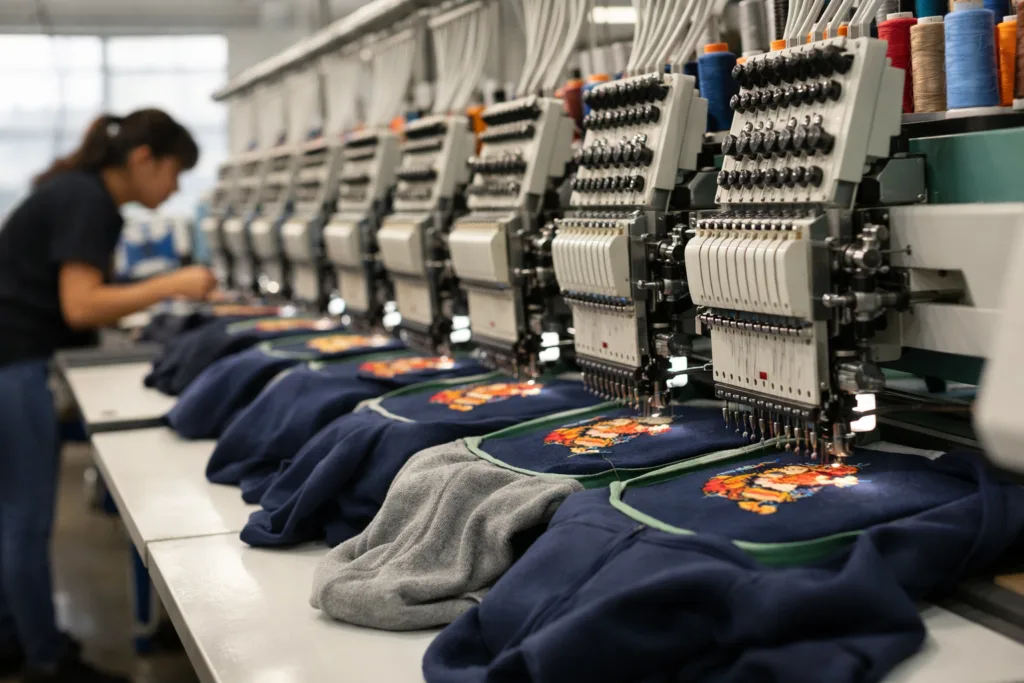
Embroidery is a decoration method where colored threads are stitched directly onto fabric, forming textured logos or designs. Most hoodies—especially premium or teamwear pieces—use computerized embroidery for clean, repeatable results. A robust embroidery setup includes digitized artwork, polyester or rayon threads, multi-head embroidery machines, and strict quality checks.
Visual Effect & Texture
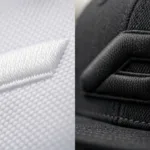
Embroidery produces a detailed, tactile design that rises neatly above the hoodie’s surface. The thread’s sheen adds a rich visual layer unmatched by most surface prints. Typical stitch types are satin (for outlines and letters), fill (for blocks), and chain. Thicker graphics require more stitches and may feel heavier. Designs look consistent across colors and fabric blends—including cotton, fleece, and polyester knits.
Cost Breakdown
Embroidery costs scale with stitch count, logo size, and run length. Setup requires digitized files, which add one-time fees. For most hoodies, embroidery may cost $1.50–$4.00 per unit (excluding digitizing), but bulk orders over 500 see sharper rates. Ninghow’s production lines, for instance, use 6–12-head embroidery machines for line balancing, which boosts efficiency and consistency.
Wash & Wear Durability
Embroidery outlasts most other methods. Quality threads hold color for 50+ machine washes if proper care is used. Stitch patterns resist abrasion, and the design won’t crack or peel as long as the backing is strong and seam stress is minimized.
- Best for: Corporate logos, heavy-duty and teamwear, timeless branding, small or multi-color designs.
- Downside: Heavier designs can feel stiff; fine detail is limited by thread thickness.
What Is Puff Print for Hoodies?
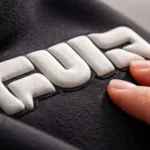
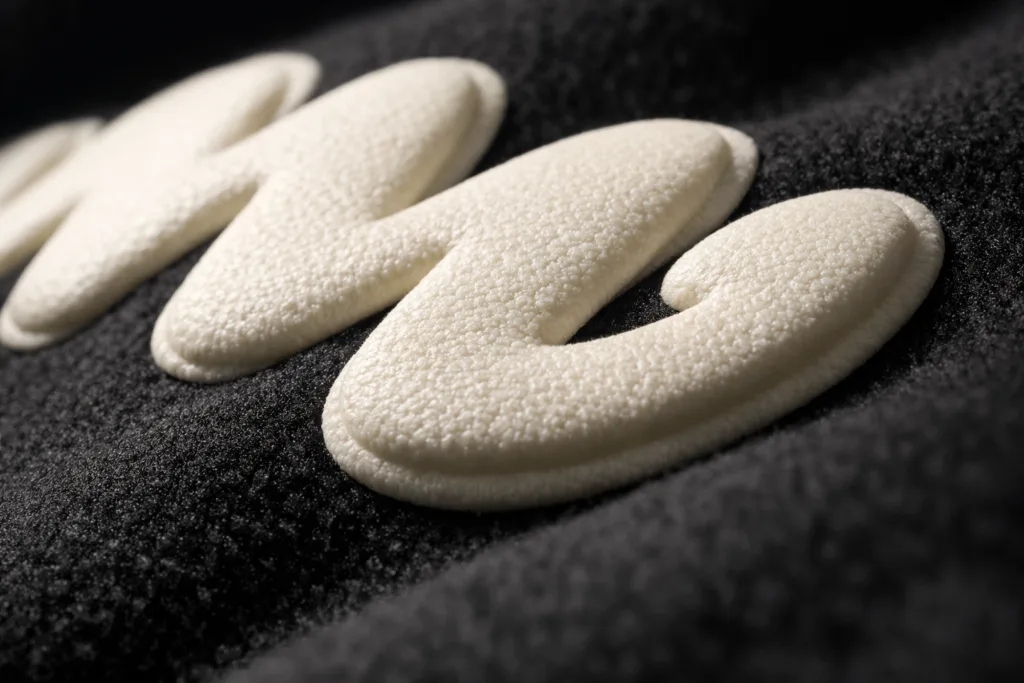
Puff print is a 3D screen printing technique that creates raised, rubbery designs by expanding print ink with a heat reaction. This results in soft, tactile shapes that feel springy to the touch. Puff print is a favorite among streetwear brands seeking eye-grabbing, modern graphics on cotton or blended hoodies.
Visual Impact
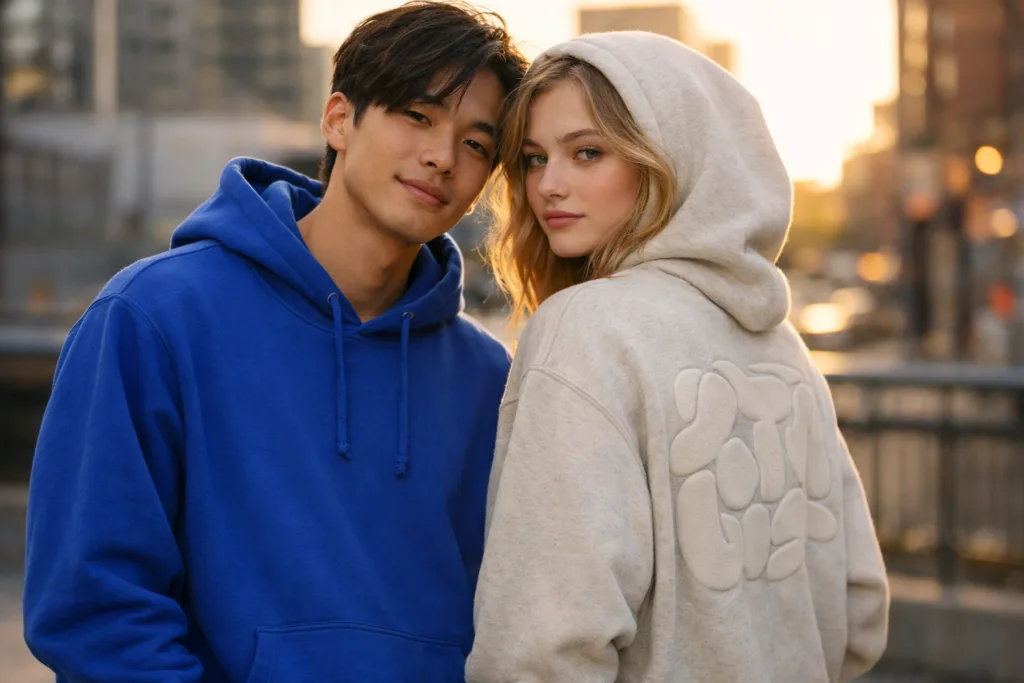
Puff prints look bold, playful, and dimensional. The print sits up to 1–2 mm above the fabric and can mimic embroidery’s tactile presence at a fraction of the density. Solid color areas stand out most. Small text or fine detail may look blurry due to ink expansion.
Process & Materials
Puff inks are mixed with a heat-reactive additive, then screen printed onto pre-cut hoodie panels or finished garments. Flash dryers or curing tunnels heat the ink, causing it to bubble up. Typical fabric choices include heavyweight ring-spun cotton or cotton/poly fleece (300–360 gsm) for best adhesion. Quality puff printing controls ink thickness and evenness through mesh count, squeegee angle, and precise temperature handling.
Cost Considerations
Puff print setups involve screen fees and ink mixing but are more budget-friendly for larger graphics or thick applications. Prices range from $1.00–$2.50 per hoodie (excluding screen setup), with economies of scale for batch runs. Custom color matching (such as Pantone) and large design placements may add cost or extend lead time.
Washability & Durability
Puff print is less durable than embroidery. Aggressive washing or high heat can flatten or crack the design, especially if the ink was over-cured or applied to loose fabric. Proper wash methods (gentle cycle, low heat dry) preserve puffiness for 20–40 washes; however, heavy-duty use will wear it sooner than thread-based embroidery.
- Best for: Statement graphics, streetwear brands, bold logos, or creative shapes and outlines.
- Downside: Fine detail is tricky; puff can lose 3D structure with harsh washing or stretch.
Comparing Embroidery and Puff Print Hoodies
This comparison table breaks down each method by how it looks, costs, and lasts in real wear—focusing on the needs of brands sourcing from top factories like Ninghow.
| Feature | Embroidery | Puff Print |
|---|---|---|
| Visual Texture | Threaded, detailed, classic | Rubbery, soft, bold |
| Color Range | Up to 15/thread, sharp lines | Solid inks, Pantone match possible |
| Best on Fabric | Fleece, cotton, blends | Cotton, cotton/poly, heavyweight fleece |
| Unit Cost | $1.50–$4 ($20–50 setup) | $1.00–$2.50 ($15–$35 screen) |
| MOQ | 50+ is common | 50+ is common |
| Washability | 50+ washes, stable | 20–40 washes, can flatten/crack |
| Design Limits | Fine lines ≥2 mm; heavy fills | No fine detail ≤2 mm; large/bold only |
| Suitability | Luxury, corporate, teams, classic looks | Streetwear, sports, youth, trendy styles |
Performance and Use Case Scenarios
Choosing the right method depends on brand identity and intended use. Here’s how each serves specific purposes in hoodie manufacturing:
High-Traffic Brands & Uniforms
For workwear, school spirit wear, and corporate promotional gear, embroidery brings rigorous longevity. The thread resists peeling, color migration, and frequent washing. For luxury streetwear, raised embroidery signals premium quality.
Fashion Forward & Seasonal Lines
Puff print attracts streetwear fans and youthful audiences. Its playful look fits graphic-heavy capsule drops, collaborations, and short-run designs, where visual impact is everything.
- Heavy Duty: Embroidery for gym staff, schools, or merchandising, where garments see weekly washes.
- Fast Fashion: Puff print delivers novelty with creative shapes for shifting trends.
Manufacturing Details: Embroidery & Puff Print Workflow
The choice impacts every production step—from artwork setup to finishing quality checks. Factories like Ninghow guide B2B partners through each stage, ensuring durability and handfeel match project specs.
Embroidery Process Snapshot
- Artwork digitization—design files are converted to stitch data (DST or EMB formats).
- Graded size sets—ensures logo scale fits every hoodie size.
- Cutting/stabilizer fit—backings stabilize stitches; rib knits receive extra care to prevent stretch distortion.
- In-line QC—checks color, thread tension, density, puckering, and alignment before washing.
Puff Print Production Steps
- Screen prep & mesh selection—thicker mesh for raised ink, fine mesh for details.
- Ink mixing—precise ratios for puff agents based on graphic thickness.
- Pre-print fabric prep—pre-shrinking/crop if base fabric is soft; anti-migration layers for poly blends.
- Drying & quality check—ensure even puff, no collapsed edges, and adhesion rated per ASTM tests where needed.
Expert Takeaway: “Embroidery remains king for durability on high-touch apparel. Puff print sparks buzz but needs careful handling to prevent flattening.”
Color, Fit, and Sustainability Considerations
Both techniques support bold color but behave differently in mass production. Embroidery uses standard thread cards or custom shades matched via Pantone with shade bands. Puff inks are hand-mixed and can show subtle shade shifts if process control wavers.
Fit Impact
Embroidery adds minimal bulk but can stiffen thin hoodie fabric. To limit distortion, proper weight-to-design ratio and even tensioning are vital. Puff print, due to raised ink, is best used away from rib trims or stress zones to prevent ink cracking.
Sustainable Sourcing
- Certified organic threads or water-based puff inks lower environmental impact.
- Ninghow prioritizes OEKO-TEX STANDARD 100 yarns and low-impact inks on client request.
- Efficient line balancing, fabric utilization, and batch color approvals limit waste.
Puff Print Hoodie Quality Control & Compliance
Quality for both decoration methods is governed by global standards. Embroidery hoodies may be tested for colorfastness (ISO 105-C06, AATCC 61), seam stretch (ASTM D1683), and durability after wash (AATCC 135). Puff print hoodies need checks for adhesion (tape test), wash stability, and color migration—plus anti-pilling tests if blended fleece is used.
Key Points in QC Programs
- Spec tables for stitch count, logo size, density, and color tolerance.
- Needle change logs, batch testing, defect control (AQL sampling, ANSI/ASQ Z1.4).
- BSCI/WRAP/SEDEX-compliant production and restricted chemical lists for inks and dyes.
Puff Print Hoodie
The modern puff print hoodie speaks to bold, tactile style. Use heavyweight fleece—often 300–360 gsm—for structure, and select chunky, high-contrast art for best effect. Screen print shops use four- to eight-color carousels for complex designs and flash dryers for fast, even curing. While puff print draws attention for launches and seasonal drops, brands must educate buyers on gentle care to maximize life. Puff print’s cost edge can help tight-margin campaigns or event-specific merchandise.
Embroidery
Embroidery transforms ordinary hoodies into premium products. Double or triple-needle lockstitch (ISO 301/401) secures the backing. Modern embroidery handles small lettering and large logos reliably, as long as designs honor minimum thickness and spacing. Embroidered hoodies command higher perceived value, align with traditions, and ensure branding stands out for years—not months. Bigger orders allow custom trims, recycled threads, or GOTS-certified yarns for truly eco-friendly storylines.
How to Choose the Right Decoration Method
Here’s a practical framework for B2B buyers, designers, or teams. Pick embroidery when:
- Long-term durability matters
- Logos or graphics are classic (clean lines, solid fills, or type)
- The target user expects a premium finish
Pick puff print when:
- Bold, eye-catching, or playful graphics drive sales
- Lower price or fast turns are key
- The style is youth/streetwear or event-driven
Final Advice
Order pre-production samples. Test for color, handfeel, and finish before launching bulk runs. An expert garment manufacturer like Ninghow ensures technical fit, lab testing, and strict QC from the first tech pack to the last carton on the pallet.
Frequently Asked Questions
Which lasts longer, embroidery or puff print on hoodies?
Embroidery lasts longer than puff print. Properly stitched embroidery survives 50+ washes, while puff print may flatten or crack after 20–40 washes if not cared for gently.
Is embroidery more expensive than puff print for hoodies?
Embroidery is usually more expensive per unit, especially for large, high-stitch-count logos. Puff print costs less for bold, large designs and is more affordable for big runs.
Does puff print suit all hoodie fabrics?
Puff print works best on heavyweight cotton or cotton/poly fleece with smooth surfaces. It may not adhere well to textured or lightweight fabrics, and the puff effect can vary by blend.
Can fine details be achieved with puff print?
Puff print is not suitable for very fine details. Small text and thin lines may blur due to ink expansion during the curing process. Embroidery handles crisp detail better in these cases.
How should I care for a puff print hoodie?
Turn the hoodie inside out, wash with gentle detergent, and avoid high heat when drying. Harsh cycles, bleach, or hot drying can cause puff print to crack or lose dimensional effect quickly.
Are embroidered hoodies more eco-friendly than puff prints?
Embroidered hoodies can be more eco-friendly when made with recycled or certified organic threads. Puff print inks vary; water-based options are greener, but traditional plastisols are less sustainable.
