
Types of Embroidery Stitches Explained
Embroidery has been decorating fabrics for centuries. Each stitch adds texture, detail, or structure to clothing and home textiles. Mastering different embroidery stitches types helps designers, brands, and manufacturers create unique styles and finishes. This guide breaks down the most common embroidery stitches, reveals their best fabric matches, and explains where each shines.
Understanding Embroidery Stitches
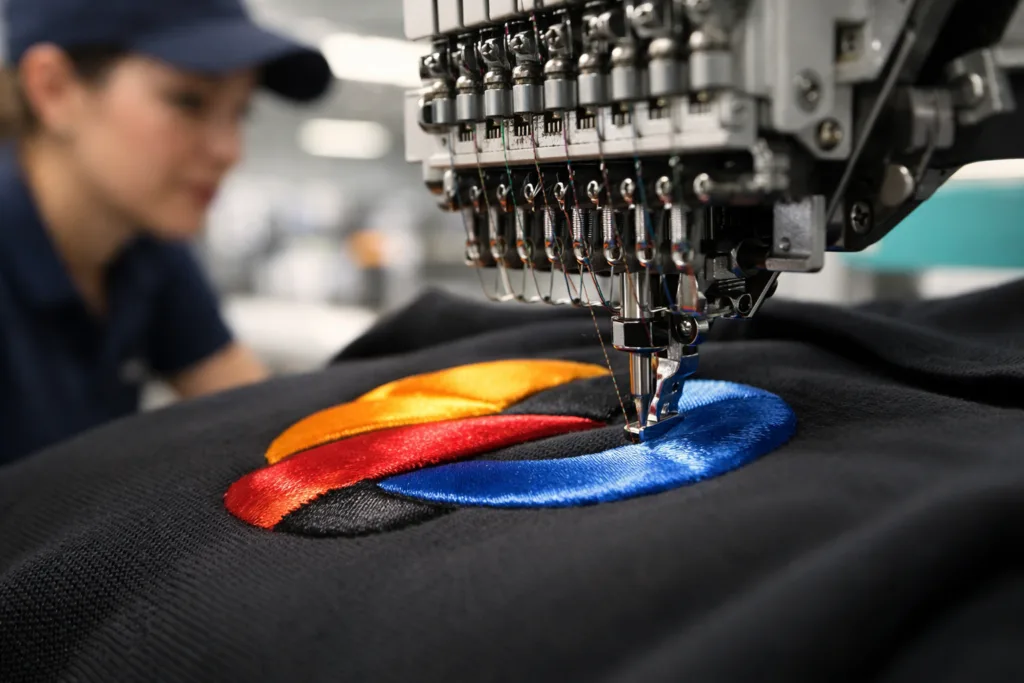
An embroidery stitch is a single movement of needle and thread through fabric, creating a specific shape or effect. The choice of stitch impacts the look, feel, and durability of the finished piece. Skilled craftspeople and manufacturers like Ninghow use precise stitch techniques to achieve quality and consistency in every run—from promotional polos to streetwear hoodies.
Classifying Embroidery Stitches Types
Embroidery stitches fall into three main groups based on their appearance and use:
- Outline or linear stitches – follow lines to create borders and edges.
- Filling stitches – fill larger spaces with color or texture.
- Decorative or specialty stitches – add unique shapes, details, or texture.
Table: Key Embroidery Stitch Types vs. Features & Best Fabrics
| Stitch Type | Features | Best Use | Ideal Fabrics |
|---|---|---|---|
| Running Stitch | Simple, quick, straight or curved lines | Outlines, detail, basting | Lightweight cotton, linen, blends |
| Backstitch | Strong, continuous line | Outlining, lettering | Medium-weight cotton, poplin |
| Chain Stitch | Looped, textured, decorative | Borders, motifs | Piqué, jersey, denim |
| Satin Stitch | Solid, shiny, smooth fill | Logos, monograms | Twills, poplin, fleece |
| French Knot | Small, raised “knot” | Flowers, eyes, accents | Aida, canvas, sturdy cottons |
| Couching | Secures thick thread/yarn | Bold lines, metallics | Velvet, felt, wool |
| Feather Stitch | Open, feathery branches | Borders, delicate fills | Lawn, voile, silk |
| Cross Stitch | Boxed X pattern | Patterns, geometric fills | Aida, even-weave cotton |
Essential Outline Embroidery Stitches
Running Stitch
The running stitch is the backbone of outline embroidery. It creates dashed or continuous lines, great for borders and guiding shapes. This stitch works best on lightweight cotton, linen, or blends, and adapts easily for both hand and machine work. Running stitches also help in quilting and temporary basting during garment assembly.
Backstitch
Backstitch forms a strong, seamless line. Each new stitch starts behind the previous one, locking threads and boosting durability—essential for sharp outlines in text or detailed images. This stitch stands up well to medium-weight fabrics like poplins and tightly woven knits, making it favored for uniforms, patches, and monograms.
Straight Stitch (Split Variation)
Straight stitch is as it sounds: a single movement resulting in a straight dash. When “split,” the needle pierces the thread on return, doubling thickness and creating a textured effect that pops on pique knits or brushed fleece—common in sports and leisure garments.
Filling Embroidery Stitches for Area Coverage
Satin Stitch
Satin stitch covers shapes with smooth, glossy lines of thread. Frequently used for lettering, logos, and bold highlights, especially on corporate polos or athletic wear. Thread tension and spacing must be precise for even coverage. Twill, poplin, and stable fleece provide a good base, supporting dense stitches and showing off sheen.
Long and Short Stitch
This shading technique uses stitches of different lengths to blend colors and create depth—perfect for realistic flowers and gradients. Works best on tightly woven fabrics, such as combed cotton or organic modal (a type of soft, eco-friendly viscose). The backing cloth must be sturdy to prevent puckering, so manufacturers often use stabilizers during production.
Fill Stitch (Tatami/Step Stitches)
On commercial embroidery machines, fill stitches (sometimes called “tatami” or “step” stitches) create solid areas of color or texture. The rows zigzag to fill space with consistent density and no gaps. These are seen in badge production, sportswear team crests, and large promotional designs. Base fabrics like jersey, poplin, or cotton-poly blends hold up well to dense stitching.
Decorative and Specialty Stitches
Chain Stitch
Chain stitch forms interlinked loops resembling a chain. It adds a tactile, raised effect to borders and motifs. Traditionally used in folk embroidery and modern streetwear for bold outlines or script. Sturdier knits like pique and denim support the thicker threads often used.
French Knot
This stitch creates small, raised dots. It’s ideal for adding texture, like flower centers or eyes. French knots are best worked on stable, slightly coarse fabrics—Aida (cross-stitch fabric), canvas, or medium-weight cotton that won’t let the knot sink. Factories use carefully calibrated bobbin tension to keep knots consistent during larger runs.
Couching
Couching lays a thicker thread or yarn on the fabric’s surface. A second, finer thread tacks it down in intervals, creating bold, decorative lines. Metallic or specialty threads often appear in this style, suited for rich velvets, dense felt, and wool blends commonly used in formalwear or ornate trims.
Feather Stitch
Feather stitch produces open, branch-like lines. It’s an elegant choice for cuffs, hem finishes, or decorative seams on lightweight, drapey fabrics such as silk, voile, or lawn (a fine cotton). This stitch is gentle on delicate bases, preventing puckering and distortion.
Cross Stitch
Cross stitch builds a uniform, X-shaped grid—popular for geometric designs and folk motifs. It’s precise, so even-weave fabrics such as Aida and high-thread-count cotton are best. Manufacturers of team gear and accessories use cross stitch for crisp, bold logos or number plates.
Embroidery Stitches Types
The main embroidery stitches types can be grouped by both look and technique. Some deliver sharp lines, others soft fills or tactile details. Here’s how to match common and specialty stitches to both fabrics and end uses in apparel manufacturing:
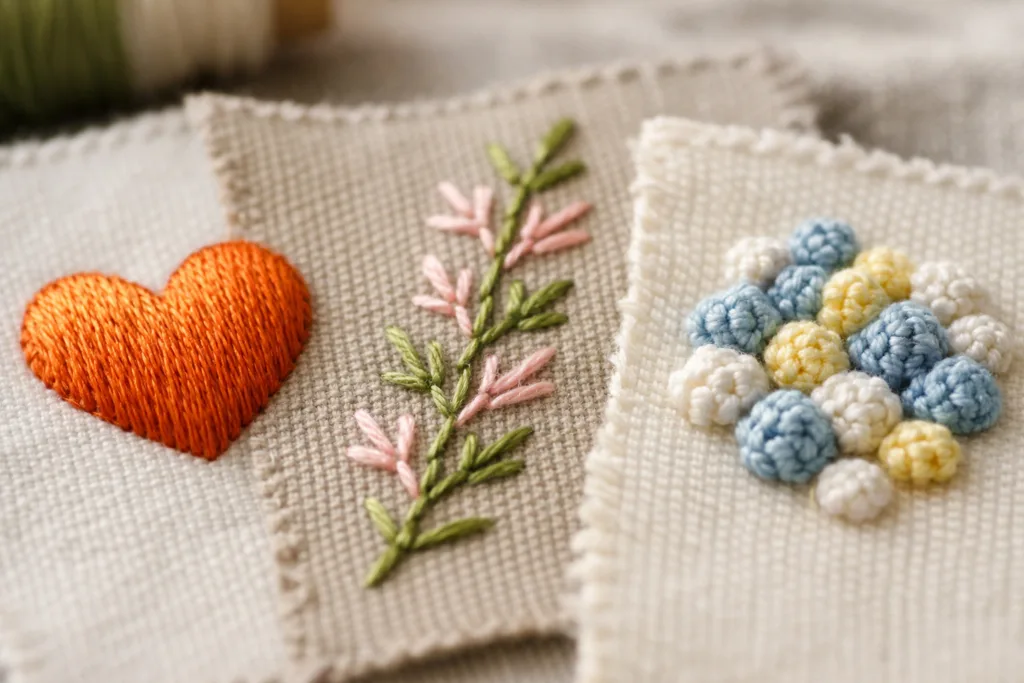
- For polos and knits: Chain stitch, satin stitch, split straight stitch
- For T-shirts, sweatshirts, hoodies: Backstitch, fill stitch, couching, French knot
- For uniforms or workwear: Dense satin stitch, backstitch, fill stitch
- For silk scarves and dresses: Feather, running, and fine backstitch
- For heavy-duty items (jackets, bags): Couching, chain, bold fill stitch
When working with sustainable fabrics—like organic combed cotton, modal, or recycled polyester (rPET)—it’s important to balance design ambition with material limits. Fabrics with stretch need stabilizers. Open-weave or lightweight bases require fine, less dense stitches for sharp, long-lasting results.
Matching Stitches to Fabric Types
Not every embroidery stitch suits every fabric. Manufacturers run tests and adjust tension, needle size, and thread to avoid puckering, distortion, or weak results. Here are practical tips from Ninghow’s quality control lab:
- Lightweight Cottons & Blends: Best for running, back, feather, and chain stitches. Use fine needles (size 75/11) and light, twisted embroidery thread for smooth lines.
- Knit Fabrics (Jersey, Piqué): Support chain, satin, and split stitches, but stabilize well to prevent stretching under dense embroidery zones.
- Heavyweight (Fleece, Denim, Canvas): Ideal for couching, fill, satin, and raised decorative stitches. Medium to heavy needles (up to size 90/14) prevent breakage.
- Synthetics & Blends (Polyester, rPET): Handle high-speed fill or satin stitches; colorfast polyester thread avoids fading and bleeding after wash testing (per colorfastness standards such as ISO 105-C06).
Embroidery for Branding and Durability
Clothing brands choose stitch type based on the look they want and how the garment will be used. For example, sports polos need chain or satin stitches that handle movement, repeated washing, and abrasion. Lightweight fashion or resort pieces rely on running or feather stitches, adding detail without stiffening the fabric.
Ninghow’s approach prioritizes lab dips for thread color control, precision engineering of stitch type per tech pack instructions, and in-process quality checks (including puckering, skew, and seam strength per ASTM D1683). For bulk orders, AQL spot checks and stability testing catch flaws before shipping—ensuring branded embroidery looks crisp, vivid, and consistent from first sample to top-of-production (TOP) lot.
Embroidery Finishes and Compliance
Modern embroidery isn’t just about thread and technique. Clothing brands and OEM/ODM suppliers balance fashion with performance and compliance needs—including OEKO-TEX STANDARD 100 limits on harmful substances, and durability requirements for uniforms or promotional items destined for high wear.
- Performance finishes: Moisture-wicking threads, anti-odor treatments.
- Sustainability: GOTS-certified organic threads, recycled content, reduced water dyes for Pantone precision in embroidery colors.
- Testing: Wash, abrasion, and seam pull tests to maintain design and color over time (ISO and AATCC test methods).
Embroidery is also adapting, with digital patterning and DTF (direct-to-film) options offering new surface effects on sportswear and team programs.
Quality Control in Embroidery Stitch Production
Consistent embroidery requires discipline from pattern to finishing. For ODM/OEM projects, expert factories use:
- Tech packs & digitizing: Clear artwork, graded size approvals, and compensated stitch paths for stretch or shrinkage.
- Lab dips & thread matching: To maintain color accuracy across production runs.
- Automatic & manual cutting: Controlled grainlines for balanced placement, avoiding fabric distortion.
- Sewing line management: Balancing operators and stitch types to reduce SMV (Standard Minute Value) and improve delivery timelines.
- End-of-line QC: Checking for missed stitches, puckering, color variation, and securing threads to avoid unraveling in use.
Real-World Applications and Trends
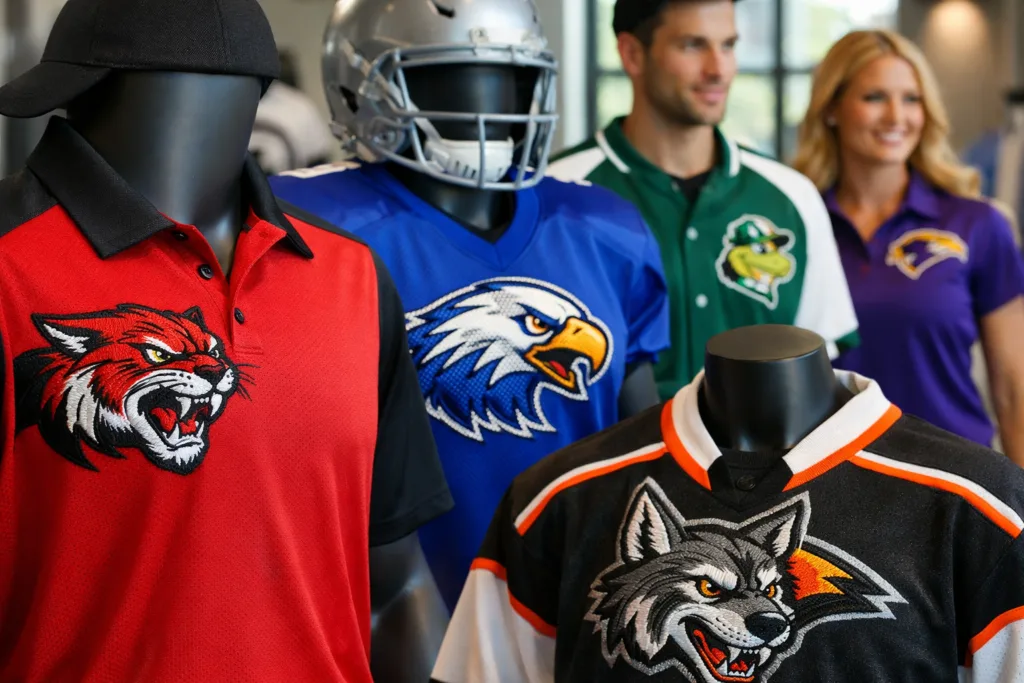
Embroidery stitches types appear across uniforms, sports teamwear, streetwear, resort goods, and corporate gifting programs. Today’s clients want high-speed sampling, color consistency, and lasting, eco-friendly results. ODMs like Ninghow help B2B buyers choose:
- The right base fabric with appropriate GSM (e.g., 210 gsm organic combed cotton for logo polos, 320 gsm cotton-poly fleece for sweatshirts).
- The optimal stitch type for the design, balancing handfeel and durability.
- The appropriate thread and finish for washfastness and compliance—all tested before shipment.
Sustainable options—such as OEKO-TEX-certified threads and GOTS cottons—gain popularity with global brands, ensuring embroidery feels as good as it looks, wash after wash.
Frequently Asked Questions
What are the most common embroidery stitches types?
Common types include running, back, chain, satin, cross, French knot, couching, and feather stitches—each delivers a distinct look and suits different fabrics.
Which fabrics work best for embroidery stitches?
Cotton, linen, poplin, jersey, pique, fleece, denim, and even-weave fabrics support embroidery well, each matched to certain stitches for best outcomes.
How do I prevent puckering in embroidered garments?
Use the correct backing, stabilize stretch fabrics, adjust thread tension, and test stitch density on sample swatches before bulk production starts.
Can embroidery stitches be used on synthetic fabrics?
Yes, most embroidery stitches work on synthetics like polyester, especially with proper stabilizers and colorfast thread that withstand repeated washing.
Is machine embroidery suitable for all stitch types?
Machines handle fill, satin, chain, and back stitches well but struggle with raised or specialty hand stitches like French knots and couching.
How does Ninghow ensure embroidery quality?
Ninghow uses tech packs, color lab dips, in-line and end-of-line QC, AQL checks, and certified threads to guarantee consistent, durable results every time.
