

Understanding Custom Polos
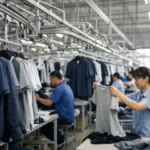
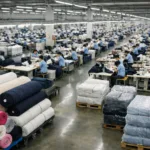
Custom polos are shirts designed and produced specifically to match your exact brand needs. This process often starts with a tech pack—a blueprint including sizing, materials, colors, trims, and logos. Factories like Ninghow follow these files to deliver quality and consistency, working with you on everything from pattern grading to the final wash test.
Fabric and Material Choices
Choosing custom gives you control over base fabrics: combed cotton (20s, 24s, 32s), organic or recycled fibers, polyester blends for stretch, or technical knits for breathability. Buyers can select GSM (gram per square meter)—most polos range between 180–220gsm for balanced comfort and durability. Finish options like moisture-wicking or anti-odor upgrading can meet athletic or outdoor program needs.
Color Accuracy and Branding
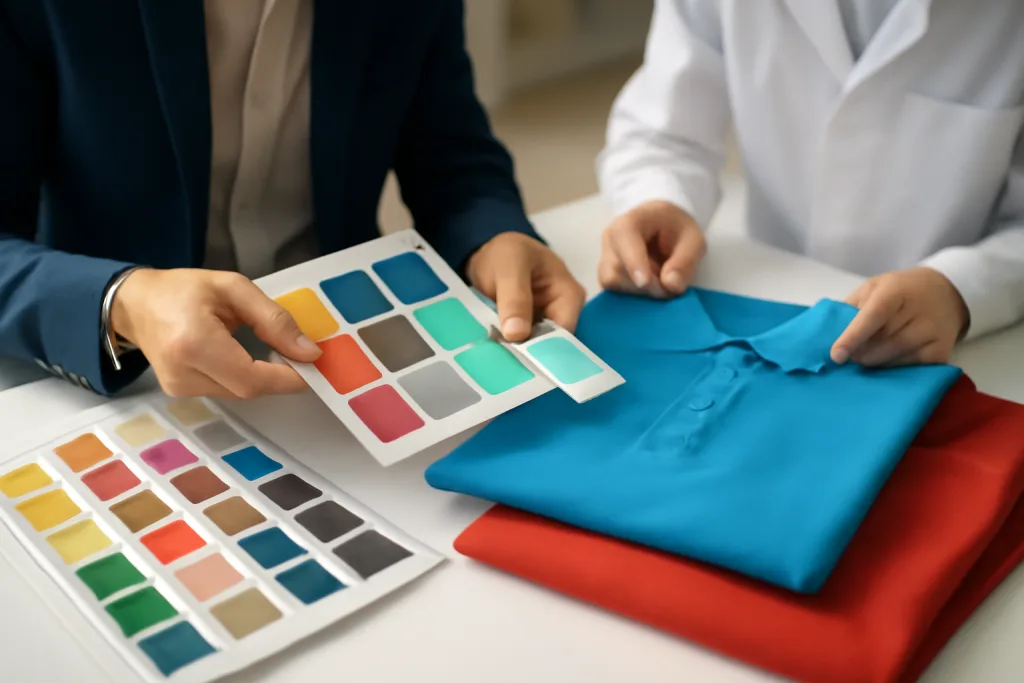
Color is crucial for brand identity. Custom programs allow bulk-dyeing or piece-dyeing matched to Pantone references, with bulk shade approval and batch consistency. Embroidery, screen print, or transfer prints can be adjusted for detailed logos, special locations, or demanding corporate clients.
Precision and Sizing Control
Custom polos offer tailored sizing—graded size sets with tight tolerances. Factories use markers and automated cutting to ensure repeatable results. Collar shapes, placket lengths, and hem details can be dialed in for your exact audience.
Understanding Ready-Made Polos
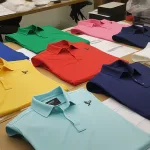
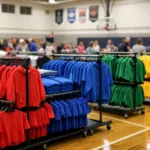
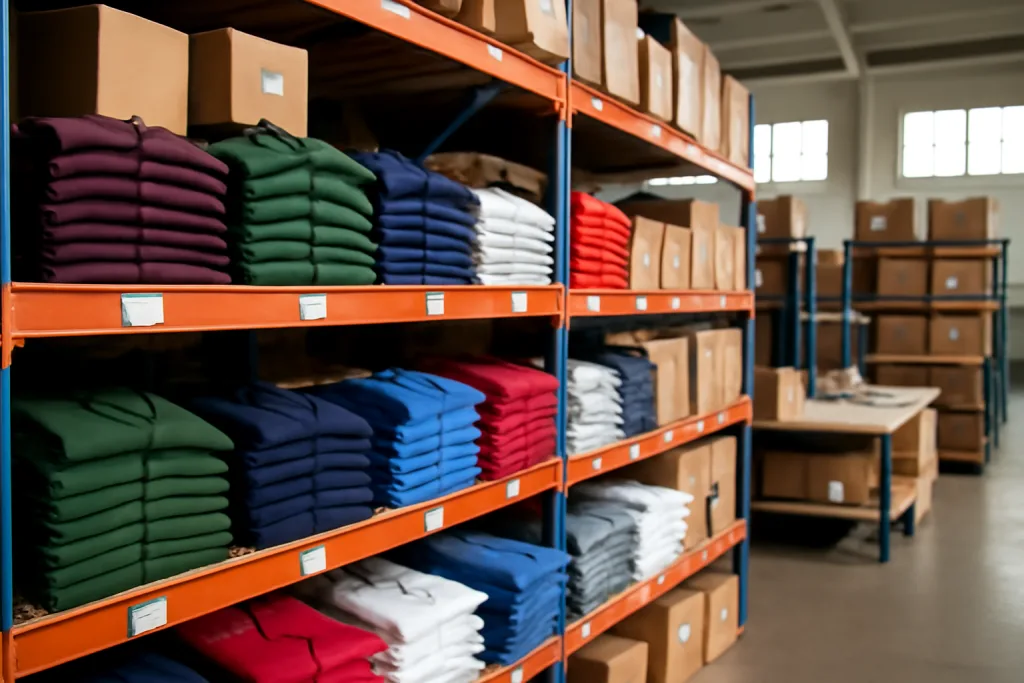
Ready-made polos, sometimes called stock or blank polos, are pre-manufactured and stocked in popular sizes and colors. Brands, teams, and companies can buy and hold inventory for fast use, sometimes adding logos with after-market decoration: embroidery, screen print, or heat transfer.
Speed to Delivery
With ready-made shirts, bulk quantities can ship within days. This makes them ideal for rush events, last-minute uniform swaps, or new staff onboarding. No need to wait for lab dips or production lead times.
Lower Minimum Order Quantities (MOQs)
Stock programs often allow buyers to purchase small volumes or mix sizes and colors in the same order—good for variable team sizes or events that don’t require full customization.
Cost Predictability
Ready-made polos usually come with fixed price points. No hidden pattern fees, development surcharges, or special handling, which simplifies budgeting for small to mid-size projects.
Comparing Fabric & Finish Options
| Item | Custom Polos | Ready-Made Polos | Best Use |
|---|---|---|---|
| Material Choices | 100% cotton, GOTS organic, poly blends, rPET, modal | Common: 100% cotton or poly blends | Custom for premium/luxury; ready-made for basics |
| Fits and Sizing | Custom graded sets, full unisex, tall/plus sizing | Standard set (S-3XL, limited fit) | Custom for specific teams/branding; ready-made for general use |
| Finish Options | Moisture-wick, UPF 50+, stain release, anti-bac | Limited (may include basic wick) | Custom for sport/technical; ready-made for office/events |
| Decoration | Factory embroidery, print, custom placement | Standard: usually post-purchase decoration | Custom for complex logos; ready-made for basic branding |
| Lead Time | 30–60 days typical OEM lead time | Ship in days from warehouse | Custom for planned launches; ready-made for urgent need |
Custom vs Ready-Made Polos: Which Works Better for Your Business?
The heart of the decision lies in your brand priorities and timeline. Do you want to create a lasting impression through design and fit? Or do you need fast, budget-friendly solutions for staff, volunteers, or promotions? Let’s break down the pros and cons for clarity.
Advantages of Custom Polos
- Unique brand identity: Every detail—from fabric to collar shape—can express your brand. You aren’t just another team in the same off-the-shelf gear.
- Consistent quality: Factories like Ninghow work to strict spec tables, using quality controls like AQL checks and lab testing to deliver stable sizing and color from one order to the next.
- Fit for purpose: Need anti-bacterial finishes for a healthcare group? Extra-long placket for golf tournaments? Custom offers these technical advantages.
- Long-term savings for scale: While upfront costs per piece may be higher, bulk orders often unlock lower unit pricing and repeat patterns mean less development work in future seasons.
Drawbacks of Custom Polos
- Higher MOQs: Most custom programs start at 200–500 pieces per style/colour for efficiency. Small teams or event orders may find this prohibitive.
- Longer lead times: Sampling, bulk production, and transit add up. For made-to-order programs, 30–75 days is standard—longer with complex fabrics or finishes.
- Greater project management: Sizing, shade bands, spec sheets, and sample approvals demand time and attention from buyers.
The Strengths of Ready-Made Polos
- Fast availability: Stock is on hand and ready for same-week shipping.
- Lower up-front investment: No development fees or minimums if you need only a few dozen shirts.
- Simpler admin: Skip the tech packs and fit samples. With set colors and sizing charts, the buying process is almost instant.
The Limitations of Ready-Made Polos
- Compromised brand distinction: Your polo may match another company’s shirt in the same trade show hall.
- Sizing and style limits: Standard size runs and fits may not suit all body types or diverse job roles.
- Inconsistent supply and shade: Dye lots and batches may vary, and top-up orders risk color or fit drift.
- Decoration afterthought: Some logos don’t embroider well on pre-constructed shirts, reducing sharpness or raising cost.
Key Factors: Brand Identity & Consistency
Your apparel is often the first brand touchpoint customers see—in stores, on-greens, at a conference booth. Custom polos let you specify everything: color, texture, fit, decoration, and garment construction. Ninghow’s OEM/ODM programs include lab dips for colors, pre-production samples, and full quality checks, ensuring every shipment aligns with your brand image. Ready-made polos can still serve as a solid blank for simple branding, but risk blending in among competitors at crowded events.
Cost Comparison: Upfront and Long-Term
The true cost of polos depends not just on price per piece, but on durability, reorder performance, and impact on your brand. Custom usually has a higher minimum and setup cost. Yet over the product life, the payback can be worth it: better fit means less waste, while branded design encourages staff pride and customer recognition. Ready-made polos are budget-friendly today, especially for small volume or one-time use, but may cost more if you face high returns, inconsistent sizing, or faded logos.
Lead Times and Planning Logistics
Custom programs require careful forecasting. Allow time for samples, production, and transit—especially if using specialized finishes or custom-matched trims. Ready-made programs are ideal for rapid changes or urgent launches, but may face stockouts, color mismatches, or limited choice under demand surges. Reliable factories like Ninghow offer structured workflows (sample > PP sample > TOP sample) to safeguard timelines.
How to Choose: Application and Brand Goals
- Team uniform or event apparel? Ready-made polos shine for speed and low risk. For programs meant to run year after year, invest in custom.
- Technical or performance needs? Custom wins if you need smart fabric finishes, UPF, or extended sizing.
- Strict brand guidelines? Go custom to guarantee Pantone and embroidery precision, seasonal shade stability, and consistent fit—all vital for multichannel marketing.
- Short-term promotions? If it’s a giveaway or a one-off, ready-made polos can be easily decorated and delivered fast.
Expert takeaway: If your brand identity, technical requirements, or multi-season consistency matter, custom polos shape perceptions and minimize risk. For urgent, cost-sensitive cases, ready-made delivers speed and flexibility but at the cost of differentiation.
Quality, Standards, and Compliance Comparison
Serious apparel buyers want end-to-end quality. No matter which route you pick, look for suppliers who meet reputable standards: OEKO-TEX®, GOTS certification on organic fibers, and workplace safety via WRAP or SEDEX audits (see OEKO-TEX 100; GOTS info). For custom programs, you control material testing for colorfastness, shrinkage, and wear using standards like AATCC (color, sizing), ISO 105 (dye fastness), and ASTM D1683 (seam strength).
Ready-made suppliers may follow AQL inspection or ANSI/ASQ Z1.4 sampling to control shipment quality, but typically offer less flexibility on print/embroidery placement, labeling detail, and after-wash performance. Brands prioritizing consistency and compliance will benefit from the documented process workflow of a custom-focused factory like Ninghow, including size specs, batch testing, and carton labeling.
Packaging and Delivery – Custom vs Stock
Custom programs usually offer more options: folded, bagged by size or color, hang tag and care label design, and even barcoded shipping. Logistics can fit your internal workflows, with packs by store or program. Ready-made polos come pre-folded and packed, but branding often requires extra steps for relabeling or individual SKU tracking.
Summary Table: Custom vs Ready-Made Polos for Business
| Criteria | Custom Polos | Ready-Made Polos |
|---|---|---|
| Brand Identity | High—full control over design & color | Basic—limited color and fit |
| MOQ | 200–500 units | Small batch/pack |
| Lead Time | 4–10 weeks | 2–10 days |
| Per-Unit Cost | Lower for scale, higher for prototypes | Fixed; often cheapest option |
| Quality & Consistency | High—spec-controlled | Varies—risk of batch discrepancies |
| Decoration Options | Unlimited (factory-based) | Basic logo/apply post-purchase |
| Compliance & Testing | Full control (OEKO-TEX, GOTS, ISO, etc.) | Factory standard (check before buying) |
Frequently Asked Questions
What are the main differences between custom and ready-made polos?
Custom polos are made specifically for your brand needs, allowing design, fit, and technical features to be specified, while ready-made polos are pre-produced and stocked for quick shipment but offer limited customization.
How do minimum order quantities (MOQs) compare for custom vs ready-made polos?
Custom polos typically require a higher minimum order (usually 200–500 pieces), while ready-made polos allow for lower quantities and even mixed packs, which is better for small teams or events.
Can I get custom fabrics or technical finishes with ready-made polos?
Generally, no—ready-made polos come in set colors and fabrics. Custom polos let you select from a wider range like moisture-wicking, anti-odor, or certified organic materials.
Why do custom polos cost more up front?
Custom polos involve setup costs for pattern creation, sampling, and order management, but larger orders can spread these costs, making them more cost-efficient over time.
Which is better for brand identity: custom or ready-made polos?
Custom polos offer full brand alignment with control over color, logo placement, and fit. Ready-made polos can be branded but are more generic, which weakens brand distinction.
How long does it take to get custom polos delivered?
Custom polos usually require 4–10 weeks for sampling, production, and transit, while ready-made polos can often be delivered in a few days depending on stock availability.
