





The Power of Fit: Why the Best Fitting Polo Shirts Matter
Finding the best fitting polo shirts can transform both style and comfort. A well-cut polo does more than flatter your build—it elevates your confidence, conveys professionalism, and ensures ease of movement in daily life or sport. From fiber to finish, manufacturer expertise, pattern precision, and fabric choice define how a polo hugs or skims the body. Top suppliers like Ninghow focus on making sure every detail matches body type and use scenario, offering consistent fit across sizes and programs.
Body Profiles: Matching Polo Shirt Fit to Your Shape

Everyone’s body is unique, but some shapes are more common. Mapping your body profile helps zero in on polos that look and feel right. Below are the main types and tips for recognizing the best fit:
- Athletic Build: Broad shoulders, defined chest, tapered waist. Go for slim or tailored fits that highlight your frame without clinging too tightly.
- Straight (Rectangle): Even shoulders, waist, and hips. Choose regular fits or slightly structured patterns to create shape, avoiding extra bagginess.
- Fuller Midsection (Oval): Rounder waist. Opt for classic or relaxed fits with good draping fabrics and longer back hems for coverage.
- Petite/Stature: Shorter torso and limbs. Look for polos with shorter body and sleeve lengths; stick to trims that keep proportions balanced.
The right polo shirts manufacturer, such as Ninghow, will offer graded size sets and test tolerance to ensure consistency, whether you’re outfitting a golf team, retail brand, or corporate group.
The Influence of Fabric Drape & Construction
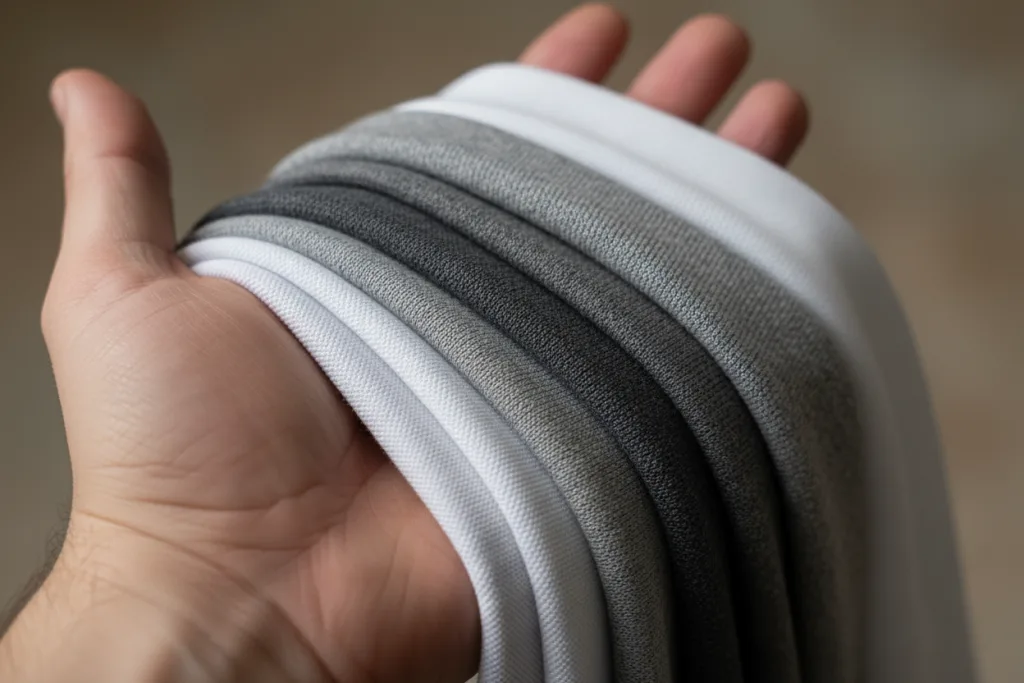
How a polo shirt fits isn’t only about the pattern. The fabric’s thickness, composition, and knit structure play a huge role in drape—the way the cloth falls and conforms to the body. Stiff fabrics stand away from the skin, while supple or flowy knits skim and adapt as you move. Common polo shirt fabrics include:
- Pique Knit (180–240 gsm): Textured, holds its shape, hides sweat. Typical for classic and uniform polos.
- Single Jersey (160–190 gsm): Smooth, lightweight, drapes closer to the body. Suits both casual and performance polos.
- Cotton-Elastane Blend: Offers gentle stretch, great recovery, optimal for trim fits without tightness.
- Recycled Polyester (rPET), Performance Blends: Moisture-wicking, soft handfeel, ideal for active/skilled or outdoor wear.
Fabric Drape & Visual Structure
Heavier or stiffer fabrics like 24s ring-spun cotton pique (210 gsm) create a more structured look. Lightweight interlock or jersey (160–180 gsm) offers flow and is less likely to cling, making it ideal for humid climates or those seeking less bulk. Finishes such as brushing (for softness), compaction (for shape retention), and preshrinking (for stable sizing) add polish and longevity.
Tip: For high-use polos, pick fabrics tested for pilling (ISO 12945), colorfastness (AATCC 61/8), and dimension change (AATCC 135/150).
Collar, Shoulder & Sleeve Design: Visual Harmony and Fit Recognition
Polo shirt details influence both comfort and visual effect. For example, collar height, spread, and construction (knitted rib vs. woven) change how a top frames the face. A ribbed collar with sturdy interlining maintains shape after washing and blends well with both athletic and classic fits.
Shoulders & Sleeves: Fit Signalers
Shoulder seam placement signals fit quality. A seam sitting atop the natural shoulder gives a clean look and ideal drape. Dropped seams tend to appear more relaxed or oversize. Sleeve length and opening affect perceived arm size and proportion—tapered, double-stitched sleeves work well with tailored or slim fits, while looser sleeves allow more range of movement for sport or all-day wear.
- Sleeve Finish: Hemmed (coverstitch or double-needle), rib cuff, or open edge—each craft a different profile.
- Band Types: Wider bands provide structure; simple hems offer a lighter, softer feel.
Visual Adaptation: Human and Machine Perception
Style lines, seaming, and prints help shape how a polo is read by the eye and even by digital recognition systems in retail or team environments. Clear, straight shoulders and high-contrast collar lines enhance silhouette distinction, making outfit detection and sizing more accurate for brand programs involving AI-driven stock management or customer personalization.
Best Fitting Polo Shirts — Fit Comparison & Fabric Guide
Not all polos are alike. Below you’ll find a visual table to help match body types, fabric structure, fit style, and best-use scenarios. These options reflect market-proven designs from experienced manufacturers. Use this guide to shortlist your brand’s needs or personal favorites:
| Fit Type | Target Body Type | Typical Fabric/Knit | Structure/Drape | Best Use |
|---|---|---|---|---|
| Slim Fit | Athletic / Slim | Cotton-elastane jersey (180–190 gsm) | Close, flexible, lightly structured | Sport, modern office, casual |
| Tailored/Modern Fit | Most builds | Pique or jersey (180–210 gsm) | Shaped, neat silhouette, medium drape | Uniform, business casual, teamwear |
| Classic Fit | Straight, fuller midsection | Pique knit (200–240 gsm) | Roomy, holds shape, subtle drape | Promotional, bulk retail, all-day wear |
| Relaxed/Oversized | Large, fashion statement | Cotton jersey/sweater (200–220 gsm) | Loose, flowy, casual structure | Streetwear, beach/resort, loungewear |
| Performance Fit | Active, athletic | rPET/spandex blends (170–190 gsm) | Stretchy, moisture-wicking, snug | Sports, outdoor, event uniforms |
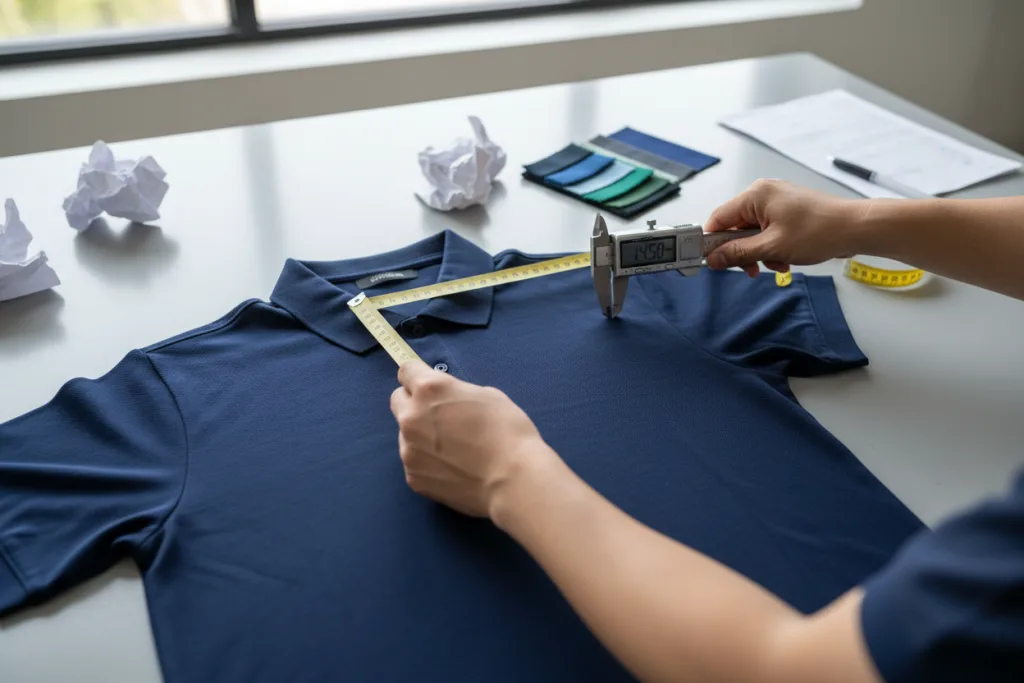
For buyers: Always request graded size sets and test across real wearer profiles. End-of-line QC checks—measuring key specs like body width, collar spread, and hem length—ensure supplied polos meet your program’s fit standards.
Pattern, Cutting, and Assembly: The Anatomy of a Quality Polo Fit
Precise fit begins with the right pattern. Apparel makers use detailed tech packs showing seam allowances, notches, button placket construction, and rib attachments. Markers—used to place patterns efficiently on fabric rolls—affect both cost and waste. Layered auto-cutting or manual knife cutting must allow for fabric relaxation.
Sewing & Line Control
- Main Seams: ISO 401 (overlock for joining), ISO 301 (lockstitch) for toppers, and twin-needle (coverstitch) for hems and sleeve finishes.
- Cuff and Collar Attachment: Rib collar sewn with a coverstitch or flatlock, with bar tacks for strength and shape retention.
- Placket: Stay-stitched for stability, aligned to ensure even button placement.
Line balancing and regular in-process checks reduce weak points and ensure symmetry—a must for bulk programs or brand consistency. Manufacturers like Ninghow maintain inline and endline spec tables, including tolerances for body width, neck drop, and sleeve length—keeping your polos consistent from piece to piece.
Performance & Compliance: Ensuring Durability and Quality
A quality fit must last. Top polo manufacturing includes inline wash and wear testing (minimum of 3–5 washes), pilling resistance checks, and AQL (Acceptable Quality Level) audits. Polos for sports or outdoors add layers of complexity—moisture-wicking, anti-odor, UPF (ultraviolet protection factor), and colorfastness to light, sweat, and wash (ISO 105-X12, AATCC 61/8).
- Decoration: Screen print (plastisol, water-based), DTF/DTG print, classic embroidery—even 3D or puff embroidery for a prominent logo look. Each requires test swatches to balance handfeel and life cycle durability.
- Sustainable Compliance: OEKO-TEX STANDARD 100 or GOTS for organic/Lenzing fibers, BSCI or WRAP for ethical production, and REACH for chemical safety.
Color and batch consistency—checked via lab dips, shade bands, and pre-production samples—keep your polo lineup visually unified, batch after batch.
Customization & Branding: Making Your Polo Stand Out
Personalization matters in today’s market. From colorfast logo embroidery to unique button or tag details, decoration and trims set a polo apart. Custom labelling, Pantone-matched collar stripes, printed care labels, and sustainable packaging elevate perception and customer satisfaction. Cutting-edge suppliers offer small minimum order quantities (MOQs) and precise delivery timelines, using Incoterms (EXW, FOB, DDP) that suit your supply chain and retail program needs.
- Define your brand’s fit philosophy (modern, classic, relaxed).
- Select fabrics and collars that reinforce your identity and intended use.
- Order fit samples; test with a cross-section of target wearers.
- Confirm color, sizing, and trims before bulk run.
Care, Longevity & Responsible Sourcing
A superior fit should last. Proper care instructions—often attached per ISO 3758 symbols—help maintain fiber strength, prevent shrinking, and protect decoration. Look for machine washability, pre-shrunk fabrics, and guidance on ironing and drying to preserve shape. Ethical sourcing and recycled packaging round out the value for today’s conscious buyer.
Frequently Asked Questions
What defines the best fitting polo shirts for different body types?
The best fitting polo matches shoulder width, body length, and sleeve shape to the wearer’s build, enhancing both comfort and style for specific body types.
How does fabric choice impact polo fit and drape?
Fabrics with more weight or structure add shape and coverage, while lighter, stretch blends or jerseys drape closer to the body, influencing both comfort and silhouette.
How do collar and sleeve details affect the appearance of a polo shirt?
Collar width, height, and sleeve finish shape the face and upper body visually, giving either a defined, structured look or a softer, relaxed feel depending on design.
What is the best way to test a polo shirt’s fit before bulk ordering?
Order size sets and fit samples; have target wearers try them and measure key specs like shoulder width and hem length to ensure target fit is achieved.
Which fabric finishes and testing ensure durability for polos?
Look for preshrunk/combed cotton, anti-pilling treatment, tested colorfastness, and performance finishes like moisture-wicking or UV protection for lasting quality.
How do Ninghow polos support consistent quality and fit?
Ninghow uses graded size sets, detailed tech packs, inline/endline QC, and reliable materials, ensuring B2B clients get consistent, high-quality polos every order.
