






French Terry vs Fleece Hoodies — What Sets Them Apart?
When searching for the perfect hoodie, fabric choice makes a big difference. “French terry vs fleece” is a common debate, especially for brands and buyers focusing on warmth, weight, and seasonal wear. Both materials offer unique benefits, but which suits your program best? This guide breaks down their differences—so you can make an informed decision based on comfort, functionality, and fit.
Understanding French Terry and Fleece
What Is French Terry?
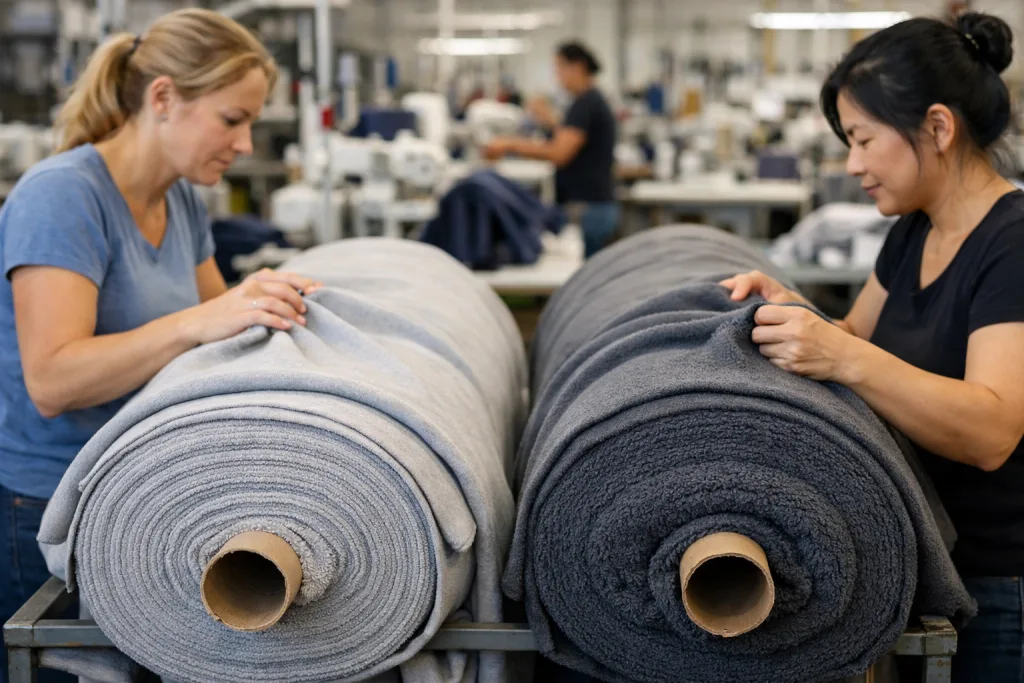
French terry is a knit fabric known for its smooth, flat outer surface and looped, unbrushed back. It usually weighs between 220 and 300 gsm (grams per square meter) for hoodies. This construction gives a comfortable handfeel and breathable warmth, making it popular for spring, fall, and mild winter layers.
What Is Fleece?
Fleece refers to fabric with a brushed, fluffy inside—made by raising the fibers after knitting. Most fleece hoodies use cotton or polyester blends. Heavier options (280–360 gsm) deliver extra warmth and softness, thanks to their dense nap and insulating air pockets. Fleece excels in colder conditions.
Warmth: Which Is Warmer?
When choosing a hoodie for cold days, insulation matters. Fleece generally outperforms French terry for warmth because of its brushed inner layer, which traps more heat. The nap creates tiny air pockets, boosting thermal retention. French terry offers enough warmth for brisk mornings or cool evenings, but is less insulating than fleece—making it better for layering or milder weather.
- Fleece: Best for winter, high warmth
- French terry: Moderate warmth, ideal for layering
Fabric Weight: GSM Explained
Fabric weight, measured in gsm, affects how heavy and warm your hoodie feels. French terry often falls between 220–300 gsm (light to medium weight), while fleece starts around 280 gsm and goes up to 360 gsm (medium to heavy). Higher gsm usually means more insulation and durability. Choosing the right weight helps align your product with seasonal demand.
| Fabric Type | Typical GSM Range | Warmth Level | Best Season |
|---|---|---|---|
| French Terry | 220–300 gsm | Moderate | Spring, Fall |
| Fleece | 280–360 gsm | High | Winter, Late Fall |
Seasonal Versatility: When to Choose Each
Different weather calls for different fabrics. French terry shines in transitional seasons—where you need warmth without overheating. It’s perfect for breezy mornings, light layering, and activities that need breathability. Fleece steps in for colder months, offering superior insulation for outdoor wear or loungewear. Brands often stock both options to meet year-round needs.
- French terry: Spring, fall, light winter, layering
- Fleece: Winter, late fall, standalone warmth
Handfeel and Comfort
French Terry—Soft and Breathable
French terry feels smooth on the skin, with gentle loops inside. It absorbs moisture well and won’t cause overheating. This makes it ideal for active or leisure use, especially when layered under a jacket. Its texture resists clinging and dries faster after washing.
Fleece—Plush and Cozy
Fleece delivers a plush, fluffy experience, especially as an inner layer. The brushing process creates a velvety nap that feels luxurious and warm. However, fleece is less breathable than terry and may trap body heat during intense activity.
Material Options and Performance
Common Fabric Blends
- Cotton French Terry: Natural, moisture-absorbing, soft. GSM range: 220–300 gsm. Preferred for lifestyle and athleisure.
- Polyester Fleece: Strong, lightweight, and dries quickly. Often blended for sportswear, with antibacterial or moisture-wicking finishes.
- Organic/Fairtrade Yarns: Both terry and fleece can use certified cotton or recycled polyester for sustainability, supporting responsible sourcing.
Finishes and Lab Work
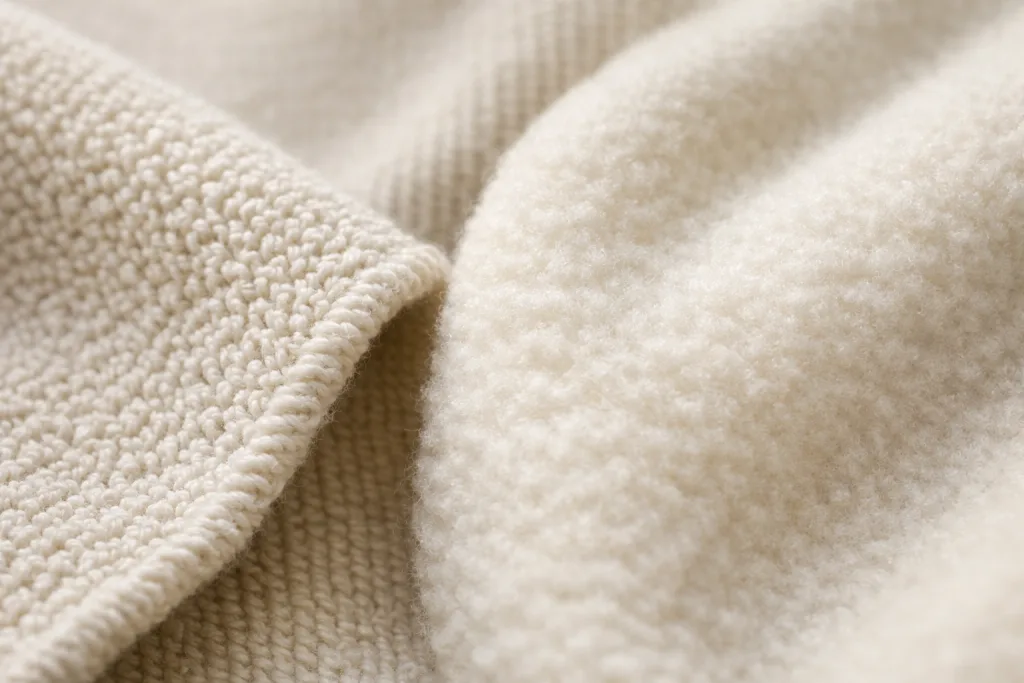
French terry may receive anti-pilling, compacting (pre-shrink) and easy-care treatments. Fleece often adds anti-static and quick-dry finishes. Lab dips and bulk color control (Pantone matching, batch shade management) ensure visual consistency. Ninghow handles color standardization, spec measurement tables, and stability tests for both fabrics.
Sewing, Construction, and Durability
Sewing Techniques
- French Terry Construction: Sewn with coverstitch hems (ISO 602), topstitching for seams, and ribbed cuffs/collars for stretch. Notches and grainline control maintain stability.
- Fleece Details: Often requires stronger thread, double-needle stitching (ISO 401), and reinforced pockets for heavy wear.
Durability Factors
Both fabrics resist tear and pilling when produced with quality yarns and proper stitch types. French terry is more resilient in repeated wash cycles, while fleece excels at maintaining structure in high-gsm builds. Quality control at endline includes AQL checks, dimensional change (AATCC 135), and seam strength tests (ASTM D1683), which Ninghow implements for consistent results.
Decoration Choices: Print and Embroidery Performance
Surface Smoothness
French terry’s flat face makes it ideal for screen printing, heat transfer graphics, or direct-to-garment (DTG) applications. Fleece’s raised surface can challenge finer print details, but supports embroidery—especially puff/3D styles—thanks to its thickness.
Handfeel vs. Durability
Prints on French terry come out crisp and flexible; fleece prints tend to sit harder on the nap. Embroidery on fleece offers a dimensional finish, with less show-through. Both allow custom branding, but fabric texture should guide design choices.
Packaging, Compliance, and Brand Service
Packing and Presentation
- French terry hoodies fold easily, packing flat for efficient shipping.
- Fleece hoodies may require polybag protection to avoid crushed nap.
- Labels: Woven/care labeling follows ISO 3758 for wash symbols.
Compliance and Testing
Both fabrics can meet OEKO-TEX STANDARD 100 or GOTS requirements for chemical safety, and must pass colorfastness (ISO 105), seam strength, and shrink testing before mass production. Ninghow supports BSCI/WRAP factory audits and can supply bulk orders under EXW/FOB/CIF/DDP Incoterms. Lead times vary by gsm, color, and finishing needs.
French Terry vs Fleece: Which Wins?

The “French terry vs fleece” choice depends on your priorities. For warmth and cold weather, heavyweight fleece hoodies offer maximum insulation. For breathability, versatility, and active or transitional wear, French terry wins. Consider target season, end use, design preferences, and cost when making your selection.
Expert Takeaway: Brands like Ninghow recommend stocking both styles to meet year-round buyer demand. Pair French terry for lighter, active, or fashion-focused drops; choose fleece for winter, lounge, or promotional programs that require extra comfort.
Frequently Asked Questions
Which is warmer for hoodies, French terry or fleece?
Fleece is warmer than French terry because its brushed inside traps more heat, making it ideal for cold weather hoodies.
What does GSM mean in fabrics?
GSM stands for grams per square meter. It’s a measure of fabric weight that helps predict warmth and durability for hoodies.
Is French terry good for winter hoodies?
French terry offers moderate warmth best suited for mild winters or layering, but fleece is a better choice for harsh cold.
Can both French terry and fleece be printed or embroidered?
Yes, both support decoration, but French terry prints crisper and fleece performs better for embroidery due to its thickness.
Which hoodie fabric breathes better?
French terry breathes better than fleece due to its looped construction, making it more comfortable for active use and transitional weather.
Does Ninghow offer both French terry and fleece hoodies?
Yes, Ninghow manufactures OEM/ODM hoodies in both French terry and fleece, ensuring quality, consistency, and compliance for B2B brands.