





Understanding Satin Fabric
Satin fabric is cherished for its smooth touch, glossy surface, and elegant drape. Many people confuse satin with silk, but the difference is clear: Satin refers to how the fabric is woven, not the fiber it’s made up of.
The signature shine of satin fabric comes from its weaving technique. It can be made from silk, polyester, nylon, acetate, or even blends. The weave gives it a one-sided sheen and a duller back, ideal for fashion, interior design, and special occasion wear.
What Is Satin?
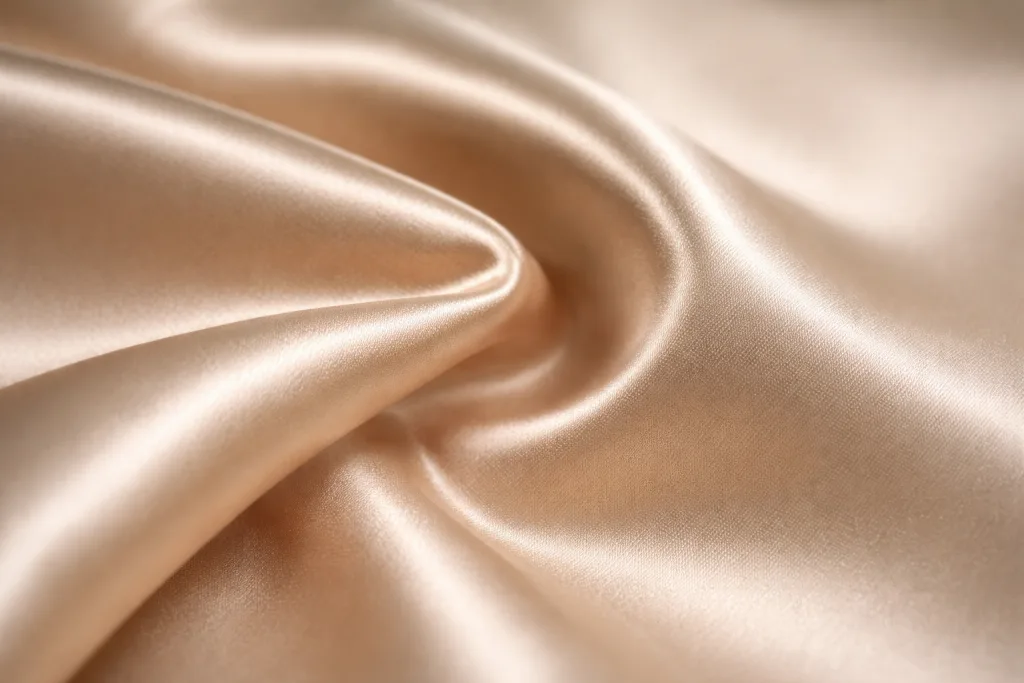
Satin is a weave structure, not a fiber. It creates a luxurious, shiny surface by placing more vertical threads (warps) on the front and fewer horizontal threads (wefts) on the back. A true satin weave has at least four warp yarns over one weft yarn, which produces a smooth front and a matte reverse.
- Can be made from silk, polyester, nylon, or acetate
- Typically features a glossy front and a dull back
- Highly drapable and soft to the touch
While silk satin is the most luxurious, modern satin fabrics are often made from synthetic fibers for better durability and lower cost.
Satin vs. Silk: Key Differences
Satin and silk often get mixed up, but they are not the same thing. Silk is a natural filament fiber produced by silkworms, while satin describes a type of weave. The key lies in their construction and end use.
- Silk: Always a fiber, naturally luxurious, breathable, and expensive.
- Satin: Refers to the weave. Can be made from silk, polyester, or nylon; price and performance vary according to fiber.
| Feature | Silk Fabric | Satin Fabric |
|---|---|---|
| Fiber Source | Natural (Silkworm) | Synthetic or Natural |
| Weave | Many types | Satin weave |
| Surface | Matte or shiny, depending on weave | Glossy front, matte back |
| Touch | Soft, breathable | Soft, smooth, can vary |
| Cost | Expensive | Varies with fiber source |
| Durability | Delicate | Durable if synthetic |
Expert takeaway: Satin refers to the weave, not the fiber. Any fiber—silk, polyester, nylon—can be woven into satin, but each delivers a different handfeel, price, and durability.
How Is Satin Made?
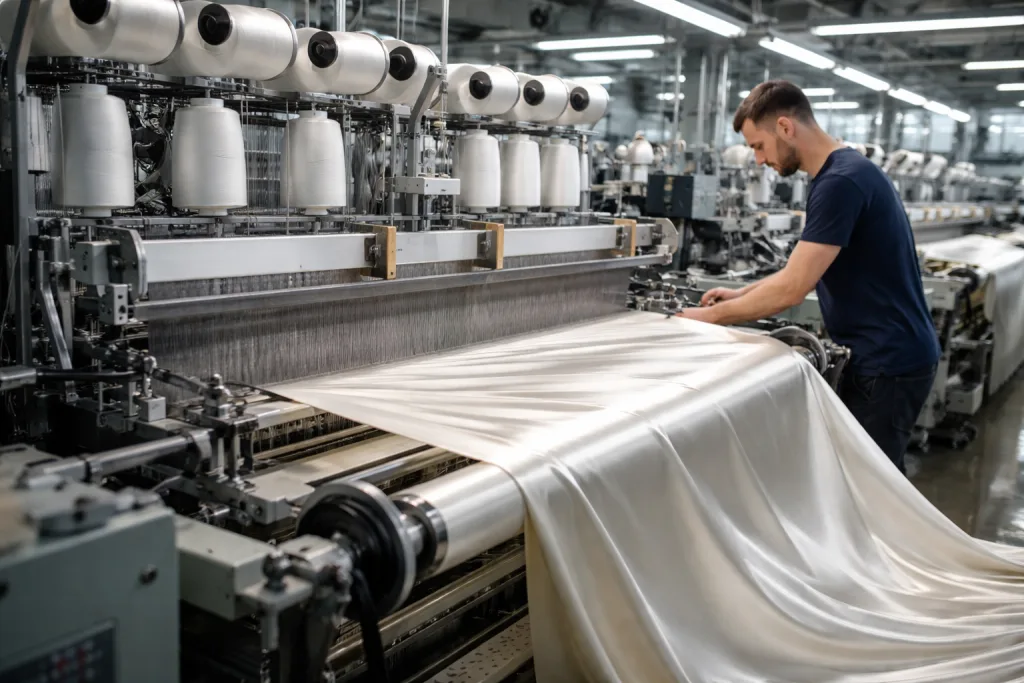
The process of making satin starts with choosing the right fiber. Manufacturers may select silk for premium garments, polyester for affordability and resilience, or acetate for a soft drape. The satin weave itself is what sets the fabric apart.
Steps in Satin Fabric Production
- Fiber Selection: Choose silk, polyester, nylon, or acetate, depending on the target market.
- Yarn Preparation: Fibers are spun into yarns with a smooth and even texture, often using ring-spun or filament techniques for extra gloss.
- Weaving: Execute the satin weave (typically warp-faced, floating at least four warps over one weft).
- Finishing: Add performance finishes such as anti-static, moisture-wicking, or stain resistance for specific applications.
- Coloring: Dyeing with laboratory dips and bulk color approval to ensure shade accuracy. Pantone matching and batch control are used for brand consistency.
- Quality Control: Tests for colorfastness (ISO 105), seam strength (ASTM D1683), and OEKO-TEX compliance to meet exporting standards.
Common Fiber Types Used for Satin
- Silk – Delivers maximum luxury, costliest
- Polyester – Widely used, durable, affordable
- Nylon – Strong, lightweight, glossy
- Acetate – Smooth, less durable but soft drape
Satin Weave: The Technical Details
To get that unique feel, satin is produced using a “floating” weave. This means more threads run along the front of the fabric, making it reflective and smooth. The standard pattern is four warp threads floating over a single weft, creating fewer interruptions and a lustrous effect.
Weaving Machines and Setup
- Rapier or shuttle looms with pattern control
- Filament or spun yarns, depending on fiber
- GSM typically ranges from 80–250 for satins
Satin weaves can be constructed as 4-harness, 5-harness, or even 8-harness designs, each impacting the fabric’s weight and shine.
Properties of Satin Fabric
Satin fabric stands out for its luxurious appearance, but it offers more than just good looks. Its properties make it ideal for a range of uses.
Key Features of Satin
- Glossy, reflective surface
- Soft handfeel
- Excellent drape
- Often slippery and lightweight
- Can promote breathability or insulation depending on fiber
- Available in various GSM for different end-uses
Performance Enhancements
Manufacturers like Ninghow may add special finishes—moisture-wicking for sports, anti-static for dress wear, or stain release for hospitality.
Applications: Where Satin Shines
Satin’s glossy look and smooth feel make it a favorite for evening wear and luxury garments. But it’s also popular for sportswear, bedding, linings, dance costumes, and corporate uniforms.
Main Uses in Apparel and Beyond
- Bridal and prom dresses
- Linings for jackets and coats
- Luxury sleepwear and robes
- Dance and performance costumes
- Decorative accents for interiors
- Uniforms for hospitality and corporate programs
Satin fabric can also be found in accessories such as ties, scarves, and ribbons, valued for their vibrant color and texture.
Satin Finishes and Decoration Techniques
Satin’s smooth surface works well with prints, embroidery, heat transfers, and embellishments. Both traditional screen printing and advanced digital techniques are used, but care must be taken not to damage the delicate weave.
Popular Decoration Methods
- Screen Printing: Water-based inks for soft handfeel; plastisol for durability.
- Embroidery: 3D/puff embroidery for visual impact.
- Heat Transfer: Suitable for complex graphics.
- Sublimation: Brings vibrant results on polyester satin.
Satin’s reflective surface can make colors pop, but proper pretreatment and finish are vital to maintain gloss and avoid puckering.
Satin Fabric Quality Control at Ninghow
Ninghow applies strict quality control measures to ensure satin maintains its signature handfeel, color consistency, and durability. The company checks for GSM tolerance, flatness, puckering, and color stability in every batch.
Checkpoints in Satin QC
- Inline and endline visual inspections
- Spec and measurement tables
- Wash testing and seam strength validation
- OEKO-TEX compliance for safe use in apparel
Using proven techniques like AQL sampling and colorfastness testing, Ninghow delivers satin fabric that meets global standards for B2B apparel manufacturing.
Satin Fabric: The Future of Elegance and Performance
Satin continues to evolve, incorporating recycled fibers, eco-friendly dyes, and advanced finishing technologies. These innovations make it suitable for technical sportswear, sustainable lifestyle collections, and premium promotional apparel.
Brands and designers choose satin for its blend of beauty and adaptability. With manufacturers like Ninghow, satin fabric can be tailored for specific projects—whether you need performance polo shirts, statement dresses, or high-quality linings, satin has an answer.
What Is Satin Fabric Made Of?
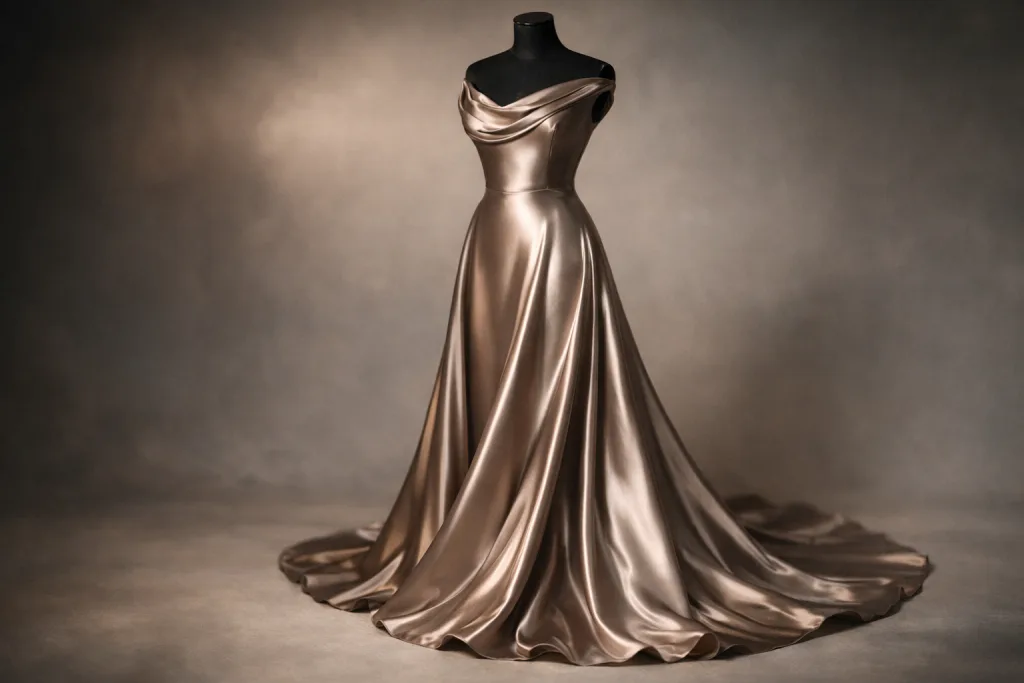
Satin fabric can be produced with silk, polyester, nylon, or acetate fibers. The magic is in the weave—using four or more warp threads over a weft, the result is a material with a shiny front and a matte back. The choice of fiber influences cost, durability, feel, and environmental impact. Modern satin fabrics focus on blending classic aesthetics with state-of-the-art manufacturing, quality control, and sustainable choices.
Frequently Asked Questions
What is the difference between satin and silk?
Satin is a type of weave that creates a glossy surface, while silk is a natural fiber produced by silkworms. Satin can be made from silk or synthetic fibers.
Is satin fabric always made from silk?
No, satin refers to the weave, not the fiber. Most satin fabrics today are made from polyester, nylon, or acetate for affordability and durability.
What are the main uses for satin fabric?
Satin is commonly used for evening wear, bridal gowns, linings, sleepwear, dance costumes, and decorative accents thanks to its sheen and drape.
How should satin garments be washed?
Satin garments should be washed gently, preferably by hand or on a delicate machine cycle, using cold water to preserve the fabric’s finish.
Does satin wrinkle easily?
Natural satin made from silk may wrinkle more than synthetic satin, which is often treated to resist wrinkling. Proper care helps reduce wrinkles.
Is satin fabric sustainable?
Satin made from recycled polyester or responsibly-sourced silk is increasingly sustainable. Many manufacturers now offer eco-friendly satin options.