






Hoodie vs Sweatshirt Overview
Choosing between a hoodie and a sweatshirt can shape your brand’s image, comfort level, and cost to consumers. Both styles are wardrobe staples, but each has unique traits. This guide explores their differences in craftsmanship, fabric selection, and cost, showing when a hoodie might serve your brand better. Whether launching athleisure, promotional, or streetwear lines, Ninghow’s expertise in apparel manufacturing highlights the options you need to consider.
The Craftsmanship Difference
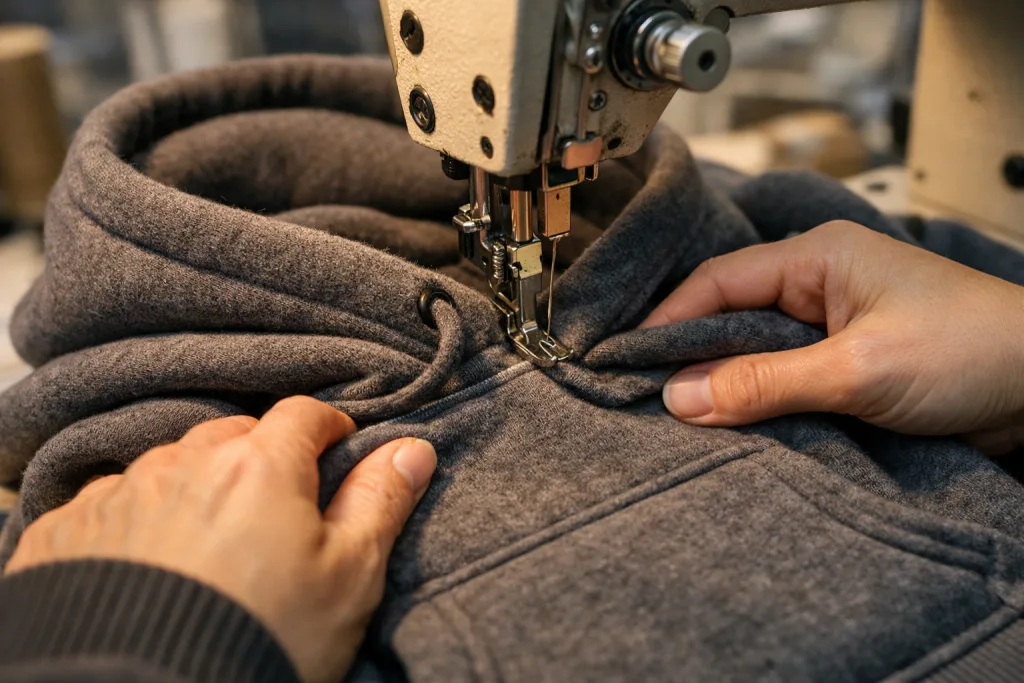
Craftsmanship, or the way a garment is made, sets hoodies and sweatshirts apart. Hoodies are known for their built-in hoods, adjustable drawstrings, and often include kangaroo pockets. Sweatshirts keep it simple: no hood, usually no pockets, and cleaner lines for versatile styling.
Components & Construction
- Hood: Hoodies include a double-layered hood, attached using a ribbed seam or facing for durability.
- Pocket: Kangaroo or split patch pockets are sewn on with topstitching and reinforced bartacks at stress points.
- Drawstrings: Often flat or tubular, tipped, and passed through metal or sewn eyelets.
- Sweatshirt Simplicity: Sweatshirts feature rib collar, cuffs, and hem, typically ISO 301/401 seam stitching, with no extraneous attachments.
Assembly Techniques
Both styles use flatlock seams for comfort and durability, covering areas prone to wear. Line balancing and SMV (Standard Minute Value) calculations help hoodie manufacturers keep production efficient and fit consistent, especially with high-volume orders.
Fabric Selection: Hoodie vs Sweatshirt
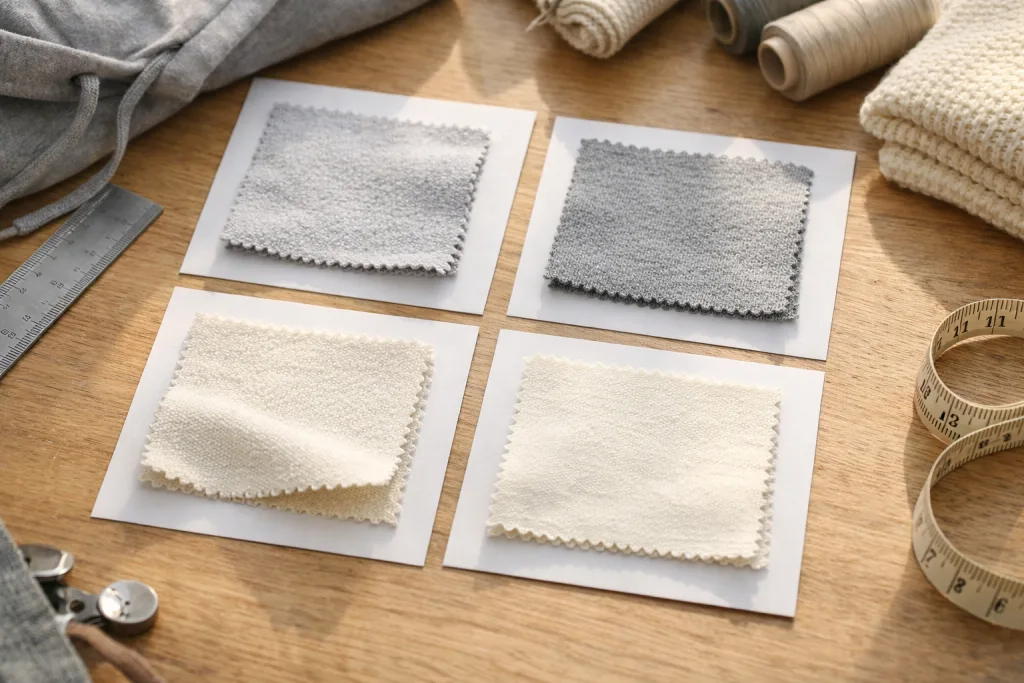
Material choice affects handfeel, durability, color retention, and price. Hoodies and sweatshirts often use the same basic fabrics—knitted fleece, French terry, or brushed jersey—but brands can differentiate through blend, weight, and performance finishes. Ninghow sources combed cotton, GOTS-certified organic cotton, recycled polyester (rPET), viscose/modal, and elastane blends for added stretch.
Common Fabrics and GSM Ranges
| Fabric Type | Typical GSM | Finish | Best Use |
|---|---|---|---|
| Combed Cotton Fleece | 320–360 gsm | Brushed | Streetwear, cold climates |
| Polyester/Cotton Blend | 280–320 gsm | Anti-Pill, Moisture-wicking | Sports, athletic programs |
| French Terry | 260–300 gsm | Loopback | Transitional seasons, lifestyle |
| Organic Cotton | 300–340 gsm | Soft touch, OEKO-TEX certified | Eco-friendly lines |
| Viscose Blend | 260–280 gsm | Peach finish | Premium/luxury basics |
Performance Considerations
- Moisture-wicking blends improve wearability for active lifestyles.
- Anti-odor and antimicrobial treatments suit gym and sports teams.
- Brushed fleece enhances warmth; French terry yields lighter, breathable feel.
- Colorfastness tested to ISO 105 standards ensures lasting appearance.
Cost Comparison: Hoodie vs Sweatshirt
Cost impacts your bottom line and pricing strategy. Hoodies usually cost more to produce because they use additional fabric for hoods, pockets, and rely on extra trims like drawstrings and eyelets. Sweatshirts are more basic with less material and simpler construction, reducing labor and material costs.
Breakdown of Key Cost Factors
- Fabric Consumption: Hoodies require 0.2 to 0.35 meters more fabric per piece.
- Trim Costs: Cord, eyelets, pocket reinforcement, extra thread—all add up.
- Labor Intensity: On average, hoodies require 10–15% more SMV than sweatshirts.
- Decoration: Hoodies offer larger surface area for print or embroidery, increasing decoration spend if fully utilized.
- Packaging: Bulkier items may raise polybag size requirements and carton dimensions, affecting logistics.
Expert insight: Sweatshirts are ideal for budget-conscious programs, while hoodies add perceived value and shelf appeal—making them premium choices for launches or limited editions.
When Should Your Brand Choose Hoodies?
Not every collection needs both styles. Hoodies fit best in activewear, streetwear, and promotional collections where added warmth, style, and custom decoration matter. The hood isn’t just functional, it signals casual cool and youth appeal.
Ideal Use Cases
- Retail launches targeting Gen Z and millennials
- Outdoor events and team uniforms for unpredictable weather
- Corporate gifting and promotional campaigns seeking standout branding
- Sports clubs wanting protection from wind and light rain
- Athleisure brands focused on layering flexibility
Performance & Lifestyle Integration
Brands often select moisture-wicking, UPF-treated, or antimicrobial fabrics when hoodies are geared toward athletes or coaching staff. For lifestyle, eco-friendly organic cotton or recycled PET supports sustainable storytelling and aligns with consumer demand.
When Are Sweatshirts the Smarter Choice?
Sweatshirts win on value, versatility, and universal fit. Their classic, fuss-free design makes them ideal for school uniforms, promotional giveaways, and basic merchandising. Bulk orders benefit from lower costs and efficient sizing runs, with fewer construction variables to complicate production.
Key Brand Scenarios
- Large-scale events needing cost-effective, branded takeaways
- School and university programs seeking standardized apparel
- Corporate clients wanting everyday basics for staff
- Lifestyle collections that prioritize mix-and-match layering
- Uniform contracts with strict spec measurement tables and compliance
Simplicity Advantages
Streamlined production lines mean fewer QC failures, easier size grading, and reliable fit. Ninghow’s endline inspection and AQL (Acceptable Quality Level) protocols minimize returns and ensure shipment quality.
Decoration Options for Hoodies and Sweatshirts
Decoration—the application of prints, embroidery, and labels—lets brands create a signature statement. Hoodies offer larger canvases, with pockets and hoods serving as secondary locations for logos or slogans. Sweatshirts stick with chest, back, or sleeve placement.
Popular Decoration Techniques
- Screen printing with plastisol (durable) or water-based (soft hand)
- Direct-to-garment (DTG) for detailed and short-run designs
- Heat transfer graphics for custom colors
- Embroidery—flat, 3D puff, applique, and patchwork options
- Sublimation for polyester blends (athletic hoodies)
Decoration Impact on QC
Quality control measures include wash testing for print durability (AATCC 61), stitch pull tests for embroidery, needle detection for metallic threads, and measurement checks to keep prints centered and consistent.
Fit, Sizing, and Pattern Development
A garment’s fit affects comfort, perceived value, and brand reputation. Hoodies often run looser with drop-shoulder patterns, suiting relaxed styles. Sweatshirts favor a closer fit for layering under jackets or vests. Accurate tech packs, pattern grading, and marker making allow manufacturers to nail tolerances and size consistency.
Key Pattern Elements
- Hood depth and shape (double-layer, relaxed or structured)
- Ribbed hem and cuff width
- Shoulder seam drop—classic vs. modern fits
- Body length for gender-specific or unisex sizing
- Marking and notching for accurate joining during sewing
QC for Fit and Sizing
During production, manufacturers measure garments against spec tables, checking for skewing, puckering, and correct stretch in finished ribs. Bulk shipments use size ratio packs, and cartons receive clear barcodes for inventory management.
Sustainability and Compliance in Manufacturing
Sustainability is more than a trend—it’s a key brand differentiator. Hoodies and sweatshirts can be made with recycled polyester, organic cotton certified by the Global Organic Textile Standard (GOTS), and OEKO-TEX STANDARD 100 accessories. Brands should ask manufacturers about certifications for dyes, screen inks, and trims to meet BSCI/WRAP, REACH/RoHS, and California Prop 65 standards.
Eco-Friendly Material Choices
- Recycled PET (rPET) fleece for closed-loop supply chains
- Low-impact dyes with bulk color approval for consistency
- GOTS organic cotton for traceable origins
- Sustainable packaging—biodegradable polybags, reduced carton volume
Compliance Considerations
Proper care labels (ISO 3758 symbols), needle detection protocols, and accessory testing ensure safety and global acceptability. Ninghow implements batch controls and lab dips with Pantone matching for bulk shade consistency.
Packaging, Logistics, and Lead Times
How garments are shipped and delivered has real impact on cost and customer satisfaction. Sweatshirts and hoodies require careful folding, polybag size selection, and proper carton markings. For export, manufacturers use common Incoterms such as FOB, CIF, and DDP. The production workflow includes sample approval, pre-production samples, and TOP (Top of Production) checks, ensuring every batch meets spec before shipment.
Key Logistics Notes
- Hoodies may require more durable polybags and larger cartons
- Size ratio packs ease inventory tracking and distribution
- Hangtags and woven labels add branding opportunity but must meet local compliance
- Lead times for hoodies may run longer due to extra steps (hood construction, trim sourcing)
- Proper barcode/UPC/EAN codes guarantee smooth retail rollout
Workflow Milestones
Ninghow helps brands move from concept to delivery by managing every step: tech pack review, prototype development, lab testing, bulk production, and final inspection. Quality service ensures timely dispatch and reliable overseas fulfillment.
Hoodie vs Sweatshirt

Deciding between a hoodie or a sweatshirt depends on your brand’s priorities: style, target market, budget, or sustainability. Hoodies bring streetwear energy and versatility, while sweatshirts offer simplicity and classic appeal. Consider fabric, trims, intended use, and decoration potential. Back your decision with careful tech pack creation and reliable manufacturing. Whether your focus is on eco-friendly materials, intricate embroidery, or lead time control, a solid partnership with specialists like Ninghow supports your brand’s growth and reputation in today’s competitive market.
Frequently Asked Questions
What is the main difference between hoodies and sweatshirts?
The main difference is that hoodies have a hood and often a front pocket, while sweatshirts do not feature a hood and are generally simpler in design.
Which fabrics are best for hoodies and sweatshirts?
Combed cotton, polyester blends, French terry, and organic cotton are popular. The final selection depends on climate, performance needs, and sustainability priorities.
Is there a cost advantage to choosing sweatshirts over hoodies?
Yes. Sweatshirts cost less to manufacture due to fewer construction steps and less material. They’re ideal for large-scale or budget-focused programs.
When should a brand choose hoodies instead of sweatshirts?
Hoodies fit best for youth-oriented, streetwear, athletic, or promotional lines that benefit from added style and warmth.
How should brands handle decoration for hoodies and sweatshirts?
Both support screen printing, DTG, embroidery, and heat transfer. Hoodies allow larger logos on pockets and hoods for extra branding.
What sustainability standards apply to hoodie and sweatshirt production?
Look for GOTS organic cotton, OEKO-TEX STANDARD 100, REACH, and BSCI/WRAP compliance to meet global safety and sustainability goals.