
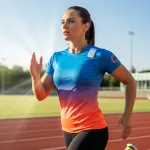


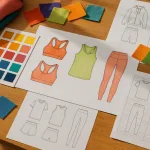


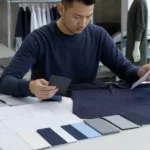

Understanding Recycled Polyester (rPET) & Dope-Dyed Fabrics
Brands and buyers in the sportswear sector increasingly seek materials that perform well, look sharp, and meet higher sustainability standards. Recycled polyester (often called rPET) and dope-dyed fabrics have surged in popularity, reshaping choices for apparel sourcing and design. This guide breaks down the impact, trade-offs, and practical steps for businesses considering these innovative textiles, with a direct lens on the world of recycled polyester sportswear.
What Is Recycled Polyester (rPET)?
Recycled polyester, commonly labelled as rPET, is produced by melting down used plastic (such as bottles or industrial offcuts) and spinning it into new fibers. This material replicates the durability, stretch, and wicking abilities of virgin polyester but has a reduced carbon footprint. It is a top choice for high-performance sportswear, activewear, and even uniforms.
- Raw material source: Primarily post-consumer PET bottles, sometimes pre-consumer industrial waste.
- Fiber production: Mechanical or chemical recycling—mechanical yields lower emissions, but chemical allows for closed-loop recycling.
- Polyester properties: Fast drying, abrasion resistant, easy to print, dyes well, and strong tensile strength.
Leading manufacturers such as Ninghow ensure consistent quality in rPET by tight controls on yarn selection, fabric GSM, and lab color testing for each batch.
Material Sourcing for Recycled Polyester Sportswear
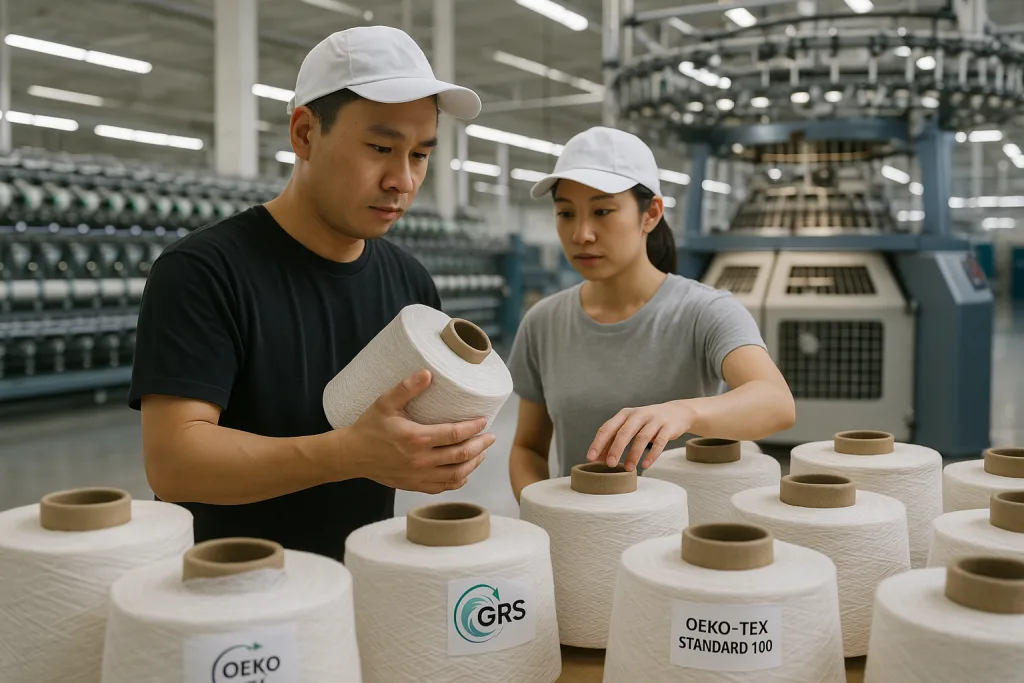
Selecting rPET for sportswear involves careful vetting of raw material origin, yarn suppliers, and traceability systems. A responsible factory will demand chain-of-custody evidence, ensuring bottles are genuinely recycled, not “fake recycled”. Third-party certifications like Global Recycled Standard (GRS) or OEKO-TEX STANDARD 100 confirm ingredient integrity, limit harmful substances, and offer peace of mind in sourcing decisions.
rPET Sourcing Best Practices:
- Request full chain-of-custody documentation from yarn suppliers.
- Check for GRS, OEKO-TEX, or other trusted certifications.
- Ask for sample batch reports detailing resin origin, recycling process (mechanical vs. chemical), and performance metrics.
- Audit suppliers visually or via a third-party for authenticity.
Authentic sourcing supports market claims and is expected by buyers who demand transparency in eco-labeling.
Dope Dyeing: Process & Advantages in Sportswear
Dope dyeing, sometimes known as solution dyeing, infuses color pigments directly into the melted polymer before the fiber is extruded. Unlike traditional piece-dyeing (adding color to finished fabric via water-intensive processes), dope dyeing merges color and resin from the start.
Key Benefits:
- Improved colorfastness: No surface-only dye; color is inherent to the fiber, significantly reducing fading from washing or sunlight.
- Water and chemical reduction: Dope dyeing uses up to 90% less water compared to regular dyeing, with minimal chemical effluent.
- Batch consistency: Less shade variance, easier Pantone matching, and reduced need for lab dips or strike-offs.
For performance apparel, these features give sportswear a vibrant, long-lasting look that withstands sweat, UV exposure, and frequent washing cycles.
Recycled Polyester (rPET) & Dope-Dyed Fabrics: Impact & Trade-offs
Switching to recycled polyester sportswear with dope-dyed fabric brings powerful pros—but also business-critical trade-offs. By reviewing both, brands can make informed sourcing and development decisions.
| Feature | Virgin Polyester | Recycled Polyester (rPET) | Piece-Dyed | Dope-Dyed |
|---|---|---|---|---|
| Raw Material | New PET resin | Recycled PET bottles/offcuts | Any base (undyed) fabric | Dope-dyed fibers at extrusion |
| Sustainability Impact | High energy/water use | ~50–75% less energy CO₂ | High water/chemical use | Up to 90% less water, low emissions |
| Colorfastness (Wash/Light) | Excellent (can fade with heavy use) | Excellent if properly dyed | Surface-level; fades faster | Superior; color locked-in |
| MOQ (Minimum Order) | Low/medium (yarn on demand) | Higher (yarn batch constraints) | Small–medium lots possible | Usually higher (custom fiber run) |
| Lead Time | Short–medium (stock) | Medium–long (yarn procurement) | Quick with available greige stock | Longer (dye at melt–order in advance) |
| Best Use | All-around | Eco sportswear, uniforms | Fashion/color variety | Team basics, uniforms, promo |
Summary Takeaway:
Recycled polyester with dope dyeing gives unbeatable eco-performance and color stability—but usually requires higher MOQs and longer lead time. For specialty shades or rapid color testing, classic piece dyeing may fit smaller, fast-turn programs.
Colorfastness and Performance in rPET Sportswear
Sportswear endures sweat, sun, and repeat washing. Colorfastness describes how well a fabric holds its dye during laundering, friction, and UV exposure. Dope-dyed rPET is typically tested with AATCC 61/ISO 105-C06 for wash, AATCC 8/ISO 105-X12 for rubbing, and AATCC 16/ISO 105-B02 for lightfastness.
Results for high-grade dope-dyed rPET show:
- Wash fastness: 4–5 (out of 5) for most athletic shades
- Light stability: 6–7 (out of 8), key for outdoor uniforms
- Rub/pilling: On par or better than piece dyed, after 50+ cycles
Buyers investing in custom lab dips or shade bands for dope-dyed production benefit from ultra-consistent colors across large and repeat orders. For logos or unpredictable colors, consider panel printing or finishes after base dyeing.
Microplastic Shedding: Understanding the Risks
Polyester—recycled or not—releases microplastics (tiny synthetic fibers) during washing. While rPET lowers landfill and energy impact, it doesn’t fully solve the microplastic problem. Have open discussions with suppliers on yarn quality and possible finishing steps that reduce fibrillation (fiber breakage).
Manage Microfiber Shedding by:
- Choosing higher denier, “compact” or twisted yarns for fabric strength
- Specifying anti-pilling finishes in your tech pack (lowers loose fibers)
- Testing full garments with ISO 4484 (microfiber release)
Some brands add consumer advice on washing bags or filtration, but most control microplastics by investing in better fabric engineering upfront. Ninghow’s technical support guides sourcing teams on knit type (interlock vs. jersey vs. mesh) and finish for each planned use scenario.
Batch Color Approval, Lab Dips & Bulk Production
Even with dope dyeing’s famed consistency, professional sportswear brands require rigorous color approval workflows. The process typically includes:
- Confirm Pantone or custom color code during design brief
- Request lab dip from the fiber/yarn manufacturer (melt-process direct)—clarify dope-dyed or regular batch
- Approve physical swatch in strong daylight and D65 lightbox conditions
- Grant go-ahead for bulk fiber extrusion (locks color in advance)
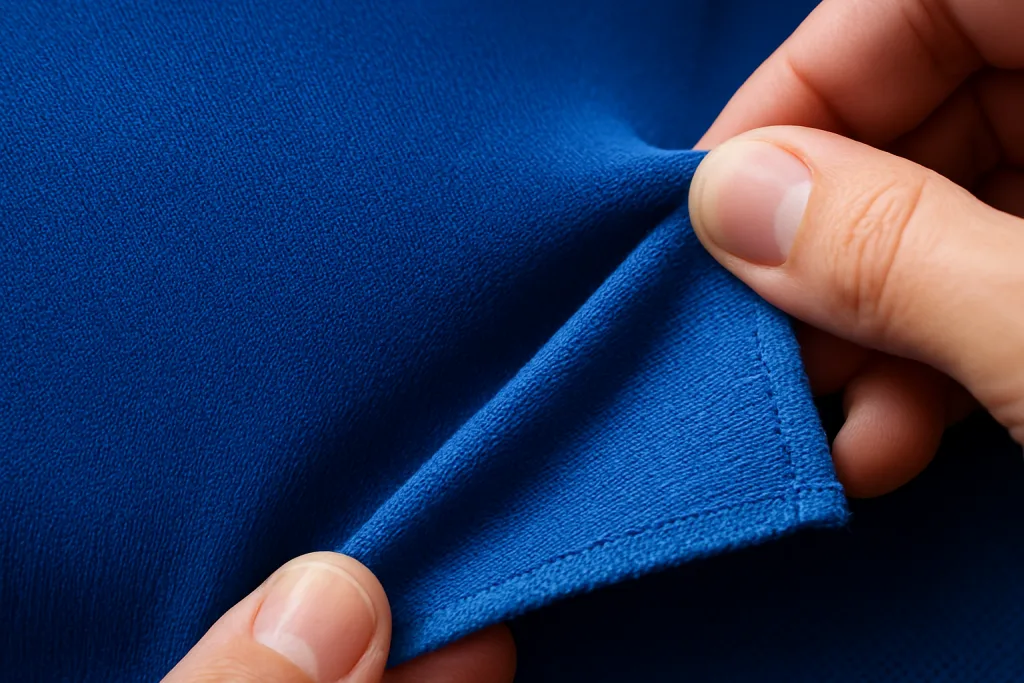
Because dope-dyed fiber can’t be re-dyed after melt-spinning, close communication is vital to avoid color claim issues. With piece-dyed polyester, adjustments or “redyes” can sometimes solve minor shade errors before sewing. Consider all timeline and cost trade-offs when planning your development calendar.
MOQ & Lead Time: Making Smart Business Decisions
While rPET and dope-dyed fabrics align with sustainability and performance, they impact order quantity and timing. Minimums usually start higher (1,000+ garments per color) because fiber needs to be dyed before spinning—not after. Lead time stretches further, as custom fiber runs can add 2–4 weeks compared to typical stock or piece-dye programs.
Typical Timeline for Dope-Dyed rPET Sportswear:
- Design/spec lock: 1 week (finalize tech pack, Pantone shade, trims)
- Lab dip and approval: 2–3 weeks (fiber-level)
- Yarn spinning and knit/weave: 3–5 weeks
- Sewing and finishing: 2–4 weeks, depending on decorations
Plan for at least 60–90 days for total production, and clarify critical delivery points (pre-production sample, top of production, and main shipment) up front. For quick programs or promotional runs, ask your supplier about available dope-dyed stock shades, or hybrid programs mixing dope-dyed body fabric with piece-dyed details for flexibility.
Garment Construction & Decoration: What Changes with rPET?
On the factory floor, rPET’s physical structure is nearly identical to virgin polyester. In knits (single jersey, pique for polos, mesh for jerseys), common weights are 160–220 gsm, while heavier fleeces or French terry run 280–360 gsm. Planning for elastic blends (5–10% spandex/elastane) improves stretch and fit—key for sports teams and fitted looks.
- Use ISO 401 chain or ISO 504 flatlock stitching for strong seams
- Opt for reinforced bartacks at pockets, plackets and hem splits
- For heat transfer/screen print: Pre-test adhesion, as dope-dyed fiber grip can differ from piece-dyed
- For embroidery: Specify backing type and needle size (to avoid fiber snag)
Ask for a full packaging/compliance review for major shipments (AQL/ANSI/ASQ Z1.4, needle detection, carton marking, and batch control all boost reliability and shipment success). Factories like Ninghow support custom tags, woven labels, and eco-friendly polybags, supporting every step from sampling to final load-out under industry best practice.
Eco Credentials and Compliance for Buyers
Third-party certifications matter more than ever, especially for sportswear that goes global. Confirm with suppliers:
- OEKO-TEX STANDARD 100 for harmful substance testing
- GRS for recycled content traceability and responsible processing
- BSCI/WRAP/SEDEX for social accountability and workplace standards
- REACH or RoHS for chemical and accessory restriction
Meeting these standards supports your claims and opens new distribution channels. Many federations and retailers now demand QR codes or batch-level traceability on tags, connecting end customers to the story of each garment.
Design Application: Real-World Scenarios for rPET & Dope-Dyed Sportswear
Not every product or program fits these fabrics equally. Consider these proven applications—a reference for your next design brief:
- Team uniforms: Football, basketball, and rugby benefit from color-matched rPET jerseys and shorts. Dope-dyed color stays true, even under aggressive field use.
- Corporate/association apparel: Bulk orders for single-color branded events maximize the dope-dyed MOQ benefit and color stability.
- Activewear basics: Polos (180–220 gsm pique), fleece hoodies (300–340 gsm) use rPET and dope-dyed options for sustainability-driven programs. Use panel decoration or contrast trims for style.
- Promo wear: Full-color logo T-shirts leverage rapid-bulk dope-dyed base with local decoration for speed-to-market in campaigns.
B2B buyers and designers gain most where batch size and program visibility justify the investment in a more sustainable, high-stability supply chain.
Future Outlook: Innovation & Responsibility
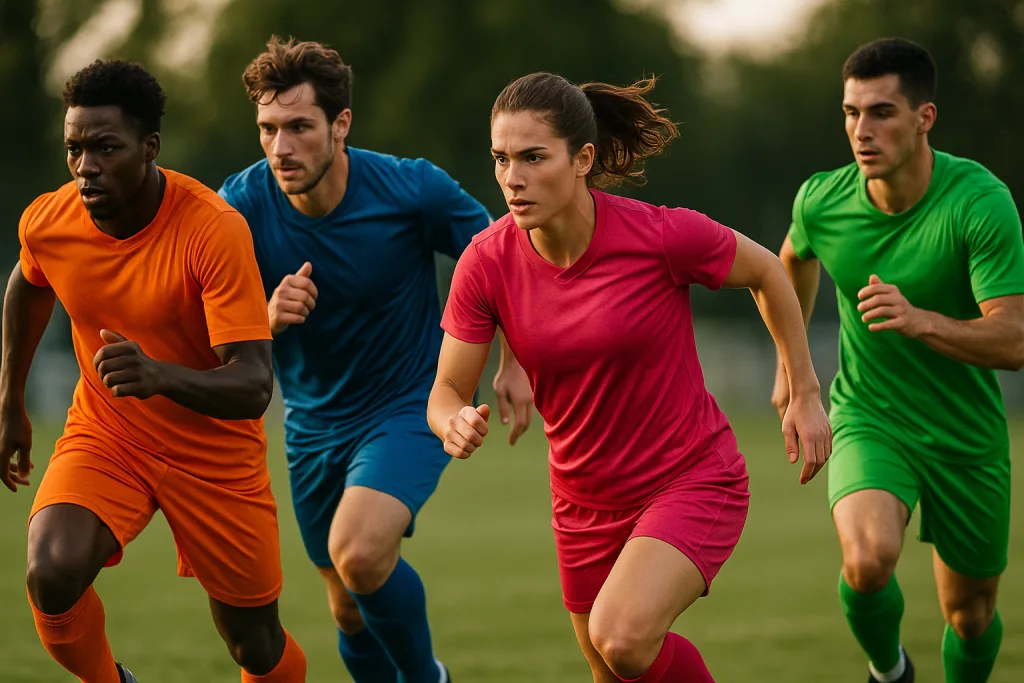
The landscape for recycled polyester sportswear is evolving rapidly. As demand for circularity grows, expect chemical recycling blends (truly closed loop rPET), bio-based alternatives, and even dope-dyed options with new finishes (antimicrobial, cooling) to reach the market. Responsible sourcing, precise supply chain data, and ongoing technical development all point to a smarter, safer, and cleaner future for performance fabrics—without sacrificing color, fit, or handfeel.
Frequently Asked Questions
Is recycled polyester (rPET) sportswear as durable as virgin polyester?
Yes, high-quality rPET matches virgin polyester in strength, stretch, and abrasion resistance—when sourced and manufactured correctly.
Does dope dyeing prevent all fading in sportswear?
Dope dyeing produces superior colorfastness, resisting most fade from washing and sunlight, but extreme wear may still dull colors over time.
Are there reliable third-party certifications for rPET fabrics?
Yes. OEKO-TEX STANDARD 100 and GRS (Global Recycled Standard) are trusted certifications for ingredient integrity and safety in rPET fabrics.
Does recycled polyester release more microplastics than regular polyester?
No—microfiber shedding depends on yarn type and finish, not the recycled origin. Good design and finishing reduce microplastic release.
Why do dope-dyed rPET fabrics have higher MOQs and longer lead times?
The fiber must be custom-dyed at extrusion, requiring larger minimum batch sizes and advance production compared to piece dyeing.
Can dope-dyed recycled polyester fabrics be printed or embroidered?
Yes. Most can be decorated, but always pre-test for adhesion or fiber grip, as results can differ from standard polyester fabric.