







Understanding Freight 101 for Apparel: EXW vs FOB vs DDP for the U.S. & EU
Ordering apparel from overseas means navigating shipping terms that affect your costs, risks, and delivery timelines. Three key shipping terms—EXW (Ex Works), FOB (Free on Board), and DDP (Delivered Duty Paid)—govern how goods move from a manufacturer to your doorstep in the United States or Europe. This guide explains each term, details how they shape everything from packaging to customs, and reveals how Ninghow supports a seamless DDP apparel shipping experience for brands. Whether you’re importing polo shirts, hoodies, or promotional activewear, understanding freight helps you control costs and plan smarter.
Incoterms Explained: EXW, FOB & DDP for Apparel
Incoterms (International Commercial Terms) are global rules set by the International Chamber of Commerce (ICC) to clarify who is responsible for shipping steps and costs. Three terms stand out for apparel buyers:
- EXW (Ex Works): Buyer picks up goods from the factory. You handle every shipping, export, and customs step.
- FOB (Free On Board): The seller delivers goods to the origin port and loads them onto the ship. The buyer covers ocean freight and importing.
- DDP (Delivered Duty Paid): The seller delivers goods to your chosen address, handling shipping, duties, and customs paperwork along the way.
Choosing between them depends on your control needs, budget, and experience with import regulations in the U.S. or EU. DDP apparel shipping lets brands avoid surprises by locking in total landed costs upfront.
How Incoterms Shape Apparel Orders
Incoterms directly influence your ordering workflow, transportation planning, and risk exposure. For instance, with DDP, Ninghow manages every transit step up to your warehouse door. With EXW, your team arranges truck, ocean, and customs clearance, often needing third-party expertise.
| Term | Who Handles Export & Ship? | Customs & Import Taxes? | Best for |
|---|---|---|---|
| EXW | Buyer | Buyer | Freight-savvy importers w/ local agents |
| FOB | Seller (to port) / Buyer (from port) | Buyer | Standard apparel importers, using own forwarders |
| DDP | Seller (factory to final delivery) | Seller | First-time buyers; no in-house logistics |
Common Incoterm Pitfalls
- Not budgeting for hidden port charges under EXW/FOB
- Underestimating customs delays with self-arranged shipments
- Misunderstanding DDP: some sellers skip duty payment—verify what’s included
Carton & Pallet Planning for Smooth Apparel Shipments
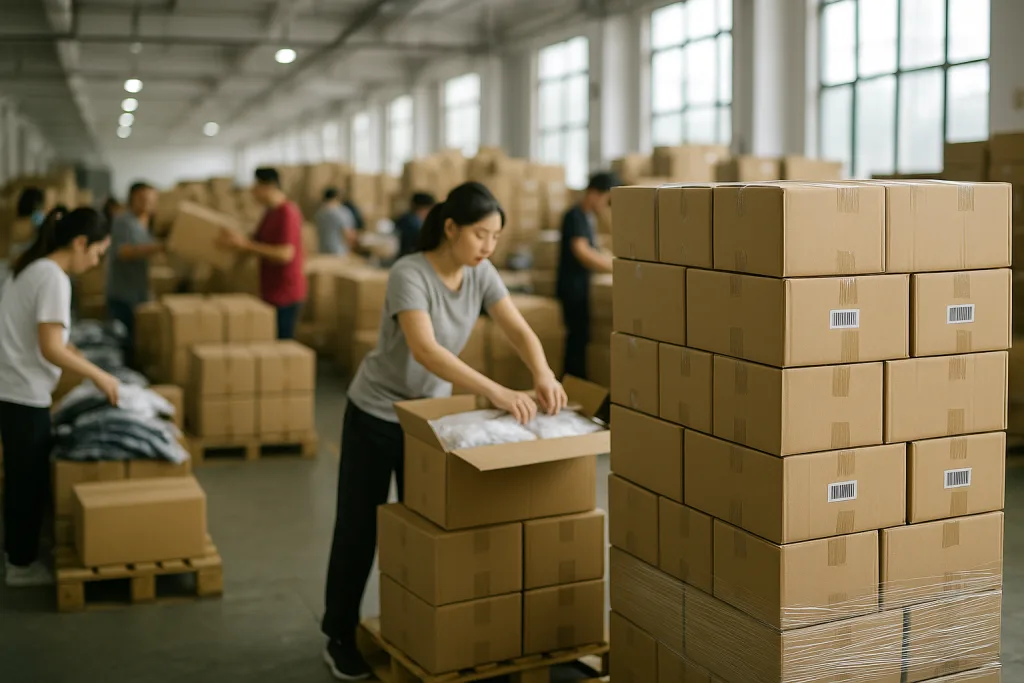
Proper packaging protects quality and helps control shipping costs, especially for bulk orders of polos, hoodies, or promotional T-shirts. Every Incoterm impacts carton specs, pallet assembly, and labeling requirements in the U.S. and EU.
Choosing Carton Specs for Apparel
- Size: Standard cartons range 50x40x30 cm for 24-48 pieces. Overfill risks damage.
- Material: Minimum 5-ply corrugated for international ocean freight.
- Weight: Keep per carton 15–20 kg to avoid surcharge on air or ground segments.
- Markings: Custom barcodes/UPC/EAN, size breakdown, and clear destination address.
Smart Palletizing Strategies
For U.S. and EU importers, efficient stacking means lower landed costs and less handling risk:
- Use ISPM 15-certified wood pallets for international compliance
- Stack cartons evenly; avoid overhang to reduce damage claims
- Shrink-wrap full pallets to stabilize loads and prevent theft
Apparel Pallet Configurations (Typical)
| Pallet Type | Pallet Size | Max Cartons | Best Use |
|---|---|---|---|
| Euro (EU) | 120×80 cm | 12-16 | EU Distribution Center |
| Standard (U.S.) | 48×40 in | 10-14 | Warehouse / Retail |
How Packaging Affects Apparel Quality
Apparel quality depends on transit care. For example, moisture-wicking polos (180–220 gsm polyester blends) need vented polybags to prevent mildew. Bulk embroidery polos get stiff card inserts for shape retention. Pantone-matched color batches benefit from sealed cartons to avoid shade band variance.
Landed Cost Basics: Calculating Your True Apparel Price
Landed cost means the total price of getting your apparel from the factory to your warehouse, including product cost, shipping, duties, insurance, and all handling fees. Accurate landed cost estimates drive profit and pricing decisions for brands.
- Ex-Factory Price: What you pay Ninghow for your goods (apparel, accessories, decoration).
- Freight & Insurance: Ocean/air freight, land transport, insurance (chargeable by volume or weight).
- Duties & Taxes: U.S. duty ranges 0–32% (find HTS code lookup); EU VAT varies by country, duty 12–14% for cotton apparel.
- Customs Fees: Entry, security, handling; approx. $75-$200 per shipment in U.S. terminals.
With DDP apparel shipping from Ninghow, you receive one invoice that rolls together every charge for door-to-door delivery—no surprise fees at borders.
Key Factors Raising Landed Costs
- High carton count (each adds handling cost)
- Mixed fabric content (affects duty classification)
- Decorations (screen print, embroidery, heat transfer can change category)
- Urgent air freight (4-6 times cost of ocean)
Common Customs Docs for Apparel Imports
Importing branded polos, sweatshirts, or team kits into the U.S. and EU requires accurate documentation. Not having correct paperwork leads to delays, fines, or rejections.
Standard Documents for U.S. & EU Apparel Clearing
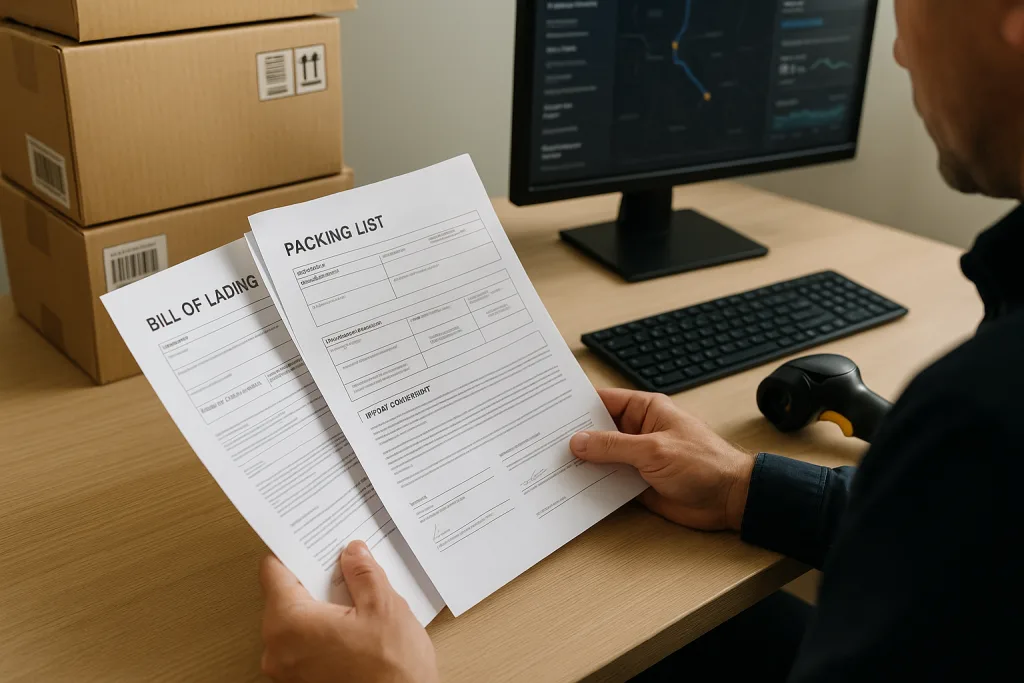
- Commercial Invoice: Product description, value, origin, buyer/seller details
- Packing List: Carton breakdown, weight, dimensions, SKU/barcodes
- Bill of Lading (B/L): Proof of shipment ownership
- Import License (where required): Needed for certain blends/yarns
- Certificate of Origin: Shows eligible trade status (for tariff reductions)
- Declaration of Conformity: Confirms safety/compliance (REACH, OEKO-TEX, CPSIA)
Ninghow pre-prepares all required customs paperwork under DDP shipments, streamlining terminal release and reducing processing times.
Document Accuracy: The Key to Seamless Customs
Small errors—a wrong HS code, missing fabric detail, or unlisted decoration—trigger customs reviews. Always confirm your apparel descriptions match inspection samples and verify that care labels display correct ISO 3758 symbols and fiber breakdown.
Freight 101 for Apparel: EXW vs FOB vs DDP for the U.S. & EU
Freight logistics affect every step of your order: from choosing fabrics to delivering branded gear for events or retail. Understanding EXW, FOB, and DDP empowers brands to take the right risks, negotiate better pricing, and ensure every shipment is compliant and traceable.
EXW in Practice: Full Control, Higher Complexity
EXW gives buyers total control and visibility but adds complexity: You or your agents arrange pick-up, export declaration, and all freight segments. For large enough programs (e.g., 10,000 units per drop), EXW offers bulk negotiation power. You’ll need partners skilled in international transportation, customs brokerage, and insurance risk.
FOB for Standardized Shipments
FOB splits shipping between seller and buyer, making it popular for established brands with preferred freight forwarders. Most U.S. and EU importers use FOB for regular PO shipments, leveraging contracted rates for ocean and air. Watch for local port handling fees: sometimes not included in quoted FOB rates.
DDP Apparel Shipping: All-In, Stress-Free
DDP lets you focus on merchandise decisions, not freight headaches. Ninghow manages pick-up, export clearance, ocean/air freight, import customs, duty payments, and final delivery to your facility. This simplifies budgeting and accelerates go-to-market for promotional and seasonal lines.
Ninghow’s Apparel Freight Support
- Custom carton packing: size ratio, insert support for embroidery, polybag specs
- Bulk color sample approval: lab dips for Pantone color matching
- Pre-shipment QC: AQL checks, spec measurement, wash/stress testing
- Labeling for compliance: OEKO-TEX, REACH, CPSIA, GOTS (where applicable)
- Automated customs paperwork: invoice, packing, certificate of origin, B/L
- Global DDP coverage: U.S., EU, UK, Middle East, Australia
With DDP apparel shipping, small brands and large buyers can avoid upskilling internal teams or hiring logistics agents, freeing up time for product launches and marketing.
How Fabric and Construction Choices Affect Freight
Material selection isn’t just about look and feel. Your choice changes shipment weight, packaging needs, duty classification, and even customs paperwork. For example, combed cotton polos (20s/24s/32s yarn, 180–220 gsm) ship lighter than plush fleece hoodies (300–360 gsm), meaning fewer cartons per pallet and lower freight rates.
- Recycled Polyester (rPET): Lower duty in U.S./EU; requires specific paperwork
- Organic Cotton (GOTS): Offers sustainability edge for brands; GOTS certificates simplify import clearance
- Technical Finishes (moisture-wicking, UV): May affect HS code and therefore duties; always check blend percentage
- Decorations (screen print, embroidery): Increases weight, impacts how garments must be separated for inspection/labeling
Smart planning at tech pack stage keeps landed costs predictable. Ninghow provides fabric, finish, and decoration sourcing to balance handfeel, durability, and freight savings for every order.
Testing & Compliance in Apparel Shipping
Passing customs means matching declared specs to tested properties. For the U.S. and EU, requirements include:
- Colorfastness (ISO 105-C06/X12, AATCC 61/8)
- Dimensional stability (AATCC 135/150)
- Pilling resistance (ISO 12945)
- Seam strength (ASTM D1683)
- Oeko-Tex, GOTS, REACH (source)
Optimizing Lead Times: Sample to Shipment Workflow
Apparel lead times hinge on clear planning. The workflow typically unfolds as:
- Design and Tech Pack finalization: specs, color charts, measurement tables
- Lab dip & strike-off: color and print proof sampling
- Pre-production sample (PP): full spec garment for bulk approval
- Bulk production: fabric knitting, cutting, sewing/embroidery/printing
- Inline and final QC: AQL checks, spec measurement
- Packing and export preparation: folding, cartonizing, palletizing
- Export clearance and booking: coordinated by Ninghow for DDP
- Doorstep delivery: typically 28–45 days ocean transit, 7–15 days air express
Ninghow’s process control at each stage gives brands visibility on quality and timings, enabling accurate drop dates for campaigns or retail launches.
Choosing Your Apparel Freight Strategy: Key Takeaways
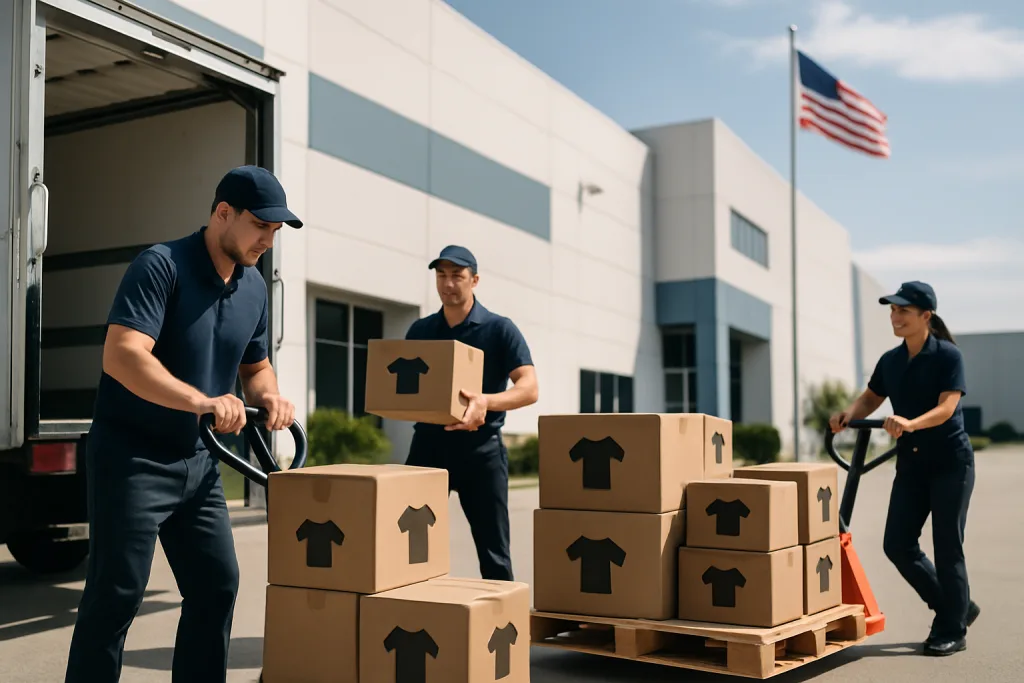
Every Incoterm offers advantages. Small brands and growing teams often prefer DDP apparel shipping for low-risk, fixed-cost delivery. Experienced apparel buyers may select FOB for flexibility or EXW for maximum control. The right choice depends on your team’s logistics experience, customs knowledge, and need for speed or cost certainty.
- For short lead times and total price control—choose DDP.
- For regular, large orders with a trusted forwarder—try FOB.
- For expert buyers with local agents—EXW offers negotiation options.
Ninghow supports all three options, with most new partners choosing DDP for reliability. From manufacturing to carton planning, compliance to doorstep delivery, Ninghow safeguards quality and simplifies freight for every apparel order.
Frequently Asked Questions
What is DDP apparel shipping and how does it work?
DDP apparel shipping means the supplier handles all transport, customs, and duty payments, delivering goods directly to your address with no hidden fees.
How do EXW, FOB, and DDP differ for U.S. and EU apparel orders?
EXW requires buyers to arrange pickup and all shipping; FOB splits responsibility at export port; DDP covers delivery, customs, and duties end to end.
Which documents are required for importing apparel into the U.S. or EU?
Standard documents include a commercial invoice, packing list, bill of lading, certificate of origin, import license (if required), and conformity declaration.
How does carton and pallet planning affect apparel shipping costs?
Proper carton sizing, sturdy materials, and efficient palletizing reduce handling fees, protect apparel quality, and lower freight charges per shipment.
How are landed costs calculated for DDP apparel shipments?
Landed costs include the product price, all freight fees, insurance, import duties, taxes, customs clearance, and final delivery to your location.
How does Ninghow support DDP apparel shipping for new brands?
Ninghow manages packing, compliance, customs documentation, duty payments, and end-to-end freight, making DDP simple and risk-free for apparel startups.