








Why Featherweight Shouldn’t Mean See-Through
“Featherweight” often calls to mind ultra-thin shirts with maximum ventilation, but there’s a fine line between breathable and revealing. Many mass-market running shirts cut costs on fabric weight (GSM), which leads to see-through problems, weak seams, and poor durability. A true performance shirt should vanish on your back, but never embarrass you at the track.
- Proper GSM Selection: Select a fabric weight that is light enough for performance but dense enough to prevent transparency. GSM (grams per square meter) is the industry term for fabric density.
- Yarn & Construction: High-count yarns and engineered knits create opacity without bulk.
- Finish & Treatment: Performance wicking, two-tone weaves, and inner mesh all enhance confidence and comfort.
Choosing Optimal GSM Ranges for Running Tees & Singlets

GSM, or grams per square meter, is the core metric dictating the weight and opacity of running fabrics. Too low — under 100gsm — and you risk see-through on sweat zones or with light colors. Too high — over 160gsm — and the shirt starts feeling heavy and traps heat.
| GSM Range | Fabric Type | Best Use | Opacity |
|---|---|---|---|
| 95–110 gsm | Ultra-fine mesh (poly/poly-blend) | Pro race singlets, hot climates | Moderate, optimal if engineered |
| 120–135 gsm | Lightweight single jersey/polyester | Everyday training tees, most singlets | High with proper yarn |
| 140–160 gsm | Dense performance knit, modal blends | Cool weather runs, added print coverage | Maximum |
Ninghow uses advanced yarn blends and double-knit meshes to reach the sweet spot: 120–135gsm for most running tees and 110–120gsm for singlets. This range balances featherweight feel, sweat-wicking, and reliable opacity, even in white or pale colors.
Best Fabric Choices from a Running Shirts Manufacturer
- Micro-polyester (rPET): Lightweight, smooth, wicks fast, enables soft handfeel, and is technically strong for team sports.
- Poly/Elastane Blend: Adds 5–10% stretch for movement, improves drape, and resists wrinkles.
- Modal or Tencel Mix: For brands prioritizing handfeel, moisture management, and odor resistance with a premium touch.
These blends, combined with proper GSM and finish, minimize the risk of see-through and maximize comfort on the move.
Mesh Mapping: Targeted Ventilation Without Compromising Coverage
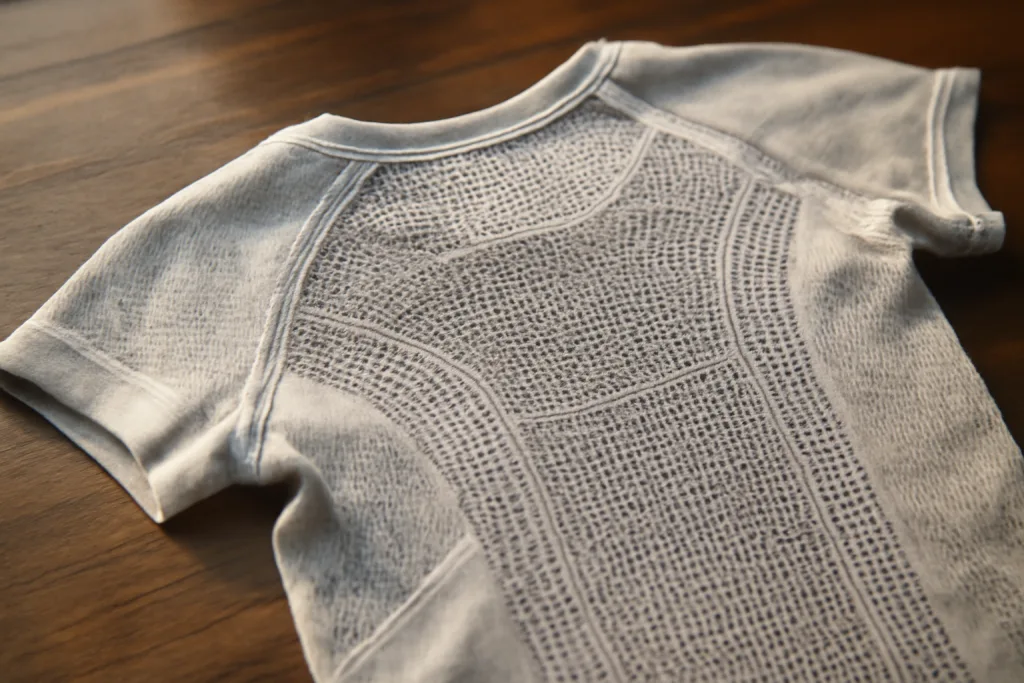
Strategic mesh placement, known as mesh mapping, delivers ultra-breathability while maintaining key coverage areas. Mesh mapping uses varying knit patterns in high-heat zones (like side panels, upper back, or underarms), while keeping chest and midsection opaque using denser knits.
Design for Function and Confidence
- Underarm Panels: Open-mesh with fine yarns increase airflow but remain opaque due to structure.
- Back Yoke/Shoulder Mesh: Provides targeted cooling during intense sessions.
- Core Shields: Denser knit front and lower body panels prevent unwanted transparency.
High-quality sportswear manufacturers like Ninghow use multi-zone knitting machines to engineer mesh and dense zones directly in the garment, saving weight without losing opacity at the front or chest.
Expert note: Proper mesh mapping is not just about airflow. It shapes the garment’s fit, eliminates bulk at seams, and ensures see-through areas never align with the body’s critical coverage zones.
Seam Engineering: Chafe-Free & Durable On Every Mile
Chafing can ruin any run, especially with lightweight shirts that shift as you move. Top running shirts manufacturers focus on seam techniques and thread selection that eliminate hot spots, even in long-distance wear.
Bonde or Flatlocked Seams?
- Flatlocked Seams (ISO 607, 602): Wide, low-profile seams stitched with soft polyester thread. These reduce bulk and lie flat on the skin, minimizing friction at shoulders and sides—perfect for running tees and singlets.
- Bonded Seams: Ultrasonic or adhesive seams fuse fabric edges without thread. This creates a nearly seamless, smooth finish, and shaves grams off race-weight singlets.
Sophisticated brands will blend techniques, placing bonded seams at high-movement zones (armholes, neck) and flatlocks at structural joins. Bartacks (extra thread reinforcements) add strength at stress points.
How Seam Choices Affect the Run
- Smoothness: Less bulk equals less chafe risk and improved comfort on skin.
- Durability: Properly executed, both methods survive repeated stretch and wash cycles with minimal pilling or seam breakage.
- Looks: Flatlocked seams can add visual accents or contrast to a minimalist design.
Reflective Placement: Visibility Without Discomfort
Night and early-morning runners need visibility, but reflective elements must be carefully positioned and integrated to avoid stiffness, skin irritation, or peeling after washes. A trusted running shirts manufacturer uses lab-tested reflective transfers, pipings, or printed logos—ideally at motion points where headlights will catch them, but where they won’t rub against skin or stick to sweat.
Key Positions for Maximum Safety
- Upper back yoke: Large surface, easy to spot from behind.
- Side hem or sleeve cuffs: Catches car beams during arm swing.
- Shoulder points: Offers visibility from multiple angles.
Reflective transfers should meet ISO 20471 reflectivity standards and pass multiple home-laundering cycles without cracking, as part of final QA testing.
Bonding vs Stitching: Which Delivers Best Performance?
Stitching is the backbone of apparel, but bonding is now a rising technique in performance-wear. Each method offers unique advantages.
| Method | Advantages | Drawbacks | Best Use Cases |
|---|---|---|---|
| Traditional Stitching | Strong, flexible, repairable, accepted in all regions | Bulkier, potential for irritation, visual seams | Main seams, hems, reinforcing joins |
| Bonding (Ultrasonic/Adhesive) | Ultra-smooth, minimal bulk, waterproofing options | Specialized machinery, higher cost, less stretch | Race singlets, tagless necks, sealed pockets |
Mixing both in one garment delivers the lightest, strongest, and most comfortable results. Trusted partners like Ninghow advise brands on where to optimize these joins for both feel and cost at scale.
Care for Lasting Wicking & Opacity
Even the best running shirts lose performance if not cared for properly. High-wicking, featherweight knits need gentle cycles and correct detergents to maintain their structure, color, and no-see-through promise. Here’s how to help customers get the longest life from their run kits:
- Wash cool (30°C or below): Hot water can break down performance finishes and cause micro-shrinkage, especially in bonded areas.
- Avoid fabric softeners: These coat the yarns, reducing wicking and water vapor flow.
- Hang dry (shade): Direct sunlight weakens synthetics and fades color. Tumble drying risks seam breakdown, especially on bonded shirts.
- No bleach, minimal detergent: Use just enough detergent to clean sweat and odor without harsh agents that erode fabric finish.
High-volume brands include these guidelines on sewn-in care labels or printed instructions, helping both garment performance and customer satisfaction endure season after season.
Running Tees & Singlets: Featherweight Without See-Through
At the heart of every great running shirt is fabric science and construction know-how. The days of heavy cotton shirts and see-through mesh are over. Today’s market demands blend featherweight comfort, coverage, and technical edge for every mile.
- Balanced GSM: The right range (120–135gsm) offers lightness without see-through.
- Mesh mapping: Places breathability only where it’s needed.
- Chafe-free seams: Engineered by blending flatlock stitching and bonding in key areas.
- Smart reflectivity: Placed for visibility, tested for durability.
- Easy care: Maintains wicking, color, and durability through the life of the garment.
Takeaway: Whether you source from a full-service partner like Ninghow or another specialist, demand full tech packs, pre-production samples, and clear QA/QC standards. Proper manufacturing unlocks performance, protects your brand, and delivers shirts runners will love.
Certifications, QA, and Partnering for Success
For apparel brands, consistency and compliance matter as much as design. The best running shirts manufacturer goes beyond clever blends or eye-catching mesh. They meet international standards like OEKO-TEX Standard 100, REACH, and BSCI/WRAP for labor and sourcing ethics. Testing for colorfastness (ASTM D2054), seam strength (ASTM D1683), and dimensional stability guarantees every production run fits, feels, and performs the same way.
- Require lab dip approval for new colors, including bulk run signoff.
- Pilot graded size sets for every style — no surprises in fit across sizes.
- Specify cartridge or barcode packaging, including hangtags, woven labels, and custom polybags.
Working with experienced factories cuts costly mistakes, ensures on-time samples, and keeps every re-order on spec. Ninghow, for example, supports B2B clients with detailed tech guidance and sustainable sourcing practices.
From Prototype to Finish: Running Tees & Singlets Production Workflow
Bringing a performance running tee from idea to finish involves several technical stages, each impacting the final product’s comfort, function, and looks. From a manufacturing lens, here’s a quick overview:
- Design and Tech Pack: Detailed documentation, including pattern, sketches, spec tables, and seam diagrams.
- Materials Selection: Lab dip/Pantone matching, sample swatches in target GSM, stretch, and opacity checks.
- Sizing and Patterning: Digitized patterns, size grading, and pre-shrinkage testing to prevent post-wash surprises.
- Cutting & Assembly: Fabric relaxation, automated cutting, and marker planning for efficiency.
- Sewing/Assembly: Seam selection (flatlock, bonding, standard overlock) and integrated reflectivity or mesh as required.
- Decoration: Digital printing, DTF/DTG, or screen printing with sweatproof inks; QC on every batch.
- Final QA & Packing: Inline and endline checks, AQL inspection, packaging by size, and secure carton labeling.
The right factory process translates brand vision into high-performance reality, mile after mile.
Buyer Guidance: Making the Right Choice with Your Running Shirts Manufacturer

Looking for the ideal partner for your next runwear line? Ask about fabric sources, custom mesh mapping, and in-house seam/bonding capabilities. Reliable manufacturers provide pre-production samples, support for color/fit approval, and flexible MOQ (minimum order quantity) levels. Source tech packs and performance test results to back every promise, from GSM spec to final reflectivity durability.
With the right knowledge and a factory like Ninghow at your side, you can confidently deliver apparel that stands out for every runner — never see-through, always featherweight.
Frequently Asked Questions
What is the best GSM range for running tees and singlets to prevent see-through?
The ideal GSM range is 120–135gsm for running tees and 110–120gsm for singlets. This ensures a featherlight feel while maintaining opacity and durability.
Does mesh mapping make the shirt more see-through?
No, professional mesh mapping uses denser knits on core coverage zones and open mesh only in targeted areas, maintaining privacy without sacrificing breathability.
Which seam type is best to prevent chafing during long runs?
Flatlocked seams or bonded seams are best for activewear. They minimize roughness, reduce bulk, and eliminate hot spots that can cause chafing on high-mileage runs.
How should reflective details be applied to running shirts for safety?
Reflective elements should be applied using durable transfers or pipings, positioned at shoulders, back yoke, or hem where they maximize visibility and avoid skin contact.
How can I maintain moisture-wicking performance during garment care?
Wash shirts in cool water, avoid fabric softeners or bleach, and hang dry out of direct sunlight. This protects the fabric’s wicking and opacity properties over time.
What certifications should I look for in a running shirts manufacturer?
Look for OEKO-TEX Standard 100, BSCI/WRAP social compliance, and performance testing for colorfastness and seam durability to ensure quality and eco-friendly production.